
Your cart (0)
Your cart is empty
Tax included and shipping calculated at checkout
Your cart is empty
Tax included and shipping calculated at checkout

A 4-season off-road camper represents the pinnacle of recreational vehicle engineering, combining robust all-weather capability with rugged terrain performance for adventurers who refuse to let seasons dictate their exploration schedule. These specialized trailers and motorhomes are designed to operate safely and comfortably in everything from sub-zero mountain winters to scorching desert summers, while accessing remote locations far beyond traditional campground infrastructure.
The American outdoor recreation economy has exploded in recent years, with the RV industry experiencing unprecedented growth. According to Global Market Insights Inc., the North American travel trailer market is projected to reach significant valuations through 2026, driven largely by increasing demand for off-grid capabilities and year-round usability. This surge reflects a fundamental shift in how Americans approach outdoor recreation, moving away from seasonal, campground-dependent travel toward true expedition-style adventures.
BlackSeries RV has positioned itself at the forefront of this movement, engineering trailers specifically designed for extreme conditions and challenging terrain. Our focus on structural integrity, advanced insulation systems, and off-road performance addresses the growing demand for vehicles that can handle both the harsh realities of winter camping and the rugged access routes to America’s most spectacular remote destinations.
A legitimate 4-season camper incorporates several critical engineering features that distinguish it from standard recreational vehicles marketed with seasonal claims:
Advanced Insulation Systems: True 4-season units feature R-11 or higher insulation values throughout walls, floors, and ceilings, often using closed-cell foam construction. This isn’t just about comfort, it’s essential for preventing condensation issues and maintaining livable interior temperatures without overworking heating systems.
Enclosed and Heated Underbellies: The most critical distinction involves completely sealed underbelly compartments with dedicated heating circuits. This prevents water lines, holding tanks, and pumps from freezing, a failure that can render any RV uninhabitable in winter conditions.
Dual-Pane Windows and Enhanced Sealing: Premium window systems with thermal breaks and advanced weatherproofing prevent heat loss and eliminate drafts that compromise heating efficiency.
Heavy-Duty Heating Systems: Hydronic heating or forced-air systems with sufficient BTU output to maintain comfortable temperatures even when exterior temperatures drop well below freezing.
Off-road campers diverge fundamentally from standard travel trailers in chassis design and suspension engineering:
Independent Suspension Systems: Unlike basic leaf-spring setups, serious off-road trailers employ independent coil-over or torsion suspension that absorbs impacts without transmitting shock to the trailer frame or occupants.
Reinforced Chassis Construction: Heavy-duty steel frames with additional cross-bracing, designed to withstand the twisting forces encountered on uneven terrain.
High Ground Clearance: Elevated frames that prevent bottoming out on rocks, logs, or deep ruts common on forest service roads and dispersed camping areas.
All-Terrain Tire and Wheel Packages: Load-rated tires designed for mixed surfaces, often mounted on reinforced wheels capable of handling impacts from rocks and debris.
The combination of year-round usability and off-road access opens possibilities unavailable to conventional RV travelers. America’s most spectacular winter destinations, from snow-covered national forests to desert areas experiencing their most comfortable temperatures, often require both seasonal hardiness and the ability to navigate unpaved access routes.
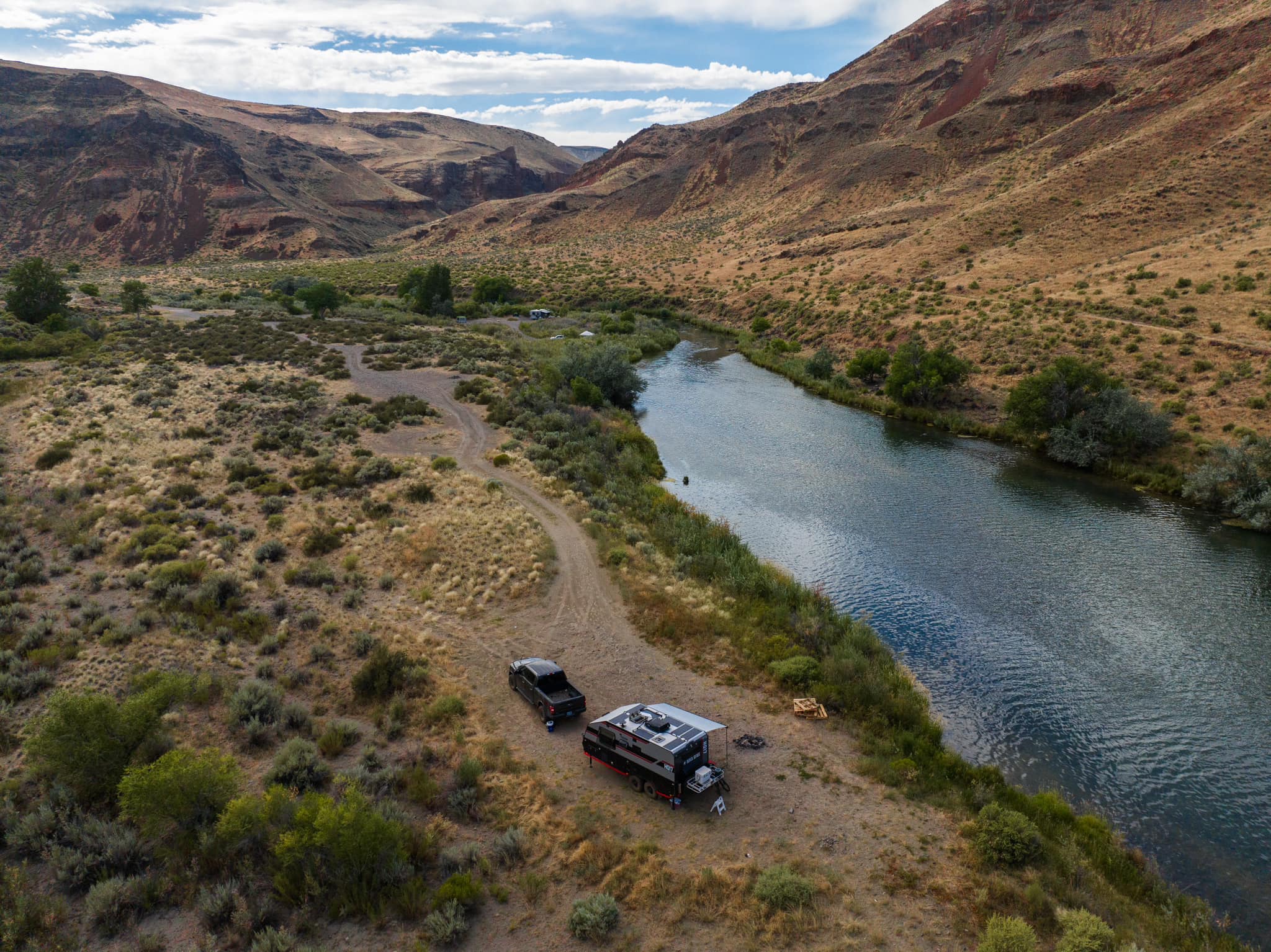
Winter Performance: Legitimate 4-season off-road campers maintain habitability in conditions that would disable standard RVs. Advanced insulation systems and heated underbellies allow comfortable occupation in sub-zero temperatures, while robust construction handles snow loading and wind resistance.
Summer Resilience: The same insulation that retains heat in winter provides crucial cooling efficiency in desert environments. Quality 4-season units resist UV degradation and maintain structural integrity under extreme temperature cycling.
Storm Resistance: Enhanced construction standards mean better wind resistance and weather sealing, crucial for riders who encounter unexpected weather in remote locations.
According to RV PRO industry analysis, the growing trend toward dispersed camping and public land exploration has created unprecedented demand for trailers capable of accessing remote sites safely. Standard travel trailers simply cannot handle the approach roads to many of America’s most desirable camping locations.
Enhanced Stability: Independent suspension systems dramatically reduce trailer sway and improve handling on uneven surfaces, providing safer travel and reduced driver fatigue.
Component Protection: Reinforced frames and protective belly panels shield critical systems from damage during off-road travel, reducing the likelihood of equipment failure far from repair facilities.
Increased Access: Higher ground clearance and rugged running gear provide access to locations impossible for standard trailers, expanding available camping opportunities exponentially.
Extended Autonomy: True off-grid capability means freedom from campground availability and reservation systems. Advanced battery systems, solar charging, and larger water capacities enable extended stays in remote locations.
Consistent Climate Control: Professional-grade heating and cooling systems maintain comfortable interior conditions regardless of external weather, crucial for enjoyable winter camping experiences.
Reliability in Isolation: Robust construction and proven components reduce the likelihood of equipment failures when professional repair services may be hours or days away.
Ken Research market analysis indicates that year-round RV usage has increased substantially as owners discover the advantages of off-season travel, fewer crowds, lower costs, and access to seasonal experiences like snow camping or desert wildflower blooms.

Seasonal Priorities: Determine whether winter capability or summer desert performance represents your primary concern. While true 4-season units handle both, understanding your priorities helps focus feature evaluation.
Terrain Requirements: Honestly evaluate the types of access roads you plan to travel. Forest service roads vary dramatically in difficulty, from well-maintained gravel to challenging rock crawling routes.
Trip Duration Expectations: Extended off-grid stays require different capabilities than weekend adventures. Water capacity, power systems, and storage needs scale significantly with trip length.
Insulation Quality: Look for specific R-values rather than marketing claims. Inspect actual construction, can you see thermal bridges in the frame? Are windows genuinely dual-pane with thermal breaks?
Heating System Assessment: Verify that heating ducts specifically serve the underbelly area where plumbing runs. Ask for documentation of successful cold-weather testing below 20°F.
Water System Protection: Ensure water lines run through heated spaces and that holding tanks have dedicated heat sources. Tank heating pads alone are insufficient for serious cold weather camping.
Electrical Capacity: Calculate actual power requirements for heating, lighting, and appliances. Many units feature impressive solar arrays but lack sufficient battery capacity for extended cloudy periods.
Suspension Analysis: Independent systems generally outperform leaf springs, but quality varies dramatically. Look for name-brand components and adequate travel distance.
Ground Clearance Measurement: Verify actual clearance measurements, not marketing claims. Consider both static clearance and departure angles.
Tire and Wheel Specifications: Confirm load ratings match or exceed trailer weight. All-terrain tires should show DOT ratings appropriate for highway speeds.
Frame Construction: Inspect weld quality and frame gauge. Look for evidence of engineering analysis rather than simply “heavy-duty” marketing language.
Towing Vehicle Compatibility: Verify your vehicle’s actual towing capacity, including tongue weight limits. Consider how off-road modifications to your trailer affect total weight.
Size and Maneuverability: Larger units offer more amenities but may limit access to tight camping spots. Consider your typical travel style and camping preferences.
Maintenance Accessibility: Remote camping amplifies the importance of reliable components and user-serviceable systems. Complex technology may provide convenience but creates additional failure points.
Service Network: Consider manufacturer support availability in areas where you plan to travel. Quality construction reduces service needs, but parts availability remains important for extended trips.
For those planning dispersed camping adventures, understanding the specific requirements of BLM and Forest Service lands can help guide appropriate equipment choices.
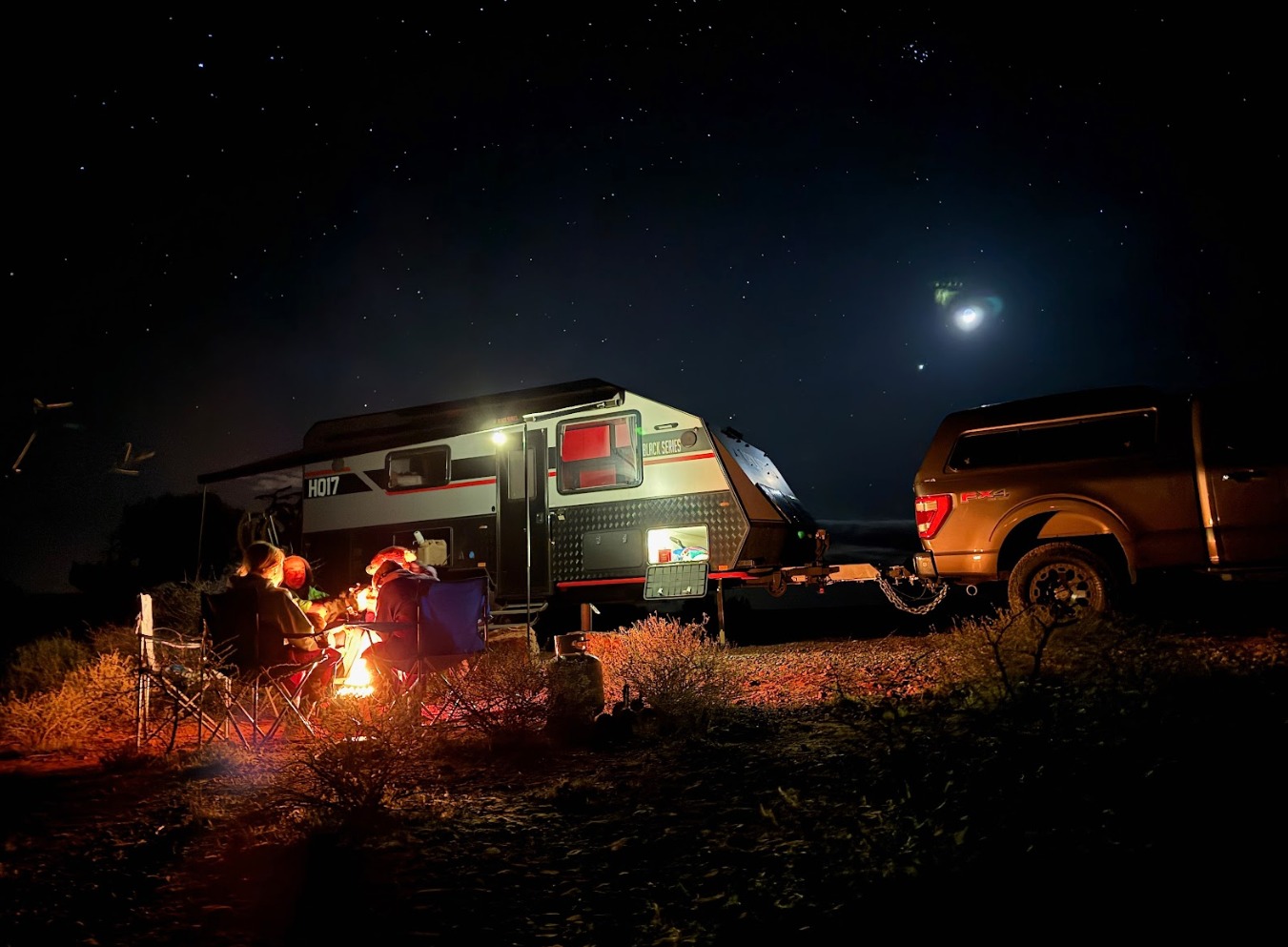
WiseGuy Reports and Global Market Insights Inc. document sustained growth in the off-road RV segment, with particular strength in units combining extreme-weather capability with rugged construction. This growth reflects both increased outdoor participation and growing sophistication among RV buyers who understand the limitations of standard travel trailers.
The USA off-road camper market has matured significantly, moving beyond basic utility toward refined comfort without sacrificing capability. Modern buyers expect amenities comparable to high-end conventional RVs, but engineered to function reliably in challenging conditions.
SUV-Towable Units: Designed for vehicles like the Toyota 4Runner, Chevy Tahoe, and Ford Expedition, these trailers typically range from 3,000-5,500 pounds. They offer genuine 4-season capability while maintaining compatibility with popular off-road vehicles.
Key Features: Advanced insulation systems, independent suspension, solar charging capability, and compact but complete amenities including full galleys and sleeping accommodations.
Target Users: Adventurers prioritizing access over luxury, couples seeking extended off-grid capability, and families with moderate space requirements.
Truck-Towable Units: Designed for HD pickup trucks, these trailers range from 6,000-10,000+ pounds but offer apartment-level amenities with expedition durability.
Advanced Systems: Multiple solar panels, large battery banks, full-size appliances, and sophisticated climate control systems capable of maintaining comfort in extreme conditions.
Luxury Integration: Modern units successfully combine rugged engineering with premium finishes, offering comfort levels approaching luxury motorhomes while retaining true off-road capability.
Engineering Philosophy: BlackSeries prioritizes function over flash, developing trailers based on actual expedition requirements rather than appearance-focused design trends.
Proven Construction: Our units undergo extensive real-world testing in conditions that challenge both structural integrity and system reliability.
Integrated Design: Rather than adding off-road capability to existing designs, BlackSeries engineers complete systems from the ground up for extreme-condition performance.
User-Focused Features: Practical details like accessible water pumps, serviceable electrical systems, and intuitive controls reflect understanding of actual field conditions and user needs.

Global Market Insights Inc. reports that the North American travel trailer market has experienced compound annual growth exceeding industry predictions, with particular strength in premium off-road segments. Ken Research data indicates that 4-season capable units represent the fastest-growing subsegment, reflecting consumer recognition that year-round capability provides superior value proposition over seasonal-use trailers.
Winter Camping Success Stories: Reddit discussions in communities like r/GoRVing and r/skoolies document increasing success with winter RV camping using properly equipped 4-season units. Users report comfortable occupation in temperatures below 0°F when using trailers with legitimate cold-weather engineering.
Off-Grid Duration Records: Community reports indicate that well-designed off-road campers routinely support 7-14 day completely off-grid camping trips, with some users documenting month-long adventures using solar charging and careful resource management.
Reliability Metrics: User forums consistently identify independent suspension systems and heated underbellies as the most valuable upgrades over standard travel trailer configurations, with both features providing measurable improvements in comfort and system reliability.
Inadequate Heating Systems: Users frequently report issues with trailers marketed as “4-season” but lacking sufficient heating capacity or proper underbelly protection. This reinforces the importance of verified cold-weather testing rather than marketing claims.
Suspension Limitations: Standard leaf-spring trailers consistently receive criticism for harsh ride quality and component damage on rough roads, validating the importance of independent suspension for serious off-road use.
Power System Inadequacy: Many users discover that factory solar and battery systems prove insufficient for extended off-grid stays, particularly during winter months with reduced solar availability and increased heating demands.
According to RV PRO analysis, the dispersed camping trend continues accelerating as traditional campgrounds become increasingly crowded and expensive. This drives demand for trailers capable of accessing alternative camping options on public lands.
A genuine 4-season camper incorporates specific engineering features for year-round use: R-11+ insulation throughout, heated and enclosed underbellies to prevent freezing, dual-pane windows, and heating systems sized for extreme conditions. Regular RVs often lack these features and may be unsafe or uninhabitable in winter conditions.
Yes, when properly designed and maintained. Legitimate 4-season units have been successfully used in temperatures well below 0°F. Key requirements include adequate heating capacity, proper insulation, and heated underbelly compartments to protect plumbing systems. However, winter camping requires additional preparation and understanding of system operation.
Off-road campers feature independent suspension systems, reinforced chassis, higher ground clearance, and all-terrain tires. Standard trailers use basic leaf-spring suspension and are designed for paved roads only. The difference becomes critical on forest service roads, beach access routes, and dispersed camping areas.
Quality 4-season off-road campers typically cost 25-50% more than comparable standard trailers due to enhanced construction, premium components, and specialized engineering. However, they provide access to camping opportunities unavailable to standard units and often prove more durable, providing better long-term value.
Consider a 4-season off-road camper if you plan winter camping, frequently visit dispersed camping areas, travel on unpaved roads, or want maximum camping season flexibility. Urban dwellers who primarily use established campgrounds may find standard trailers adequate, though off-road capability significantly expands available camping options.
These units require attention to heating system maintenance, battery conditioning, solar panel cleaning, and suspension component inspection. However, robust construction often reduces overall maintenance needs compared to lighter-duty standard trailers. Regular system checks become more critical due to the consequences of failure in remote or cold conditions.
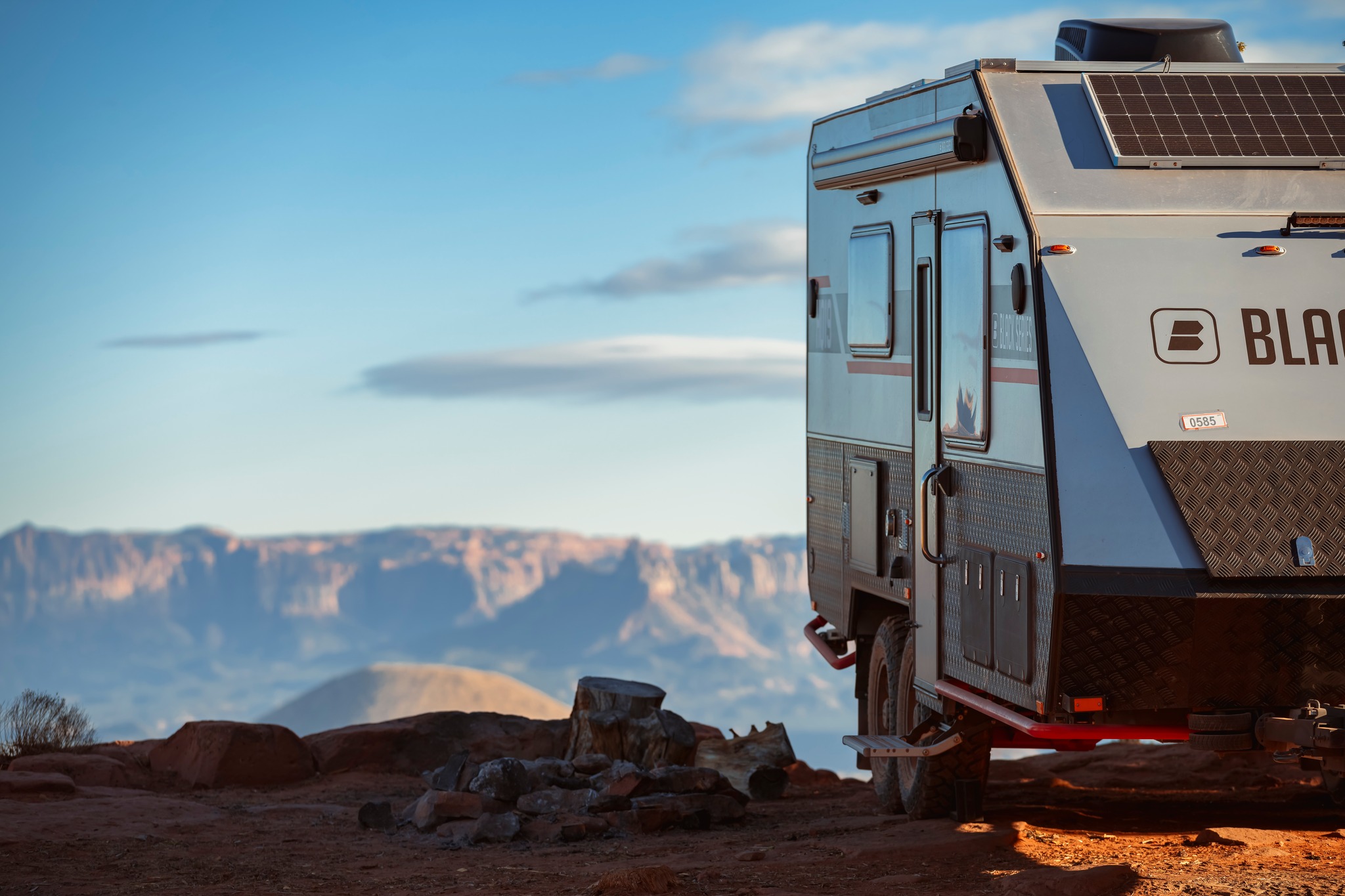
The 2026 USA off-road camper market represents a maturation of American outdoor culture, moving beyond seasonal limitations toward true expedition capability. Quality 4-season off-road campers provide access to experiences impossible with standard RVs: from snow camping in national forests to extended desert exploration during comfortable winter months.
For adventurers seeking maximum freedom and flexibility, a properly engineered year-round travel trailer proves invaluable. The ability to camp comfortably regardless of season or terrain dramatically expands available destinations while reducing dependence on increasingly crowded and expensive campground systems.
BlackSeries RV continues leading this evolution through engineering focused on real-world performance rather than marketing appeal. Our trailers provide the structural integrity, thermal performance, and off-road capability necessary for serious expedition use, backed by extensive testing in conditions that challenge both equipment and occupants.
Whether you’re planning extended off-grid adventures, winter camping expeditions, or simply want the flexibility to travel without seasonal constraints, investing in legitimate 4-season off-road capability opens possibilities unavailable to conventional RV travel. As the outdoor recreation community continues discovering the advantages of off-season and dispersed camping, properly equipped adventurers gain access to America’s most spectacular destinations at their most beautiful and least crowded moments.
Ready to explore the capabilities of genuine 4-season off-road trailers? Contact BlackSeries to discuss how our engineering expertise can support your adventure goals, or explore our comprehensive guides covering everything from off-grid power systems to extreme-weather camping techniques.
Best 4-Season Off-Road Camper Trailers in the USA最先出现在Black Series RV | Off-Road Travel Trailers, Toy Haulers & Camper Trailers | Off road rv | Off grid rv | Overland rv | Off road trailer | Off road travel trailer | Overland travel trailer。