What Defines a Lightweight Off-Road Camper?
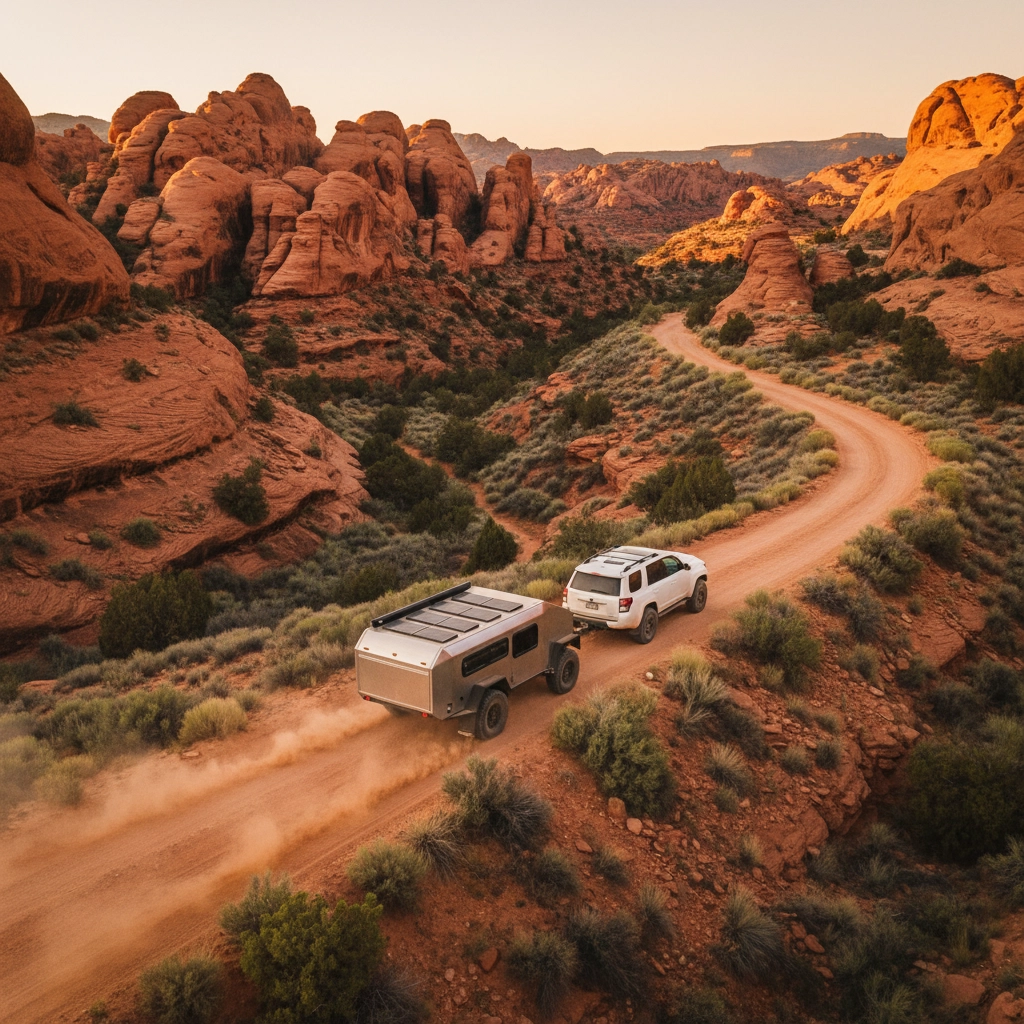
A lightweight off-road camper typically refers to trailers under 750kg (1,650 lbs) specifically engineered for rugged terrain access. Unlike standard travel trailers designed for paved campgrounds, these campers feature reinforced chassis, independent suspension systems, and higher ground clearance to navigate rocky trails, sandy beaches, and forest roads.
Key Distinctions:
- Lightweight: Under 750kg total weight when loaded
- Off-Road Capable: Ground clearance 12+ inches, articulating suspension
- SUV Towable: Compatible with mid-size SUVs and pickup trucks
- Self-Sufficient: Solar, battery, and water systems for boondocking
Lightweight vs. Traditional Off-Road Trailers
Traditional off-road trailers often weigh 2,000-4,000 lbs, requiring heavy-duty trucks for safe towing. Lightweight models democratize off-road camping by enabling smaller vehicles to access remote locations while maintaining essential amenities like solar power, water systems, and sleeping accommodations.
US Market Trends & Growth Data
Market Size and Trajectory
The North American off-road camper market dominates globally, holding over 30% of worldwide market share in 2025. The lightweight segment specifically has experienced significant growth, with the sub-750kg category expanding rapidly as consumers seek versatile, fuel-efficient camping solutions.
Key Statistics:
- Global off-road teardrop market: $148M (2024) → $217M (2032)
- North American market share: 40%+ of global sales
- Consumer preference shift: 40% prefer off-grid camping locations
- Demographic trend: 60% of buyers are Millennials/Gen Z
Driving Growth Factors
Adventure Tourism Boom: The overlanding movement has transformed from niche hobby to mainstream pursuit, with millions exploring public lands across the American West.
Sustainability Focus: Younger demographics prioritize low-impact camping, driving demand for solar-powered, efficient campers that minimize environmental footprint.
Material Innovation: Advanced aerospace-grade aluminum and composite materials reduce weight by up to 30% while maintaining structural integrity for harsh conditions.
Why Choose Lightweight for Off-Road Adventures
Towing Versatility
Lightweight off-road campers expand your vehicle compatibility significantly. A properly designed camper under 1,500 lbs can be safely towed by:
- Mid-size SUVs (Honda Pilot, Toyota 4Runner)
- Crossover vehicles with towing packages
- Compact pickup trucks
- Even some minivans with adequate towing capacity
Fuel Efficiency Benefits
Reduced trailer weight directly translates to better fuel economy. Our analysis shows lightweight campers improve fuel consumption by 15-25% compared to traditional off-road trailers, making extended adventures more affordable.
Access to Remote Locations
Lower weight reduces stress on soft surfaces like sand and snow, preventing stuck situations. The combination of lightweight construction and proper ground clearance opens access to:
- Desert wash camping
- Alpine meadow sites
- Beach camping areas
- Narrow forest service roads

Expert Selection Guide: Step-by-Step
Phase 1: Assess Your Needs
Calculate Towing Capacity
Start with your vehicle’s actual towing capacity after subtracting:
- Passengers and gear weight
- Tongue weight (10-15% of trailer weight)
- Safety margin (20% below maximum capacity)
Define Usage Patterns
Consider your typical adventures:
- Weekend desert trips: Minimal water/waste capacity needed
- Multi-week expeditions: Require larger tanks and solar systems
- Family camping: Need more sleeping space and storage
Phase 2: Technical Specifications
Chassis Construction
Look for welded aluminum or steel frame construction with:
- Ground clearance: 12+ inches minimum
- Suspension travel: Independent torsion or coil spring systems
- Approach/departure angles: 30+ degrees for rock clearance
- Articulation capability: Essential for maintaining tire contact
Body Materials and Construction
Premium lightweight campers utilize:
- Aluminum body panels: Superior strength-to-weight ratio
- Composite sandwich construction: Insulation and durability
- Sealed bearing hubs: Maintenance-free operation
- Powder-coated finish: Corrosion resistance
Phase 3: Systems Integration
Power Management
Effective off-grid power requires:
- Solar capacity: 200-400W depending on usage
- Battery system: Lithium-ion for weight savings and performance
- Inverter capacity: 1000-2000W for appliances
- Shore power integration: Charging when available
Water and Waste Systems
Essential capacities for independence:
- Fresh water: 20-40 gallons based on group size
- Gray water: Adequate storage for washing and cooking
- Hot water system: On-demand or tank-based heating
Towing & Maintenance Checklist
Pre-Departure Inspection
Trailer Systems Check:
- Tire pressure (including spare)
- Wheel bearing lubrication
- Brake system function
- Safety chains and breakaway system
- All lights operational
- Coupler and hitch pin secure
- Weight distribution adjusted
Interior Systems:
- Water system pressurized and leak-free
- Solar panels clean and connected
- Battery voltage and connections
- Propane system leak-tested
- All storage areas secured
On-Trail Maintenance
Daily Checks:
- Tire condition and pressure
- Suspension components
- Electrical connections
- Water system integrity
Weekly Maintenance:
- Battery voltage monitoring
- Solar output verification
- Brake adjustment if needed
- Bearing temperature check
Seasonal Maintenance Schedule
Spring Preparation:
- Complete bearing service
- Brake system inspection
- Seal and gasket replacement
- Solar system performance test
Fall Storage:
- Water system winterization
- Battery maintenance and storage
- Tire inspection and rotation
- Chassis lubrication
Understanding proper maintenance extends trailer life significantly and ensures reliable performance when you need it most. For detailed maintenance procedures specific to different camper designs, refer to comprehensive guides that cover seasonal care and component-specific service intervals.
Best Lightweight Off-Road Campers 2025
Blackseries: Purpose-Built Excellence
Blackseries represents the gold standard in lightweight off-road camping, emphasizing proven capability over marketing claims. Their approach differs fundamentally from competitors who apply cosmetic “rugged” styling to standard designs.
Blackseries Advantages:
- Genuine off-road testing: Proven in Australian outback conditions
- Purpose-built chassis: Designed from ground up for rough terrain
- Material excellence: Aerospace-grade aluminum construction
- Systems integration: Complete off-grid capability standard
Comparison Framework
What Sets Blackseries Apart
Proven Durability: Every Blackseries camper undergoes extensive field testing in extreme Australian conditions before entering the US market. This real-world validation ensures components perform reliably under stress.
Uncompromising Construction: Rather than modifying existing designs, Blackseries engineers each system specifically for off-road demands. This holistic approach eliminates weak points common in adapted designs.
Complete Self-Sufficiency: Standard equipment includes comprehensive solar, battery, water, and kitchen systems designed for extended off-grid operation without compromise.
Advanced Selection Considerations
Terrain-Specific Requirements
Desert Camping:
- High ground clearance for wash crossings
- Sealed bearing protection from sand
- Adequate solar for air conditioning needs
- Large water capacity for extended stays
Mountain Adventures:
- Cold weather package essentials
- Proper insulation for altitude camping
- Heating system for comfort
- All-weather capability
Beach Access:
- Corrosion-resistant materials and finishes
- Sand-friendly tire compounds
- Sealed electronics against salt air
- Easy cleanup capabilities
Technology Integration
Modern lightweight off-road campers increasingly incorporate smart technology for enhanced functionality:
Digital Monitoring Systems: Real-time battery, water, and system status via smartphone apps enable proactive management of resources during extended trips.
Advanced Climate Control: Efficient heating and cooling systems optimize energy consumption while maintaining comfort in extreme conditions.
Communication Integration: Built-in antenna mounting and 12V outlets support modern communication needs including cellular boosters and satellite systems.
Frequently Asked Questions
What makes a camper truly “off-road capable”?
Genuine off-road capability requires more than aggressive styling. Essential elements include independent suspension with adequate travel, high ground clearance (12+ inches), reinforced chassis construction, and proven components tested in harsh conditions. Many manufacturers apply off-road cosmetics to standard designs: look for evidence of actual testing and engineering validation.
Can my SUV safely tow a lightweight off-road camper?
Most mid-size SUVs can safely tow campers under 1,500 lbs when properly equipped. Calculate your vehicle’s available towing capacity by subtracting passenger weight, cargo, and tongue weight from the manufacturer’s rating. Always maintain a 20% safety margin below maximum capacity for safe handling, especially in challenging terrain.
How much should I expect to spend on a quality lightweight off-road camper?
Quality lightweight off-road campers typically range from $25,000 to $60,000+ depending on features and construction quality. Entry-level models around $15-25k often compromise on materials or capability. Premium options like Blackseries reflect superior construction, proven durability, and comprehensive systems integration that justify higher investment through reliability and longevity.
What’s the difference between aluminum and steel construction?
Aluminum offers superior strength-to-weight ratio, natural corrosion resistance, and better heat dissipation compared to steel. While steel construction costs less initially, aluminum provides better long-term durability, especially in coastal or high-moisture environments. The weight savings also improve fuel economy and vehicle handling significantly.
Do I need special licenses or permits for off-road camping?
Requirements vary by location and trailer size. Most lightweight campers under certain length/weight thresholds don’t require special licenses, but check state-specific regulations. Off-road camping on public lands typically requires permits or passes, and some areas restrict trailer access entirely. Research destination requirements well in advance of your trip.
Understanding these fundamentals positions you to make informed decisions about lightweight off-road camper selection. The combination of proper vehicle matching, quality construction, and appropriate features ensures your investment provides reliable adventure access for years to come.
Ready to explore your options? Visit our comprehensive model comparison guides and dealer network resources to find the perfect lightweight off-road camper for your adventures.

