What Works Best for National Park Adventures
Most U.S. national parks impose strict limitations on trailer length, campsite width, road access, and turning radius. The sweet spot for park camping is a lightweight trailer ≤30 ft with excellent off-grid capability and independent suspension to handle park roads. Black Series trailers excel here with their compact sizing, robust independent suspension systems, and proven off-road capability: perfectly engineered for both park campgrounds and the rough access roads that lead to America’s most spectacular camping spots.
The ideal national park trailer combines three critical elements: size compliance (fitting 20-30 ft length restrictions), terrain capability (independent suspension for washboard roads), and self-sufficiency (solar and battery systems for extended off-grid stays).
U.S. National Park Camping Market Overview
America’s 400+ National Park Service sites attract millions of RV travelers annually, but most campgrounds accommodate trailers in the 20–30 ft range. Understanding these constraints is crucial for trailer selection.
Key Market Restrictions:
- Vehicle length limits: Individual trailer length restrictions
- Total rig length: Combined trailer + tow vehicle limitations
- Road access conditions: Mountain grades, narrow bridges, tight turns
- Campsite pad dimensions: Typically 20–35 ft depth with width variations
Primary Search Intent from Park Campers:
- “Best compact trailer for national parks”
- “30 ft trailer weight limits for park roads”
- “Off-road vs. standard RV for park camping”
- “Which trailers fit Yellowstone/Yosemite campsites”
The market increasingly favors trailers that can handle both maintained park roads and dispersed camping on forest service and BLM lands, making versatile off-road capability essential.
National Park Length & Access Rules: The Reality Check
Understanding park limitations prevents disappointing arrival experiences and ensures access to premier camping locations.
Length Compatibility Zones:
- Under 20 ft: Compatible with 95%+ of national park campsites
- 20–27 ft: Fits most parks with minor restrictions on specific campgrounds
- 27–30 ft: Acceptable for many parks but eliminates some premium sites
- Over 30 ft: Severely limited access, especially in mountain and desert parks
Critical Road Access Factors:
- Mountain Parks (Yosemite, Zion, Glacier): Winding grades, narrow passages, elevation changes
- Desert Parks (Utah Big Five, Arizona): Washboard gravel roads, sandy approaches
- Eastern Parks: Generally better road infrastructure but still have vintage campground layouts
Campsite Pad Realities:
- Standard depth: 25–35 ft (including picnic table space)
- Width variations: Some sites as narrow as 10 ft
- Total rig length often becomes the limiting factor on shorter pads
Key Traits of Park-Ready Off-Road Trailers
Selecting the right trailer requires balancing park compliance with off-road capability and comfort needs.
Size and Maneuverability:
The optimal length range is 18–25 ft, with acceptable options extending to 27–29 ft. Black Series HQ12 and HQ19 models exemplify this sweet spot: compact enough for park access yet spacious enough for extended stays.
Suspension and Chassis Design:
Independent suspension systems significantly outperform traditional leaf-spring setups on park access roads. The constant washboard surfaces and occasional water bars demand suspension that can absorb impacts while maintaining stability. Black Series’ independent coil-over suspension with twin tube shocks handles everything from smooth park roads to rough backcountry approaches.
Off-Grid Power Systems:
National parks typically offer limited electrical hookups, making solar capability essential. Look for:
- Solar panel capacity: Minimum 200W for 2-4 day stays
- Lithium battery storage: 100-200Ah for appliance operation
- Inverter capacity: 1000W+ for electronics and small appliances
Towing Considerations for Park Roads:
Mountain park grades demand proper towing setup. Calculate your complete system:
- Tongue weight: 10-15% of trailer weight
- GVWR compliance: Never exceed manufacturer limits
- Payload capacity: Include passengers, gear, and tongue weight

Best Off-Road Trailers for National Park Camping
Top Off-Road Options for Park Access:
Black Series HQ12 – The ultimate park-compatible off-roader at just 16 ft length and 2,850 lbs dry weight. Features independent suspension, 100W solar standard (upgradeable), and fits virtually every national park campsite. Perfect for couples seeking maximum access with minimal compromise.
Black Series HQ19 – The sweet spot for families at 19 ft length and 4,200 lbs. Offers bunk beds, full kitchen, and substantial storage while maintaining excellent off-road capability and park compatibility.
Best Lightweight Options (Under 3,500 lbs):
- Small fiberglass trailers: Excellent fuel economy but limited off-road capability
- Off-road teardrops: Maximum access, minimal living space
- Hybrid tent trailers: Compact storage, expanded living space
Best Family Layout Options:
- Mid-size bunkhouse designs: 20-24 ft models with dedicated children’s sleeping
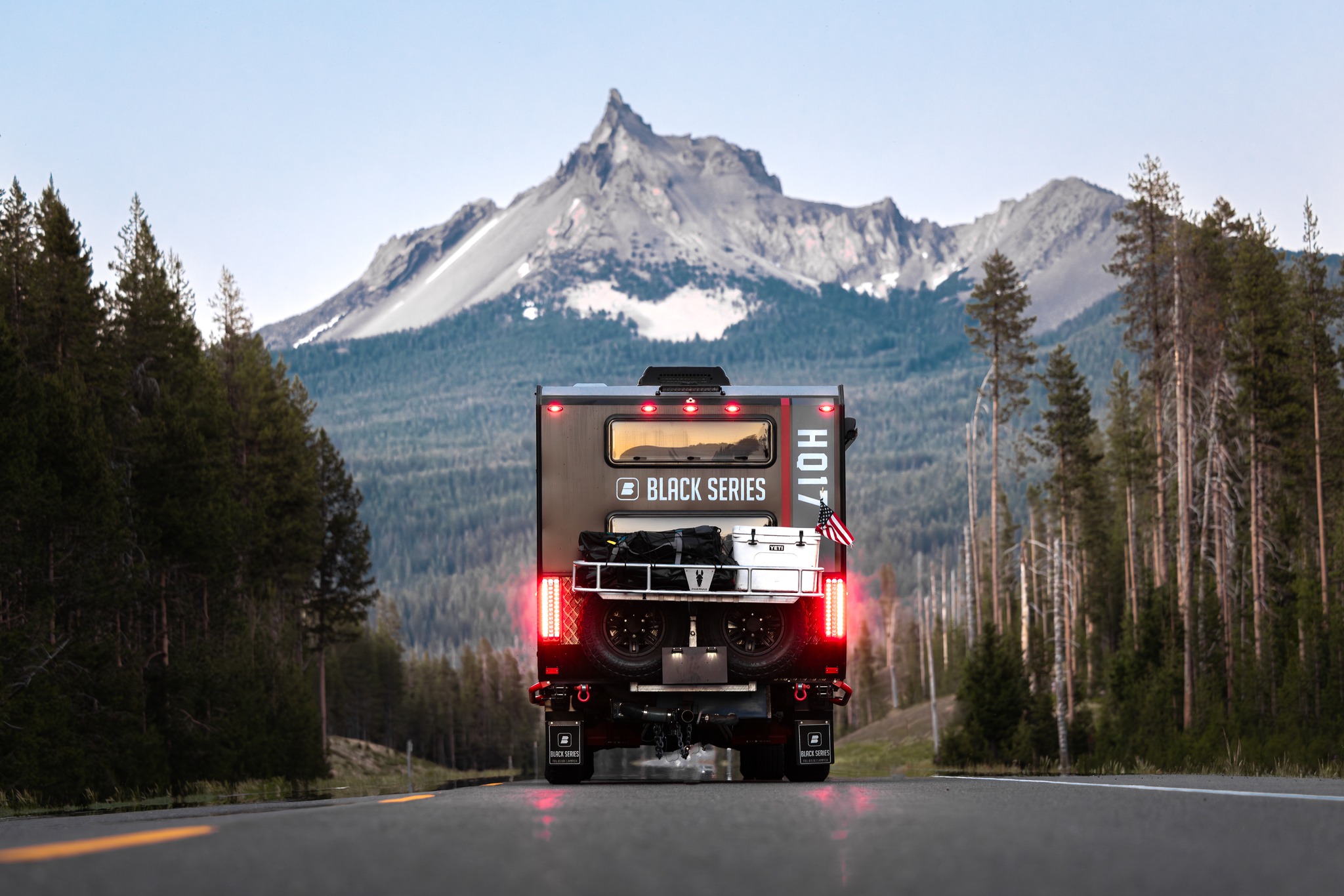
- HQ17 and HQ21: Black Series options balancing family space with off-road capability
National Park Camping Success Checklist
Pre-Trip Planning:
- Research specific park campsite dimensions and restrictions
- Verify combined rig length (trailer + tow vehicle)
- Check road conditions and seasonal access limitations
- Book reservations 3-6 months ahead for popular parks
Essential Capabilities:
- 2-3 days minimum off-grid power capacity
- Fresh water storage for extended dry camping
- Waste tank capacity matching water storage
- Tow vehicle properly rated for park grades
Gear and Setup:
- Leveling blocks for uneven park pads
- Water pressure regulator for park hookups
- Surge protector for electrical connections when available
- Portable chairs and table for site flexibility
Access Verification:
- Confirm trailer registration and insurance
- Check tire condition and spare availability
- Test all systems before departure
- Plan fuel stops considering towing fuel economy
Market Data and Trends
Campsite Availability Statistics:
- 75% of national park campsites accommodate trailers up to 27 ft
- 90%+ accommodate trailers under 24 ft
- Western parks average 15% more unpaved access roads than eastern parks
- Off-grid capable sites represent 40% of total park camping options
Growth in Off-Grid Demand:
Recent surveys indicate 60% of park campers prefer sites without hookups for the authentic experience, driving demand for self-sufficient trailer designs. This trend benefits manufacturers like Black Series who prioritize off-grid capability.
Regional Considerations:
- Western Parks: Higher demand for ground clearance and dust protection
- Mountain Parks: Premium on compact maneuverable designs
- Desert Southwest: Solar capacity and water storage critical
The data clearly supports choosing versatile off-road trailers over conventional RVs for serious park exploration.
Frequently Asked Questions
What trailer size fits most national parks?
Trailers 27 ft and under fit approximately 85% of national park campsites. The optimal range is 20-25 ft, offering the best balance of access and livability. Black Series HQ models in this range provide maximum park compatibility.
Can off-road trailers access all national park campsites?
Off-road trailers excel at park access due to higher ground clearance and robust suspension, but size remains the primary limiting factor. A compact off-road trailer like the HQ12 or HQ19 accesses virtually all park sites that allow trailers.
Do national parks offer hookups?
Most national parks offer limited electrical hookups and even fewer sewer connections. Water hookups are more common. Plan for primarily dry camping with occasional electrical access, making solar power and battery storage essential.
How much solar and battery capacity is needed for park camping?
For 2-3 day park stays, minimum 100W solar with 100Ah lithium battery storage handles basic needs. For extended comfort and electronics, upgrade to 200W+ solar with 200Ah+ battery capacity: standard on many Black Series configurations.
Are Black Series trailers suitable for national park roads?
Black Series trailers are specifically designed for varying terrain including park roads. Their independent suspension, appropriate ground clearance, and robust construction handle everything from smooth pavement to rough park access roads while maintaining the compact sizing parks require.
Ready to explore America’s national parks with confidence? Browse our complete lineup of park-ready off-road trailers and find the perfect match for your adventure style.

