What is an overlanding trailer?
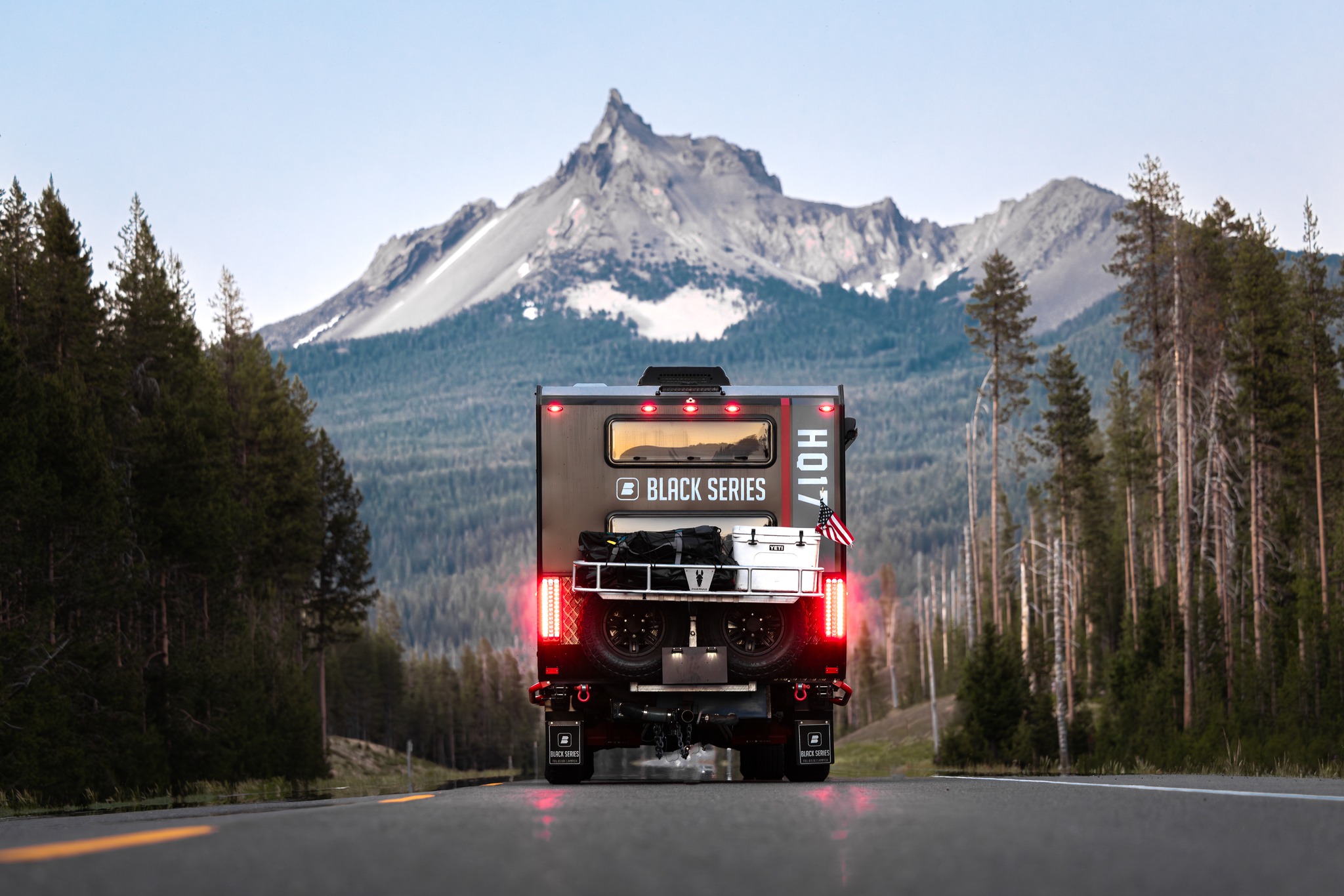
An overlanding trailer is a reinforced travel trailer specifically designed for long-distance, self-sufficient adventures that can handle off-grid camping and multi-day expeditions across diverse terrain. Unlike standard camping trailers, overlanding trailers feature higher ground clearance, all-terrain tires, reinforced chassis, off-road suspension systems, and independent power and water systems. BlackSeries overlanding trailers are engineered specifically for North American terrain including deserts, forests, and mountain environments, combining exceptional durability with comfort for the ultimate adventure experience.
Explore BlackSeries Overlanding Trailers
What Is an Overlanding Trailer?
Overlanding represents vehicle-based, long-distance, self-reliant travel where the journey itself is the destination. This adventure travel style has exploded in popularity across the United States, driving demand for specialized equipment that can handle extended off-grid expeditions.
An overlanding trailer serves as your mobile basecamp, equipped with everything needed for weeks of independent travel. These trailers must withstand harsh conditions while providing comfortable living accommodations far from traditional campgrounds and RV parks.
Standard Features of Overlanding Trailers
Modern overlanding trailers incorporate several key characteristics that distinguish them from conventional travel trailers:
- Enhanced ground clearance and off-road geometry for navigating challenging terrain
- All-terrain or mud-terrain tires designed for diverse surface conditions
- Reinforced chassis and protective armor to withstand impacts and abrasion
- Independent off-road suspension systems that maintain stability on uneven surfaces
- Complete off-grid power systems including solar panels and lithium battery banks
- Integrated water storage and filtration for extended water independence
U.S. Market User Profiles
American overlanding enthusiasts typically fall into three main categories:
Weekend Warriors: Adventurers seeking 2-3 day escapes from urban life, requiring reliable but compact setups that can handle moderate off-road conditions.
Digital Nomads: Remote workers combining career flexibility with extended travel, needing comfortable living spaces with reliable power for electronics and internet connectivity.
Family Adventurers: Parents introducing children to outdoor adventures while maintaining safety and comfort standards, requiring larger sleeping capacity and family-friendly amenities.
Types of Overlanding Trailers in the U.S.
Compact Overlanding Trailers
Compact models typically range from 16 ft camper weight averaging 2,800-3,500 pounds to 18 ft camper weight ranging 3,200-4,200 pounds. These lightweight options work well with mid-size SUVs and pickup trucks, making them accessible to a broader range of tow vehicles. Their smaller footprint allows access to tight camping spots and easier maneuvering on technical trails.
Family Overlanding Trailers
Family-oriented trailers typically measure 20-24 feet in length, with 24 ft camper weight averaging 4,500-6,200 pounds. These models provide multiple sleeping areas, interior dining spaces, and increased storage capacity for extended family adventures. The additional space comes with higher weight requirements, necessitating full-size trucks or heavy-duty SUVs for safe towing.
Luxury Overland Trailers
Premium overlanding trailers represent the pinnacle of off-road camping comfort. Models approaching 30 ft camper weight or 30-foot camper weight can range from 7,500-10,000+ pounds, requiring serious towing capacity. These trailers feature full kitchens, bathrooms with showers, climate control systems, and luxury appointments while maintaining off-road capability.
DIY and Cargo-Based Options
Budget-conscious adventurers often convert cargo trailers or build custom solutions. While these options offer cost savings, they typically lack the engineering, testing, and warranty support of purpose-built overlanding trailers.
Key Features to Look For in an Overlanding Trailer
Chassis and Frame Construction
The foundation of any quality overlanding trailer starts with its structural integrity. Look for fully-welded steel chassis rather than bolted assemblies, which can loosen under constant vibration and stress. Military-grade steel construction with proper corrosion protection ensures longevity in harsh environments.
Premium overlanding trailers utilize advanced welding techniques and reinforcement strategies. Four-corner welding provides superior strength compared to traditional spot welding, while integrated skid plates and rock guards protect vulnerable components during off-road travel.
Suspension and Axle Systems
Independent suspension systems represent a significant advancement over traditional solid axles for overlanding applications. Independent systems provide several key advantages:
- Improved ground clearance by eliminating the solid axle differential
- Better wheel articulation for maintaining traction on uneven surfaces
- Reduced shock transmission to trailer contents and occupants
- Enhanced stability during off-camber situations
Ground Clearance and Tire Selection
Adequate ground clearance determines which trails you can safely navigate. Quality overlanding trailers feature 12-15 inches of ground clearance minimum, with premium models offering 18+ inches. This clearance, combined with proper approach and departure angles, prevents high-centering on rocks, logs, or steep terrain.
All-terrain tires provide the necessary traction and puncture resistance for varied surfaces. Look for Load Range E tires that can handle the trailer’s gross vehicle weight rating (GVWR) while providing sufficient sidewall strength for lower air pressures when needed for sand or soft terrain.
Off-Grid Power Capabilities
Extended overlanding requires electrical independence. Modern overlanding trailers incorporate comprehensive power systems designed for multi-week autonomy:
Solar Panel Arrays: 400-1000+ watts of solar generation capacity, often using high-efficiency monocrystalline panels with MPPT charge controllers for maximum power harvest.
Battery Storage: Lithium iron phosphate (LiFePO4) battery banks ranging from 200Ah to 600Ah+ capacity, providing consistent power delivery and longer cycle life compared to lead-acid alternatives.
Power Distribution: Pure sine wave inverters (1000-3000 watts) enable operation of standard household appliances, while 12V DC systems handle lighting, fans, and specialty equipment.
Water Systems and Storage
Water independence requires adequate storage, filtration, and conservation systems. Quality overlanding trailers include:
- Fresh water tanks holding 30-50+ gallons for extended trips
- Pressurized water systems with on-demand pumps and accumulator tanks
- Filtration systems for refilling from natural sources safely
- Gray water storage for responsible waste water management
- Hot water systems using propane, diesel, or electric heating
Interior Comfort and Layout
Living space efficiency becomes critical during extended expeditions and inclement weather. Well-designed overlanding trailers maximize functionality within compact footprints:
Sleeping Arrangements: Comfortable mattresses with adequate ventilation and storage underneath. Some models offer convertible dinettes or fold-down beds for increased capacity.
Kitchen Facilities: Adequate refrigeration (12V compressor fridges), cooking surfaces (propane burners or induction cooktops), and meal preparation space.
Climate Control: Proper insulation rated for four-season use, efficient heating systems (diesel or propane furnaces), and optional air conditioning for hot climates.
Storage Solutions: Strategically placed compartments, overhead cabinets, and exterior storage boxes for organizing gear efficiently.

U.S. Overlanding Trailer Market Snapshot
Market Growth Trends
The North American overlanding and off-road trailer market has experienced unprecedented growth, driven by increased interest in outdoor recreation, remote work flexibility, and adventure travel. Industry data shows consistent double-digit growth rates, with particular strength in the premium segment where buyers prioritize quality and capability over entry-level pricing.
This growth reflects broader lifestyle shifts toward experiential spending and outdoor recreation. The COVID-19 pandemic accelerated these trends as Americans sought safe, socially-distanced recreation options that overlanding readily provides.
Price Range Overview
Understanding overlanding trailer pricing helps set realistic expectations:
Entry-Level Options: $15,000-$30,000 for basic off-road capable trailers with minimal amenities
Mid-Range Models: $35,000-$65,000 for well-equipped trailers with good off-road capability and comfort features
Premium/Luxury Trailers: $70,000-$120,000+ for top-tier models with advanced systems, luxury appointments, and maximum capability
Custom/Expedition Models: $150,000+ for specialized or heavily customized expedition trailers
User Preference Trends
Modern overlanders increasingly prioritize:
- Lightweight construction using advanced materials for better fuel economy
- Integrated technology including solar power, lithium batteries, and smart monitoring systems
- Sustainable materials and environmentally conscious manufacturing processes
- Modular designs allowing customization for specific adventure types
Best Overlanding Trailer Options by Use Case
Best Overlanding Trailer for Off-Grid Camping
For extended off-grid adventures, prioritize trailers with exceptional power generation and storage capacity. Look for models with 600+ watts of solar generation, 400Ah+ lithium battery banks, and efficient LED lighting throughout. Advanced power management systems with monitoring capabilities help optimize energy usage during extended stays.
BlackSeries trailers excel in off-grid scenarios with oversized electrical systems, four-season insulation packages, and proven reliability in extreme conditions. The combination of military-grade construction and premium comfort systems enables extended off-grid adventures without compromising safety or comfort.
Best Overlanding Trailer for Families
Family overlanding requires balancing safety, comfort, and convenience. Seek trailers with multiple sleeping areas, adequate storage for family gear, and child-friendly features like secure storage and rounded interior edges.
BlackSeries HQ series trailers provide family-friendly layouts with flexible sleeping configurations, spacious interiors, and robust safety features. The reinforced construction and advanced suspension systems ensure stable, comfortable travel even with active children aboard.
Best Overlanding Trailer for Weekend Warriors
Weekend adventurers benefit from trailers that are quick to set up, easy to tow, and provide essential amenities without unnecessary complexity. Average travel trailer weights for weekend-oriented models typically range from 3,000-5,500 pounds, making them compatible with a wider range of tow vehicles.
Focus on models with simplified systems, reliable basic amenities, and proven durability for frequent use. Quick-deploy awnings, easy-access storage, and straightforward hookup procedures enhance the weekend adventure experience.
How to Choose the Right Overlanding Trailer
Step 1: Assess Your Tow Vehicle’s Capacity
Understanding your vehicle’s towing specifications prevents costly mistakes and ensures safe operation. Key specifications include:
Gross Vehicle Weight Rating (GVWR): Maximum total weight your vehicle can safely carry including passengers, cargo, and tongue weight.
Towing Capacity: Maximum trailer weight your vehicle can safely pull, typically ranging from 3,500 pounds for compact SUVs to 12,000+ pounds for heavy-duty pickup trucks.
Tongue Weight Rating: Maximum downward force the trailer tongue can place on your hitch, typically 10-15% of total trailer weight.
Step 2: Define Your Overlanding Style
Different adventure styles require different trailer capabilities:
Technical Off-Road: Emphasize ground clearance, suspension articulation, and protective armor for challenging terrain.
Long-Distance Touring: Prioritize comfort, fuel efficiency, and highway stability for covering significant distances.
Base Camp Setup: Focus on spacious interiors, extensive storage, and comprehensive amenities for extended stays.
Step 3: Determine Sleeping and Living Requirements
Assess your typical group size and comfort expectations:
- Solo/Couple Travel: Compact trailers with efficient layouts and premium comfort features
- Family Adventures: Larger models with multiple sleeping areas and family-friendly amenities
- Group Expeditions: Maximum capacity models or multiple trailer configurations
Step 4: Set Off-Grid Duration Goals
Your desired autonomy period directly influences system requirements:
3-5 Days: Basic solar charging and moderate battery capacity suffice for most electronics and LED lighting.
1-2 Weeks: Substantial solar arrays, large battery banks, and efficient appliances enable extended independence.
Multiple Weeks: Maximum solar generation, oversized battery systems, and comprehensive water storage/filtration become essential.
Step 5: Establish a Realistic Budget
Factor in the complete investment including:
- Base trailer cost and desired options
- Tow vehicle modifications (brake controllers, transmission cooling, suspension upgrades)
- Essential gear (recovery equipment, camping supplies, maintenance tools)
- Insurance and registration costs for the trailer
- Ongoing maintenance and potential repairs
Step 6: Inspect Build Quality and Workmanship
Personal inspection reveals construction quality that specifications cannot convey:
- Welding quality and frame construction integrity
- Electrical system routing and component accessibility
- Cabinetry construction and hardware quality
- Appliance installation and secure mounting
- Seal integrity around windows, doors, and roof penetrations
Why Choose a BlackSeries Overlanding Trailer?
Proven Off-Road Chassis and Suspension
BlackSeries trailers feature military-grade construction with fully independent suspension systems engineered specifically for North American off-road conditions. The advanced suspension design provides superior ground clearance, wheel articulation, and impact resistance compared to conventional trailer axles.
Years of testing across diverse terrain from Moab’s sandstone to Pacific Northwest forests have refined every aspect of the chassis design. This real-world validation ensures reliable performance when you need it most.
True Off-Grid Capability
BlackSeries trailers come standard with oversized electrical systems designed for extended off-grid adventures. High-capacity lithium battery banks, efficient solar charging systems, and comprehensive monitoring enable weeks of independence from external power sources.
The integration of premium appliances, LED lighting, and 12V systems maximizes energy efficiency while maintaining comfort standards. Advanced battery management systems protect your investment while optimizing performance.
Family-Ready Interiors
Premium interior appointments combine durability with comfort for family adventures. High-quality materials resist wear and cleaning challenges while providing the luxury feel families expect. Thoughtful storage solutions and safety features create child-friendly environments without compromising adult comfort.
Flexible sleeping configurations adapt to changing family needs, while robust construction handles the additional wear that comes with active children.
Designed for U.S. Overlanders
BlackSeries understands American overlanding requirements including DOT compliance, standard electrical systems, and parts availability. The dealer network provides support and service access across the continent, while design specifications account for American towing practices and road conditions.
Browse BlackSeries Models to explore specific configurations and options available for your adventures.
Frequently Asked Questions
What is an overlanding trailer?
An overlanding trailer is a specialized off-road capable travel trailer designed for self-sufficient, long-distance adventure travel. Unlike standard camping trailers, overlanding trailers feature reinforced construction, independent suspension systems, higher ground clearance, and comprehensive off-grid systems for extended wilderness expeditions.
How is an overlanding trailer different from an off-road camper?
While both handle rough terrain, overlanding trailers specifically emphasize self-sufficiency and long-distance travel capability. They typically include larger water and power systems, more durable construction, and layouts optimized for extended off-grid living rather than just weekend camping.
What size overlanding trailer can my SUV tow?
This depends on your specific vehicle’s towing capacity. Most mid-size SUVs can safely tow trailers weighing 3,500-5,000 pounds, while full-size SUVs often handle 6,000-8,500 pounds. Compact overlanding trailers with 16 ft camper weight around 2,800-3,500 pounds work well with smaller tow vehicles, while 30 ft rv weight models requiring 7,500+ pounds need heavy-duty trucks.
How much does a good overlanding trailer cost in the U.S.?
Quality overlanding trailers typically range from $35,000-$80,000 for well-equipped models with proven off-road capability. Entry-level options start around $20,000-$30,000, while premium expedition trailers can exceed $100,000. The average travel trailer weights and features significantly influence pricing.
Is an overlanding trailer good for full-time living?
While possible, overlanding trailers are optimized for adventure travel rather than stationary full-time living. The compact layouts, limited storage, and emphasis on mobility may become restrictive for permanent residence. However, they excel for extended travel periods and temporary full-time adventures.
What maintenance do overlanding trailers require?
Regular maintenance includes checking tire pressure and condition, inspecting suspension components, testing electrical systems, and servicing wheel bearings annually. The demanding off-road use requires more frequent inspections than standard trailers, but quality construction minimizes maintenance needs. Learn more about dispersed camping to understand the environments these trailers encounter.
Can a family with kids use an overlanding trailer comfortably?
Yes, many overlanding trailers offer family-friendly layouts with multiple sleeping areas, adequate storage, and safety features suitable for children. Models with 24 ft camper weight classifications typically provide sufficient space for families while maintaining off-road capability. BlackSeries HQ series trailers specifically accommodate family adventures with thoughtful design and robust safety features.

