When you’re towing a trailer down a long stretch of American highway, every design decision matters. One factor that often gets overlooked, but has a massive impact on your towing experience, is reduced frontal area. Simply put, it’s the front-facing surface of your trailer that pushes against the wind as you drive.
Why does this matter? Because a smaller frontal area means less aerodynamic drag, better fuel efficiency, and improved stability at highway speeds. For anyone pulling a travel trailer, cargo hauler, or RV across the country, understanding reduced frontal area isn’t just engineering trivia, it’s the key to a smoother, more economical journey.
Let’s break down exactly what reduced frontal area means, why it matters, and how BlackSeries designs trailers with this principle at the core.
What Does Reduced Frontal Area Mean?
Reduced frontal area refers to minimizing the front-view profile of a trailer or vehicle, essentially, the size of the “wall” that pushes against the air as you move forward. Think of it like this: if you hold a large piece of cardboard flat against the wind versus turning it sideways, you’ll feel a huge difference in resistance. That’s frontal area at work.
In vehicle aerodynamics, frontal area is one of the three critical factors that determine overall drag, alongside the drag coefficient (how smooth the shape is) and speed. The formula is straightforward:
Aerodynamic Drag = Frontal Area × Drag Coefficient × Speed²
This means that reducing frontal area has a direct, measurable impact on how much energy your tow vehicle needs to pull the trailer. A trailer with a smaller front profile simply requires less force to move through the air.
Where Does This Apply?
Reduced frontal area is relevant across multiple trailer types:
- Cargo trailers used for commercial transport
- Travel trailers designed for cross-country adventures
- RVs and campers built for extended road trips
- Off-road trailers tackling diverse terrain and highway stretches
Whether you’re hauling gear for work or heading out on an overland expedition, frontal area influences every mile you drive.
Why Reduced Frontal Area Matters
So why should you care about frontal area when shopping for a trailer or evaluating your current setup? Here’s a quick rundown of the benefits:
- Lower aerodynamic drag – Less resistance means easier towing
- Improved fuel economy – Your tow vehicle works less hard, saving gas
- Better high-speed stability – Reduced buffeting and sway at highway speeds
- Reduced wind noise – A quieter, more comfortable ride
- Less strain on tow vehicles – Extended engine and transmission life
For anyone logging serious miles on US highways, especially long-haul routes through windy plains or mountain passes, these benefits add up quickly. We’re talking real money saved at the pump and a noticeably more relaxed driving experience.
Reduced Frontal Area and Aerodynamics
Let’s get a bit technical. Aerodynamic drag increases exponentially with speed, which means frontal area becomes even more critical the faster you drive. At 70 mph, a trailer with a large, boxy front profile creates significantly more drag than a streamlined design, sometimes enough to reduce fuel efficiency by 15% or more.
The Science Behind It
The drag equation shows that frontal area and drag coefficient multiply together. While you can improve the drag coefficient by smoothing surfaces and adding aerodynamic accessories, reducing frontal area is often the most effective single change you can make.
Design elements that help reduce frontal area include:
- Slanted or angled front facades – Deflects air up and over the trailer
- Rounded corners and edges – Prevents air from “catching” on sharp transitions
- Lower overall height – A shorter profile means less surface pushing against the wind
- Compact, streamlined structures – Eliminating unnecessary bulk
Research shows that innovative designs like telescoping trailers can achieve a 35-40% reduction in combined drag and frontal area, a dramatic improvement that translates directly to fuel savings.
Reduced Frontal Area Trailer Design
Designing a trailer with reduced frontal area isn’t just about shrinking everything down. It’s about smart engineering that balances interior space, functionality, and aerodynamic performance.

Key Design Strategies
Here are the primary approaches used in modern trailer design:
The BlackSeries Approach
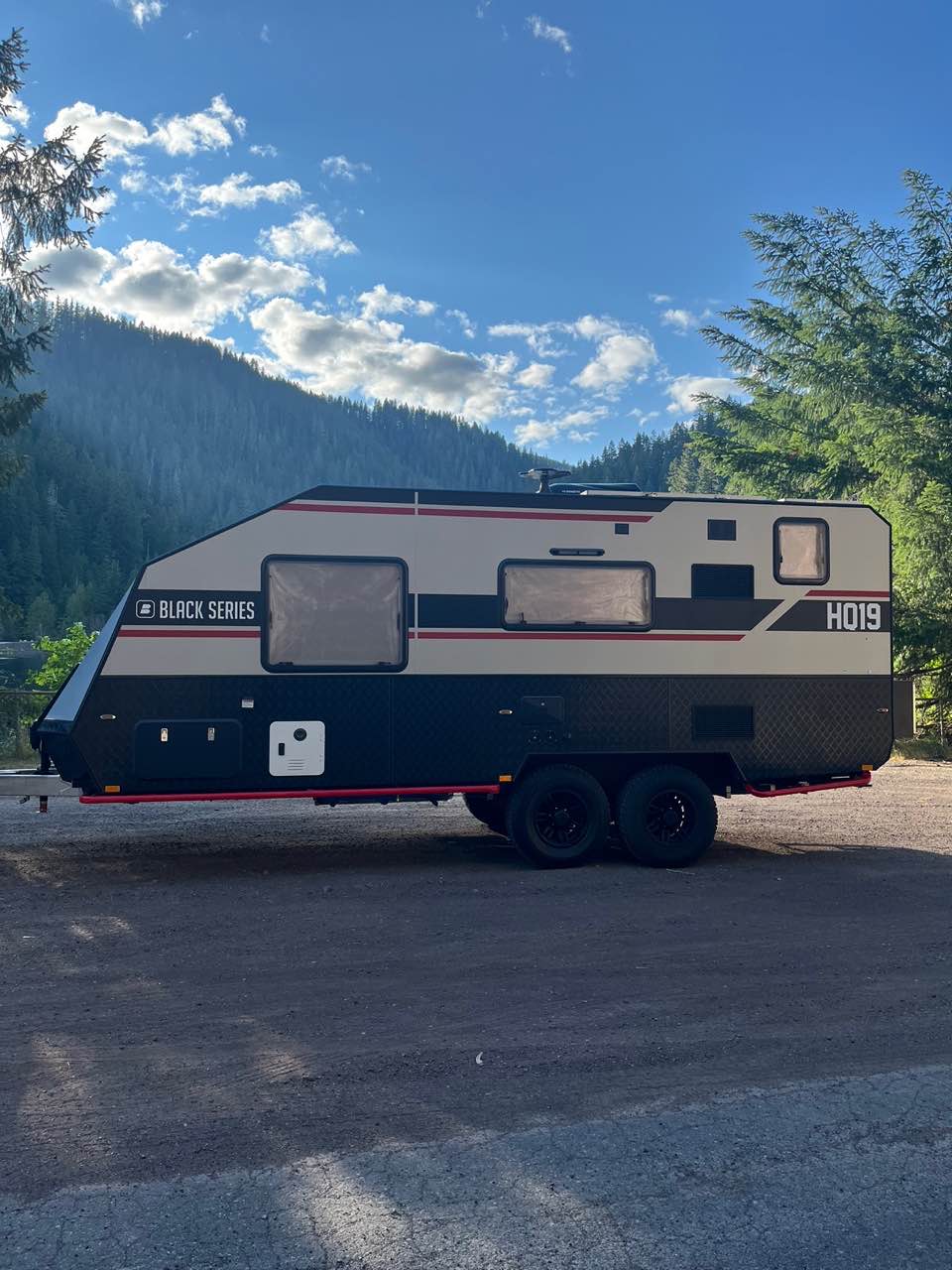
At BlackSeries, trailers are engineered specifically for US highway conditions. Our design philosophy combines aerodynamic efficiency with rugged off-road capability, no compromises. Features like slanted front facades, optimized profiles, and carefully designed exterior lines reduce frontal area without sacrificing interior comfort or durability.
Every model in the HQ Series reflects this commitment to smart aerodynamics, delivering a towing experience that’s stable, efficient, and ready for anything.
How Reduced Frontal Area Improves Fuel Efficiency
Here’s where the rubber meets the road, literally. Reducing frontal area directly impacts how much fuel your tow vehicle burns, especially during highway driving.
The Direct Connection
As drag decreases, fuel efficiency increases. It’s a simple relationship with real-world consequences. Studies and field testing show that trailers with optimized frontal areas can achieve:
- 5-15% reduction in aerodynamic drag
- Measurable improvement in miles per gallon
- Lower overall fuel costs on long trips
For a cross-country road trip from Los Angeles to New York, even a 10% improvement in fuel efficiency can save hundreds of dollars. Over the lifetime of the trailer, those savings compound significantly.
Real-World Performance
On the open highway, where speeds average 65-75 mph, aerodynamic drag is the dominant force resisting your tow vehicle. A trailer with reduced frontal area cuts through the air more efficiently, meaning your engine doesn’t have to work as hard. The result? Better MPG, less frequent fill-ups, and a happier wallet.
Practical Ways to Achieve Reduced Frontal Area
Whether you’re choosing a new trailer or optimizing your current setup, there are several practical ways to reduce frontal area and improve aerodynamics.
Design and Accessory Options
- Slanted front facades – The single most effective design feature for deflecting wind
- Compact trailer profiles – Choose models with optimized dimensions
- Aerodynamic accessories – Add-ons like nose cones, fairings, and vortex generators
- Proper load distribution – Avoid roof-mounted cargo that increases height and drag
BlackSeries Integrated Solutions
BlackSeries trailers come with aerodynamic optimization built in. Our integrated design approach means you don’t need aftermarket add-ons to achieve efficient towing. From the factory, every trailer features:
- Streamlined front profiles
- Rounded edges and smooth transitions
- Optimized height and width ratios
- Professional engineering validated on US highways
If you’re looking for a trailer that delivers both off-road capability and highway efficiency, explore our 2025 buying guide for the latest options.
Who Benefits Most from Reduced Frontal Area?
Reduced frontal area isn’t just for aerodynamics enthusiasts, it delivers real advantages to a wide range of users.
Primary Beneficiaries
- Commercial trailer operators – Lower fuel costs improve profit margins
- RV and travel trailer owners – Better efficiency on cross-country trips
- Long-haul transport companies – Reduced drag means less wear on vehicles
- Off-road and overland enthusiasts – Improved stability across varied terrain
If you’re towing regularly, whether for work, adventure, or both, reduced frontal area should be a key factor in your trailer selection.
Why Choose BlackSeries for Aerodynamic Design?
At BlackSeries, aerodynamic performance isn’t an afterthought. It’s baked into every design decision from the ground up.
What Sets Us Apart
- Purpose-built for US highways – Tested and validated in real American driving conditions
- Professional engineering – Our team optimizes every curve, angle, and surface
- Long-term reliability – Aerodynamic efficiency that lasts for years of use
- Comprehensive solutions – From compact campers to full-size travel trailers
When you choose a BlackSeries trailer, you’re investing in a vehicle designed to perform, on the highway, off the grid, and everywhere in between. Check out our best 2025 recreational vehicles to see the full lineup.
Frequently Asked Questions
Q1: What is reduced frontal area?
Reduced frontal area refers to minimizing the front-facing surface of a vehicle or trailer to decrease aerodynamic drag. A smaller profile means less wind resistance and easier towing.
Q2: Does reduced frontal area really save fuel?
Yes. Less frontal area means lower drag, which directly improves fuel efficiency: especially at highway speeds where aerodynamic forces dominate.
Q3: How can I reduce the frontal area of my trailer?
Using aerodynamic designs, slanted front facades, compact profiles, and avoiding roof-mounted cargo are effective ways to reduce frontal area.
Q4: Is reduced frontal area important for all trailers?
It’s especially important for long-distance and high-speed towing applications, but any trailer benefits from improved aerodynamics.
Q5: Can I retrofit my existing trailer for better aerodynamics?
While reducing frontal area on an existing trailer is limited, adding aerodynamic accessories and optimizing load distribution can help improve efficiency.
Reduced frontal area is one of those “invisible” design features that makes a huge difference in real-world performance. Whether you’re chasing fuel savings, smoother towing, or just a quieter ride, prioritizing aerodynamic design pays off mile after mile. And with BlackSeries, that optimization comes standard.

