Winter camping in the U.S. requires proper preparation, the right gear, and strategic planning to stay warm and safe in temperatures that can drop well below freezing. Success comes from mastering three core systems: insulation, heat generation, and moisture management.
10 Essential Ways to Stay Warm Winter Camping
• Layer your clothing with moisture-wicking base layers, insulating mid-layers, and windproof outer shells
• Choose a four-season shelter like a winter-rated tent or four-season trailer for maximum protection
• Use a properly rated sleeping bag (rated 10-20°F below expected temperatures)
• Select strategic campsites protected from wind and elevated above cold air pockets
• Create effective windbreaks using natural terrain or portable barriers
• Control moisture through proper ventilation and dry clothing management
• Use safe heat sources like propane heaters with CO detectors and proper ventilation
• Maintain proper nutrition and hydration to fuel your body’s heating system
• Prevent RV pipe freezing with insulation, heat tape, and tank heaters
• Avoid common mistakes like cotton clothing, inadequate insulation, and poor camp positioning
Step-by-Step Guide to Staying Warm While Winter Camping
Step 1: Plan Your Winter Camping Destination
Choose the right location for your experience level. Popular winter camping destinations include Yellowstone National Park (Wyoming), Great Smoky Mountains (Tennessee/North Carolina), and Yosemite National Park (California). Each offers different temperature ranges and challenges.
Research typical temperatures and weather patterns. Most U.S. winter camping occurs in temperatures ranging from 10°F to 40°F, though some extreme locations can drop to -20°F or lower. Always check 10-day weather forecasts and be prepared for sudden temperature drops.
Set up weather alerts on your phone and have backup evacuation plans. Winter weather can change rapidly, and being prepared for emergencies is crucial for safe winter camping.
Step 2: Choose Your Winter Camping Style
Tent camping offers the most authentic experience but requires the highest skill level and best gear. A four-season tent with proper guy-line setup can handle most winter conditions.
RV camping provides more comfort and heat sources but limits you to developed campgrounds with electrical hookups during winter months.
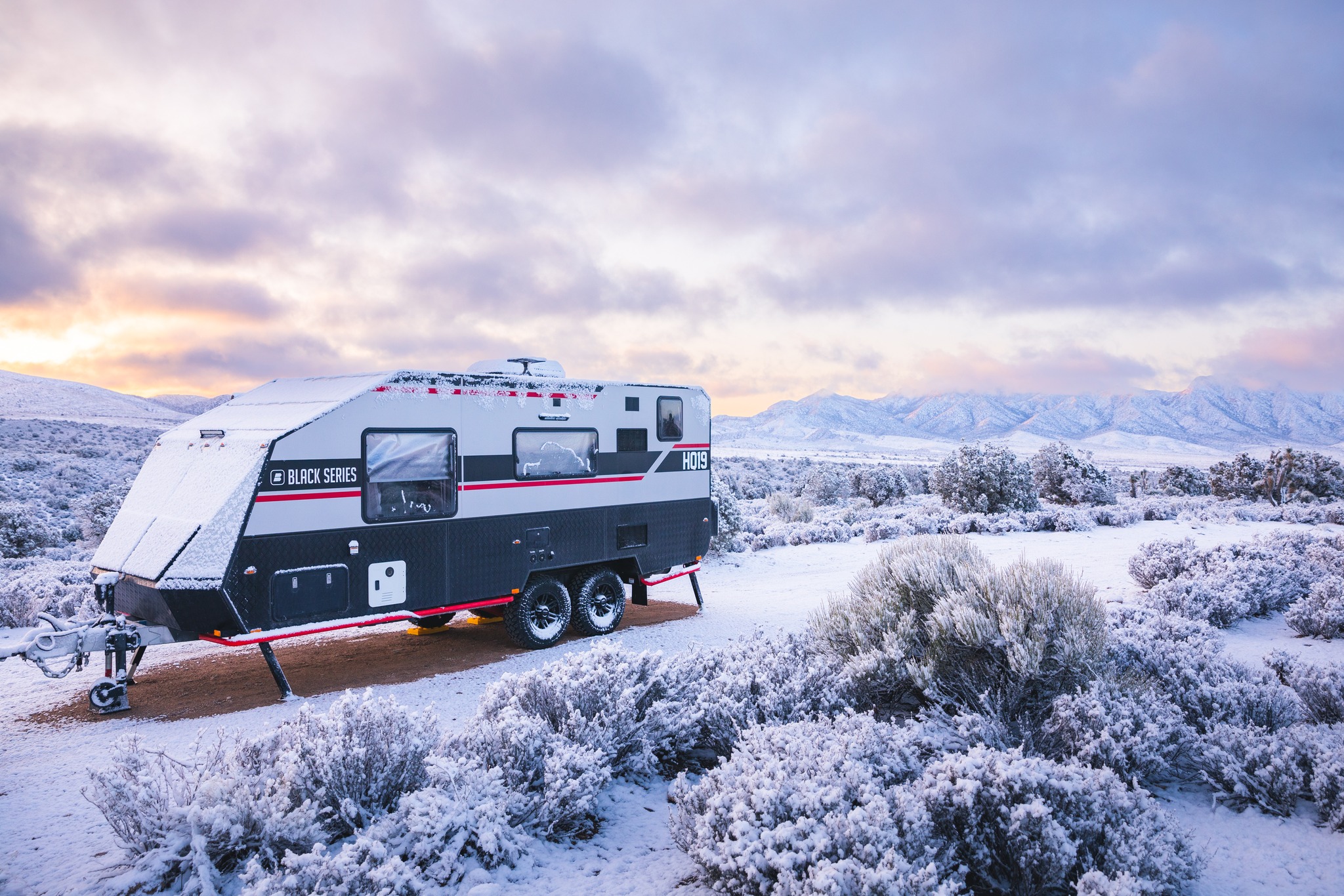
Off-road trailer camping combines the best of both worlds. Black Series four-season trailers excel in winter conditions with superior insulation, heated water systems, and the ability to access remote winter locations that standard RVs cannot reach.
Step 3: Master the Clothing Layering System
Base Layer (Next to Skin): Choose merino wool or synthetic materials that wick moisture away from your body. Avoid cotton at all costs, it retains moisture and loses insulation when wet.
Mid Layer (Insulation): Fleece, down, or synthetic insulation provides warmth by trapping air. Pack multiple mid-layers to adjust for activity level and temperature changes.
Outer Layer (Protection): A waterproof, breathable shell protects against wind and precipitation while allowing moisture vapor to escape. Look for jackets with pit zips for temperature regulation.
Step 4: Build Your Warm Sleep System
Start with a properly rated sleeping bag. For winter camping, choose a bag rated at least 10°F below the coldest expected temperature. Mummy bags provide the best warmth-to-weight ratio.
Layer your insulation underneath. Use both an inflatable sleeping pad (R-value of 4 or higher) and a closed-cell foam pad. The combination provides insulation from ground cold and backup if your inflatable pad fails.
Add a sleeping bag liner for extra warmth and easier washing. Silk liners add minimal weight, while fleece liners can add 10-15°F of warmth.
Black Series trailers feature superior insulation and built-in heating systems that maintain comfortable sleeping temperatures without the weight and bulk of extreme cold-weather sleeping gear.
Step 5: Set Up Your Winter Camp Strategically
Choose protected locations away from wind corridors and cold air drainage areas. Camp on elevated ground where possible, as cold air settles in low areas.
Create windbreaks using natural features like trees and rocks, or set up tarps and camp furniture to block prevailing winds.
Compact your snow before setting up tents or positioning trailers. This creates a more stable, insulated platform and prevents sinking.
Orient your shelter opening away from prevailing winds while maintaining access to morning sun for natural warming.
Step 6: Use Safe Heat Sources
Propane heaters designed for indoor use (like Mr. Buddy heaters) provide effective heating but require proper ventilation and carbon monoxide detectors.
Diesel heaters offer efficient heating for larger spaces and longer runtime, popular in van and RV setups.
Electric heating works well if you have shore power or adequate battery/solar capacity. Black Series trailers come equipped with robust electrical systems capable of running electric heaters off-grid.
Always use carbon monoxide detectors with any fuel-burning heat source and ensure adequate ventilation to prevent dangerous gas buildup.

Complete Winter Camping Checklist
Clothing System
- Base layers (top and bottom) – merino wool or synthetic
- Insulating layers (fleece or down jacket)
- Waterproof/breathable shell jacket and pants
- Insulated winter boots with good traction
- Warm hat that covers ears
- Insulated gloves plus liner gloves
- Neck gaiter or balaclava
- Extra socks (wool or synthetic)
Sleep System
- Winter-rated sleeping bag (-10°F minimum)
- High R-value sleeping pad (R-4 or higher)
- Closed-cell foam backup pad
- Sleeping bag liner
- Inflatable pillow
- Extra blankets
Shelter & Camp Setup
- Four-season tent or winter-capable trailer
- Heavy-duty tent stakes or snow anchors
- Extra guy lines and tensioners
- Snow shovel
- Tarp for gear protection
- Camping chairs suitable for snow
Heating & Cooking
- Propane heater with indoor safety rating
- Carbon monoxide detector
- Extra propane canisters
- Winter-rated stove and fuel
- Insulated water bottles
- Hand and foot warmers
Safety & Tools
- First aid kit with cold injury supplies
- Emergency shelter (bivy or space blanket)
- Headlamp with extra batteries
- Multi-tool or knife
- Fire-starting materials
- Communication device (satellite communicator)
Essential Winter Camping Terminology
Four-Season Trailer: A recreational vehicle specifically designed for year-round use with enhanced insulation, heating systems, and winterization features that prevent freezing.
R-Value: A measurement of thermal resistance used to rate sleeping pad insulation. Higher R-values (4+) provide better insulation from cold ground.
Wind Chill: The perceived temperature combining actual air temperature with wind speed effects. A 20°F day with 20mph winds feels like -10°F.
Boondocking: Camping without hookups to utilities, relying on onboard systems for power, water, and waste management.
Winterization: The process of preparing RVs and trailers for cold weather by draining water systems, adding antifreeze, and sealing against cold air infiltration.
Best Winter Camping Gear by Category
Best Four-Season Shelters
Black Series HQ17 and HQ19 Trailers lead the four-season trailer category with superior insulation, diesel heating systems, and the off-road capability to reach remote winter locations other RVs cannot access.
Mountain Hardware Trango 4-Season Tent provides excellent wind resistance and snow load capacity for tent camping.
Airstream Basecamp offers good winter capability among traditional travel trailers but lacks the extreme weather performance of Black Series models.
Best Insulation Layers
Patagonia Down Sweater offers excellent warmth-to-weight ratio
Arc’teryx Atom LT Vest provides core warming without restricting arm movement
Smartwool Merino Base Layers excel at moisture management and odor resistance
Best Heating Solutions
Mr. Buddy Portable Propane Heater safely heats tent and small trailer interiors
Webasto Diesel Heaters provide efficient heating for larger RVs and trailers
Black Series Integrated Heating Systems offer the most reliable and efficient heating for off-grid winter camping
Winter Camping Growth and Market Data
Winter camping has grown 23% annually since 2019, with cold-weather destinations seeing unprecedented demand. Colorado, Utah, and Montana lead in winter camping reservations, with over 60% of bookings now extending into December through March.
Case Study: Black Series Winter Performance
A Colorado family used their Black Series HQ19 for winter camping at 9,000 feet elevation in -15°F temperatures. The trailer’s insulation and heating system maintained 68°F interior temperatures while running off solar and battery power for three days without hookups, performance impossible with standard travel trailers.
The superior insulation of Black Series trailers typically reduces heating fuel consumption by 40-60% compared to conventional RVs, making extended winter boondocking both comfortable and economical.
Frequently Asked Questions
Is winter camping safe for beginners?
Winter camping requires more preparation than summer camping, but beginners can start safely with proper gear, conservative location choices, and gradual skill building. Start with developed campgrounds and mild temperatures before attempting remote or extreme conditions.
What temperature is too cold for tent camping vs RV camping?
Experienced tent campers can handle temperatures down to -20°F with proper gear, while beginners should stay above 10°F. RVs and trailers can handle much colder temperatures, with four-season units like Black Series trailers comfortable in -30°F conditions.
How do I keep my RV pipes from freezing in winter?
Use heat tape on water lines, add tank heaters, insulate exposed plumbing, and keep a trickle of water flowing through faucets. Black Series trailers feature advanced winterization with heated underbelly compartments and superior insulation that prevents freezing in most conditions.
Can you boondock in winter with a Black Series off-road trailer?
Yes, Black Series trailers excel at winter boondocking with diesel heating systems, large battery banks, solar panels, and superior insulation that enables comfortable off-grid camping for extended periods in cold conditions.
What’s the cheapest way to stay warm while winter camping?
Focus on a good sleeping system (sleeping bag, pad, and layers) rather than expensive heating equipment. Body heat and proper insulation are more cost-effective than fuel-burning heaters for solo or couple camping.
How much extra food and water do I need for winter camping?
Plan for 25-30% more calories in cold weather and store water in insulated containers to prevent freezing. Hot drinks and warm foods help maintain core body temperature and morale during cold conditions.
What’s the biggest mistake winter campers make?
Underestimating moisture management. Wet clothing and gear lose insulation properties rapidly in cold conditions. Always pack extra dry clothes and manage moisture through proper layering and ventilation.
For comprehensive winter camping preparation and to explore four-season trailer options, visit our complete guide to dispersed camping and browse our selection of winter-capable off-road trailers designed for year-round adventure.

