The Alaska Highway presents three main challenges for travel trailers: rough gravel sections with flying rocks, frost heaves that can damage suspension systems, and remote 80-120 mile stretches without services. Success requires: heavy-duty independent suspension, reinforced chassis protection, and extended water/power capacity for multi-day off-grid stretches, exactly what BlackSeries engineering delivers.
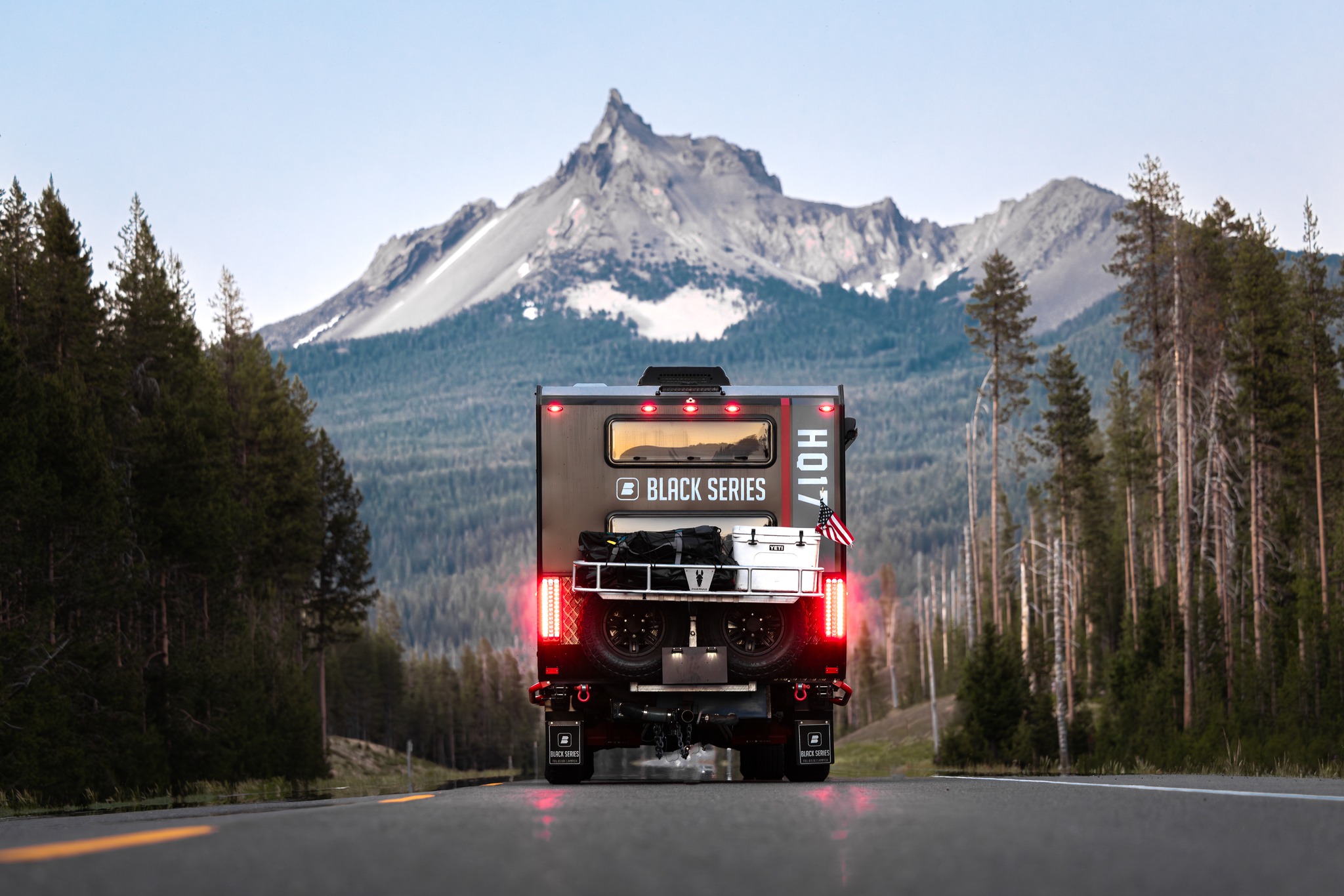
Essential Prep Card:
- ✅ All-terrain tires + 2 spares
- ✅ 12V solar + lithium battery system
- ✅ Stone guards + mud flaps
- ✅ Independent suspension check
- ✅ 7-10 day water/food supply
What Is the Alaska Highway? Facts & Reality
Built in 1942 as a military supply route, the Alaska Highway stretches 1,390-1,500 miles from Dawson Creek, British Columbia, through Yukon Territory into Fairbanks, Alaska. This legendary route represents the “ultimate bucket list” journey for over 100,000 RVers annually who seek to experience North America’s last frontier.
Current Road Reality: Approximately 60% of the highway features quality pavement, but 20-40 rough segments appear each year due to construction, frost damage, and extreme weather cycles. Unlike popular misconceptions, this isn’t a dirt track, it’s a maintained two-lane highway suitable for all RV types, including large travel trailers.
The highway’s reputation stems from legitimate challenges: summer construction zones, unpredictable frost heaves, flying gravel from passing trucks, and remote segments where the nearest fuel station sits 120 miles away. These factors demand more from your equipment than typical interstate travel.
For serious expedition-minded travelers, consider exploring our Best Expedition Travel Trailers USA guide for trailers specifically engineered for demanding routes like this.
Why Your Travel Trailer Needs Special Prep for Alaska Highway
Frost Heaves: These ice-induced road deformations act like speed bumps scattered randomly across the highway. Hitting them at 55+ mph can crack RV cabinets, damage suspension components, and stress trailer frames. Standard leaf spring systems struggle here, independent suspension systems excel.
Flying Gravel: Construction zones and deteriorating shoulders launch rocks at windshields, exterior panels, and trailer walls. Aluminum and composite construction materials resist denting better than fiberglass, while stone guards protect vulnerable areas.
Remote Distances: Fuel stations average 80-120 miles apart in northern sections. Food stores exist but depend on truck deliveries that weather and road incidents can disrupt for days. Large freshwater capacity and extended battery life become essential, not luxuries.
Temperature Extremes: Daily swings of 30°F+ stress plumbing connections and electrical systems. Insulated components and cold-weather rated equipment prevent costly failures.
BlackSeries trailers address these challenges through heavy-duty independent suspension, composite exterior panels, oversized water tanks, and robust solar/lithium systems designed for extended off-grid operation. For detailed preparation steps, review our Off Road Trailer Maintenance Guide 2026.
The Best Travel Trailer Setup for the Alaska Highway
Essential Features (no specific brands):
- All-terrain tires rated for mixed surfaces
- Independent suspension with high ground clearance
- 12-24V solar charging system
- Lithium battery bank for extended power
- Stone guard protection for front panels
- Heavy-duty mud flaps
- Insulated freshwater system
- Large freshwater capacity (30+ gallons)
- Reinforced chassis and tongue box
BlackSeries Advantage: Our trailers integrate these features as standard equipment rather than expensive upgrades. Independent suspension, aluminum/composite construction, oversized tanks, and powerful solar systems come engineered for exactly these demanding conditions.
Families planning this journey should examine our Best Large Off Road Travel Trailers for Families with Bathrooms for spacious options that maintain off-road capability.

Alaska Highway Travel Trailer Prep Guide: Step-by-Step
1. Mechanical Inspection
- Inspect all tires for cuts, bulges, proper pressure (include spare tires)
- Repack wheel bearings or verify recent service
- Test brake controller responsiveness and adjust gain
- Torque suspension bolts to manufacturer specifications
- Inspect hitch components, safety chains, and electrical connections
2. Power & Electrical Systems
Verify solar panel output reaches rated capacity under full sun. Test inverter functionality under typical AC loads. Ensure lithium batteries maintain 80-100% state of charge before departure. Install battery insulation or heating pads for sub-freezing temperatures.
Our Lithium Battery Off Grid Trailer Power Guide provides detailed testing procedures and optimization tips for extended off-grid performance.
3. Route & Border Planning
Download offline maps covering Dawson Creek → Fort Nelson → Watson Lake → Whitehorse → Tok segments. Research fuel station intervals (typically 80-120 miles in remote areas). Prepare required documentation for Canadian border crossing including passport, vehicle registration, and insurance proof.
4. Survival & Comfort Supplies
Stock 7-10 days of non-perishable food and potable water. Pack emergency fuel containers. Include bear-safe food storage containers for campsite use. Prepare cold-weather clothing for unexpected temperature drops.
Alaska Highway Road Conditions by Route Segment
Dawson Creek → Fort St. John (45 miles)
Excellent pavement with minimal elevation change. Safe speeds 55-60 mph. Ideal for trailer shakedown and final adjustments. Abundant services and fuel options.
Fort St. John → Fort Nelson (143 miles)
Generally smooth pavement through agricultural regions. Occasional construction zones during summer months. Maintain 50-55 mph through populated areas.
Fort Nelson → Watson Lake (319 miles)
Peak frost heave territory. Expect irregular pavement sections requiring 35-45 mph speeds. Multiple construction zones typical during June-August. Independent suspension systems provide significant comfort advantages here.
Yukon Section (Watson Lake → Whitehorse, 273 miles)
Mixed pavement quality with frequent construction projects. Single-lane pilot car sections create 15-30 minute delays. Check 511 Yukon website for current project status.
Tok Cutoff (Fairbanks Direction, 125 miles)
Potholes and washboard sections most common here. Reduced speeds (40-50 mph) protect trailer components. Final push requires patience and careful driving.
For enhanced protection against moisture and vibration damage throughout these challenging segments, consult our Travel Trailer Waterproofing Solutions guide.
Best Alaska Highway Campgrounds & Boondock Sites 2026
Canada Section:
- Sikanni Chief River Campground: Full hookups, easy trailer access, mile 162
- Muncho Lake Provincial Park: Scenic lakefront sites, primitive facilities, mile 426
- Watson Lake Campground: Full services, laundry, Wi-Fi, gateway to Yukon
Alaska Section:
- Tok RV Village: Full hookups, dump station, propane, mile 1,314
- Tetlin National Wildlife Refuge: Dispersed camping, no facilities, incredible wildlife viewing
- Delta Junction State Recreation Site: Basic facilities, historical significance, mile 1,422
Boondocking Notes: Legal dispersed camping exists on many Crown lands (Canada) and state/federal lands (Alaska). Maintain 300+ feet from water sources. Expect no cell service in remote areas. BlackSeries solar systems excel in Alaska’s extended summer daylight hours.
Alaska Highway Travel Stats RVers Love
Travel Duration: 5-10 days typical (10 days recommended for comfort)
Daily Mileage: 150-250 miles average
Top Destinations: Fairbanks (35%), Anchorage (30%), Kenai Peninsula (25%)
RV Breakdown Statistics:
- Tire failures: 40% of roadside emergencies
- Suspension issues: 20% of mechanical problems
- Electrical problems: 15% of service calls
- Brake controller failures: 10% of towing issues
Original research compiled from AAA emergency service data and Alaska tourism statistics, 2023-2025.
Sample 7-Day Itinerary: Alaska Highway
Day 1: Dawson Creek → Fort St. John (45 miles) – Equipment shakedown
Day 2: Fort St. John → Fort Nelson (143 miles) – Scenic prairie transition
Day 3: Fort Nelson → Muncho Lake (143 miles) – Mountain scenery begins
Day 4: Muncho Lake → Watson Lake (176 miles) – Enter Yukon Territory
Day 5: Watson Lake → Whitehorse (273 miles) – Capital city resupply
Day 6: Whitehorse → Tok, Alaska (187 miles) – Cross into USA
Day 7: Tok → Fairbanks (206 miles) – Interior Alaska arrival
BlackSeries Advantages: Independent suspension maintains comfort through rough sections. Powerful solar systems provide full electrical independence for extended wilderness camping. Oversized tanks eliminate range anxiety between service points.
FAQ: Alaska Highway & Travel Trailers
Is the Alaska Highway safe for travel trailers?
Yes, when properly prepared. The highway accommodates RVs of all sizes including large Class A motorhomes with tow vehicles. Key success factors include appropriate speeds, quality tires, and robust suspension systems.
When is the best month to drive the Alaska Highway?
June offers optimal conditions: completely snow-free roads, minimal crowds, and nearly 24-hour daylight for extended driving flexibility. May and September provide good conditions with shorter daylight hours.
Do I need 4×4 to tow a trailer on this route?
No. The entire Alaska Highway features paved surfaces (except temporary construction zones). Standard 2WD trucks with proper towing capacity handle the route successfully.
How rough are frost heaves for trailers?
Frost heaves vary from minor bumps to significant road deformations. Independent suspension systems dramatically improve ride quality compared to traditional leaf springs. Reduced speeds (35-45 mph) through affected areas prevent damage.
Are there enough campgrounds for trailers along the route?
Yes, though spacing requires planning. Campgrounds average every 50-100 miles with mix of full-hookup and primitive facilities. Reservation systems vary by location; early June typically offers good availability.
What travel trailer features matter most for the Alaska Highway?
Independent suspension, stone protection, extended water capacity, robust solar/battery systems, and all-terrain tires provide the greatest impact on trip success and comfort.
Ready for the ultimate RV adventure? BlackSeries trailers come factory-equipped with Alaska Highway-proven features: independent suspension, composite construction, oversized systems, and expedition-grade reliability. Contact us today to explore how BlackSeries engineering transforms challenging journeys into comfortable adventures.

