Texas beach RV camping is absolutely legal in most coastal areas, with Padre Island National Seashore and Galveston beaches leading as top destinations. Your RV can drive on sand with proper preparation, lower tire pressure, use all-terrain tires, and ensure adequate ground clearance. BlackSeries trailers excel in beach environments thanks to their corrosion-resistant aluminum construction, independent suspension for soft sand navigation, and salt-fog protective coatings.
Quick Texas Beach RV Guide:
- Best Spots: Padre Island (remote boondocking), Galveston Island (services), Mustang Island (state park amenities)
- Permit Rules: Most beaches require day-use or camping permits ($10-25)
- Driving Tips: 15-25 PSI tire pressure, avoid high tide areas, stay on marked routes
- Season: October-April ideal for cooler weather and fewer crowds
What Is Texas Beach Camping with an RV? Laws & Landscape
Beach camping with an RV differs from traditional boondocking, you’re dealing with sand, salt air, and tidal changes rather than mountain terrain. Texas offers 367 miles of Gulf Coast shoreline, from the Louisiana border down to Mexico, with varying regulations by jurisdiction.
The Texas coast features three distinct camping environments: developed beachfront RV parks with full hookups, primitive beach camping where you drive directly onto sand, and nearby coastal campgrounds within walking distance of beaches. Each presents unique challenges including loose sand that can trap vehicles, salt spray that accelerates corrosion, and rapidly changing weather conditions.
Over 100,000 RVers visit Texas beaches annually, with 60% experiencing some form of sand-related driving challenge. The most common issues include getting stuck in soft sand, underestimating tide schedules, and inadequate preparation for salt-air corrosion. BlackSeries trailers address these challenges with enhanced Travel Trailer Waterproofing Solutions that protect against moisture intrusion and corrosive salt spray.
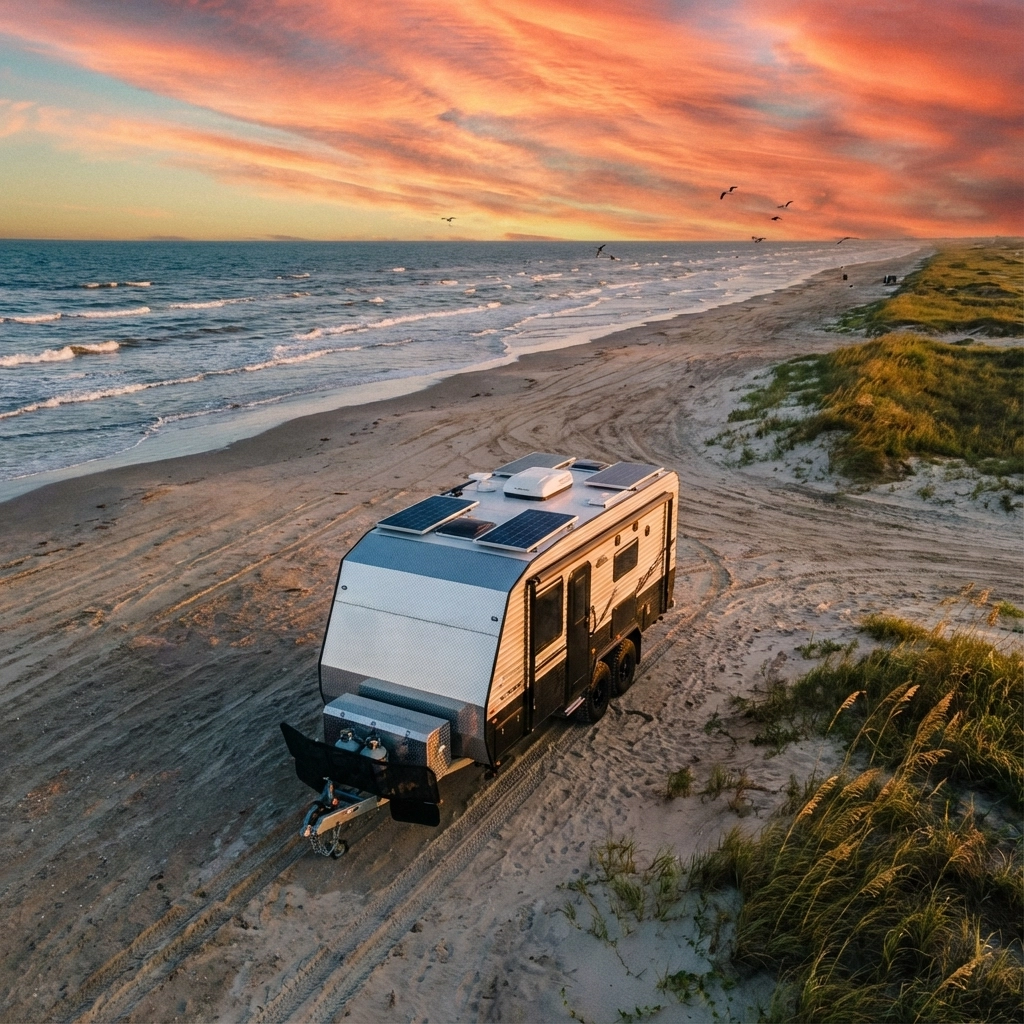
Best Texas Beach RV Camping Spots (2026)
North Texas Coast
Galveston Island offers the most accessible beach RV experience, with East Beach allowing overnight parking for $25/night. The hard-packed sand supports most RV weights, and the proximity to Galveston’s amenities makes it ideal for first-time beach campers. Crystal Beach on Bolivar Peninsula provides free primitive camping on the left side of Rettilon Road, though a $10 permit grants access to less crowded areas.
Central Texas Coast
Mustang Island State Park near Corpus Christi features 48 RV sites with water and electrical hookups, plus direct beach access. The park’s improved drainage systems and reinforced boardwalks make it reliable year-round. Matagorda Beach offers excellent boondocking opportunities with loose sand requiring higher ground clearance, perfect for BlackSeries trailers with their robust suspension systems.
South Texas Coast
Padre Island National Seashore represents the ultimate Texas beach camping destination. Past Mile Marker 5, you’ll find completely off-grid camping directly on the beach. The remote sections require serious off-road capability, making this ideal territory for Best Large Off Road Travel Trailers for Families with Bathrooms. BlackSeries trailers thrive in these conditions thanks to their independent suspension and extended water capacity for multi-day stays without services.
Each location requires different preparation levels:
- Galveston/Crystal Beach: Basic beach driving skills, day-use permits
- Mustang Island: State park reservations, moderate sand driving
- Padre Island PINS: Advanced preparation, camping permits, serious off-road gear
Texas Beach Camping Rules for RVs
Texas beach camping regulations vary significantly by managing authority. State beaches generally allow overnight camping with proper permits, while city beaches often restrict overnight stays. National seashores like Padre Island require entrance fees plus camping permits.
Key regulations include maintaining 15-25 feet distance from the high-tide line, no glass containers on beaches, and fire restrictions (most areas allow only contained fires in designated fire rings). Vehicle speeds are typically limited to 15 mph on beach sand.
Permit Requirements:
- Galveston East Beach: $25 overnight parking fee
- Bolivar Peninsula: $10 for improved access areas
- Padre Island National Seashore: $15 entrance fee plus $8 camping fee per night
- Mustang Island State Park: Standard Texas state park fees
Most beaches require vehicles to display permits visibly and prohibit driving during sea turtle nesting seasons (typically May-August in certain designated areas).
How to Camp on Texas Beaches with an RV: Step-by-Step Guide
Pre-Trip Preparation
Check tide charts before departure, Texas Gulf tides can vary 2-4 feet, dramatically affecting available camping space. Download offline maps since cellular service becomes spotty on remote beach sections. Fill your freshwater tank completely, as most primitive beach camping offers no water sources.
Beach Driving Technique
Lower tire pressure to 15-20 PSI for sand driving, but never go below your tire manufacturer’s minimum. Maintain steady momentum without sudden acceleration or braking. Stay in existing vehicle tracks when possible, and avoid areas where waves have recently washed over the sand.
For towing, ensure your vehicle’s transmission can handle the extra stress of sand driving. BlackSeries trailers’ independent suspension reduces drag in soft sand compared to leaf-spring systems, making them easier to tow through challenging beach terrain. See our Off Road Trailer Maintenance Guide 2026 for detailed pre-trip inspection procedures.
Camp Setup Strategy
Choose elevated positions whenever possible to avoid unexpected wave action during high tides or storms. Set up your awning with extra stakes and guy lines, Gulf Coast winds can exceed 25 mph with little warning. Position your trailer to minimize salt spray exposure on the entry door and windows.
Deploy your outdoor kitchen on the inland side of your setup to protect cooking equipment from salt air. BlackSeries outdoor kitchens feature stainless steel construction that resists salt corrosion better than standard aluminum models.

RV Corrosion & Maintenance on Beaches
Salt air accelerates metal corrosion up to eight times faster than inland environments. Traditional RV construction with exposed aluminum and steel components faces serious degradation risks during extended beach stays.
BlackSeries trailers feature marine-grade aluminum construction with protective powder coating specifically designed for harsh environments. The diamond plate armor provides both impact protection and corrosion resistance, while sealed electrical connections prevent salt intrusion.
Post-Beach Maintenance Protocol:
- Fresh water rinse within 24 hours, focusing on undercarriage components
- Inspect brake actuators, suspension bolts, and hitch components for salt buildup
- Apply corrosion-inhibiting spray to exposed metal surfaces
- Check door and window seals for sand accumulation
Regular maintenance becomes critical for beach camping. Refer to our comprehensive Travel Trailer Waterproofing Solutions guide for advanced protection strategies.
Best Gear for Texas Beach RV Camping
Essential beach camping equipment includes sand traction boards for stuck situations, a portable air compressor for tire pressure adjustments, and wind-resistant awning anchors rated for 30+ mph winds.
Power management becomes crucial for extended beach stays. Solar panels perform excellently in Texas coastal conditions, often generating 5-6 hours of peak charging daily. BlackSeries trailers come equipped with high-efficiency solar systems and lithium battery banks perfectly sized for off-grid beach camping. Learn more in our Lithium Battery Off Grid Trailer Power Guide.
Additional gear categories include:
- Recovery Equipment: Shovel, tow straps, sand ladders
- Protection: Awning tie-downs, window covers, fresh water containers
- Navigation: Offline GPS apps, tide charts, emergency communication devices
Sample 3-Day Texas Beach RV Itinerary
Day 1: Mustang Island Base Camp
Arrive at Mustang Island State Park for your first night with full services. Test your beach driving skills on the park’s beach access areas while maintaining easy access to fresh water and dump stations.
Day 2: Padre Island Adventure
Drive south to Padre Island National Seashore for primitive beach camping. Set up past Mile Marker 10 for solitude and spectacular sunrise views. This tests your off-grid systems and sand driving abilities.
Day 3: Coastal Exploration
Explore the furthest accessible beach areas (Mile Marker 20+ depending on conditions) before returning to civilization via Corpus Christi for resupply and equipment cleaning.
This itinerary provides progressive difficulty levels while showcasing BlackSeries capabilities in both supported and remote beach environments.
Texas Beach Camping Statistics US RVers Want
Recent data shows salt spray contains 5-8 times higher salt concentration than inland air, making corrosion protection essential rather than optional. Approximately 40% of beach-related RV problems stem from stuck vehicles, while 25% involve electrical issues from salt intrusion.
Summer Gulf Coast winds average 15-20 mph but can gust to 35 mph during afternoon thunderstorms. Winter months (December-February) offer the calmest conditions but require cold-weather preparation for occasional freezes.
The most successful beach RVers invest in proper preparation rather than hoping for luck, those with appropriate tires, recovery gear, and corrosion protection report 90% fewer problems than unprepared campers.
FAQ: Texas Beach RV Camping
Can you camp overnight on Texas beaches with an RV?
Yes, most Texas beaches allow RV overnight camping with proper permits. Padre Island National Seashore, Galveston East Beach, and Bolivar Peninsula all welcome RVs for overnight stays.
Do I need 4×4 to drive on Texas beaches?
While 4×4 helps, it’s not absolutely required for most beach camping areas. Proper tire pressure, momentum control, and choosing hard-packed sand areas matter more than drive type.
What is the best Texas beach for RV boondocking?
Padre Island National Seashore offers the best primitive beach camping, especially past Mile Marker 10 where you can camp directly on sand with ocean views and complete solitude.
Can travel trailers get stuck on the sand easily?
Travel trailers can get stuck, but proper preparation minimizes risk. Lower tire pressure, maintain momentum, and avoid soft sand areas. BlackSeries trailers’ independent suspension and lighter aluminum construction reduce stuck incidents.
How do I avoid corrosion when camping on the beach?
Choose trailers with marine-grade materials, rinse with fresh water daily, apply corrosion inhibitors, and avoid extended exposure during high-salt-spray conditions.
Is Padre Island safe for RV camping?
Yes, Padre Island is very safe for properly prepared RVers. The main risks involve getting stuck in sand or being unprepared for weather changes, not personal safety concerns.
Ready to experience Texas beach camping? BlackSeries trailers offer the perfect combination of off-road capability, corrosion resistance, and comfort for coastal adventures. Contact us to schedule a demonstration and see why our trailers excel in challenging beach environments.

