The best boondocking trailers combine self-sufficient power systems, large water capacity, and rugged off-road capability for extended stays in remote locations. This comprehensive review evaluates top models using standardized criteria (power, water, mobility, comfort, durability) and explains why BlackSeries stands out as the premier off-grid travel trailer built for true wilderness independence.
What Is a Boondocking Trailer? (Definition & Requirements)
A boondocking trailer is specifically designed for camping without external hookups, no electrical, water, or sewer connections. Unlike standard RVs that rely on campground infrastructure, these trailers must be completely self-sufficient for days or weeks in remote locations.
Core requirements for legitimate boondocking RV capability include:
Independent Power System
- Solar panel array (typically 400W minimum)
- Lithium battery bank for extended runtime
- Pure sine wave inverter for household appliances
- 12V LED lighting and efficient electronics
Water Self-Sufficiency
- Large fresh water tank (40+ gallons minimum)
- Grey and black water holding tanks
- Water filtration system for refilling from natural sources
- Low-flow fixtures to conserve water
Waste Management
- Adequate holding tank capacity
- Easy dumping access for extended trips
- Composting toilet options for ultra-remote camping
Most quality boondocking trailers also incorporate some level of off-road capability, since the best free camping spots often require leaving paved roads to access BLM lands, National Forests, and dispersed camping areas.
Why Boondocking Is So Popular in the USA
The surge in boondocking USA popularity stems from several converging factors that make off-grid camping increasingly attractive to American travelers.
Free Camping on Public Lands
The United States offers unparalleled access to free camping through Bureau of Land Management (BLM) and National Forest Service lands. With over 640 million acres of public land, boondockers can camp for up to 14 days without cost, a significant advantage as RV park fees continue climbing above $50-80 per night in popular destinations.
Escape from Crowded Campgrounds
Traditional RV parks have become increasingly congested, especially post-2020 as outdoor recreation boomed. Long-term boondocking camper enthusiasts appreciate the solitude, wildlife encounters, and authentic nature experiences impossible in developed campgrounds.
Digital Nomad Lifestyle Growth
Remote work capabilities have enabled more Americans to embrace full-time RV living. Off-grid travel trailers equipped with robust power systems can support laptop work, Starlink internet, and extended wilderness stays while maintaining connectivity.
Market data shows boondocking-related searches increased 340% between 2020-2025, with “dispersed camping,” “off-grid RV systems,” and “solar setup for boondocking” among the fastest-growing search terms in outdoor recreation.
What Makes the Best Boondocking Trailer? (Checklist)
Evaluating boondocking trailer capability requires examining specific systems rather than relying on marketing claims. Use this checklist when comparing models:
Power System Essentials
- Solar capacity: 400W minimum, 800W+ for extended stays
- Lithium batteries: 200Ah minimum, 400Ah+ for comfort
- Inverter size: 2000W pure sine wave for household appliances
- Battery monitoring system for accurate power management
- Shore power charging capability for quick top-offs
Water & Waste Capacity
- Fresh water: 40+ gallons (60+ gallons for extended stays)
- Grey water: 30+ gallon capacity
- Black water: 20+ gallon capacity
- Water pump: demand pump with accumulator tank
- Filtration: inline filter for refilling from questionable sources
Off-Grid Comfort Features
- Propane efficiency: tankless water heater, high-efficiency furnace
- Ventilation: roof vents with fans for temperature control
- Insulation: R-value 7+ walls for four-season capability
- LED lighting throughout for low power consumption
- 12V refrigerator/freezer for consistent cooling without inverter power
Mobility & Access
- Ground clearance: 12+ inches for forest service roads
- Suspension: independent or torsion axles for rough terrain
- Tire size: 15+ inch diameter for durability and traction
- Tongue weight: balanced for stable towing in mountains
- Breakaway system: required for safe off-road descents
Best Boondocking Trailers – 2026 Buyer’s List
Best Overall Boondocking Trailer
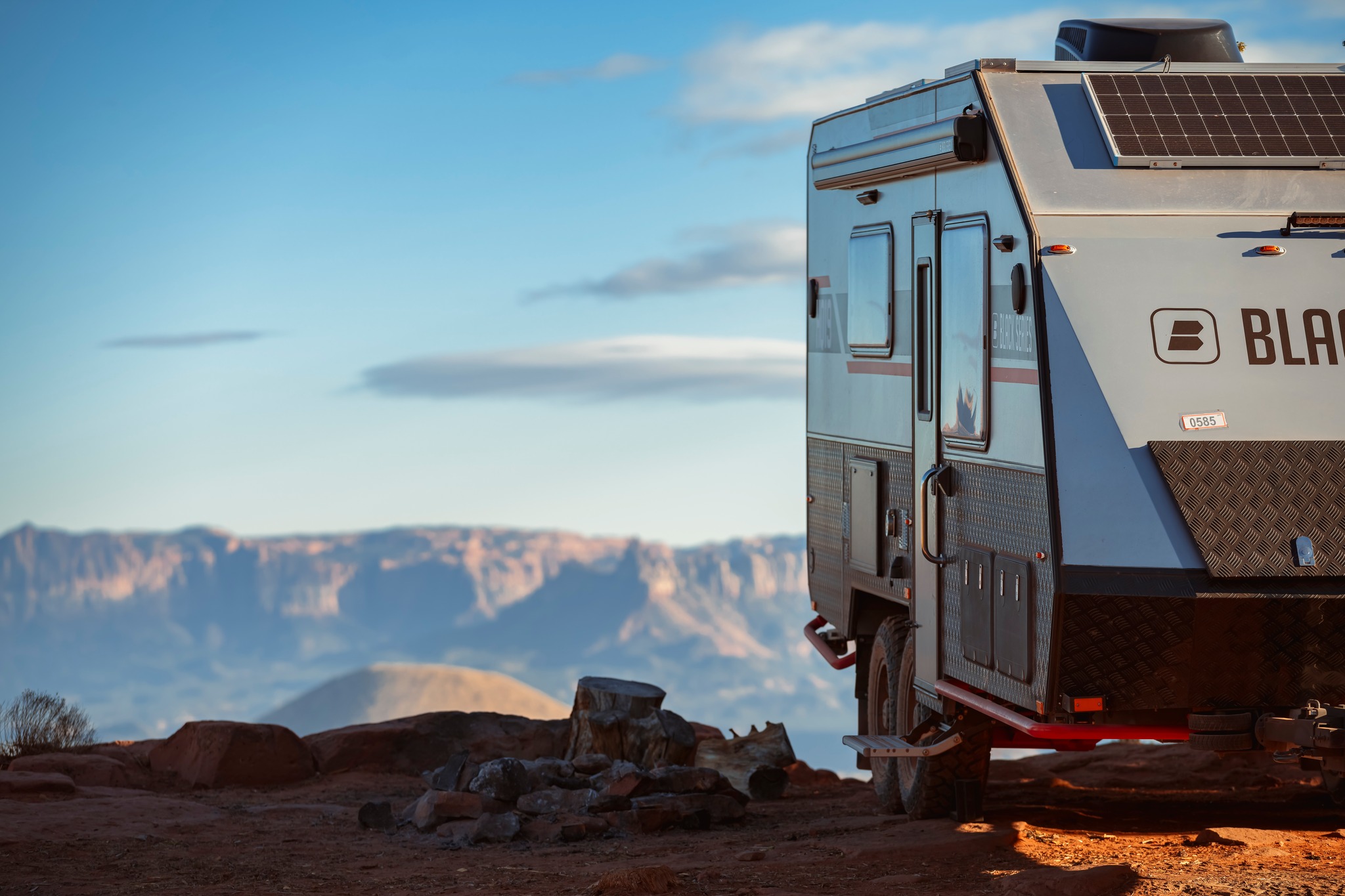
BlackSeries HQ19: The gold standard for off-road boondock trailer capability, combining Australian off-road engineering with comprehensive off-grid systems. Factory-equipped with 800W solar, 400Ah lithium batteries, and true four-season construction including heated underbelly. Independent suspension and reinforced chassis handle everything from desert washes to mountain forest roads.
Outdoors RV Backcountry 21BD Titanium: Four-season certified with 1000W solar and 100-gallon fresh water capacity. MORryde suspension and self-leveling system excel in rough terrain, though at higher weight requiring three-quarter-ton tow vehicles.
Best Off Grid Boondocking Trailer
BlackSeries HQ17: Purpose-built for extended lithium solar trailer independence with no compromises. Integrated 600W solar charges 320Ah lithium bank while 3000W inverter powers full-size appliances. Water filtration system and 50-gallon fresh tank enable weeks of autonomous camping.
Living Vehicle Overland: Ultra-premium off-grid setup with 1440W solar and 690Ah batteries, though weight and cost limit accessibility for many boondockers.
Best Off Road Boondocking Trailer
BlackSeries HQ21: Maximum ground clearance and articulation for accessing remote camper for BLM lands locations. Reinforced aluminum frame and independent suspension handle severe terrain while maintaining living comfort with slide-out and full kitchen.
Pause Overland Travel Trailer: Lightweight aluminum construction with independent suspension, though limited by smaller tanks and basic electrical systems compared to dedicated off-road models.
The 2026 No Boundaries 18.2 with Beast Mode package offers good towability at 4,143 lbs unloaded, making it accessible to mid-size truck owners, though solar and battery capacity require upgrades for serious boondocking.

Why BlackSeries Is Built for True Boondocking
BlackSeries represents a fundamentally different approach to boondocking trailer design, engineering every component for off-grid independence rather than retrofitting RV park trailers with add-on systems.
Australian Off-Road Heritage
Developed in Australia’s harsh outback conditions, BlackSeries trailers incorporate decades of remote travel engineering. Independent suspension, reinforced chassis, and integrated protection systems aren’t aftermarket additions, they’re core design elements proven across millions of miles in extreme environments.
Factory Off-Grid Integration
Unlike competitors who offer “solar prep” or optional packages, BlackSeries trailers include comprehensive off-grid systems from the factory. Solar controllers, battery monitoring, inverters, and wiring are professionally integrated rather than dealer-installed, ensuring reliability and warranty coverage for the complete system.
Four-Season Engineering
True boondocking USA capability requires handling temperature extremes from desert summers to mountain winters. BlackSeries trailers feature enclosed, heated underbellies, superior insulation values, and cold-weather plumbing protection enabling year-round off-grid camping, critical for accessing winter skiing areas or escaping summer heat in northern forests.
For detailed winterization procedures and cold-weather camping strategies, review our comprehensive guide on camping in high winds and extreme weather, which covers essential safety protocols for challenging boondocking environments.
Proven American Testing
BlackSeries trailers undergo extensive testing in U.S. conditions, from Alaska Highway expeditions to southwestern desert trails. This real-world validation ensures systems perform reliably when you’re days from the nearest service center, a critical consideration for serious off-grid travel trailer use.
How to Start Boondocking Safely (Step-by-Step)
Successful boondocking requires systematic preparation and gradual skill development. Follow this progression for safe introduction to boondocking trailer adventures:
Step 1: Choose Legal Camping Areas
- Download FreeRoam, Campendium, and iOverlander apps for location research
- Understand 14-day limits on BLM and National Forest lands
- Check seasonal restrictions and fire danger closures
- Obtain required permits for National Parks dispersed camping
Step 2: Calculate Power and Water Consumption
- Monitor usage during RV park stays to establish baseline
- Plan for 20% higher consumption without hookups (inefficient charging cycles)
- Size solar and battery systems for 3-4 days of poor weather
- Carry extra water containers for extending stays beyond tank capacity
Step 3: Master Waste Management
- Locate dump stations along your route using RV Trip Wizard or Sanidumps.com
- Practice Leave No Trace principles, pack out everything you bring in
- Consider portable waste tanks for extending stays
- Never dump grey water on the ground, even “biodegradable” soap damages desert soils
Step 4: Emergency Preparedness
- Carry satellite communication device (InReach, SPOT) for areas without cell service
- Maintain emergency water and food for 7+ days
- Include basic mechanical tools and spare parts for common failures
- Share itinerary with contacts and establish check-in schedules
Start with weekend trips near civilization before attempting extended remote adventures. Gradually build confidence and refine your systems based on real experience rather than YouTube optimism.
Boondocking Trailer vs Standard Travel Trailer
Understanding the fundamental differences helps justify the investment in specialized boondocking RV capability:
The cost premium for legitimate boondocking trailer capability reflects engineering complexity and specialized components. However, the ability to camp free on public lands can offset higher initial costs for frequent users.
FAQ – Best Boondocking Trailers
How long can you boondock with a travel trailer?
Duration depends on tank capacities and power management. Well-equipped boondocking trailers with 60+ gallon fresh water, adequate waste storage, and 400W+ solar can support 7-14 days independently. Conservative users extend this to 3+ weeks through water conservation and efficient power use.
Do boondocking trailers need solar?
Solar is essential for extended off-grid travel trailer use. While generators can recharge batteries, solar provides silent, maintenance-free power generation. Minimum 400W solar recommended; 600-800W enables comfortable appliance use without generator dependence.
Is BlackSeries good for full-time boondocking?
Yes, BlackSeries trailers are specifically engineered for extended off-grid living. Factory-integrated systems, four-season capability, and proven durability make them excellent choices for full-time long-term boondocking camper lifestyles, particularly for users accessing challenging terrain.
Can you boondock in winter?
Winter boondocking requires four-season trailer construction with enclosed, heated underbelly and adequate insulation. Standard trailers risk frozen pipes and uncomfortable conditions. Purpose-built winter trailers like BlackSeries models handle sub-zero temperatures safely.
What size trailer is best for boondocking?
Boondocking size balances payload capacity with towability. 17-21 foot trailers offer optimal compromise: large enough for adequate tanks and solar while remaining towable by half-ton trucks. Larger trailers provide more comfort but require three-quarter-ton or one-ton tow vehicles.
The best boondocking trailer matches your specific adventure goals, towing capacity, and comfort requirements. Prioritize system integration, build quality, and real-world testing over marketing claims when making this significant investment in off-grid freedom.

