Camping in high winds requires smart campsite positioning and knowing when to secure or retract your awning. This guide explains how to camp safely in windy conditions, protect your equipment, and make informed decisions about when wind conditions become too dangerous for outdoor recreation.
What Is Considered “High Wind” When Camping?
High winds in camping contexts typically begin at sustained speeds of 25-30 mph, though this threshold varies depending on your shelter type and camping location. Meteorologists define high wind warnings when sustained winds reach 40 mph or gusts exceed 58 mph, but experienced campers know that problems start much earlier.
Sustained winds differ significantly from gusts – sustained winds maintain consistent speed over several minutes, while gusts are brief bursts that can exceed sustained speeds by 10-20 mph. Both pose unique challenges for campers, with gusts creating sudden stress on tent stakes and guy lines, while sustained winds cause prolonged fatigue on equipment.
American camping regions experience varying wind patterns throughout the year. Desert environments like Arizona and Nevada commonly see sustained winds of 20-35 mph during spring months, while coastal areas from California to Texas face consistent ocean breezes that intensify during storm systems. Mountain passes in Colorado, Montana, and Wyoming create natural wind tunnels where speeds can double compared to surrounding valleys.
Why Camping in High Winds Is Dangerous
The primary risks of high-wind camping extend beyond simple discomfort. Awning damage represents the most common insurance claim among RV owners, with replacement costs ranging from $800-$2,500 depending on size and quality. Even experienced campers underestimate how quickly wind conditions can deteriorate.
Trailer instability becomes a serious concern when crosswinds exceed your vehicle’s design limits. Standard travel trailers begin experiencing handling issues around 25 mph crosswinds, while off-road models with lower profiles and reinforced frames maintain stability at higher speeds.
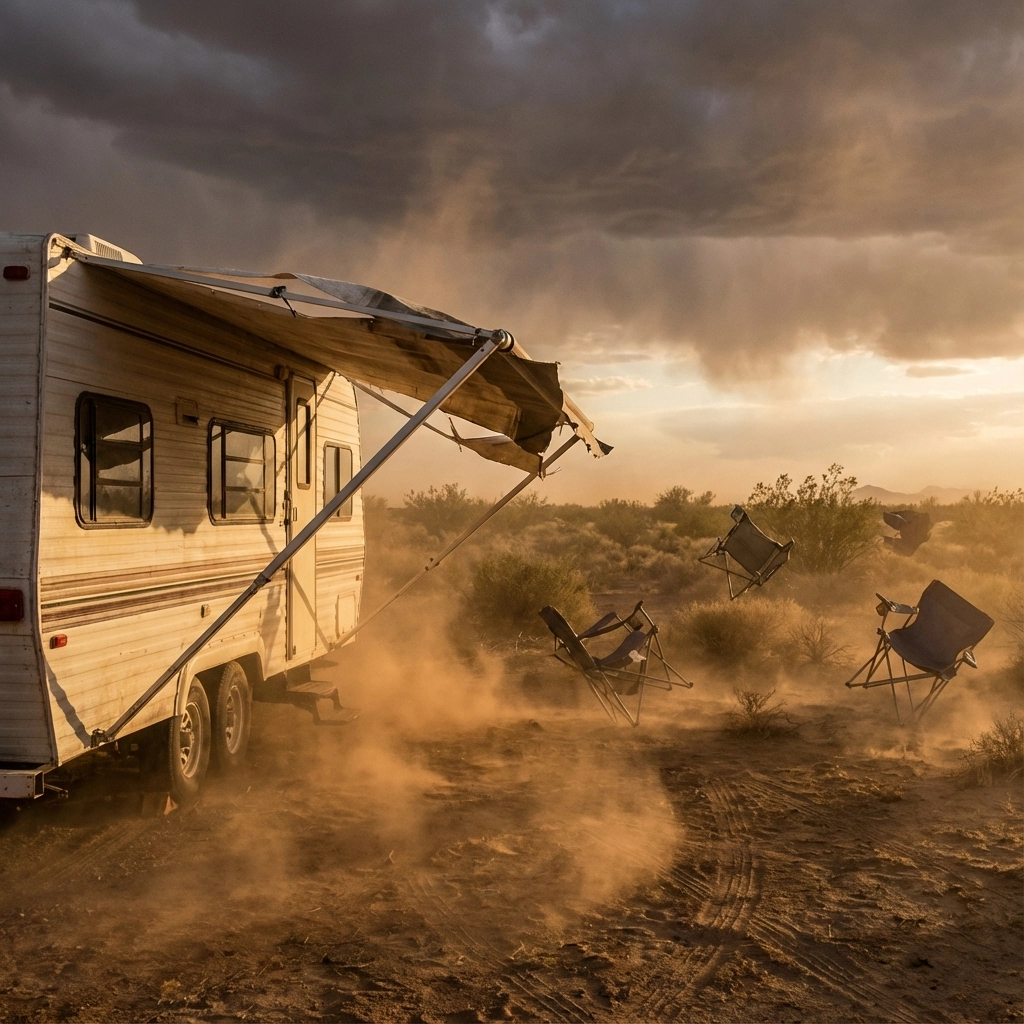
Flying debris poses the greatest safety threat during high-wind events. Loose camping chairs, tarps, and even improperly secured tent stakes become projectiles capable of causing serious injury. Insurance data from 2026 shows that wind-related camping accidents most commonly occur during the 6 PM to 10 PM timeframe when campers are setting up or securing gear for the night.
How to Camp in Windy Conditions (Step-by-Step)
Step 1 – Read the Wind Direction
Understanding wind direction determines every subsequent decision about campsite setup and equipment positioning. Use weather apps that provide hourly wind direction forecasts, but supplement digital information with on-site observation.
Look for natural wind indicators such as grass movement, tree lean, and dust patterns. Experienced overlanders recommend arriving at campsites 2-3 hours before sunset to observe how wind patterns change as temperatures drop. Desert regions often experience dramatic wind direction shifts after dark as thermal patterns reverse.
Step 2 – Choose the Correct Windward and Leeward Position
The windward side faces incoming wind, while the leeward side sits downwind and receives protection. Position your shelter on the leeward side of natural barriers like rock formations, established buildings, or dense vegetation.
Trailer and awning orientation requires strategic planning. Point your RV’s front end into prevailing winds to minimize surface area exposure. If camping with multiple vehicles, create a protected courtyard by positioning larger RVs as windbreaks for smaller units.
Utilize natural terrain features effectively. When dispersed camping in areas like Colorado’s high-elevation locations, seek campsites in slight depressions or behind ridges that block wind flow without creating dangerous downdrafts.
Step 3 – Secure or Retract the Awning
Wind speed thresholds for awning safety are non-negotiable. Most manufacturer warranties void coverage for wind damage when speeds exceed 15-20 mph. This conservative limit reflects the physics of fabric stress and aluminum frame limitations.
Retract awnings immediately when sustained winds reach 20 mph or gusts approach 25 mph. The brief inconvenience of losing shade protection pales compared to $1,500 replacement costs and potential injury from collapsing hardware.
Tie-down systems create false security for many campers. Even professional-grade awning anchors and tie-downs cannot overcome fundamental design limitations. Awnings are temporary shade structures, not permanent architectural features designed for extreme weather resistance.
Awning Safety in High Winds
Common awning damage patterns reveal consistent failure points across manufacturers and price ranges. Fabric tears typically begin at stress points near the roller mechanism, while frame damage occurs when lateral forces exceed joint capacity.
Automatic versus manual awning systems present different risk profiles. Electric awnings retract faster during emergency situations, but manual systems allow more precise control during marginal conditions when you want to partially close rather than fully retract.
Quick retraction procedures should be practiced before emergencies arise. Assign specific family members to awning duty and other wind-related tasks. Keep the area around your awning clear of chairs, tables, and other obstacles that could impede emergency retraction.
Proper awning maintenance reduces wind vulnerability significantly. Regular inspection and care, as detailed in our comprehensive RV awning maintenance guide, ensures all components function correctly when quick action becomes necessary.

Best Campsite Setup for High Winds
Creating an effective wind protection strategy requires systematic evaluation of your entire camping setup. Position your heaviest, most stable equipment as windbreaks for lighter gear and living spaces.
Campsite checklist for windy conditions should include these priority items: Park your tow vehicle with the nose facing prevailing winds, retract all awnings and external attachments, establish a low-profile gear arrangement, secure all loose items inside vehicles or storage compartments, and monitor weather forecasts every 2-3 hours for changing conditions.
Profile reduction minimizes wind resistance across your entire campsite. Store bicycles, generators, and water containers inside trailers or truck beds. Keep camping chairs folded and secured rather than leaving them set up when unoccupied.
Monitoring weather systems becomes critical during multi-day camping trips. Coastal camping environments, such as those explored in Texas beach camping adventures, can experience rapid wind speed changes as frontal systems move through the Gulf region.
Real-World Wind Camping Scenarios
Desert wind camping presents unique challenges as thermal heating creates afternoon wind tunnels between rock formations. Spring camping in Arizona’s Sonoran Desert commonly sees 20-25 mph sustained winds between 2 PM and 7 PM, followed by calmer evening conditions.
Coastal camping wind dynamics shift dramatically with tidal changes and offshore storm systems. Beach camping requires constant awareness of surf conditions, as breaking waves generate localized wind patterns that can exceed regional forecasts by 10-15 mph.
Mountain wind corridor effects amplify speeds through natural gaps and passes. Valleys that appear protected often funnel wind with surprising intensity. High-elevation camping locations experience dramatic temperature swings that create powerful thermal winds during sunset and sunrise periods.
Common Mistakes to Avoid
Leaving awnings extended “just for a few minutes” accounts for the majority of preventable wind damage. Weather conditions deteriorate faster than most campers anticipate, particularly during late afternoon hours when thermal patterns destabilize.
Trusting optimistic weather forecasts leads to poor decision-making. Local conditions often exceed regional predictions, especially in mountainous or coastal environments where terrain influences create microclimates.
Parking broadside to wind direction maximizes your trailer’s surface area exposure and increases rolling resistance during gusty conditions. This positioning also makes entering and exiting your RV more difficult and potentially dangerous.
Over-relying on tie-down equipment creates dangerous complacency. Professional expedition outfitters recommend mechanical solutions (retraction, secure storage) over tension-based solutions (ropes, stakes, anchors) when wind speeds approach equipment limits.
How Trailer Design Helps in High Winds
Engineering advantages in modern off-road trailers provide significant safety margins during challenging weather conditions. Lower center-of-gravity designs reduce wind resistance and improve stability compared to traditional rectangular travel trailers.
Structural reinforcement systems like those found in BlackSeries models utilize galvanized chassis construction that provides superior strength-to-weight ratios. These design elements contribute to overall stability during high-wind events.
Integrated storage systems eliminate external gear that becomes problematic during wind storms. Purpose-built compartments for bicycles, generators, and camping equipment reduce the profile of items that must remain outside during weather events.
Quick-deployment mechanisms for awnings, slide-outs, and external components enable faster setup and breakdown when weather conditions change rapidly. Time efficiency becomes critical when afternoon thunderstorms approach with little warning.
Emergency Preparedness for Extreme Wind Events
Evacuation planning should include predetermined criteria for abandoning a campsite. When sustained winds reach 35-40 mph, even the most robust camping setups become unsafe. Having alternate accommodation plans prevents dangerous last-minute decisions.
Emergency equipment preparation mirrors winter camping protocols for extreme weather response. Keep essential items accessible and secure, as detailed in our winterization guide for off-road campers, which covers equipment protection during severe weather events.
Communication systems become vital when standard cell service fails during storms. Satellite communicators or weather radios provide backup methods for receiving updated forecasts and emergency information.
FAQ – Camping in High Winds
How much wind is too much for camping? Sustained winds above 30 mph create unsafe conditions for most camping activities. Begin taking precautions at 20 mph and consider evacuation at 35+ mph.
Should I ever leave my awning out in wind? Never leave awnings extended when sustained winds reach 15+ mph or gusts exceed 20 mph. Retraction takes less than 60 seconds but replacement costs thousands of dollars.
Which direction should my trailer face in strong wind? Position your trailer’s front end toward prevailing winds to minimize surface area exposure. This orientation also improves tow vehicle stability if emergency evacuation becomes necessary.
Are tie-downs enough for awnings? Tie-down systems cannot overcome fundamental design limitations of awning hardware. Mechanical retraction provides the only reliable protection during high-wind conditions.
High-wind camping requires respect for natural forces and systematic preparation, but proper techniques enable safe enjoyment of outdoor adventures even during challenging weather conditions. Focus on equipment protection, position optimization, and conservative decision-making to maintain safety margins when wind speeds increase beyond normal camping comfort zones.

