Colorado dispersed camping means high-elevation adventures at 8,000–11,000 feet with unpaved forest roads, dramatic temperature swings, and zero amenities. Unlike regular campground RVing, dispersed camping in Colorado demands serious preparation for altitude, weather extremes, and challenging terrain that can test both you and your equipment.
The Rocky Mountain state offers some of America’s most spectacular dispersed camping, but the combination of thin air, gravel roads, and elevation-induced weather changes creates unique challenges that catch many campers off guard. Success requires understanding what high-elevation camping actually entails.
What Is Dispersed Camping in Colorado?
Dispersed camping in Colorado refers to camping on Bureau of Land Management (BLM) and National Forest Service lands without designated campsites, amenities, or maintained access roads. Unlike RV parks with hookups or established campgrounds with facilities, dispersed camping means finding your own spot in the wilderness with no water, electricity, bathrooms, or trash service.
The key difference from standard campground experiences lies in self-sufficiency and terrain access. Most Colorado dispersed sites require navigating forest roads ranging from well-maintained gravel to rough 4WD tracks. You’re responsible for bringing everything you need and packing out all waste.
Colorado’s National Forests and BLM areas span millions of acres, with most dispersed camping opportunities occurring between 6,000–9,000 feet elevation. Popular areas include Pike National Forest near Colorado Springs, sites around Crested Butte, and high-elevation locations like Old Monarch Pass with sites exceeding 10,000 feet.
The 14-day camping limit applies to most areas, though some locations now use designated dispersed sites rather than completely unrestricted camping to manage environmental impact.
Why High Elevation Changes Everything
Reduced Engine and Power Performance
At Colorado’s typical dispersed camping elevations of 8,000–11,000 feet, your vehicle loses significant power due to reduced air density. Naturally aspirated engines lose approximately 3% of their power for every 1,000 feet of elevation gain. This means at 9,000 feet, your truck operates with roughly 25% less power than at sea level.
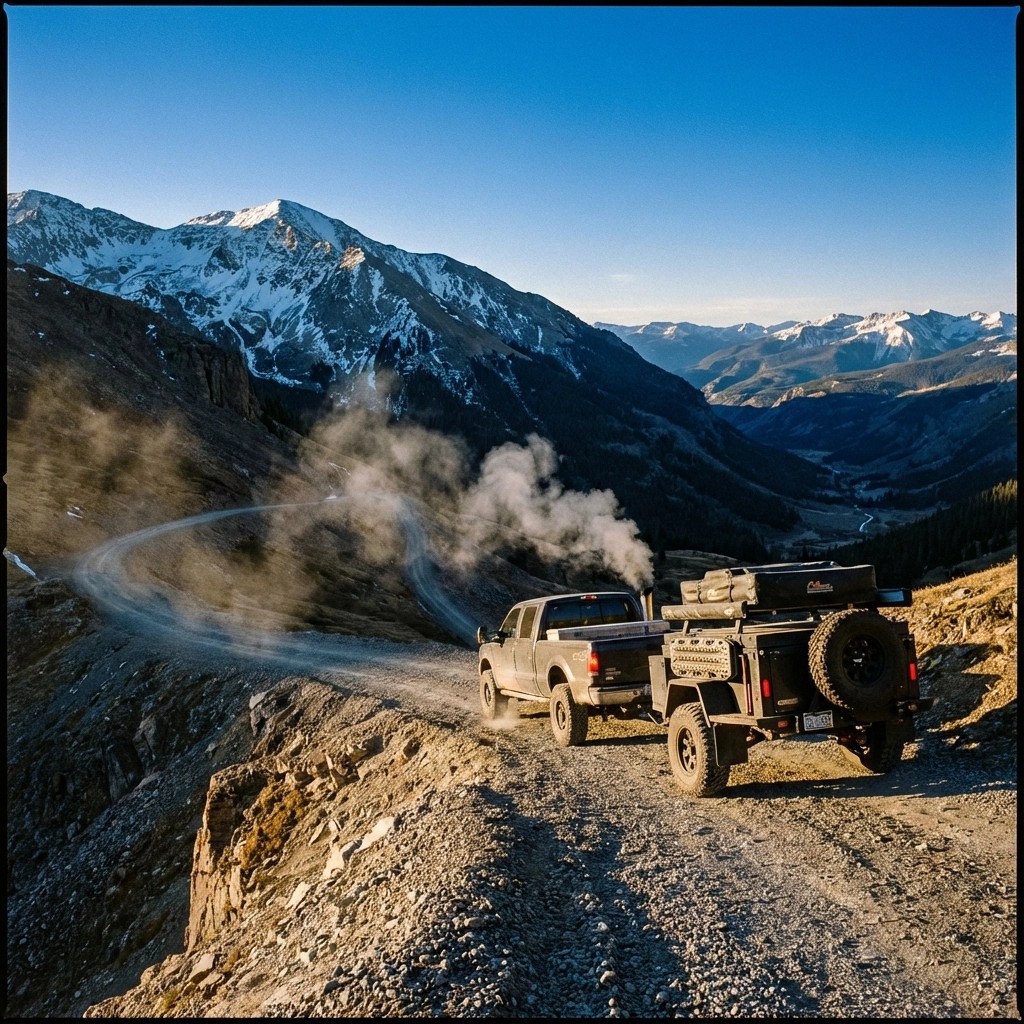
When towing an off-road camper up mountain passes and steep forest roads, this power reduction becomes critical. Your engine works harder, runs hotter, and may struggle on grades that would be manageable at lower elevations. Braking performance also diminishes due to reduced air density affecting brake cooling and engine braking effectiveness.
Temperature Swings at Altitude
High-elevation campsites experience extreme temperature variations that catch many campers unprepared. Sites above 10,000 feet like those on Old Monarch Pass or Weston Pass can see 40-50°F temperature swings between day and night, even during summer months.
Paradise Divide near Crested Butte exemplifies this challenge: gorgeous daytime weather gives way to freezing nights that require serious insulation and heating capacity. The thin atmosphere at altitude provides less thermal mass to moderate temperature changes, creating rapid cooling after sunset.
In Colorado, elevation creates the primary camping unknown factor, not just travel distance. Weather can shift from sunny and warm to cold and stormy within hours at high elevation.
Gravel Roads and Forest Access Explained
Typical Colorado Gravel and Forest Roads
Colorado’s forest roads leading to dispersed campsites range from smooth gravel highways to brutal washboard surfaces that test equipment durability. Many roads deteriorate as elevation increases, transitioning from maintained county roads to rough forest service tracks with loose stone, steep grades, and seasonal washouts from spring snowmelt.
Washboard surfaces: repetitive ridges formed by vehicle traffic: create constant vibration that fatigues both drivers and equipment. These corrugated roads are particularly common on popular routes and can extend for miles without relief.
Seasonal conditions dramatically affect road quality. Spring thaw creates muddy, rutted conditions, while summer thunderstorms can wash out sections of road or create new obstacles. Fall and winter may bring early snow that makes higher elevations inaccessible.
Why Suspension Matters More Than Size
On Colorado’s challenging forest roads, trailer suspension quality becomes more important than overall size or luxury features. Constant vibration from washboard roads creates cumulative stress on trailer components, furniture, and occupants that inadequate suspension cannot address.

Independent suspension systems excel in these conditions by allowing each wheel to respond independently to road irregularities, maintaining better tire contact and reducing structural stress. This translates to improved stability when towing and reduced wear on both the trailer and contents.
Poor suspension leads to vibration fatigue: the gradual loosening of fasteners, cabinet doors, and structural connections from constant shaking. Over time, this degradation can cause significant damage or complete failure of trailer systems.
What Makes an Off-Road Camper Suitable for Colorado Dispersed Camping
High-elevation dispersed camping demands specific trailer characteristics that differ significantly from standard RV requirements. Suspension travel and shock absorption capability rank as the most critical factors, followed by chassis strength to handle repeated stress from rough roads.
Ground clearance becomes essential when navigating boulder-strewn forest roads or high-centered situations on unmaintained tracks. Colorado’s rocky terrain can quickly damage low-hanging components on standard trailers designed for paved road use.
Body sealing against dust and cold winds matters significantly more at elevation. Dust infiltration ruins the camping experience and contaminates food and bedding, while poor weatherproofing allows cold mountain air to make sleeping uncomfortable despite adequate heating systems.
Insulation quality directly impacts livability during Colorado’s extreme temperature swings. Trailers with superior insulation maintain comfortable interior temperatures with less energy consumption, crucial for off-grid camping where power generation is limited.
How BlackSeries Campers Handle High Elevation and Rough Roads
BlackSeries campers feature independent suspension systems specifically engineered for Colorado’s challenging gravel road conditions. This suspension design allows each wheel to articulate independently, maintaining tire contact on uneven surfaces while dramatically reducing vibration transmission to the trailer body.
The robust chassis construction withstands repeated stress from forest road travel without the structural fatigue common in lighter trailers. This durability proves especially valuable during extended trips involving multiple high-elevation destinations connected by rough access roads.
Superior insulation in BlackSeries models addresses Colorado’s dramatic temperature swings, maintaining comfortable interior conditions despite extreme outdoor weather variations. The sealed construction prevents dust infiltration and cold air penetration that plague lesser trailers in mountain environments.
For comprehensive guidance on selecting trailers built for challenging terrain, review our Off-Road Travel Trailer Guide: Durable Suspension for Rough Terrain.
Best Practices for Dispersed Camping in Colorado (Checklist)
Pre-Trip Preparation
- Check current road conditions and seasonal closures with local Forest Service offices
- Verify weather forecasts for your target elevation, accounting for rapid changes
- Ensure adequate cold-weather sleeping gear rated for anticipated temperatures
- Plan fuel stops, as services become scarce near remote areas
High-Altitude Driving Tips
- Allow extra time for reduced vehicle performance at elevation
- Monitor engine temperatures closely when towing uphill
- Use lower gears to maintain engine RPM and cooling airflow
- Expect longer braking distances due to reduced air density
Gravel Road Towing Strategy
- Maintain speeds under 35 mph on washboard surfaces to reduce vibration
- Increase following distance to avoid rock damage from other vehicles
- Check trailer connections and tire pressure more frequently
- Carry spare fuses and basic repair tools for vibration-related failures
For additional off-grid camping preparation, consult our Dry Camping & Boondocking Guide: Summer Destinations.
Real-World Colorado Dispersed Camping Scenarios
Summer High-Mountain Meadows
Sites above 9,000 feet offer spectacular wildflower displays and cool daytime temperatures, but nighttime lows can drop below freezing even in July. Popular areas like Kebler Pass Road provide dozens of scenic options, though the most accessible sites fill quickly with weekend campers.
Fall Aspen Forest Camping
September and early October bring stunning aspen colors, but also unpredictable weather including early snowstorms. Forest roads may become impassable quickly, requiring flexibility in camping plans and potential early departure.
Long-Distance Gravel Access Adventures
Some of Colorado’s best dispersed sites require 10-15 miles of forest road travel from paved highways. These remote locations offer incredible solitude but demand reliable equipment and emergency preparedness for potential breakdown situations far from help.
FAQ: Dispersed Camping Colorado
Is dispersed camping legal everywhere in Colorado?
Dispersed camping is allowed on most National Forest and BLM lands in Colorado, but some popular areas now require camping in designated sites rather than unrestricted locations. Always check current regulations with local offices before departing.
How high is too high for camping in Colorado?
Most campers handle elevations up to 10,000 feet well, though some sensitive individuals may experience altitude effects above 8,000 feet. Sites above 11,000 feet become extremely challenging due to weather exposure and access difficulties.
Are gravel roads safe for towing a camper?
Gravel roads are safe for properly equipped trailers when driven at appropriate speeds. The key factors are adequate suspension, structural integrity, and maintaining speeds under 35 mph on rough washboard surfaces.
Do I need an off-road camper for Colorado dispersed camping?
While not absolutely required, off-road campers with independent suspension and reinforced construction significantly improve the experience and reduce maintenance issues from rough road travel.
Colorado’s high-elevation dispersed camping offers unmatched natural beauty and solitude, but demands serious preparation and appropriate equipment. The combination of challenging access roads, extreme weather variations, and high-altitude conditions separates successful adventures from disappointing experiences.
Ready to explore Colorado’s remote high-country destinations with confidence? Contact BlackSeries RV to schedule a demonstration of our high-elevation capable campers designed specifically for challenging mountain adventures.

