RV awning maintenance includes regular cleaning to prevent mold and mildew, proper lubrication of moving parts, and routine inspections to ensure smooth operation and long-term durability. Neglecting these essential tasks can lead to costly repairs, premature fabric replacement, and mechanical failures that leave you without shade during your adventures.
Why RV Awning Maintenance Is Often Overlooked
Many RV owners underestimate the importance of regular awning care until problems arise. Mold and mildew damage represents one of the most common RV maintenance issues across the United States, particularly in humid regions like the Southeast and Pacific Northwest. When organic growth takes hold, it permanently discolors fabric and creates persistent odors that are nearly impossible to eliminate.
The financial impact of neglect is significant. A complete awning fabric replacement typically costs between $400-$800, while a full awning assembly replacement can exceed $1,500. In contrast, preventive maintenance requires only basic cleaning supplies and lubricants costing under $50 annually.
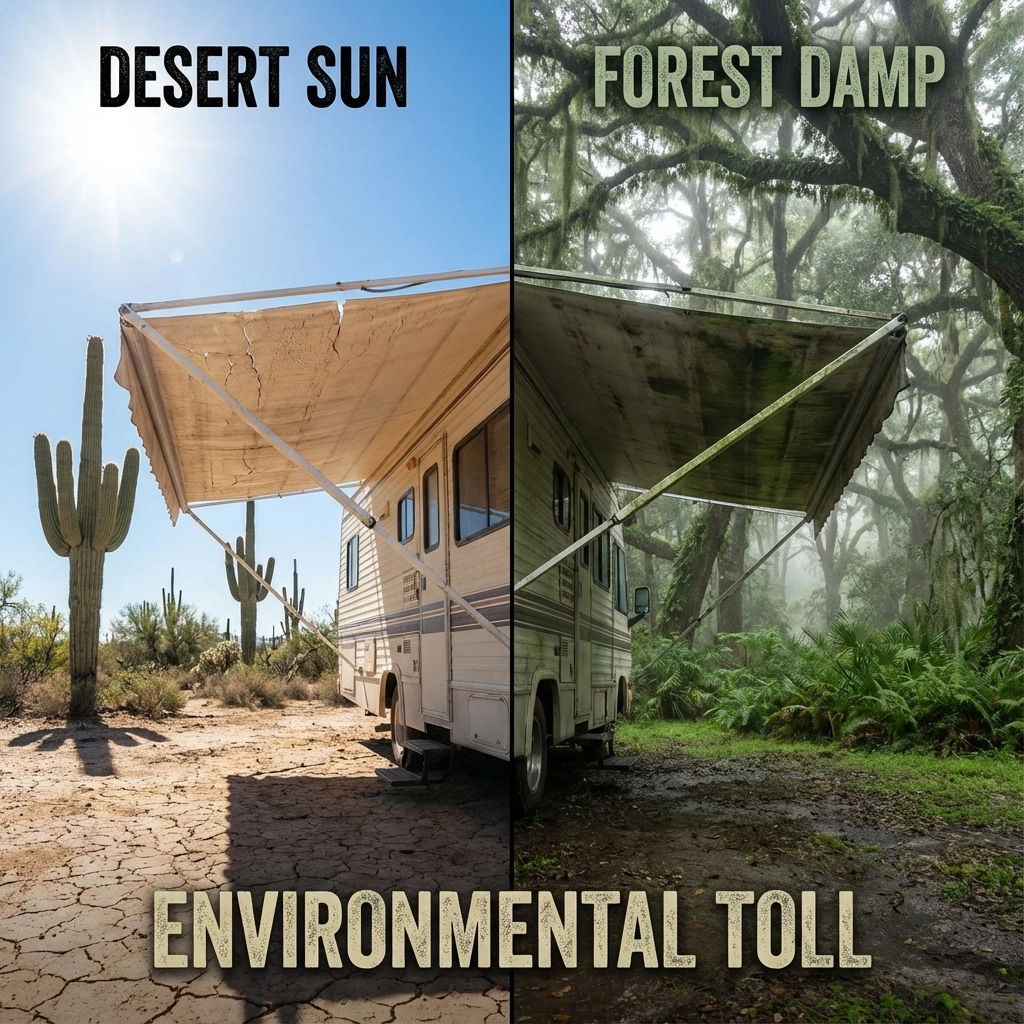
Climate factors across America accelerate awning deterioration. UV exposure in southwestern states like Arizona and Nevada breaks down fabric fibers, while humidity in states like Florida and Louisiana creates ideal conditions for mold growth. Snow loads in northern regions stress mechanical components, and frequent temperature fluctuations cause seals and joints to expand and contract, leading to premature wear.
What Causes Mold and Mildew on RV Awnings?
Understanding the root causes of mold and mildew helps prevent their occurrence. Moisture trapped during storage is the primary culprit: rolling up a damp awning creates a sealed environment where spores thrive in darkness.
Organic debris buildup provides food sources for mold growth. Leaves, pollen, bird droppings, and tree sap accumulate on fabric surfaces, creating nutrient-rich environments. Poor airflow around stored awnings compounds this problem, preventing natural drying that would otherwise inhibit growth.
The most critical mistake RVers make is folding the awning while wet after rain or morning dew. Even minor dampness, when trapped for days or weeks, transforms into visible mold colonies that require aggressive treatment to remove.
RV Awning Maintenance Basics (Definitions & Terms)
Awning maintenance encompasses three core activities: cleaning, lubrication, and inspection. This differs significantly from emergency repairs or fabric patching, which address damage after it occurs.
Mold versus mildew are often confused terms. Mold appears as black, green, or red patches that penetrate deep into fabric fibers. Mildew presents as white or gray surface growth that’s easier to remove but still requires prompt attention.
Understanding your awning type affects maintenance approach. Fabric awnings (typically acrylic or vinyl) require gentle cleaning solutions, while manual awnings need more frequent lubrication than electric models due to increased mechanical operation.
How Often Should You Maintain an RV Awning?
Maintenance frequency depends on usage patterns and environmental exposure. Monthly visual inspections should check for visible mold, loose hardware, and smooth operation during extension and retraction.
Seasonal deep cleaning is essential before and after camping seasons. Spring preparation removes winter storage residue, while fall cleaning prevents mold growth during storage months.
For full-time RVers or frequent users, increase cleaning frequency to every 4-6 weeks. Off-road enthusiasts should inspect after each trip, as dust and debris accelerate wear and create cleaning challenges.
How to Clean RV Awning Mold (Step-by-Step)
Cleaning Supplies Checklist
Gather fabric-safe RV awning cleaner or create a solution using white vinegar and water. Avoid household bleach on acrylic fabrics, as it damages protective coatings and weakens stitching. You’ll need:
- RV-specific fabric cleaner or white vinegar
- Soft-bristled brush or non-abrasive sponge
- Garden hose with spray nozzle
- Protective gloves and eyewear
- Clean microfiber cloths
Step-by-Step Mold Removal Process
Fully extend the awning on a calm, sunny day to maximize working space and drying potential. Begin by rinsing loose debris with fresh water, working from top to bottom to avoid recontamination.
Apply cleaner evenly across affected areas. For stubborn mold, create a solution of one part white vinegar to three parts water. Commercial RV cleaners designed for awning fabrics offer convenience and optimal pH balance for different materials.
Gently scrub mold-affected areas using circular motions with minimal pressure. Allow cleaning solution to penetrate for 10-15 minutes before scrubbing to maximize effectiveness. For extensive contamination, work in sections to prevent cleaner from drying on fabric.
Rinse thoroughly with clean water, ensuring no cleaning residue remains. Soap residue attracts dirt and can accelerate future staining. Allow complete air drying before retraction: this is the most critical step in preventing recurring mold growth.
How to Lubricate an RV Awning Properly
Parts That Need Lubrication
Awning arms and hinges experience the most wear during operation. These pivot points require regular attention to maintain smooth extension and prevent binding. Roller tube mechanisms benefit from light lubrication but avoid over-application that attracts debris.
Tension springs on manual awnings operate under significant load and require specialized attention. Never attempt to service internal spring mechanisms without proper training, as stored energy can cause serious injury.
RV Awning Lubrication Steps
Inspect moving parts before lubrication, looking for rust, corrosion, or excessive wear. Clean debris from joints and pivot points using compressed air or soft brushes.
Use RV-safe silicone lubricant specifically designed for outdoor applications. Marine-grade lubricants offer superior protection in humid environments. Apply sparingly: excess lubricant collects dust and grit that accelerates wear.
Cycle the awning open and closed several times after lubrication to distribute product evenly. This also reveals any binding or irregular operation that requires additional attention.
Wipe excess lubricant from visible surfaces to prevent dripping and debris accumulation. Focus particular attention on areas above outdoor kitchens or seating areas.
For comprehensive exterior maintenance, consider implementing a complete RV exterior cleaning routine that addresses all external components systematically.

Best Products for RV Awning Maintenance
Best RV awning cleaners include specialized formulations like Star Brite Mildew Stain Remover and 303 Fabric & Vinyl Cleaner. These products balance cleaning power with fabric protection, unlike harsh household cleaners that can damage protective coatings.
Best lubricants for awning mechanisms include marine-grade silicone sprays and dry PTFE lubricants. Silicone provides excellent water resistance, while PTFE offers superior dirt resistance in dusty environments common during off-road adventures.
Products to avoid include petroleum-based lubricants, household bleach, and pressure washers. These can damage seals, fabrics, and mechanical components, leading to expensive repairs.
Common RV Awning Problems and How Maintenance Prevents Them
Sticking or jerky movement typically results from inadequate lubrication or debris in mechanical components. Regular cleaning and lubrication prevent these issues from developing into costly repairs.
Fabric cracking occurs when UV protection breaks down or cleaning chemicals damage protective coatings. Using appropriate cleaners and implementing UV protection strategies extends fabric life significantly.
Persistent mildew odor indicates deep contamination that requires aggressive treatment. Prevention through proper drying and storage practices eliminates this problem before it develops.
Preventive Tips to Avoid Mold & Awning Damage
Always dry before storage is the fundamental rule of awning care. Even slight dampness creates conditions for mold growth during storage periods. If weather prevents complete drying, extend the awning as soon as possible to complete the drying process.
Proper ventilation during storage helps prevent moisture accumulation. Avoid covering awnings with tarps or storage bags unless they’re completely dry and provide adequate airflow.
Balance shade and sun exposure by extending awnings during appropriate weather conditions while retracting them during storms or high winds. This maximizes utility while minimizing stress and damage risk.
Storage best practices include thorough cleaning before winterization and proper support during long-term storage. Consider implementing comprehensive winterization procedures that address all RV systems, including awning preparation.
FAQs About RV Awning Maintenance
How do I prevent mold on my RV awning?
Prevent mold by never storing a wet awning, cleaning regularly with appropriate products, ensuring adequate ventilation during storage, and inspecting monthly for early signs of contamination.
What is the best cleaner for RV awning mold?
Use RV-specific fabric cleaners or a solution of white vinegar and water. Avoid household bleach on acrylic fabrics, and always test cleaners on inconspicuous areas first.
How often should I lubricate my RV awning?
Lubricate awning mechanisms quarterly for recreational use, monthly for full-time living, or after exposure to dusty or sandy conditions that accelerate wear.
Can I retract my awning when it’s wet?
Never retract a wet awning for storage. Brief retraction during active rain is acceptable, but extend it for drying as soon as weather permits.
How long does an RV awning last with proper maintenance?
Well-maintained awnings typically last 10-15 years, with fabric replacement needed every 7-10 years depending on UV exposure and usage patterns.
Why BlackSeries RV Owners Maintain Their Awnings Differently
BlackSeries RV owners face unique challenges that demand exceptional awning maintenance standards. Off-road and overland adventures expose awnings to dust, sand, and debris that accelerate wear and complicate cleaning procedures.
Extended stays in remote locations mean reliability during distant travel is non-negotiable. A failed awning mechanism or damaged fabric can significantly impact comfort and shelter during multi-week expeditions far from repair facilities.
Our rugged travel environments require enhanced protection strategies including more frequent inspections, premium lubricants, and aggressive preventive maintenance schedules. This proactive approach ensures your awning provides reliable service whether you’re base-camping in the Mojave Desert or exploring remote forest service roads in the Pacific Northwest.
By implementing these comprehensive maintenance practices, BlackSeries owners maximize their investment while ensuring their awning systems deliver the reliability and durability demanded by serious outdoor adventures.

