Polyblock hitch maintenance includes regular lubrication of moving joints, routine inspections for wear or cracking, and proper cleaning to ensure safe off-road towing performance. Unlike traditional ball hitches, polyblock systems require specialized care to maintain their articulating capabilities that make them essential for serious off-road adventures.
Why Polyblock Hitch Maintenance Is Critical for Off-Road Towing
Polyblock hitches differ significantly from standard ball hitches in their design and stress tolerance. These articulating coupling systems use a polyurethane block that allows for multi-directional movement, making them ideal for navigating uneven terrain, steep inclines, and rocky trails where rigid connections would fail.
Off-road and overland towing subjects hitches to extreme stress factors that standard road travel never encounters. Side-loading forces from traversing off-camber terrain, vertical articulation from steep ascents and descents, and constant flexing over rough surfaces create wear patterns that can rapidly deteriorate an unmaintained hitch.
The safety risks of neglected polyblock hitch maintenance extend beyond inconvenience. A failed hitch connection in remote terrain can leave you stranded miles from assistance, potentially creating dangerous situations. Regular maintenance prevents catastrophic failures that could damage both your tow vehicle and trailer.
Cost comparison heavily favors preventive maintenance over emergency repairs. A complete polyblock hitch replacement can cost $800-1,500, while routine maintenance supplies cost under $50 annually. More importantly, proper maintenance extends hitch life from 3-5 years to 8-12 years under similar usage conditions.
What Is a Polyblock Hitch? (Definitions & Terminology)
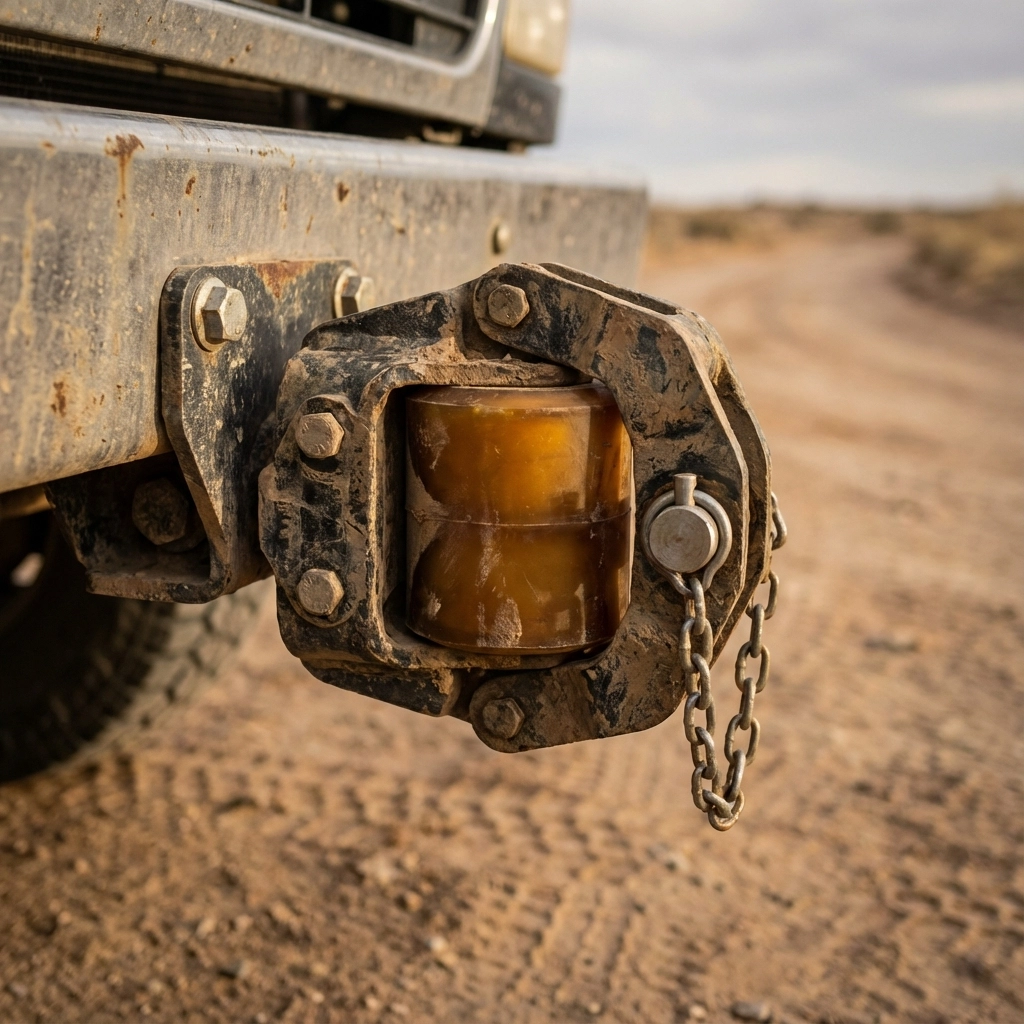
A polyblock hitch uses a polyurethane block as the primary coupling element instead of a traditional ball-and-socket arrangement. The “polyblock” refers to this dense polyurethane component that provides controlled flexibility while maintaining structural strength.
The system works through controlled deformation of the polyurethane block, which compresses and flexes to accommodate movement between the tow vehicle and trailer. This design allows articulation in multiple directions simultaneously, unlike single-axis pivot systems.
Key components include the polyurethane block itself, which handles the primary coupling forces; the articulation pin that provides the primary pivot point; and the yoke and mounting hardware that secures everything to both vehicles. Spring-loaded mechanisms maintain proper tension and engagement throughout the range of movement.
The fundamental difference between polyblock and coupler hitches lies in their movement characteristics. Traditional couplers allow rotation around a single vertical axis, while polyblock systems permit complex multi-directional articulation that follows terrain contours more naturally.
Understanding these components helps identify maintenance points and explains why proper suspension maintenance works in conjunction with hitch care for optimal off-road performance.
How Often Should You Perform Polyblock Hitch Maintenance?
Pre-trip inspection should become routine before any off-road adventure. Check for obvious damage, ensure all pins and hardware are secure, and verify smooth articulation through the full range of movement. This 5-minute inspection can prevent trail-side failures.
Post-trip inspection becomes critical after off-road use, especially following dusty conditions, water crossings, or extended rock crawling. Debris accumulation and contamination can rapidly accelerate wear if not addressed promptly.
Seasonal maintenance schedules should align with your usage patterns. Heavy off-road users need quarterly deep maintenance, while occasional users can extend to semi-annual service. However, storage periods require specific preparation to prevent deterioration.
How to Lubricate a Polyblock Hitch (Step-by-Step)
Lubrication Tools & Materials Checklist
Proper polyblock hitch lubrication requires specific materials that won’t damage polyurethane components. Poly-safe grease or dry lubricant prevents chemical breakdown of the polyurethane block. Clean rags remove contamination before lubrication, while a soft brush helps access tight spaces. Safety gloves protect hands from chemicals and sharp edges.
Never use petroleum-based lubricants, which can cause polyurethane to swell and fail. Marine grease or specialized polymer-safe lubricants provide the best protection without material compatibility issues.
Step-by-Step Polyblock Hitch Lubrication
Start by securing both the trailer and tow vehicle on level ground, then fully disengage the hitch to access all components. This safety step prevents unexpected movement during maintenance.
Clean all dirt, dust, and debris from articulation joints using compressed air or a soft brush. Contamination mixed with fresh lubricant creates an abrasive paste that accelerates wear rather than preventing it.
Apply lubricant specifically to articulation points, including the main pivot pin, yoke joints, and any grease fittings. Use sparingly, excess lubricant attracts dirt and debris that compromises protection.
Cycle the hitch through its full range of motion several times to distribute lubricant evenly across all contact surfaces. This ensures complete coverage and identifies any binding or resistance issues.
Wipe excess lubricant from external surfaces to prevent dirt accumulation. Leave only enough lubrication to maintain protection without creating a debris magnet.

How to Inspect a Polyblock Hitch for Wear or Damage
Key Inspection Points
The polyurethane block requires careful examination for cracking, deformation, or hardening. Surface cracking often indicates UV damage or chemical exposure, while deformation suggests overloading or impact damage. Hardening typically results from age or thermal cycling.
Check for excessive play or looseness in all joints by manually working the hitch through its range of motion. Properly maintained hitches should move smoothly without binding, but shouldn’t exhibit loose or sloppy movement that indicates worn bushings or pins.
Inspect pin wear and corrosion carefully, as these components handle primary structural loads. Surface corrosion can be addressed with cleaning and fresh lubrication, but deep pitting or dimensional wear requires replacement.
Verify bolt torque and fastener condition throughout the assembly. Vibration and stress cycling can loosen critical fasteners, while corrosion can compromise thread integrity.
Signs Your Polyblock Hitch Needs Service or Replacement
Squeaking or grinding noises during articulation indicate insufficient lubrication or contamination. Address these sounds immediately, as continued operation accelerates wear exponentially.
Reduced articulation range suggests polyurethane degradation or mechanical binding. The hitch should move freely through its designed range without resistance or stops.
Uneven trailer movement or tracking problems often indicate asymmetric wear or component failure. These symptoms typically develop gradually but can worsen rapidly under continued stress.
Visible structural damage, including cracked mounting brackets, bent pins, or separated components, requires immediate attention and professional evaluation.
Regular trailer wheel bearing maintenance complements hitch inspection by ensuring the entire towing system operates as designed.
Best Lubricants for Polyblock Hitch Maintenance
The choice between grease and dry lubricant depends on operating conditions and maintenance preferences. Grease provides superior protection in dusty environments and offers longer service intervals, but attracts more debris. Dry lubricants resist contamination but require more frequent application.
Polyurethane-safe lubrication considerations eliminate many common automotive lubricants. Petroleum-based products can cause swelling, hardening, or chemical breakdown of polyurethane components. Marine-grade greases often provide the best compatibility and protection.
Avoid penetrating oils like WD-40 for primary lubrication, though they’re useful for cleaning and displacement of water. Never use chassis grease or wheel bearing grease, as these typically contain additives that attack polyurethane.
Recommended products include synthetic greases specifically formulated for polymer compatibility, lithium-based marine greases, and dry PTFE lubricants for dusty conditions.
Common Polyblock Hitch Maintenance Mistakes
Over-lubricating ranks among the most common errors, creating a debris magnet that accelerates rather than prevents wear. Apply only enough lubricant to coat moving surfaces, excess provides no additional protection.
Using incompatible grease can destroy polyurethane components within months rather than years. Always verify compatibility before applying any lubricant to polyurethane parts.
Skipping inspections after off-road trips allows damage to accumulate unnoticed. Rocky trails, water crossings, and dusty conditions introduce contaminants and cause impact damage that requires prompt attention.
Ignoring early signs of wear leads to more expensive repairs and potential failures. Address unusual noises, reduced movement, or visible damage immediately rather than hoping problems resolve themselves.
Many owners neglect the connection between hitch maintenance and overall off-road trailer preparation, missing opportunities for comprehensive system care.
Polyblock Hitch Maintenance Checklist (Quick Reference)
Before Every Trip
- Visual inspection for obvious damage
- Check pin security and engagement
- Verify smooth articulation
- Confirm mounting bolt tightness
After Off-Road Use
- Clean debris from all joints
- Check for impact damage
- Inspect polyurethane block condition
- Apply lubrication if needed
Seasonal Deep Inspection
- Remove and inspect all pins
- Check polyurethane block for degradation
- Verify torque specifications
- Replace worn components
- Apply fresh lubrication throughout
This systematic approach ensures reliability during critical moments when proper RV maintenance becomes essential for safety and success.
FAQs About Polyblock Hitch Maintenance
How often should I lubricate a polyblock hitch?
Lubricate every 3,000 miles or quarterly for regular use, monthly for heavy off-road use, and always after dusty conditions or water crossings.
What grease is safe for polyblock hitches?
Use only polyurethane-compatible lubricants such as marine-grade grease or synthetic lubricants specifically formulated for polymer compatibility. Avoid petroleum-based products.
Can I tow without lubricating a polyblock hitch?
While possible short-term, operating without proper lubrication rapidly accelerates wear and can lead to catastrophic failure, especially under off-road stress.
How long does a polyblock hitch last?
With proper maintenance, expect 8-12 years of service. Neglected hitches may fail within 3-5 years under similar conditions.
Is polyblock hitch maintenance different for off-road trailers?
Yes, off-road use requires more frequent inspection and lubrication due to increased stress, contamination, and environmental exposure compared to highway towing.
Why BlackSeries Trailers Rely on Proper Hitch Maintenance
BlackSeries designs trailers specifically for off-road and overland adventures where equipment reliability becomes paramount. Remote locations offer no roadside assistance or parts availability, making preventive maintenance essential rather than optional.
Articulation reliability matters critically in terrain where rigid connections would bind, creating unsafe handling characteristics or component failure. Proper hitch maintenance ensures the suspension system and towing interface work harmoniously to handle challenging conditions.
The investment in quality off-road trailers deserves protection through comprehensive maintenance programs. Regular maintenance schedules that include hitch care, suspension service, and system inspection provide the reliability that serious adventurers depend on for safe, successful expeditions into remote destinations.

