The best family travel trailers for 2026 combine spacious bunkhouse layouts, comprehensive safety features, and proper weight distribution for reliable towing. Key factors include sleeping capacity for 6-8 people, dedicated storage for family gear, and matching your trailer’s GVWR to your tow vehicle’s capabilities: with bunkhouse designs emerging as the top choice for growing families.
What Makes a Travel Trailer Family-Friendly?
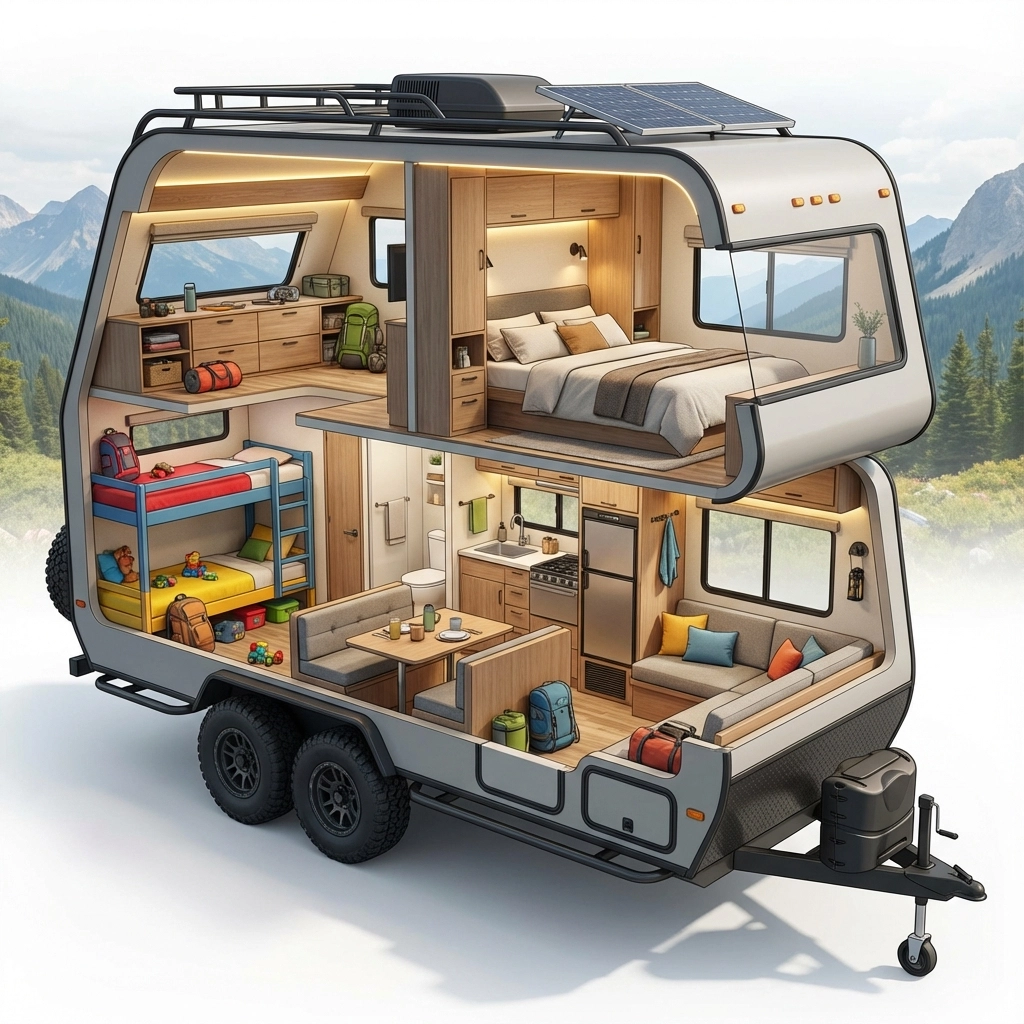
Understanding family-specific terminology helps narrow your search effectively. A family travel trailer typically sleeps 4-8 people using multiple sleeping zones rather than just convertible furniture. Bunkhouse layouts feature dedicated sleeping areas with built-in bunk beds, usually in the rear section, separate from the main bedroom.
The difference between dry weight and GVWR (Gross Vehicle Weight Rating) becomes critical for families carrying extra gear. Dry weight represents the trailer without water, propane, or belongings, while GVWR includes everything loaded. Family trailers often gain 1,500-2,500 pounds between dry weight and actual travel weight due to clothing, toys, outdoor equipment, and supplies.
Sleeping capacity versus real usability matters significantly. A trailer rated for 8 people might require converting the dinette and sofa every night, disrupting family routines. True family-friendly designs provide dedicated sleeping spaces that don’t require daily setup and teardown.
Family Travel Trailers vs Other RV Types
Family travel trailers offer distinct advantages over fifth wheels and motorhomes for most American families. Unlike fifth wheels requiring heavy-duty pickup trucks, travel trailers can be towed by half-ton trucks and many SUVs, expanding your vehicle options and reducing overall investment.
Compared to motorhomes, travel trailers provide camping flexibility: you can unhitch and explore in your tow vehicle without breaking camp. This proves especially valuable for families visiting national parks or remote areas where large RVs face restrictions. Travel trailers also cost significantly less to purchase, insure, and maintain than comparable motorhomes.
The maintenance advantage becomes substantial over time. Travel trailer systems remain simpler than motorhome engine and chassis complications. When issues arise, trailer repairs typically cost less and require shorter service visits than motorhome maintenance.
How to Choose the Best Family Travel Trailer (Step-by-Step)
Step 1: Determine Your Family Size and Growth Plans
Count current family members plus frequent travel companions. Consider children’s growth: teenagers need more privacy and space than young children. Factor in pets, as they require dedicated space and safety features.
Step 2: Select Your Ideal Layout
Bunkhouse trailers work best for families with multiple children, providing separate sleeping zones and play areas. Slide-out models maximize interior space but add weight and complexity. Rear living layouts suit families with older children who need distinct zones.
Step 3: Evaluate Safety Configurations
Look for rounded interior corners, slip-resistant flooring, and secure cabinet latches. Window guards prevent falls, while proper ventilation systems maintain air quality during weather confinement. Consider child safety locks on exterior compartments and entry doors.
Step 4: Match Your Tow Vehicle Capabilities
Calculate your vehicle’s actual towing capacity minus passengers and cargo weight. Factor in tongue weight (typically 10-15% of trailer weight) affecting your vehicle’s payload. Ensure your vehicle includes trailer brake controllers and adequate cooling systems for sustained pulling.
Step 5: Assess Your Camping Preferences
RV park families need different features than off-grid campers. Full-hookup camping prioritizes interior comfort and entertainment, while boondocking requires larger fresh water tanks, robust battery systems, and solar capabilities.
Step 6: Consider Long-term Value and Maintenance
Research manufacturer warranty coverage and dealer service networks. Quality construction materials and proven floor plans typically maintain better resale values. Consider parts availability and repair complexity for long-term ownership costs.
Family Travel Trailer Buying Checklist
Must-Have Features
- ✅ Dedicated sleeping for each family member without daily furniture conversion
- ✅ Adequate storage including exterior compartments and interior closets
- ✅ Safety features like non-slip flooring and secure cabinet latches
- ✅ Proper dinette space for family meals and activities
- ✅ Sufficient fresh water capacity (minimum 40 gallons for 4+ people)
- ✅ Reliable electrical systems with adequate 12V capacity
- ✅ Quality suspension for stable towing and setup
Nice-to-Have Upgrades
- ✅ Outdoor kitchen for expanded cooking options and reduced interior heat
- ✅ Separate kids’ entertainment zone with gaming outlets and storage
- ✅ Four-season insulation for extended camping seasons
- ✅ Solar preparation for off-grid power independence
- ✅ Pet-friendly features like food/water stations and secure doors

Best Family Travel Trailer Layouts Explained
Bunkhouse Travel Trailers (Most Popular)
Bunkhouse designs place bunk beds in a dedicated rear section, often with a privacy door or curtain. This layout works exceptionally well for families with 2-4 children, providing separation from adult sleeping areas. Quality bunkhouse trailers include individual reading lights, storage cubbies, and sometimes entertainment systems for the kids’ zone.
The best bunkhouse models feature full-size bunks rather than cramped “mini-bunks” that children quickly outgrow. Look for 6-foot-plus bunk lengths and adequate headroom for sitting up. Some designs include a convertible lower bunk that transforms into seating during the day.
Rear Living + Convertible Beds
This layout places the primary bedroom in front with living space and convertible sleeping in the rear. It works well for smaller families (2-4 people) who prioritize social space over dedicated children’s areas. The rear living room typically features opposing slides that create substantial interior volume.
Convertible bed systems vary in quality and convenience. Better designs use sturdy mechanisms that don’t require removing cushions or struggling with complex folding procedures. Consider how often you’ll need to convert spaces and whether children can manage the process independently.
Compact Family Layouts (Lightweight Friendly)
Shorter trailers (20-26 feet) can accommodate families while remaining towable by SUVs and lighter trucks. These designs maximize efficiency through clever storage solutions, convertible furniture, and vertical space utilization. They work best for weekend camping or families with younger children requiring less personal space.
Compact family designs often feature creative solutions like murphy beds, flip-up bunks, or convertible dinettes. While space remains limited, quality compact trailers provide surprising livability through thoughtful design and premium materials.
Best Family Travel Trailers by Category (2026)
Best for Small Families (3-4 People)
Lightweight Options (5,000-7,000 lbs): Perfect for families transitioning from tent camping or those with mid-size SUV tow vehicles. These trailers typically feature a front bedroom, central living area, and convertible rear sleeping. Look for models with slide-outs that expand living space while maintaining towable weight.
Key Features: Queen bed, convertible dinette, adequate storage, and simple systems for easy maintenance. Many include outdoor kitchens that expand usable space during good weather.
Best for Large Families (5-7 People)
Bunkhouse Specialists: These larger trailers (28-35 feet) provide dedicated sleeping for multiple children while maintaining family gathering spaces. Double bunks in the rear section accommodate 2-4 kids, with some models including a third bunk or convertible lower section.
Premium Features: Separate bathrooms (half-bath in bunkhouse area), larger fresh water tanks (50+ gallons), enhanced electrical systems for multiple devices, and improved storage throughout.
Best Lightweight Family Travel Trailers
SUV-Towable Options: Designed for families who don’t want to purchase a larger tow vehicle. These trailers use lightweight construction materials and efficient layouts to maximize space while minimizing weight. Dry weights typically range from 4,000-6,000 pounds.
Construction Advantages: Aluminum framing, lightweight cabinetry, and efficient appliances reduce weight without sacrificing functionality. Some manufacturers specialize in ultra-light construction that maintains structural integrity.
Best Family Trailers for Off-Grid Camping
Off-Grid Specialists: These rugged family trailers combine spacious layouts with self-sufficiency features. Enhanced battery systems, solar preparation, larger fresh water tanks, and improved insulation support extended boondocking with families.
Companies like BlackSeries engineer family-friendly trailers specifically for off-grid adventures, incorporating heavy-duty construction with comfort features that don’t compromise durability. Their approach balances rugged capability with family livability: essential for parents planning extended wilderness adventures.
Why More Families Are Choosing Rugged Travel Trailers
American family camping preferences are shifting from developed RV parks toward natural settings and off-grid locations. This trend reflects families seeking authentic outdoor experiences away from crowded facilities, especially after recent years emphasized outdoor recreation benefits.
Rugged travel trailer designs address family safety concerns in remote areas through improved structural integrity, better suspension systems, and self-sufficient utilities. Families appreciate knowing their trailer can handle rough roads while providing reliable shelter and amenities regardless of location.
The safety benefits extend beyond mechanical reliability. Robust construction provides better protection during severe weather, while off-grid capabilities ensure comfort when infrastructure fails. For families with children, this reliability becomes crucial for successful outdoor adventures.
Real-World Use Case: Four-Person Family with Pet
Consider the Johnson family: two adults, two children (ages 8 and 12), and a medium-sized dog planning 5-7 day camping trips throughout the American West. They need a trailer that handles both developed campgrounds and off-grid locations while providing comfort and safety.
Their Requirements:
- Sleeping for 4 without daily conversion
- Pet-safe features and adequate space
- Fresh water for extended stays (50+ gallons)
- Reliable power for devices and lighting
- Tow vehicle compatibility (half-ton truck)
- Storage for outdoor gear and family belongings
Common Problems and Solutions:
Inadequate fresh water capacity forces frequent resupply trips, disrupting family time. Solution: Larger tanks (50+ gallons) plus grey water management systems extend autonomy.
Poor interior ventilation creates condensation and discomfort during weather confinement. Solution: Quality ventilation systems with multiple fans and strategically placed windows maintain air circulation.
Insufficient power storage leads to device charging problems and lighting limitations. Solution: Robust battery systems with solar charging capability provide reliable off-grid power.
Storage shortages force families to leave gear behind or create interior clutter. Solution: Dedicated exterior compartments plus interior storage solutions accommodate family equipment without compromising living space.
FAQ – Best Family Travel Trailers
What is the best family travel trailer layout?
Bunkhouse layouts work best for most families, providing dedicated sleeping areas for children separate from adult spaces. The rear bunkhouse design offers privacy, storage, and often includes entertainment features specifically for kids.
How many people can a family travel trailer sleep?
Quality family travel trailers typically sleep 6-8 people using a combination of queen beds, bunk beds, and convertible dinettes. However, realistic comfortable capacity often runs 1-2 people fewer than maximum ratings, especially for extended trips.
Do family travel trailers need bunk beds?
While not absolutely required, bunk beds provide the most efficient use of space for families with multiple children. Alternatives include convertible dinettes and sofas, but these require daily setup and limit living space functionality.
How heavy is a family travel trailer?
Family travel trailers typically range from 5,000-9,000 pounds dry weight. When loaded with gear, water, and supplies, total weight often increases by 1,500-2,500 pounds. Choose models well within your tow vehicle’s capacity, leaving margin for family equipment.
Are BlackSeries travel trailers good for families?
BlackSeries trailers excel for families prioritizing off-grid adventures and rugged reliability. Their robust construction, self-sufficient utilities, and thoughtful layouts work well for families seeking remote camping experiences while maintaining comfort and safety standards.
Ready to find the perfect family travel trailer? Explore BlackSeries family-ready designs that combine rugged off-road capability with the comfort and safety features modern families need for memorable outdoor adventures.

