The best off-road camper trailers combine three critical elements: adequate ground clearance (10+ inches), independent suspension systems, and proper weight distribution for your tow vehicle. Success depends on matching trailer capabilities to your intended terrain, from forest service roads to technical rock crawling routes.
Understanding Off-Road Trailer Categories
Off-road vs. Overland vs. Off-grid: These terms often overlap but serve different purposes. Off-road trailers prioritize terrain capability with reinforced chassis, high ground clearance, and durable suspension. Overland campers focus on extended remote travel with larger water/fuel capacity and self-sufficiency features. Off-grid trailers emphasize power independence through solar panels and battery systems, though they may lack true off-road capability.
Ground clearance measures the lowest point between axles: aim for 12+ inches for serious trail work. Departure angle affects your ability to climb over obstacles without scraping. Articulating hitches allow the trailer to twist independently from your tow vehicle, reducing stress on both during uneven terrain traversal.
What US Buyers Really Want to Know
Can I Tow It Safely?
Most off-road trailers range from 3,000-7,000 lbs dry weight. Your tow vehicle’s capacity, tongue weight rating, and brake controller compatibility determine what you can safely pull. Popular mid-size trucks like the Toyota Tacoma (6,400 lb tow rating) work well with lighter options, while full-size trucks handle expedition-weight trailers.
Will It Handle My Routes?
Forest Service roads require different capabilities than Moab slickrock. Consider your typical terrain: washboard gravel roads need good suspension, while technical trails demand maximum ground clearance and skid plate protection.
How Long Can I Stay Off-Grid?
Water capacity (20-40+ gallons), battery storage (100-400Ah), and solar generation (200-800W) determine your boondocking duration. Four-season insulation extends camping seasons but adds weight and complexity.
How to Choose Your Best Off-Road Trailer: 6-Step Process
Step 1: Define Your Trail Intensity
Light duty: Maintained dirt roads, gravel campgrounds, established dispersed sites. Standard SUV clearance suffices.
Moderate duty: Forest service roads, washboard surfaces, mild rock gardens. Requires 10+ inch clearance, all-terrain tires.
Heavy duty: Technical 4WD trails, river crossings, severe articulation. Demands 12+ inch clearance, independent suspension, full skid protection.
Step 2: Match Tow Vehicle Capabilities
Calculate your vehicle’s actual towing capacity minus passengers, gear, and fuel weight. Factor in tongue weight (typically 10-15% of trailer weight) and ensure your brake controller can handle trailer-specific requirements.
Step 3: Prioritize Suspension and Hitch Systems
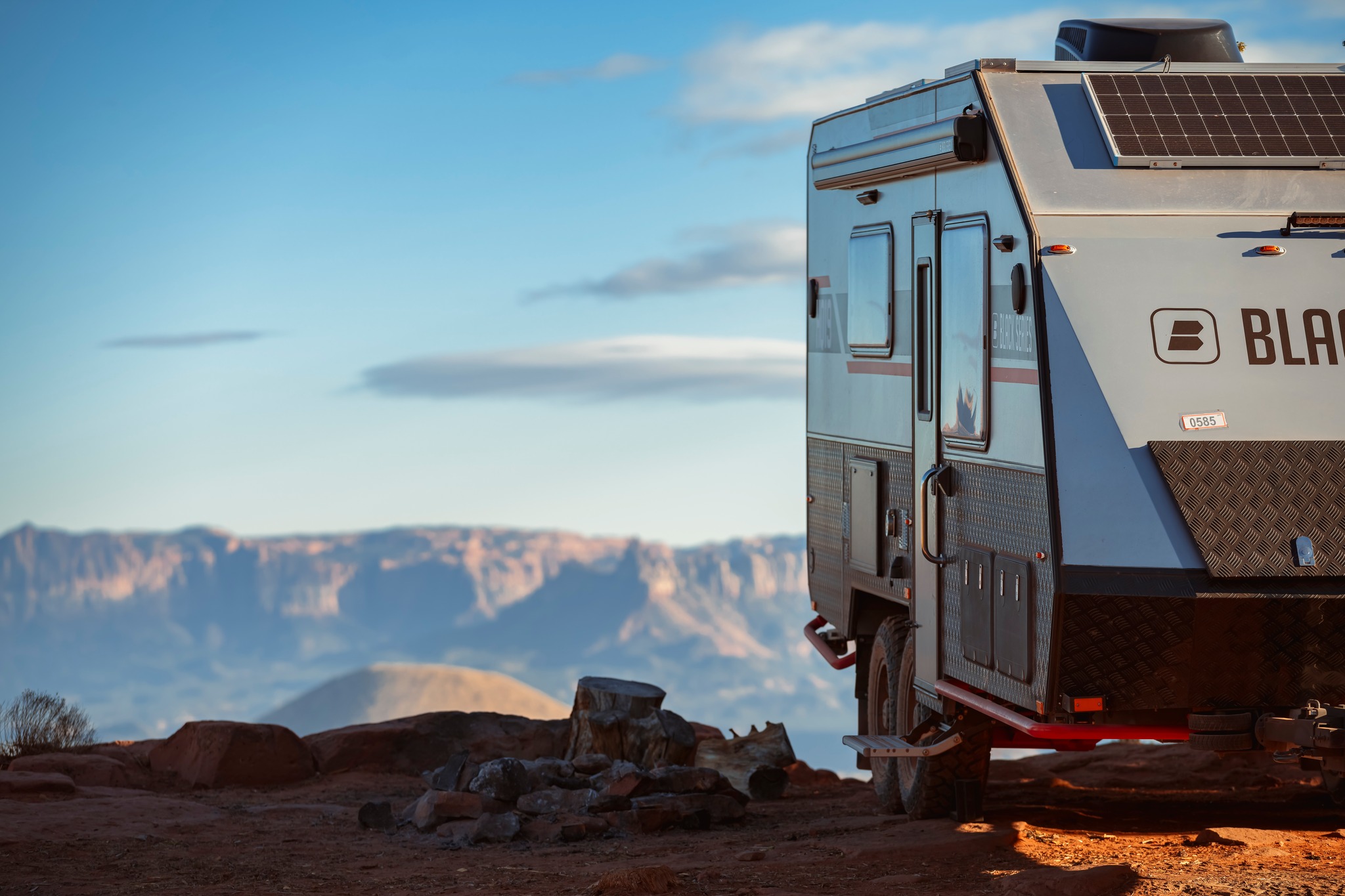
Independent suspension with coil-over shocks handles trail impacts better than leaf springs. Articulating hitches (like those used by BlackSeries designs) prevent binding during extreme articulation. Torsion axles offer middle-ground durability.
Step 4: Evaluate Chassis Protection
Look for full-perimeter skid plates protecting water tanks, electrical systems, and propane lines. Hot-dipped galvanized steel chassis resists corrosion better than painted alternatives. Integrated rock sliders protect vulnerable sidewall areas.
Step 5: Assess Off-Grid Systems
Water capacity should match your typical trip length: 20 gallons minimum for weekend trips, 40+ for week-long adventures. Solar panels (400W+) and lithium batteries (200Ah+) provide reliable power. Four-season insulation enables year-round use but adds weight.
Step 6: Consider Maintenance and Support
Choose brands with established US dealer networks and readily available parts. Avoid exotic components that require specialty service. Research warranty coverage for off-road use: some manufacturers void coverage for “extreme” conditions.
Off-Road Trailer Buyer’s Checklist
Must-Have Features
✅ True ground clearance: 10+ inches measured at lowest point
✅ All-terrain or mud-terrain tires with matching spare
✅ Comprehensive skid plate protection for tanks and systems
✅ Electric trailer brakes with breakaway safety system
✅ Reinforced chassis construction (steel tube or aluminum space-frame)
✅ Functional hitch articulation for uneven terrain
Nice-to-Have Upgrades
✅ Large freshwater capacity (30+ gallons for extended boondocking)
✅ Four-season insulation and heating systems
✅ External kitchen setup to minimize interior moisture and odors
✅ Roof-mounted solar panels with battery monitoring systems
✅ LED lighting package for reduced power consumption
✅ Integrated awning system for expanded outdoor living space

Top Off-Road Trailer Picks by Category
Best for Lightweight Overlanding
Airstream Basecamp 20: 3,500 lbs dry weight, 8.5″ ground clearance, compatible with mid-size SUVs. Aluminum construction resists corrosion, though clearance limits serious trail work.
TAXA Mantis: 3,200 lbs, innovative flip-up roof design, good build quality. Limited ground clearance (8.7″) but excellent for maintained dirt roads and established campgrounds.
Best for Extended Off-Grid Adventures
BlackSeries HQ19: Purpose-built for American overlanding with 14″ ground clearance, independent coil-over suspension, and 40-gallon freshwater capacity. Features hot-dipped galvanized chassis and integrated solar preparation. Learn more about winter capabilities.
Boreas XT: 4,200 lbs, 11.5″ clearance, strong solar and battery systems. Well-suited for week-long boondocking with good build quality and US support network.
Best for Rugged Trails
BlackSeries HQ21: Maximum ground clearance (14″), independent suspension, full chassis protection. Designed for Australian Outback conditions, adapted for American trails. The larger format provides enhanced family comfort without sacrificing capability.
Opus Air: Expanding trailer design, good clearance when deployed. Unique pop-up concept maximizes interior space while maintaining towing stability.
Best Value Options
Forest River Rockwood Geo Pro: Budget-conscious option with decent ground clearance and standard features. Limited off-road capability but suitable for light-duty applications.
Aliner Scout: Lightweight A-frame design, easy towing, basic amenities. Good entry-level option for weekend warriors on established forest roads.
Off-Road Trailer Comparison
The BlackSeries Advantage: Engineering for Extremes
BlackSeries trailers originate from Australian outback requirements, where isolation and harsh conditions demand absolute reliability. The HQ Series design philosophy prioritizes chassis strength, suspension capability, and system redundancy over lightweight construction.
Proven Specifications: 14-inch ground clearance exceeds most competitors, while independent coil-over suspension absorbs impacts that destroy leaf-spring setups. Hot-dipped galvanized chassis construction provides superior corrosion resistance compared to painted alternatives.
System Integration: Unlike aftermarket modifications, BlackSeries designs integrate off-road capability from the foundation up. Articulating hitches, reinforced drawbars, and protected system routing reflect purpose-built engineering rather than compromised adaptations.
Who Benefits Most: Serious overlanders planning extended remote travel, families wanting four-season capability, and users prioritizing long-term durability over initial cost savings find BlackSeries trailers worth the premium investment.
Real-World Performance Data
Common Failure Points: Industry analysis shows standard travel trailers fail most frequently due to suspension damage (40%), water system leaks (25%), and electrical problems (20%) during off-road use. Purpose-built off-road trailers reduce these failure rates significantly through reinforced construction and protective systems.
Terrain Testing: A typical Western US overland route: combining 200 miles of washboard gravel, moderate rock crawling, and 5-day boondocking: exposes trailers to impacts, dust infiltration, and system stress that reveals design weaknesses. Successful trailers typically feature sealed electrical systems, protected plumbing, and suspension designed for repeated impacts rather than highway comfort.
Frequently Asked Questions
What makes a camper trailer truly “off-road” capable?
Ground clearance above 10 inches, independent suspension, reinforced chassis construction, and comprehensive skid plate protection. Marketing terms like “off-road ready” often mean only cosmetic accessories without fundamental capability improvements.
How much should I expect to spend on a quality off-road trailer?
Entry-level options start around $35,000, while serious expedition-grade trailers range $75,000-$120,000+. The premium reflects reinforced construction, advanced suspension systems, and comprehensive off-grid capabilities rather than luxury appointments.
Do I need independent suspension for off-road camping?
For maintained dirt roads and established campgrounds, torsion axles suffice. Technical trails, repeated impacts, and severe articulation benefit significantly from independent coil-over suspension that protects both trailer and cargo.
What tow vehicle works best with off-road trailers?
Mid-size trucks (Toyota Tacoma, Chevy Colorado) handle lighter trailers well, while full-size trucks (F-150, Silverado, Ram 1500) provide margin for heavier expedition rigs. Match your vehicle’s actual towing capacity to trailer requirements, including tongue weight and brake controller specifications.
Can off-road trailers handle winter camping conditions?
Purpose-built models with four-season insulation, heated compartments, and proper ventilation systems enable winter use. Standard travel trailers modified for “off-road” typically lack thermal protection and system freeze prevention necessary for cold-weather reliability.
Ready to explore America’s backcountry? Discover BlackSeries off-road trailers engineered for the adventures ahead, or browse our comprehensive adventure guides for planning your next expedition.

