
Your cart (0)
Your cart is empty
Tax included and shipping calculated at checkout
Your cart is empty
Tax included and shipping calculated at checkout

The best travel trailers for remote camping must offer independent suspension, robust construction, long-lasting power systems, high-ground clearance, reliable insulation, and true off-grid capability. This guide compares the top off-road trailers and explains why Blackseries is a leading choice in the U.S. market.
Remote camping encompasses several distinct camping styles that go far beyond traditional campground experiences. Dispersed camping refers to camping on public lands without designated campsites, typically found on Bureau of Land Management (BLM) land and national forests. Boondocking involves camping without hookups to water, electricity, or sewer systems, requiring complete self-sufficiency. BLM land camping specifically targets the millions of acres of public land managed by the Bureau of Land Management, offering free camping opportunities in remote desert and mountain locations.
These camping styles present unique terrain challenges that standard RVs simply cannot handle. Rocky desert terrain in places like Moab, Utah, demands high ground clearance and robust undercarriage protection. Muddy trails in Pacific Northwest forests require aggressive tread patterns and reliable traction systems. Snow-covered roads leading to winter camping spots demand four-season capability and proper insulation. Riverbed crossings in remote areas necessitate waterproofing and corrosion-resistant materials.
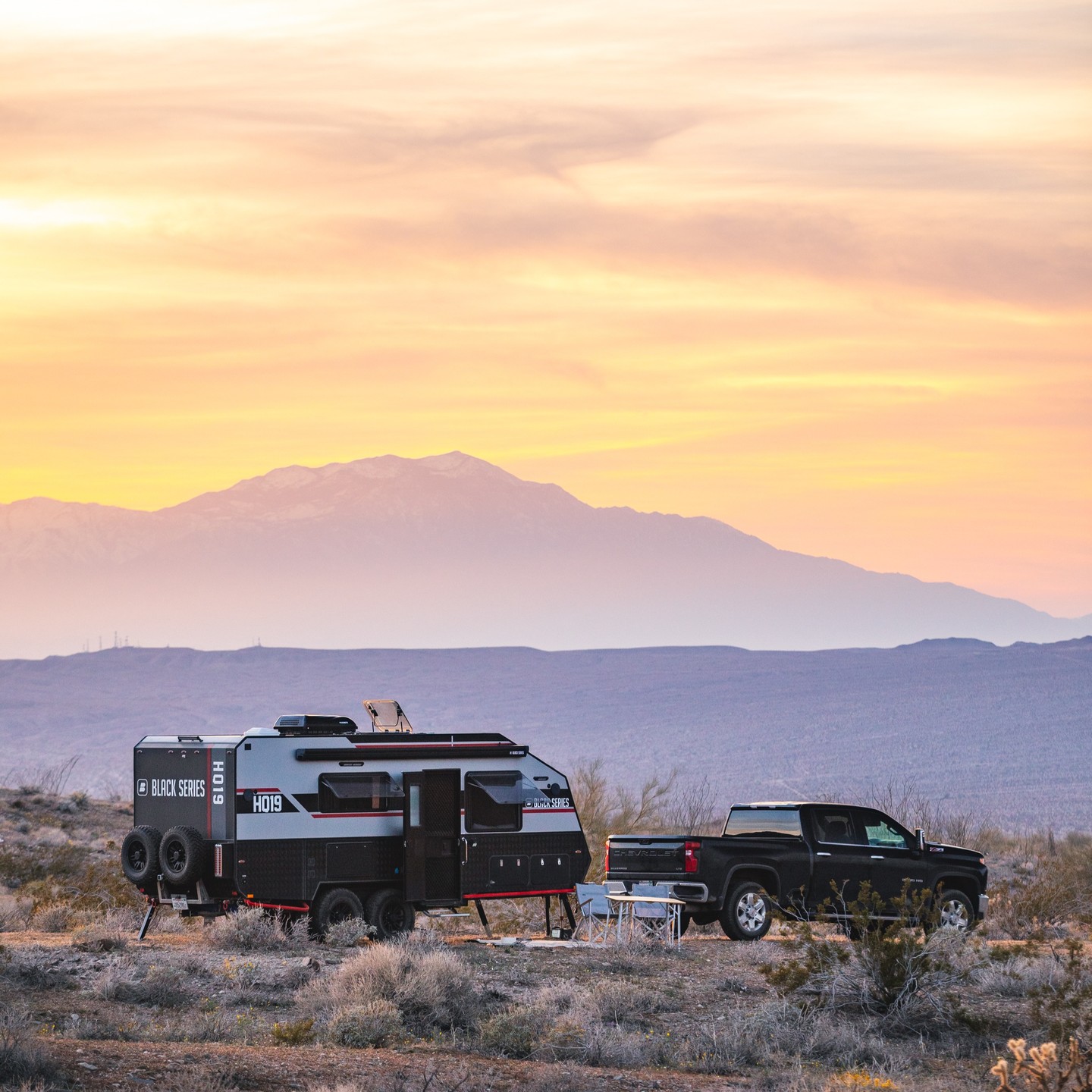
U.S. remote camping enthusiasts are motivated by the desire for complete independence from crowded campgrounds, enhanced safety through self-sufficiency, power autonomy that enables extended stays, and the ruggedness required to access truly pristine locations. Understanding these motivations helps explain why standard travel trailers fall short for serious remote camping adventures.
Independent trailing arm suspension represents the gold standard for remote camping trailers. Unlike traditional leaf spring systems, independent suspension allows each wheel to articulate separately, maintaining traction and stability on uneven terrain. Quality systems feature dual shock absorbers at each wheel position, providing both impact resistance and controlled articulation over rocks, ruts, and steep approaches.
The superiority of independent suspension becomes evident when comparing impact resistance capabilities. While leaf springs tend to transfer jarring impacts directly to the trailer frame and contents, independent systems absorb and dissipate energy through dedicated shock absorbers and control arms. This protection proves critical when traversing challenging terrain types that would damage conventional travel trailers.
Evaluation checklist for suspension durability:
Premium remote camping trailers utilize hot-dipped galvanized steel frames that provide superior corrosion resistance compared to standard painted steel construction. This galvanization process creates a metallurgical bond between zinc and steel, offering decades of protection against rust and corrosion in coastal and desert environments.
Underbody armor and skid plates protect critical components from rock impacts and debris. Quality systems include reinforced A-frame construction, transmission and differential protection, and strategically placed armor covering fuel and water lines. The importance of proper undercarriage protection cannot be overstated when accessing remote locations via technical terrain.
Modern remote camping demands sophisticated electrical systems capable of supporting extended autonomous operation. Lithium battery capacity options typically range from 200Ah for weekend adventures to 600Ah for extended remote stays. These systems require proper inverter compatibility rated for peak loads, including air conditioning, microwaves, and power tools.
Solar wattage benchmarks vary significantly based on usage patterns:
Generator compatibility remains essential for extended cloudy periods and high-demand situations. Quality installations include automatic transfer switching and proper ventilation for safe operation.
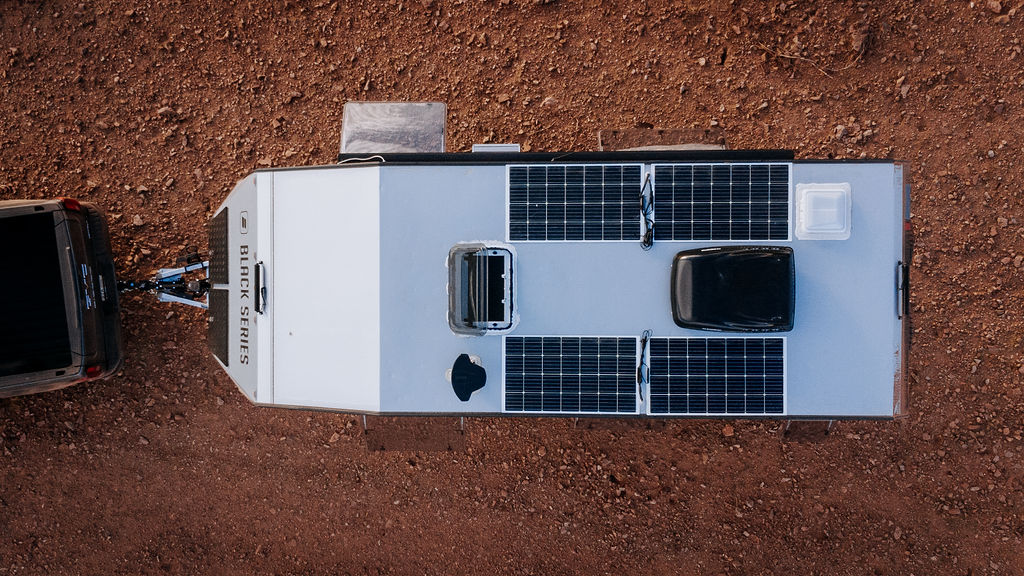
Water system considerations include adequate fresh water capacity (typically 40-100 gallons), heated tank systems for winter operation, and grey tank protection preventing freezing and contamination.
Four-season capability requires proper R-value insulation matched to expected climate conditions. Quality remote camping trailers feature R-13 to R-21 wall insulation, with additional floor and ceiling insulation for comprehensive thermal protection. Dual-pane windows minimize condensation and heat transfer while providing durability against impact.
Effective heat distribution systems utilize ducted forced-air furnaces with proper routing to eliminate cold spots. Condensation control through adequate ventilation and vapor barriers prevents moisture accumulation that can lead to mold and structural damage during extended stays.
Ground clearance requirements vary by intended terrain, but serious remote camping trailers feature minimum 12-inch clearance at the lowest point. Approach angles of 25-30 degrees and departure angles exceeding 30 degrees enable navigation over rocks, logs, and steep transitions commonly encountered on remote access roads.
Real-world clearance benchmarks based on popular U.S. destinations:
Remote camping subjects trailer interiors to constant vibration and impact forces that quickly destroy conventional RV cabinetry. Quality construction utilizes metal frame cabinetry with proper reinforcement and secure mounting systems that distribute loads effectively.
Anti-rattle hardware becomes critical for extended remote travel. Positive latching systems, cushioned contacts, and proper gap management prevent the annoying rattles and cabinet damage common in standard travel trailers. Wet bath construction requires marine-grade materials and proper waterproofing to withstand the humidity and usage patterns of extended boondocking.
Understanding proper interior construction techniques helps buyers evaluate build quality and longevity when comparing different manufacturers.
The Blackseries HQ series represents the pinnacle of remote camping trailer engineering, combining uncompromising off-road capability with genuine comfort and luxury. Independent trailing arm suspension provides superior articulation and impact absorption compared to leaf spring systems. Armored underbody protection includes comprehensive skid plates and reinforced mounting points.
Honeycomb composite walls offer exceptional strength-to-weight ratios while providing superior insulation properties. The available 600Ah lithium battery option with 1000W solar capability enables extended autonomous operation in the most remote locations. This combination makes HQ series trailers ideal for BLM land exploration and extended boondocking adventures.
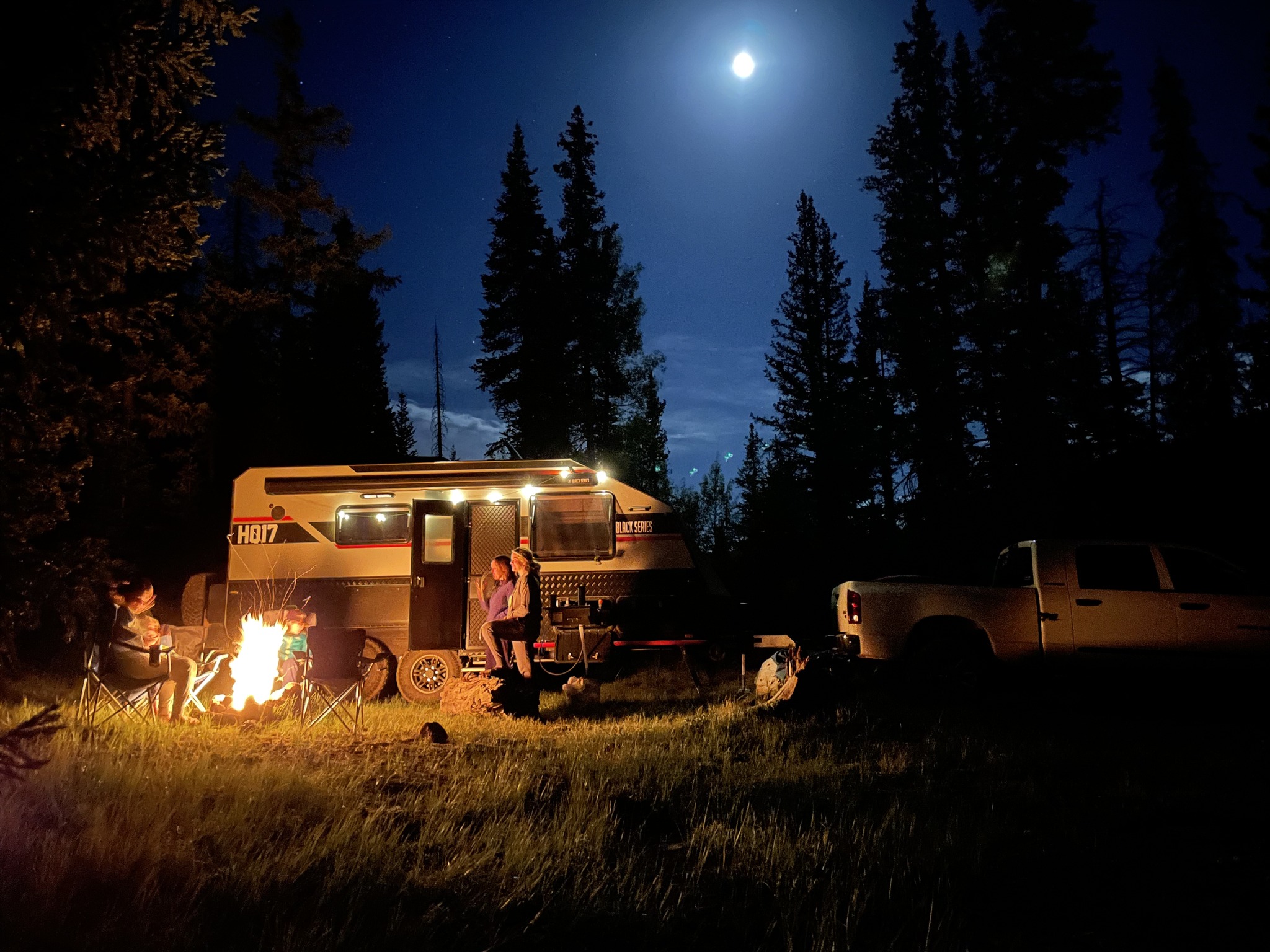
The Bruder EXP features Australian-inspired design with independent suspension and composite construction. While capable, the EXP series lacks the comprehensive underbody protection and electrical system sophistication of the Blackseries HQ lineup.
Imperial’s Xplore series offers good value with independent suspension and adequate off-grid capability. However, interior construction and component selection don’t match the durability standards expected for serious remote camping.
The Opus OP15 provides interesting hybrid functionality with expandable sleeping areas. Ground clearance and suspension articulation limit its capability on technical terrain compared to purpose-built options.
Taxa’s Mantis features distinctive styling and adequate capability for maintained dirt roads. Limited power system capacity and modest ground clearance restrict its remote camping applications.
Comparison Table:
Hot-dipped galvanized frame construction provides decades of corrosion protection in the harshest environments. This process creates a metallurgical bond that far exceeds the protection offered by painted or powder-coated finishes common in competitive products.
Military-grade independent suspension utilizes heavy-duty components designed for military vehicle applications. Dual shock absorbers and reinforced control arms handle impacts that would damage conventional systems. This suspension design enables confident navigation of challenging terrain that stops other trailers.
Heavy insulation packages enable genuine four-season camping capability. Comprehensive thermal barriers, heated tank systems, and proper ventilation control make winter remote camping comfortable and safe. Honeycomb composite wall construction provides exceptional strength while maintaining reasonable weight for towing efficiency.
Blackseries conducts extensive 30,000-mile cross-terrain testing that validates design decisions and component selection. Independent suspension systems demonstrate superior shock absorption characteristics compared to leaf spring alternatives, reducing interior damage and improving comfort.
Gravel impact testing confirms underbody armor effectiveness in protecting critical systems. Temperature insulation measurements verify R-value claims and thermal performance in extreme conditions.

Real customer case studies from Utah desert exploration, Colorado Rockies winter camping, and Alaska summer adventures demonstrate proven reliability in America’s most challenging environments. These field reports provide valuable insights into long-term durability and maintenance requirements.
Stabilizer design ensures secure setup on uneven terrain common in remote locations. Proper stabilization prevents dangerous shifting during setup and occupation, critical for safety when camping alone in remote areas.
Tire protection systems include spare tire storage, tire pressure monitoring, and run-flat capability options. Tool storage and recovery gear mounting provide organized storage for essential equipment needed when self-recovery becomes necessary.
Step 1: Evaluate Your Terrain Requirements
Honestly assess the terrain you plan to explore. Maintained forest service roads require different capabilities than technical rock crawling or river crossings. Understanding terrain classifications helps match trailer specifications to actual requirements.
Step 2: Check Suspension and Chassis
Verify independent suspension operation and inspect construction quality. Look for reinforced mounting points, adequate shock absorber travel, and comprehensive frame protection.
Step 3: Verify Off-Grid Power Specifications
Calculate actual power requirements including peak loads and duty cycles. Verify solar capacity, battery chemistry, and inverter ratings match your usage patterns.
Step 4: Test Insulation and Climate Rating
Examine insulation specifications and verify four-season capability if winter camping is planned. Check heating system capacity and distribution effectiveness.
Step 5: Compare Ground Clearance
Measure clearance at all critical points including axles, tanks, and electrical components. Verify approach and departure angles meet your terrain requirements.
Step 6: Check Interior Structure Firmness
Test cabinet mounting, door operation, and overall structural integrity. Look for anti-vibration hardware and proper reinforcement throughout.
Step 7: Test Doors, Seals, and Dust-Proofing
Verify weatherstrip condition and seal integrity. Test all latching mechanisms and inspect dust intrusion prevention measures.
Step 8: Match Tow Vehicle Capacity
Confirm your vehicle’s towing capacity, tongue weight limits, and braking capability match trailer specifications. Consider weight distribution systems for optimal handling.
Boondocking refers to camping without utility hookups, requiring complete self-sufficiency for water, power, and waste management. Overlanding emphasizes vehicle-dependent travel to remote destinations with the vehicle serving as primary equipment transport.
Ground clearance measures the distance between terrain and the lowest trailer component, critical for obstacle clearance. Articulation describes suspension travel capability, determining wheel contact maintenance on uneven surfaces.
GVWR (Gross Vehicle Weight Rating) defines maximum loaded trailer weight, including cargo and fluids. Off-grid systems encompass all equipment enabling autonomous operation without external utilities.
Solar array output indicates maximum power generation under ideal conditions, while independent suspension describes wheel systems that operate independently rather than through connected axles.
What size travel trailer is best for remote areas?
Smaller trailers (16-21 feet) offer better maneuverability and lower towing requirements while still providing essential amenities. Length affects approach angles and turning radius on tight trails.
Do I need independent suspension for off-road camping?
Independent suspension provides significant advantages for serious remote camping, offering better traction, reduced impact transfer, and improved stability on uneven terrain compared to leaf spring systems.
What power system is best for off-grid camping?
Lithium battery systems with adequate solar charging provide the best combination of capacity, efficiency, and longevity. Minimum 400Ah capacity with 600W+ solar enables comfortable extended stays.
How much solar power is needed for boondocking?
Power requirements vary by usage, but 600-1000W provides adequate capacity for refrigeration, lighting, electronics, and moderate appliance use during extended remote camping.
Are Blackseries trailers good for winter remote camping?
Yes, Blackseries trailers feature comprehensive insulation packages, heated tank systems, and proper ventilation making them excellent for winter remote camping when properly prepared.
What type of tires are best for remote camping trailers?
All-terrain or light truck tires provide the best combination of on-road comfort and off-road traction. Load rating must match trailer requirements with adequate reserve capacity for harsh conditions.
The investment in a quality remote camping trailer pays dividends in reliability, safety, and comfort during your most adventurous expeditions. Proper maintenance and preparation ensures years of dependable service in America’s most remote and beautiful locations.
Best Off-Road Travel Trailers for Remote Camping & Boondocking最先出现在Black Series RV | Off-Road Travel Trailers, Toy Haulers & Camper Trailers | Off road rv | Off grid rv | Overland rv | Off road trailer | Off road travel trailer | Overland travel trailer。