Full-time RV living in the U.S. requires a trailer that offers durability, weather-resistance, long-term comfort, and off-grid capability. Many full-time RVers prefer off-road travel trailers like Blackseries because of their reinforced chassis, insulation for four-season living, and independent suspension that can handle both highways and remote areas.
What Full-Time RV Living Really Means in America
Full-time RV living has transformed from a niche lifestyle to a mainstream movement across America. Unlike weekend camping or extended vacations, full-time living means your travel trailer becomes your primary residence, requiring systems and construction built for daily use rather than occasional recreation.
The demographic embracing this lifestyle spans digital nomads seeking location independence, retired couples pursuing adventure, and families choosing financial freedom over traditional homeownership. According to recent industry data, over 1 million Americans now live full-time in RVs, with growth accelerating 7.5% annually.
Key Differences from Recreational Use:
Full-time living demands residential-quality systems, not weekend-camping convenience. You’ll need reliable heating and cooling for daily comfort, robust water systems for regular use, and electrical capacity supporting work-from-home technology. Most importantly, your trailer must withstand constant road travel and diverse climate conditions.
Legal Considerations in America:
Full-time RV living exists in a legal gray area across different states. While no federal law prohibits living in an RV, local zoning ordinances, HOA restrictions, and municipal codes create varying regulations. Popular full-time friendly states include Texas, Florida, and South Dakota, which offer mail forwarding services and RV-friendly insurance options.
Step-by-Step Guide: Choosing Your Full-Time Travel Trailer
1. Structure & Durability Assessment
Frame Construction: Look for fully welded steel frames rather than bolt-together assemblies. Aluminum framing offers weight savings but steel provides superior durability for constant road stress. Understanding travel trailer construction materials becomes crucial when your trailer faces daily wear rather than weekend use.
Suspension Systems: Traditional leaf spring suspension works adequately for campground-to-campground travel, but independent suspension systems handle road irregularities better during extended highway travel. This becomes critical for full-timers who average 10,000+ miles annually.
Build Quality Indicators:
- Seamless exterior panels without visible joints
- Reinforced door frames and window mounting
- Continuous structural members rather than sectional assembly
- Marine-grade wiring throughout
2. Four-Season Capability Requirements
Insulation Standards: Full-time living demands true four-season insulation, not basic weather protection. Look for R-13+ wall insulation, thermal-pane windows, and heated underbelly protection. Standard RV insulation (R-5 to R-7) proves inadequate for winter full-time living.
Heating System Capacity: Your heating system must maintain comfortable temperatures during extended cold weather, not just overnight warming. Forced-air propane furnaces should exceed 30,000 BTU capacity for trailers over 25 feet. Consider diesel heating systems for superior efficiency during extended cold-weather stays.
Moisture Management: Full-time living generates significant interior moisture from cooking, showering, and breathing. Adequate ventilation systems, including powered roof vents and moisture-barrier construction, prevent the condensation issues that plague full-timers in humid climates.
3. Interior Layout & Storage Solutions
Permanent Sleeping Arrangements: Convertible dinette beds work for camping but prove impractical for full-time living. Prioritize trailers with dedicated bedrooms featuring residential-quality mattresses and adequate storage around the bed.
Kitchen Functionality: Full-time cooking requires residential-sized refrigerators (8+ cubic feet), three-burner cooktops with oven, and sufficient counter space for meal preparation. Pantry storage should accommodate groceries for extended periods between supply runs.
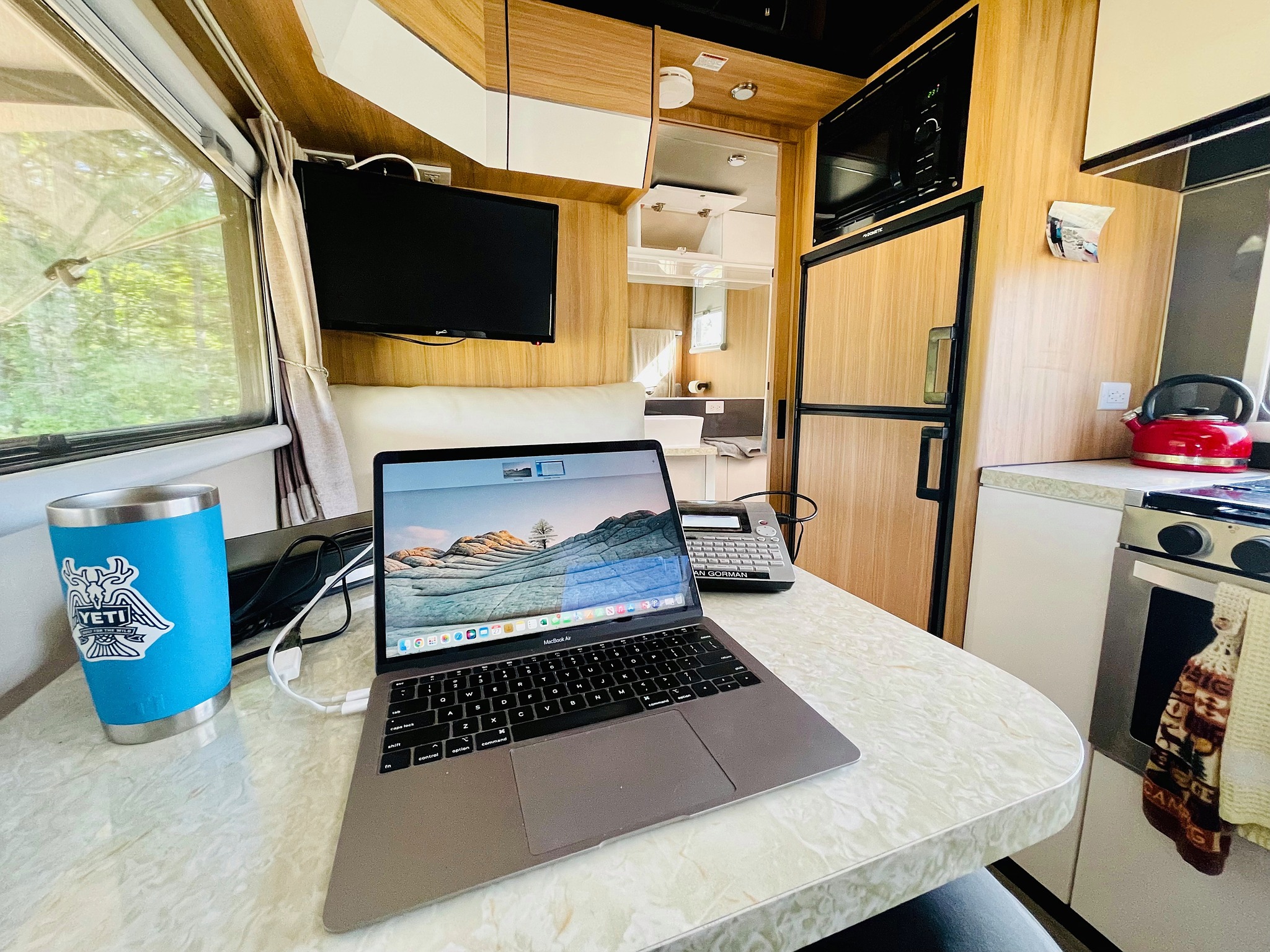
Work Space Requirements: Remote work demands dedicated office space with reliable internet connectivity. Look for trailers offering desk areas with multiple 120V outlets and ethernet pre-wiring for enhanced connectivity options.

4. Off-Grid Power System Essentials
Battery Capacity: Full-time off-grid living requires substantial battery banks, typically 400Ah minimum lithium capacity. Lead-acid batteries prove inadequate for daily cycling and extended autonomy. Lithium systems provide 3-4x the usable capacity while lasting 5-10x longer.
Solar Array Sizing: Calculate your daily power consumption and size solar arrays accordingly. Full-time living typically requires 600-1000 watts of solar generation for reliable autonomy. Off-grid power system planning helps determine your specific requirements based on usage patterns.
Inverter Systems: Pure sine wave inverters rated 2000W+ enable running standard household appliances including microwaves, coffee makers, and power tools. Modified sine wave inverters prove inadequate for sensitive electronics and appliances.
5. Safety Features for Extended Living
Fire Safety: Full-time trailers require comprehensive fire safety beyond basic smoke detectors. Install fire extinguishers in kitchen and bedroom areas, LP gas detectors, and emergency escape windows in sleeping areas.
Security Systems: Extended stays in remote locations demand enhanced security. Consider trailer-specific alarm systems, reinforced door locks, and exterior motion lighting for personal safety.
Emergency Preparedness: Full-time living requires enhanced emergency preparedness including first aid supplies, emergency food/water reserves, communication devices, and basic mechanical tools for roadside repairs.
Top Travel Trailers for Full-Time Living in America
Blackseries HQ Series: Premium Off-Grid Living
The Blackseries HQ Series represents the pinnacle of full-time RV living, especially for those pursuing extended off-grid adventures. These Australian-engineered trailers combine luxury interiors with uncompromising off-road capability.
Engineering Advantages:
- Hot-dipped galvanized steel frame construction
- Independent trailing arm suspension with coil-over shocks
- 12-15 inch ground clearance for accessing remote locations
- Honeycomb composite wall construction for superior insulation
- Marine-grade electrical systems throughout
Off-Grid Systems:
- 400-800Ah lithium battery banks (model dependent)
- 600-1000W solar arrays with MPPT charge controllers
- 2000W+ pure sine wave inverters
- 75-100 gallon fresh water capacity
- Comprehensive grey/black tank systems
Interior Features:
- Permanent queen bed arrangements
- Residential appliances including 12V compressor refrigeration
- Full wet bath with cassette toilet
- Outdoor kitchen with slide-out components
- Climate-controlled storage compartments
The HQ15, HQ17, HQ19, and HQ21 models offer progressively larger living spaces while maintaining off-road capability that enables accessing remote locations impossible for conventional trailers.
Airstream Classic Series: Luxury Highway Travel
Airstream represents iconic American RV manufacturing with emphasis on highway comfort and traditional craftsmanship. Their aluminum construction provides corrosion resistance and distinctive styling.
Strengths:
- Aluminum construction for longevity
- Superior resale value
- Established dealer network
- Time-tested designs
Limitations for Full-Time Living:
- Limited off-road capability
- Smaller tank capacities
- Traditional electrical systems
- Premium pricing for standard features
Grand Design Reflection/Imagine Series: Mainstream Luxury
Grand Design offers well-appointed trailers targeting full-time living with residential features at competitive pricing. Their focus on interior space and standard features appeals to campground-based full-timers.
Notable Features:
- Spacious interior layouts
- Residential appliances standard
- Solid construction quality
- Extensive dealer support network
Lance Travel Trailers: Lightweight Premium
Lance specializes in lightweight travel trailers that maintain livability while reducing towing requirements. Their construction quality exceeds typical production trailers while remaining towable by half-ton vehicles.
Full-Time Living Preparation Checklist
Living Setup Requirements
Legal Preparations:
- Establish mail forwarding service (South Dakota, Texas, or Florida)
- Update vehicle registration and insurance for full-time use
- Research campground reservation systems and membership programs
- Obtain Good Sam, Passport America, or similar discount memberships
Financial Planning:
- Budget for fuel costs (typically $200-500 monthly depending on travel)
- Plan for campground fees ($300-800 monthly)
- Allocate maintenance reserves ($100-300 monthly)
- Consider extended warranty coverage for major systems
Safety & Security Setup
Personal Safety:
- Install CO and LP gas detectors with 12V power
- Mount fire extinguishers in kitchen and bedroom areas
- Test smoke detectors monthly and replace batteries bi-annually
- Create emergency evacuation plans from all sleeping areas
Trailer Security:
- Upgrade door locks to residential-grade deadbolts
- Install window security film on ground-level windows
- Consider alarm systems with cellular connectivity
- Use tongue locks and wheel locks during extended stays
Weather Preparedness:
For those planning four-season RV living, weather preparation becomes critical:
- Carry snow chains appropriate for your trailer tires
- Install heated water hose for winter camping
- Stock emergency supplies for severe weather
- Monitor weather forecasts and plan accordingly
Connectivity & Work Setup
Internet Solutions:
- Starlink satellite internet for remote connectivity
- Cellular boosters for improved signal strength
- Multiple carrier data plans for redundancy
- Campground WiFi as backup option
Power Management:
Understanding RV electrical system basics helps prevent power issues:
- Monitor battery state of charge daily
- Understand your power consumption patterns
- Maintain backup charging methods (generator, vehicle alternator)
- Upgrade to lithium batteries for improved performance
Maintenance Requirements
Daily Checks:
- Monitor tire pressure and condition
- Check all lights and signals before travel
- Verify hitch connection and safety chains
- Inspect leveling system operation
Weekly Maintenance:
- Clean and sanitize water systems
- Check battery voltage and charging systems
- Inspect roof seals and vents
- Monitor propane levels and connections
Monthly Service:
- Lubricate hitch components and stabilizer jacks
- Inspect suspension components and bushings
- Clean and check solar panels for optimal output
- Test all safety systems (smoke detectors, CO detectors)
For comprehensive maintenance guidance, refer to travel trailer maintenance best practices for detailed procedures.
Market Trends and Statistics
The full-time RV living market continues robust growth, driven by remote work flexibility and housing cost concerns. Industry analysis shows:
Growth Statistics:
- Full-time RV population grew 62% between 2015-2020
- Average age decreased from 62 to 45 years over the past decade
- 35% of full-timers work remotely while traveling
- Women represent 48% of full-time RVers (up from 31% in 2010)
Regional Preferences:
Western states dominate full-time RV populations, with Arizona, California, and Texas hosting the largest communities. This trend reflects climate preferences and availability of BLM land for extended boondocking.
Economic Impact:
Full-time RVers contribute over $24 billion annually to local economies through fuel purchases, campground fees, and local spending. Rural communities particularly benefit from this distributed tourism spending.
Case Study: The Johnsons’ Three-Year Journey
Mark and Sarah Johnson transitioned from suburban homeownership to full-time RV living in 2021, choosing a Blackseries HQ19 for its off-grid capabilities and durability. Their experience illustrates both challenges and rewards of full-time living.
Initial Setup Costs:
- Blackseries HQ19: $165,000
- Tow vehicle (RAM 2500): $55,000
- Initial equipment and setup: $12,000
- Total investment: $232,000
Monthly Operating Costs:
- Fuel: $380 (averaging 8,000 miles annually)
- Campgrounds/parking: $450 (mix of paid campgrounds and free camping)
- Maintenance and repairs: $180
- Insurance and registration: $145
- Total monthly: $1,155
Key Lessons Learned:
The Johnsons emphasize that choosing the right off-road travel trailer proved crucial for accessing their preferred remote locations. Their Blackseries enabled camping in locations impossible for conventional trailers, reducing campground costs while enhancing their experience.
After 47,000 miles across 32 states, their trailer required only routine maintenance, validating their investment in premium construction quality.
Frequently Asked Questions
What is the best travel trailer for full-time living in America?
The best travel trailer depends on your priorities: Blackseries HQ Series for off-grid capability, Airstream for highway luxury, or Grand Design for spacious campground living. Consider your intended travel style, budget, and towing capacity when choosing.
Is it legal to live full-time in a travel trailer in the U.S.?
Yes, but regulations vary by location. No federal law prohibits full-time RV living, but local zoning laws may restrict where you can park. Popular full-time friendly states include Texas, Florida, and South Dakota, which offer mail forwarding and insurance advantages.
How much does full-time RV living cost per month?
Costs range from $1,000-$3,000 monthly depending on travel frequency, campground preferences, and maintenance needs. Budget $300-800 for camping fees, $200-500 for fuel, $100-300 for maintenance, plus insurance and miscellaneous expenses.
Can a travel trailer survive winter full-time living?
Yes, with proper preparation. Look for trailers with adequate insulation (R-13+), heated underbelly, and dual-pane windows. Four-season packages and diesel heating systems enhance winter capability. Blackseries trailers excel in winter conditions due to superior insulation and robust heating systems.
What size trailer is best for couples living full-time?
Most full-time couples prefer 19-25 foot trailers balancing livability with maneuverability. Smaller trailers limit storage and comfort while larger trailers restrict campground options and require bigger tow vehicles. The sweet spot offers permanent beds, adequate storage, and reasonable towing requirements.
Is an off-road travel trailer better for long-term living?
Off-road capability provides significant advantages for full-time living, including access to free BLM camping, reduced campground costs, and enhanced travel flexibility. However, understanding off-road trailer requirements helps determine if the added capability justifies higher initial costs.
What is the lifespan of a full-time travel trailer?
Quality trailers can provide 10-15+ years of full-time living with proper maintenance. Construction quality significantly impacts longevity – premium trailers like Blackseries often exceed 20 years while budget models may require replacement after 5-7 years of full-time use.
The key to successful full-time RV living lies in choosing equipment that matches your intended lifestyle rather than settling for the lowest initial cost. Whether you choose off-grid adventure or campground comfort, invest in quality systems designed for daily use rather than occasional recreation.

