The overlanding travel trailer market in America has exploded as outdoor enthusiasts seek vehicles that can handle remote terrain while providing comfort and self-sufficiency. With over 11 million RV-owning households in the U.S. and growing interest in off-grid adventures, understanding what makes an overlanding travel trailer different from standard RVs is crucial for making an informed purchase decision.
What “Overlanding Travel Trailer” Really Means in the U.S.
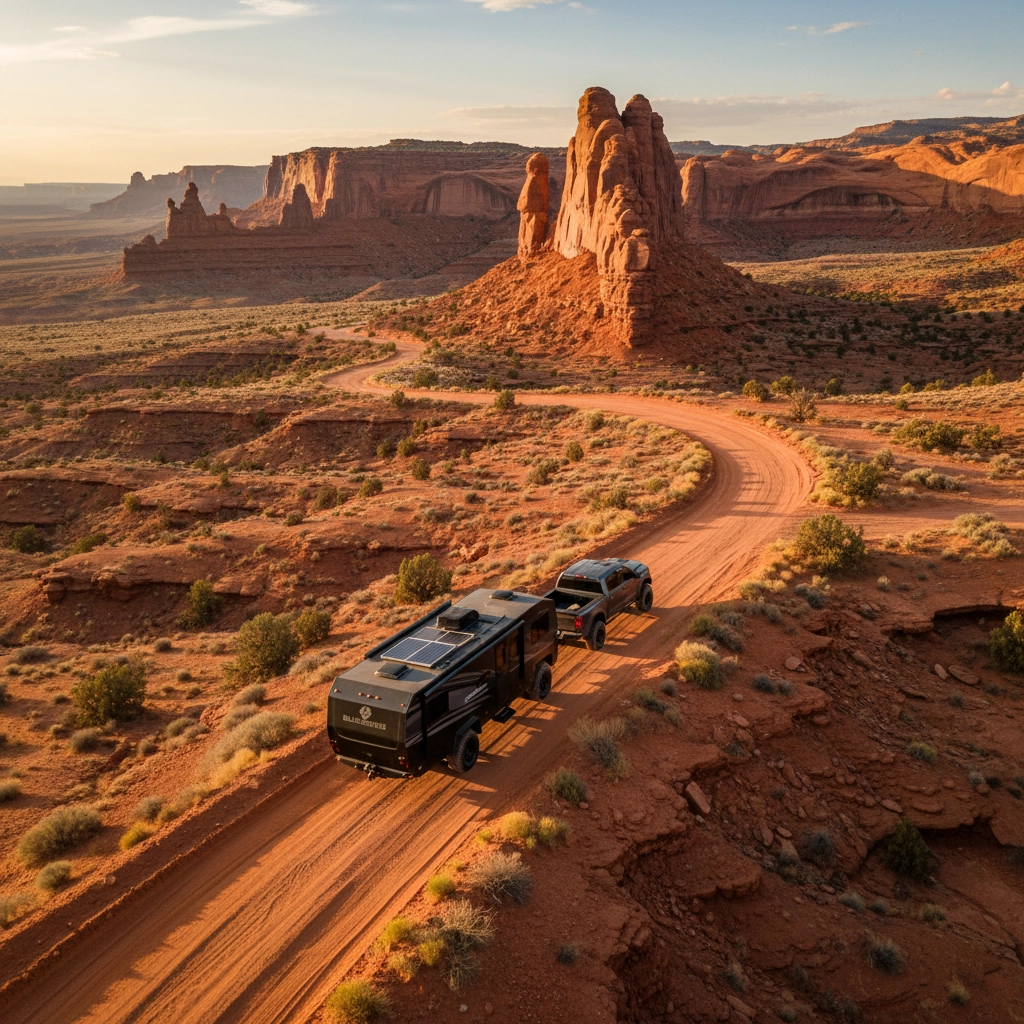
An overlanding travel trailer represents a specialized category of recreational vehicle engineered specifically for self-reliant adventure travel through remote, often challenging terrain. Unlike conventional travel trailers designed for paved roads and developed campgrounds, these rugged units are built to access Bureau of Land Management (BLM) lands, Forest Service roads, and remote wilderness areas where standard RVs simply cannot venture.
The fundamental difference lies in construction philosophy. While regular travel trailers prioritize interior space and amenities, overlanding trailers emphasize durability, off-road capability, and complete self-sufficiency. They’re designed for adventurers who want to reach pristine locations far from crowded campgrounds and utility hookups.
Market Growth and User Demographics
The American RV market reached $21.7 billion in 2024, with projections showing growth to $32.5 billion by 2030: an annual growth rate of approximately 8%. Within this expanding market, off-road and overlanding trailers represent one of the fastest-growing segments, driven primarily by younger demographics aged 18-34 who increasingly value authentic outdoor experiences over traditional RV park camping.
This shift reflects changing outdoor recreation preferences. Modern overlanders seek independence from crowded campgrounds, access to untouched landscapes, and the ability to explore America’s vast public lands network spanning over 640 million acres of BLM and National Forest territory.
Key Factors for Choosing Overlanding Travel Trailers in America
Chassis & Suspension: The Foundation of Off-Road Capability
The chassis represents the most critical component differentiating overlanding trailers from conventional units. Quality overlanding trailers feature hot-dipped galvanized steel frames with fully welded construction rather than bolted assemblies. This welded approach provides superior structural integrity when traversing washboard gravel roads, rocky terrain, and uneven surfaces common across America’s western landscapes.
Independent suspension systems have revolutionized overlanding trailer capability. Unlike traditional leaf spring setups that transfer every bump and impact directly to the trailer body, independent suspension systems with trailing arms and coil springs provide controlled articulation and shock absorption. This technology, pioneered in Australia’s harsh outback conditions, enables trailers to maintain stability and protect cargo while navigating challenging terrain.
Blackseries employs military-grade suspension engineering with dual shock absorbers per wheel, providing exceptional impact resistance and ride quality. Their polyblock hitch system allows 360-degree articulation, preventing binding during extreme off-camber situations that would stress conventional hitches to failure.
Tires & Ground Clearance: Accessing Remote Terrain
Minimum ground clearance should exceed 12 inches, with 14-16 inches being optimal for serious overlanding applications. This clearance enables navigation over rocks, fallen logs, and uneven surfaces encountered on BLM lands and forest service roads throughout Utah’s red rock country, Colorado’s mountain passes, and Montana’s backcountry routes.
All-terrain tires sized appropriately for trailer weight and terrain demands are essential. Many overlanding trailers utilize 15-16 inch wheels with robust sidewalls capable of handling lower air pressures for improved traction on sand and rock surfaces. Spare tire accessibility and mounting security become critical factors during extended expeditions far from tire services.
Body Structure & Protection Systems
Weather resistance extends far beyond basic rain protection. Quality overlanding trailers incorporate composite wall construction, advanced sealing systems, and thermal management designed for four-season use across America’s diverse climate zones: from desert heat exceeding 120°F to sub-zero mountain conditions.
Underbody protection through skid plates and armor shields the trailer’s vital systems from rock strikes and debris. Diamond plate exterior panels resist impact damage while providing mounting points for external gear storage. These protection systems prove essential when accessing remote locations via challenging approach routes.

Off-Grid Power & Water Systems
True overlanding capability demands complete independence from external infrastructure. Modern overlanding trailers integrate lithium battery systems ranging from 200Ah to 600Ah capacity, paired with solar charging arrays from 400W to 1000W depending on power requirements and available roof space.
Water system design significantly impacts expedition length and comfort. Quality units provide 40-60 gallons of fresh water storage in heated and protected tanks, plus adequate grey water capacity for extended off-grid periods. Propane systems fuel cooking, heating, and hot water generation, with tank capacity determining expedition duration between resupply stops.
Inverter systems convert 12V battery power to 120V AC for modern conveniences like coffee makers, laptops, and charging stations. Advanced power management systems monitor consumption and generation, preventing unexpected power depletion during remote camping.
Best Overlanding Travel Trailers for U.S. Markets
Blackseries HQ Series: Engineering Excellence
Blackseries represents the pinnacle of overlanding trailer engineering, combining decades of Australian outback testing with American market preferences. Their HQ series features fully welded chassis construction, independent trailing arm suspension, and composite wall technology that delivers exceptional durability and weather resistance.
The HQ lineup ranges from 12-foot to 21-foot models, each engineered with identical off-road capability regardless of size. Standard features include 600Ah lithium battery systems, 600W solar arrays, 45-gallon fresh water capacity, and comprehensive off-grid amenities designed for extended expedition use.
What distinguishes Blackseries from competitors is their singular focus on off-road capability rather than cosmetic ruggedness. Every component: from suspension geometry to cabinet construction: reflects genuine off-road engineering rather than marketing-driven styling additions to conventional designs.
Competitive Landscape Analysis
While several manufacturers produce overlanding-capable trailers, most represent conversions of standard RV designs with added ground clearance and all-terrain tires. True purpose-built overlanding trailers remain relatively rare in the American market, creating opportunities for specialized manufacturers like Blackseries to establish market leadership through authentic capability rather than superficial ruggedness.
Premium competitors include Taxa Outdoors’ Mantis series and Imperial Outdoors’ X-Plore lineup, each offering unique approaches to off-road capability and interior design. However, these alternatives often compromise either off-road performance or interior comfort, while Blackseries achieves both through advanced engineering and premium materials.
Regional Use Cases Across American Terrain
Southwestern Deserts (Arizona, Utah, Nevada)
Desert overlanding demands exceptional heat resistance, dust protection, and water conservation. Temperatures exceeding 120°F stress electrical systems, seals, and structural materials. Quality overlanding trailers incorporate thermal management systems, sealed electrical enclosures, and UV-resistant materials designed for prolonged desert exposure.
Blackseries trailers excel in desert conditions through their composite wall construction and advanced sealing systems that prevent dust infiltration while maintaining comfortable interior temperatures. Their oversized water storage and efficient power systems enable extended desert expeditions without resupply requirements.
Rocky Mountain Region (Colorado, Wyoming, Montana)
High-altitude mountain terrain presents unique challenges including extreme temperature variations, steep grades, and thin air affecting propane appliance performance. Overlanding trailers must handle sustained climbs, engine braking on descents, and overnight temperatures potentially dropping 40°F below daytime highs.
Four-season insulation packages become essential for year-round mountain use, while heating systems must operate efficiently at altitude. Blackseries addresses these challenges through comprehensive insulation systems and propane appliances calibrated for high-altitude operation.
Pacific Northwest (Washington, Oregon)
Constant moisture, dense forest environments, and muddy trail conditions demand exceptional corrosion resistance and underbody protection. Trailers must shed water effectively while resisting mold and mildew in humid conditions.
Galvanized chassis construction and effective drainage systems prevent moisture-related deterioration that destroys conventional trailers in these environments. Blackseries’ hot-dipped galvanizing process provides superior corrosion resistance compared to powder-coating alternatives used by most manufacturers.
Real-World Performance Data
Durability Testing Results
Independent testing by overlanding organizations has documented Blackseries trailers completing 30,000-mile expeditions across diverse terrain without major mechanical failures. This durability stems from their welded chassis construction and military-grade suspension components designed for extreme service conditions.
Battery endurance testing demonstrates their 600Ah lithium systems powering typical loads for 4-5 days without solar input, extending to 8-10 days with moderate solar generation. This capacity enables true off-grid independence far exceeding conventional RV capabilities.
User Case Studies
The Martinez family from Phoenix upgraded from a conventional Class C motorhome restricted to paved roads and RV parks. Their Blackseries HQ19 enabled access to remote desert locations throughout Arizona and Utah, mountain forest service roads in Colorado, and pristine camping spots completely inaccessible to standard RVs. Their initial $140,000 investment proved worthwhile through eliminated campground fees and access to exclusive wilderness experiences.
Similarly, Montana residents the Anderson family transitioned from a conventional travel trailer limiting them to developed campgrounds. Their Blackseries upgrade unlocked mountain passes accessing alpine lakes, remote Utah desert locations, and Montana backcountry hunting areas. While their $70,000 investment seemed substantial initially, eliminated campground fees and premium location access justified the expense.
Step-by-Step Selection Guide
Step 1: Define Your Adventure Scope
Determine whether your overlanding involves maintained forest roads and national parks, or extends to challenging BLM routes requiring maximum capability. This decision affects necessary features, budget, and trailer complexity.
Step 2: Assess Towing Vehicle Capability
Verify your vehicle’s towing capacity, tongue weight rating, and brake controller compatibility. Many overlanding trailers exceed conventional trailer weights, potentially requiring vehicle modifications or upgrades.
Step 3: Evaluate Essential Off-Road Hardware
Prioritize independent suspension over conventional axles, minimum 14-inch ground clearance, all-terrain tire packages, and comprehensive underbody protection. These features determine accessible terrain and long-term durability.
Step 4: Calculate Off-Grid Requirements
Estimate power consumption, water usage, and expedition duration to size battery, solar, and tank capacity appropriately. Undersized systems limit expedition length and comfort, while oversized systems increase cost and weight unnecessarily.
Step 5: Inspect Construction Quality
Examine chassis welding, suspension mounting, cabinet construction, and sealing systems. Quality manufacturers provide detailed specifications and warranty coverage reflecting confidence in their construction methods.
Step 6: Consider Long-Term Value
Overlanding trailers represent significant investments typically ranging $60,000-$150,000. Factor resale value, manufacturer support, parts availability, and service network coverage into purchase decisions.
Maintenance & Safety Protocols
Pre-Expedition Inspections
Systematic pre-departure inspections prevent remote failures that could compromise safety or expedition success. Check tire pressure and tread condition, suspension component wear, electrical connections and battery voltage, propane system integrity and tank levels, water system function and tank security, and hitch hardware torque specifications.
Trail Safety Procedures
Safe overlanding with trailers requires modified driving techniques and heightened awareness. Maintain reduced speeds on technical terrain, use lower gears for engine braking on descents, allow increased following distances, and monitor trailer tracking through mirrors continuously. Plan escape routes and communication protocols for emergency situations.
Long-Term Maintenance
Overlanding trailers require more intensive maintenance than conventional RVs due to harsh operating conditions. Annual suspension inspections, chassis lubrication, electrical system testing, and seal replacement prevent minor issues from developing into major failures. Quality manufacturers like Blackseries provide comprehensive maintenance schedules and readily available parts support.
Frequently Asked Questions
What is an overlanding travel trailer?
An overlanding travel trailer is a purpose-built recreational vehicle designed for self-reliant adventure travel through remote, often challenging terrain, featuring reinforced construction, independent suspension, and complete off-grid capability.
How is an overlanding trailer different from a regular travel trailer?
Overlanding trailers feature reinforced chassis construction, independent suspension systems, higher ground clearance, comprehensive off-grid power and water systems, and weather resistance designed for four-season use in remote locations.
Do I need an overlanding travel trailer for U.S. national parks?
While not required for developed national park campgrounds, overlanding trailers enable access to remote dispersed camping areas, BLM lands, and forest service roads that standard RVs cannot reach.
What size overlanding trailer is best for couples?
Couples typically find 15-19 foot overlanding trailers optimal, providing comfortable living space while maintaining manageable towing characteristics and access to narrow trail systems.
Can I boondock for a week with an overlanding trailer?
Quality overlanding trailers with adequate battery, solar, and water capacity can easily support week-long off-grid expeditions, with some systems enabling 10-14 day independence with conservative usage.
Is an off-road overlanding trailer worth the extra cost?
For adventurers seeking access to remote wilderness locations and genuine off-grid independence, overlanding trailers provide unique capabilities impossible with conventional RVs, justifying their premium pricing through exclusive access and experiences.
The overlanding travel trailer market continues expanding as Americans increasingly value authentic outdoor experiences over traditional RV park camping. Quality manufacturers like Blackseries lead this evolution through genuine engineering excellence rather than cosmetic ruggedness, enabling access to America’s most spectacular and remote landscapes while maintaining comfort and safety.

