
Your cart (0)
Your cart is empty
Tax included and shipping calculated at checkout
Your cart is empty
Tax included and shipping calculated at checkout

If you’re serious about overlanding in the USA, you’ve probably noticed that most camper trailers are built for the paved campground, not the dirt road. That’s where Black Series comes in. Our camper trailers are engineered for the off-grid adventurer who wants to go deeper, stay longer, and never worry about whether the rig can handle the terrain.
In the world of outdoor adventure, terminology can get confusing. While many use the terms interchangeably, a camper trailer is typically more compact and focused on the “basecamp” experience compared to a full-sized RV. A Black Series camper trailer specifically bridges the gap between rugged utility and high-end comfort. Unlike a standard off-road travel trailer, these are designed with a lower profile and extreme departure angles, making them the preferred choice for serious overlanders and off-grid campers who want to push deeper into the wilderness.
The key difference? Standard travel trailers are built for highway comfort and established campgrounds. Black Series camper trailers are built for washboard roads, rock crawling, and BLM land where the nearest RV park is 100 miles away. Our hot-dipped galvanized chassis, independent suspension, and reinforced steel framing mean you can take that dirt road without second-guessing.
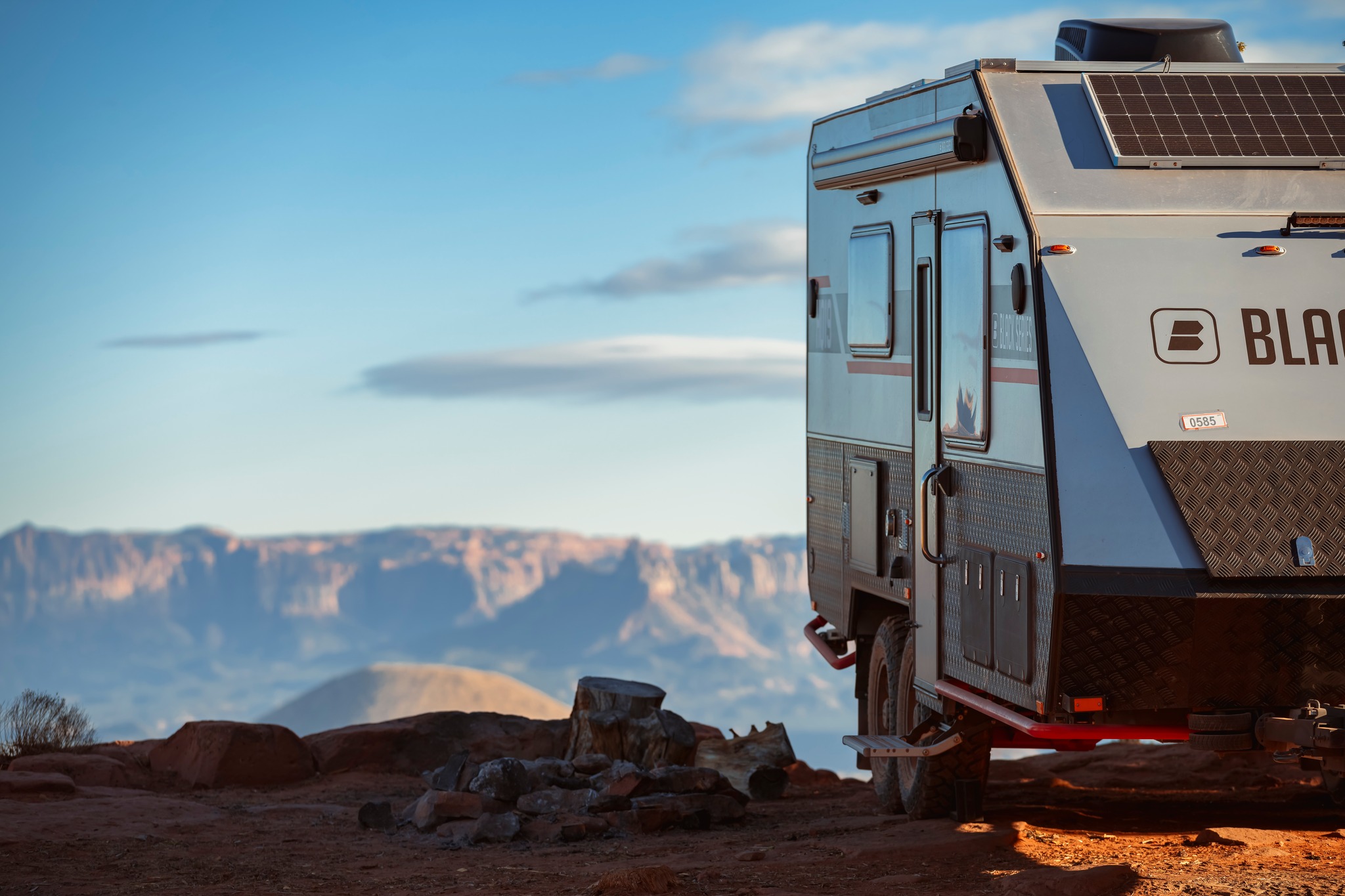
Choosing the right rig is a balance of weight, capability, and your actual towing setup. Here’s what you need to evaluate:
Towing Match: You must match your vehicle’s towing capacity with the average weight of camper models in our lineup. For instance, an 18 ft camper weight is often the “sweet spot” for mid-sized SUVs and half-ton trucks. Our compact models start around 3,300 lbs dry weight, while premium models can reach 6,500+ lbs. If you’re running a Ford F-150 or Ram 1500, you’re typically safe with anything under a 24 ft camper weight configuration. But if you’re eyeing a 30 ft camper weight setup, you’ll need a heavy-duty tow vehicle.
Suspension & Clearance: We specialize in off-road camper trailers equipped with independent dual-shock suspension and coil springs. This is what allows you to maintain speed on washboard roads without shaking your interior to pieces. Ground clearance ranges from 12 inches on compact models to 16 inches on our premium series, critical when you’re navigating rocky creek crossings or high-centered trails.
Terrain Adaptability: Consider where you’ll spend most of your time. If you’re navigating tight forest trails in the Pacific Northwest, a 16 ft camper weight model offers better maneuverability than a 30 foot rv weight beast. Desert runners who spend weeks on open BLM land might prioritize a larger water capacity over tight turning radius.
Legal & Compliance: All Black Series models are fully compliant with US road and safety regulations. They include electric tow brakes with mechanical handbrakes, DOT-approved lighting, and proper trailer registration. Some states have specific length or width restrictions for backcountry roads, always check local regs before heading out.
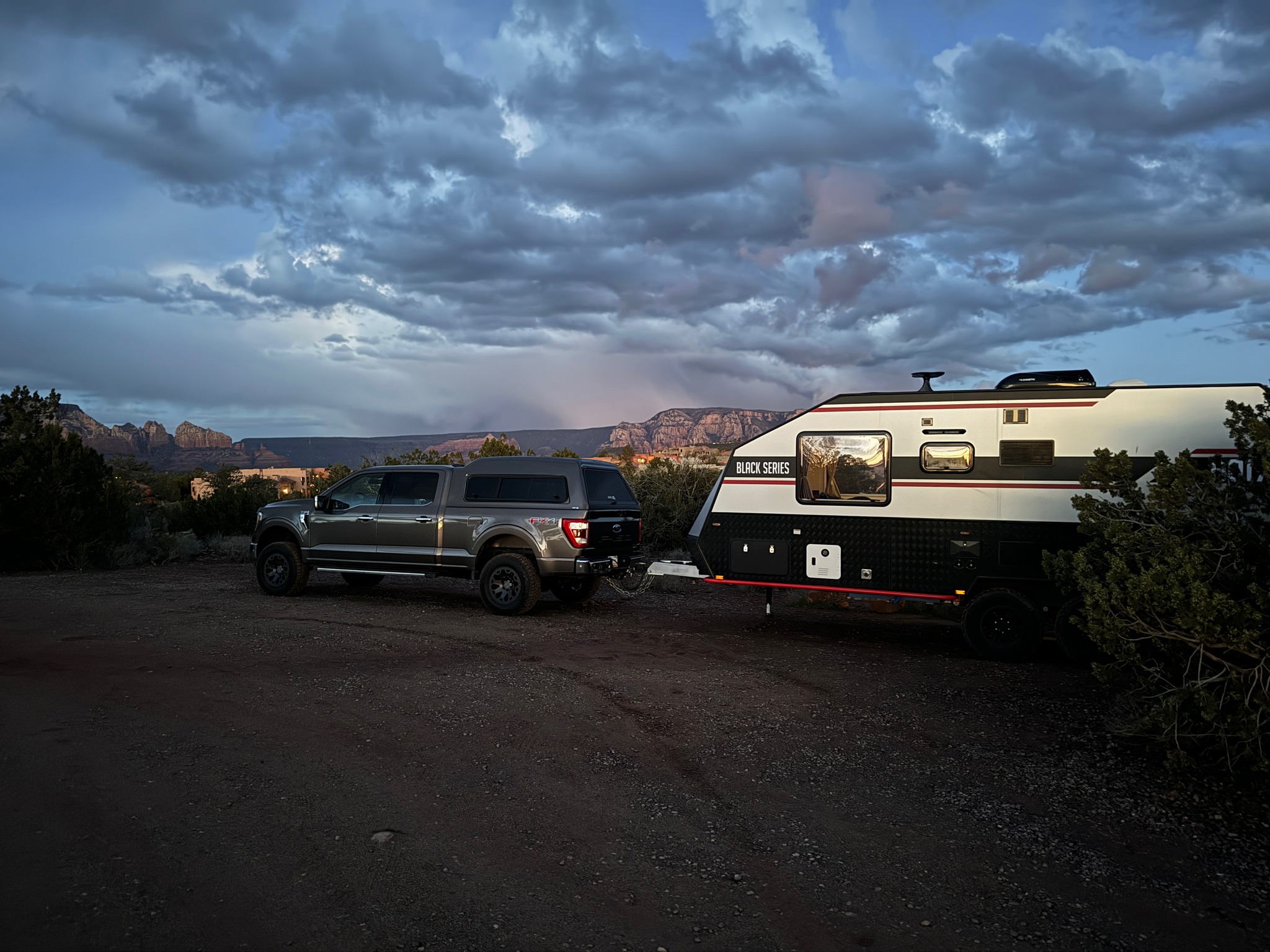
Let’s break down what makes these trailers different from the aluminum boxes you see at big-box dealerships.
Chassis & Armor: Our hot-dipped galvanized tubular steel chassis is the backbone of every build. It’s designed to flex without breaking, which is critical when one wheel drops into a rut and the other is on a rock. We also use diamond plate aluminum composite panels on high-impact zones to protect against trail debris.
Off-Road Camper Trailers with Kitchen: One of our most popular features is the pull-out stainless steel kitchen. It allows you to cook gourmet meals in the open air while keeping the interior of the camper clean and spacious. Models like the HQ19 include a two-burner propane stove, stainless sink, and prep surface that slides out from the side of the trailer. You’re not compromising on quality just because you’re 50 miles from the nearest town.
Power & Storage: Integrated solar panels and massive water tanks mean you can stay off-grid for weeks, not just days. Our premium models feature 600–800+ watts of roof-mounted solar paired with 400Ah battery banks and a 2,000-watt pure sine wave inverter. Water capacity ranges from 20 gallons in compact models to 64 gallons in the HQ19, all triple-filtered for safety.
Insulation & Climate Control: Our campers are built for the four-season US climate, from the heat of the Mojave to the snow of the Sierras. R16 spray foam insulation covers the full roof and walls, and models include optional air conditioning units and diesel heaters for year-round comfort. You won’t be waking up at 3 AM because the desert temperature dropped 40 degrees.

Long-Term Overlanding: For those living on the road, the durability of a Black Series is unmatched. Our trailers are designed to handle the constant vibrations and impacts of full-time off-road use. The galvanized frame won’t rust out after a year of Pacific Northwest rain, and the independent suspension won’t snap a leaf spring on your third week in Utah.
BLM & National Forest Exploration: Since most of these lands lack hookups, the self-sustainability of our trailers is a game-changer. With 40–60 gallons of fresh water, robust solar systems, and propane storage, you can camp legally on dispersed sites for 14 days without resupply. The average travel trailer weights found at big-box dealerships don’t include the reinforced frames and heavy-duty components needed for this kind of use.
Weekend Warrior Sprints: Even if you only have 48 hours, being able to reach a remote spot that a 30-foot camper weight rig can’t access makes every minute count. A 16 ft camper weight Black Series can fit into tight campsite configurations that larger trailers would never attempt, think single-track forest service roads or narrow canyon approaches.
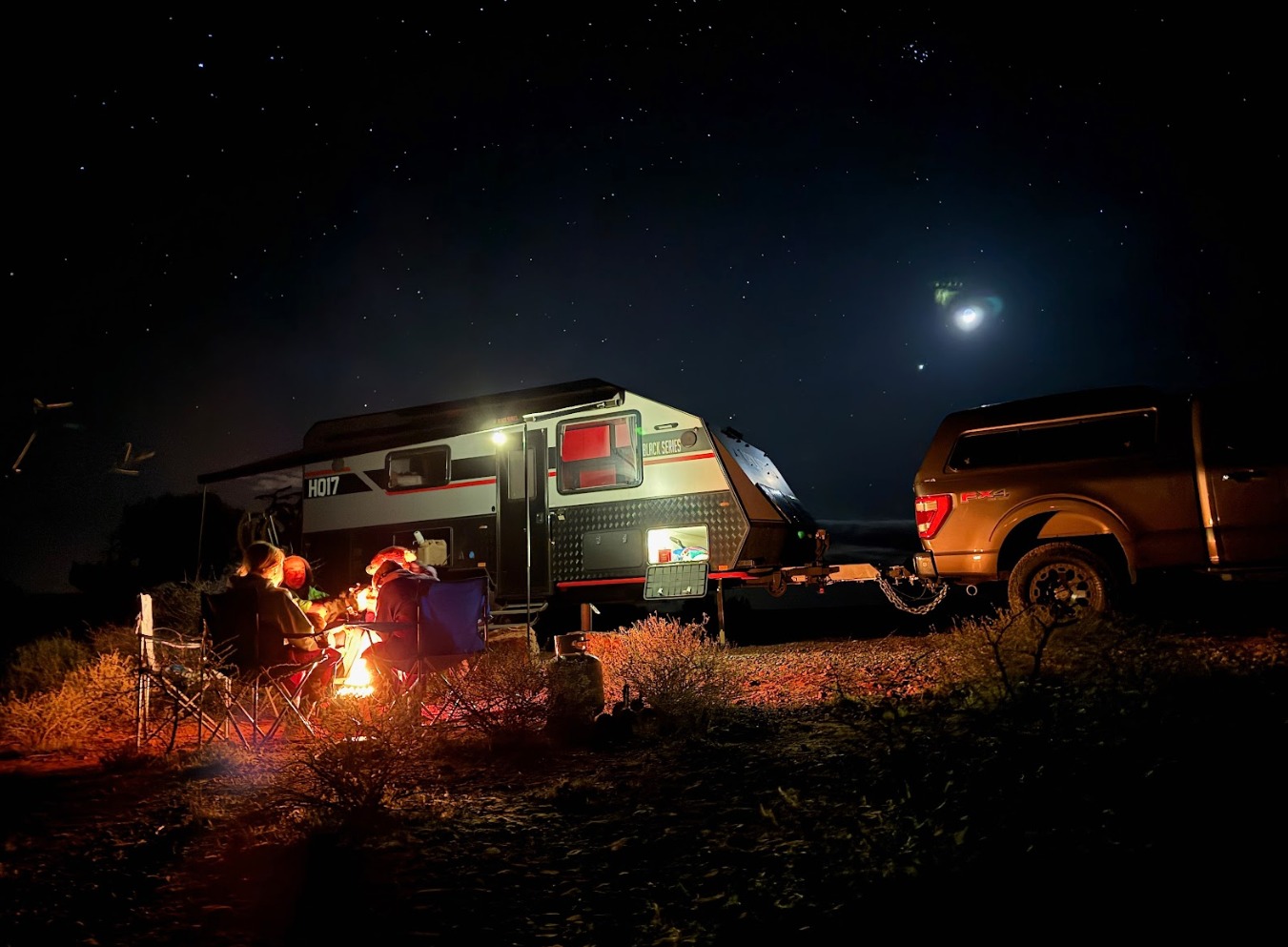
Reviewers often highlight that while our trailers are “heavier” than the average travel trailer weights found at big-box dealerships, that weight is an investment in safety and longevity. A 24 ft camper weight in our catalog includes thick steel and heavy-duty armor, components that prevent frame snapping when you’re 50 miles from the nearest paved road.
What US Buyers Care About: Maintenance is straightforward, our trailers use standard RV components for plumbing and electrical, so you’re not locked into proprietary parts. Upgrades are modular, meaning you can add a second battery bank or upgrade your solar array without re-engineering the entire system. And because we use galvanized steel instead of painted frames, you won’t be dealing with rust issues after a few seasons.
Structural Differences: Compared to traditional camper trailers, Black Series models feature a lower center of gravity, wider axle track, and reinforced tongue. This isn’t marketing fluff, it’s the difference between a trailer that sways dangerously at highway speed and one that tracks confidently behind your truck. Our coupling capacity typically reaches 12,000 lbs, with recovery shackles and all-terrain tires (265x75R16) included as standard.
Use Conditions: These trailers are built for people who want to go off-road, not for those who need a fifth-wheel mansion. If you’re planning to spend 90% of your time in paved RV parks with full hookups, a Black Series might be overkill. But if your idea of camping involves dirt roads, dispersed sites, and the occasional creek crossing, this is your rig.
For more insight on how these trailers hold their value over time, check out our guide on travel trailer depreciation.
Are Black Series camper trailers street legal in the USA?
Yes, all Black Series models are fully compliant with US road and safety regulations, including DOT-approved lighting, trailer brakes, and proper weight distribution systems.
What vehicles can tow a Black Series camper trailer?
It depends on the model. A 16 ft camper weight setup (around 3,300 lbs dry) can be towed by most mid-size SUVs like a 4Runner or Jeep Grand Cherokee. A 30 ft rv weight premium model requires a heavy-duty truck like an F-250 or Ram 2500. Always match your vehicle’s towing capacity to the trailer’s GVWR (Gross Vehicle Weight Rating).
Are camper trailers suitable for full-time overlanding?
Yes, especially Black Series models. They are engineered specifically for the vibrations and rigors of full-time off-road use, with reinforced frames, heavy-duty suspension, and durable interior components that won’t rattle apart after a few thousand miles of dirt roads.
How do camper trailers differ from travel trailers?
Generally, camper trailers have a more compact, rugged footprint designed for higher-clearance trails and off-grid use. Travel trailers are often larger and built for highway towing and established campgrounds with hookups. Black Series camper trailers combine the best of both: compact enough for backcountry access but comfortable enough for extended stays.
What kind of maintenance do these trailers require?
Standard RV maintenance applies: check tire pressure before trips, lubricate the hitch and suspension components, inspect the roof seals annually, and winterize the water system if you’re in freezing climates. The galvanized frame requires minimal upkeep compared to painted steel. For detailed maintenance tips, visit our off-road trailer maintenance guide.
If you’re ready to explore the full Black Series lineup and find the model that matches your adventure style, head over to our blog for more in-depth guides, or check out our warranty information to understand what’s covered on your investment. The dirt road is calling( make sure your trailer can answer.)