Boondocking means camping without hookups on public lands (free), while campground camping offers full amenities for a fee. Solo adventurers and budget travelers prefer boondocking; families and comfort-seekers choose campgrounds. Blackseries travel trailers excel at both with off-grid solar systems and luxury comfort features.
What Is Boondocking?
Core Characteristics of Boondocking
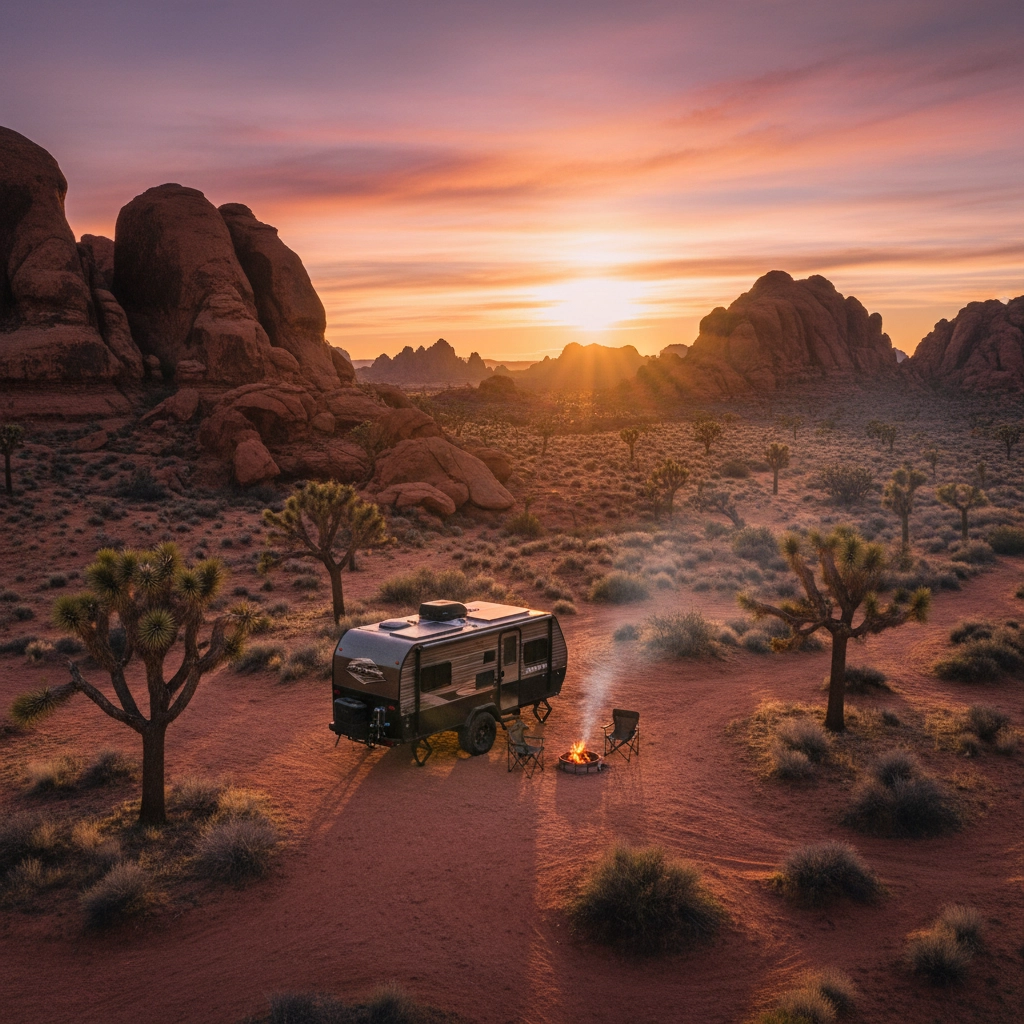
Boondocking, also known as dry camping or wild camping, involves camping without water, electric, or sewer hookups. This style of RV travel typically occurs on public lands like Bureau of Land Management (BLM) areas, National Forests, and dispersed camping sites where you rely entirely on your travel trailer’s self-contained systems.
The term “boondocking” comes from the phrase “out in the boonies,” emphasizing the remote, off-the-beaten-path nature of these camping experiences. Unlike traditional campgrounds, boondockers must manage their own power generation, water conservation, and waste disposal without external infrastructure support.
Boondocking Growth Trends in America
The popularity of boondocking has surged dramatically across the United States. Google search data shows “dry camping” queries increased by 340% between 2020-2024, while “dispersed camping” searches grew by 280%. This growth reflects Americans’ increasing desire for affordable, socially-distanced outdoor recreation and remote work flexibility.
Several factors drive this trend:
- Rising campground costs (average $50-120 per night)
- Increased public land accessibility through apps like Campendium and FreeRoam
- Remote work enabling longer RV adventures
- Growing overlanding and off-road trailer communities
The Western states particularly embrace boondocking due to vast public lands. Utah, Arizona, Colorado, Nevada, and California offer millions of acres of BLM and Forest Service land perfect for extended off-grid camping.
What Is Campground Camping?
Standard Campground Features
Campground camping provides designated sites with essential hookups and amenities. Most established campgrounds offer:
- Full Hookups: 30/50-amp electrical, fresh water, and sewer connections
- Facilities: Restrooms, showers, laundry rooms, camp stores
- Infrastructure: Paved roads, designated fire rings, picnic tables
- Services: WiFi, cable TV, recreational activities, security
Commercial vs Public Campgrounds
Commercial Campgrounds like KOA, Good Sam parks, and luxury RV resorts emphasize comfort and convenience. These facilities often include pools, hot tubs, golf courses, and organized activities, with nightly rates ranging from $40-150 depending on location and amenities.
Public Campgrounds in National Parks, State Parks, and Corps of Engineers sites balance nature access with basic amenities. These government-operated facilities typically cost $15-45 per night and require advance reservations through Recreation.gov, especially during peak seasons.
Boondocking vs Campground: Core Differences Comparison

How to Choose Between Boondocking and Campgrounds
Step 1: Assess Your Travel Style
Solo/Couple Adventures: Boondocking offers unmatched solitude and scenic beauty. Experienced RVers who enjoy self-reliance and spectacular remote locations gravitate toward dispersed camping.
Family Travel: Campgrounds provide safety, amenities, and social interaction that families with children often prefer. Playgrounds, organized activities, and reliable WiFi support family dynamics.
Weekend Warriors vs Full-Timers: Short trips may favor campgrounds for convenience, while extended travel benefits from boondocking’s cost savings and location variety.
Step 2: Budget Considerations
Public land boondocking costs virtually nothing beyond fuel and supplies. A family spending 100 nights per year saves $3,000-8,000 annually compared to campground fees. However, boondocking requires upfront investment in off-grid electrical systems, solar panels, and enhanced water capacity.
Step 3: Evaluate Your RV’s Off-Grid Readiness
Essential Boondocking Systems:
- Lithium battery banks (300-400Ah minimum)
- Solar panels (400-800 watts)
- Large fresh water tanks (40+ gallons)
- Efficient appliances (DC fridge, diesel heater)
- Robust suspension systems for rough road access
Campground Compatibility:
- Standard 30/50-amp electrical systems
- Black/gray water tank capacity
- Slide-out and awning functionality
- Entertainment systems and luxury amenities
Beginner’s Guide: How to Boondock Safely
Pre-Trip Planning Checklist
- Download Essential Apps: Campendium, FreeRoam, GaiaGPS, and iOverlander for site location and road conditions
- Check Regulations: Verify fire restrictions, length of stay limits (typically 14 days), and seasonal closures
- Weather Preparation: Monitor forecasts for extreme temperatures, storms, and road conditions
- Communication Plan: Satellite communicators like Garmin InReach for emergency situations
Power and Water Management
Electrical Systems:
- Monitor battery levels with digital displays
- Rotate high-power appliance usage
- Maximize solar generation with panel positioning
- Consider backup generators for extended cloudy periods
Water Conservation:
- Navy showers (wet, soap, rinse quickly)
- Biodegradable soaps for outdoor washing
- Paper plates and minimal dishwashing
- Monitor tank levels daily
Safety and Environmental Responsibility
Leave No Trace Principles:
- Pack out all trash and waste
- Use established fire rings only
- Camp 200 feet from water sources
- Respect wildlife by securing food properly
Emergency Preparedness:
- First aid kits and emergency supplies
- Spare tire and repair tools
- Emergency water and food reserves
- Communication devices for remote areas
Best Travel Trailers for Boondocking vs Campgrounds
Optimal Boondocking Features
Off-Road Capability:
Superior boondocking trailers feature independent suspension systems, high ground clearance (15+ inches), and rugged construction. These specifications enable access to remote locations that standard RVs cannot reach.
Self-Sufficiency Systems:
- 400+ watts solar generation
- 300-400Ah lithium battery capacity
- 40-80 gallon fresh water tanks
- Diesel heating systems
- DC-powered appliances for energy efficiency
Campground-Focused Features
Comfort and Convenience:
- Multiple slide-outs for spacious interiors
- Residential appliances and entertainment systems
- Large awnings and outdoor kitchens
- Luxury bathroom facilities
Blackseries: Versatility for Both Scenarios
Blackseries travel trailers uniquely excel in both boondocking and campground environments. The HQ17, HQ19, and HQ21 models integrate off-road capability with luxury amenities.
Boondocking Advantages:
- Independent trailing arm suspension handles rough terrain
- 400W solar systems with lithium batteries
- 40+ gallon water capacity for extended stays
- High ground clearance for remote site access
Campground Comfort:
- Full kitchen and bathroom facilities
- Climate control and entertainment systems
- Outdoor kitchens and awning setups
- Hook-up compatibility for full-service sites
Popular U.S. Locations: Real Examples
Top Boondocking Destinations
Arizona BLM Land:
- Quartzsite (winter gathering hub)
- Yuma East Wetlands
- Lake Havasu dispersed areas
Utah Public Lands:
- Moab area (spectacular red rock access)
- Dixie National Forest
- BLM land near Zion National Park
California Desert:
- Anza-Borrego State Park
- Salton Sea recreation areas
- Eastern Sierra dispersed sites
Premier Campground Networks
Commercial Options:
- KOA (consistent amenities nationwide)
- Good Sam Club parks (member discounts)
- Thousand Trails (membership-based luxury)
Public Campgrounds:
- Yellowstone and Yosemite (advance reservations essential)
- Florida State Parks (winter snowbird destinations)
- Corps of Engineers lakes (affordable, well-maintained)
Frequently Asked Questions
Is boondocking legal in the U.S.?
Yes, boondocking is legal on designated public lands including BLM areas, National Forests, and many state lands. Most locations allow 14-day stays before requiring relocation. Always check local regulations and fire restrictions before camping.
How long can a travel trailer boondock?
Well-equipped travel trailers can boondock 5-14 days depending on water capacity, battery systems, and conservation practices. Blackseries trailers with solar and large tank capacity regularly support week-long adventures without resupply.
What equipment do I need to start boondocking?
Essential equipment includes adequate battery capacity (200+ Ah), solar panels, large water tanks, emergency supplies, and communication devices. Many successful boondockers start with basic systems and upgrade based on experience.
Are campgrounds safer than boondocking?
Both offer different safety profiles. Campgrounds provide security, cell service, and immediate assistance. Boondocking requires self-reliance but offers fewer crime risks. Proper preparation and communication devices ensure safety in both environments.
Which type is better for families or first-time RVers?
First-time families often prefer campgrounds for amenities, safety, and convenience while learning RV systems. Once comfortable with RV operation and outdoor skills, many families gradually transition to boondocking for cost savings and adventure.
Whether you choose the freedom of boondocking or the comfort of campgrounds, both styles offer unique rewards for American RV travelers. The key lies in matching your choice to your experience level, budget, and adventure goals while ensuring your travel trailer can support your chosen camping style.

