
Your cart (0)
Your cart is empty
Tax included and shipping calculated at checkout
Your cart is empty
Tax included and shipping calculated at checkout
Winter driving with a trailer presents unique challenges that can turn dangerous quickly without proper preparation and technique. Icy roads, reduced visibility, and unpredictable weather conditions create hazardous situations that require specialized knowledge and equipment to navigate safely.
The key to successful winter trailer towing lies in three critical areas: thorough preparation of your equipment, understanding the physics of how ice affects vehicle control, and mastering winter driving techniques specific to trailer operation. Whether you’re heading to a winter camping destination or relocating during the colder months, these safety principles can mean the difference between a successful trip and a roadside emergency.
Driving a trailer on icy roads multiplies the dangers compared to operating a single vehicle. Reduced traction becomes your primary concern, as both your tow vehicle and trailer can lose grip independently, creating unpredictable handling characteristics. When one component slides while the other maintains traction, the result is often dangerous trailer sway or jackknifing.
Extended stopping distances represent another critical risk factor. While a typical vehicle might see stopping distances increase by 300-400% on ice, a trailer combination can experience even longer stopping distances due to the additional weight and momentum of the trailer. The trailer’s momentum continues pushing forward even when your tow vehicle begins to slow, potentially causing the trailer to push your vehicle sideways or into oncoming traffic.
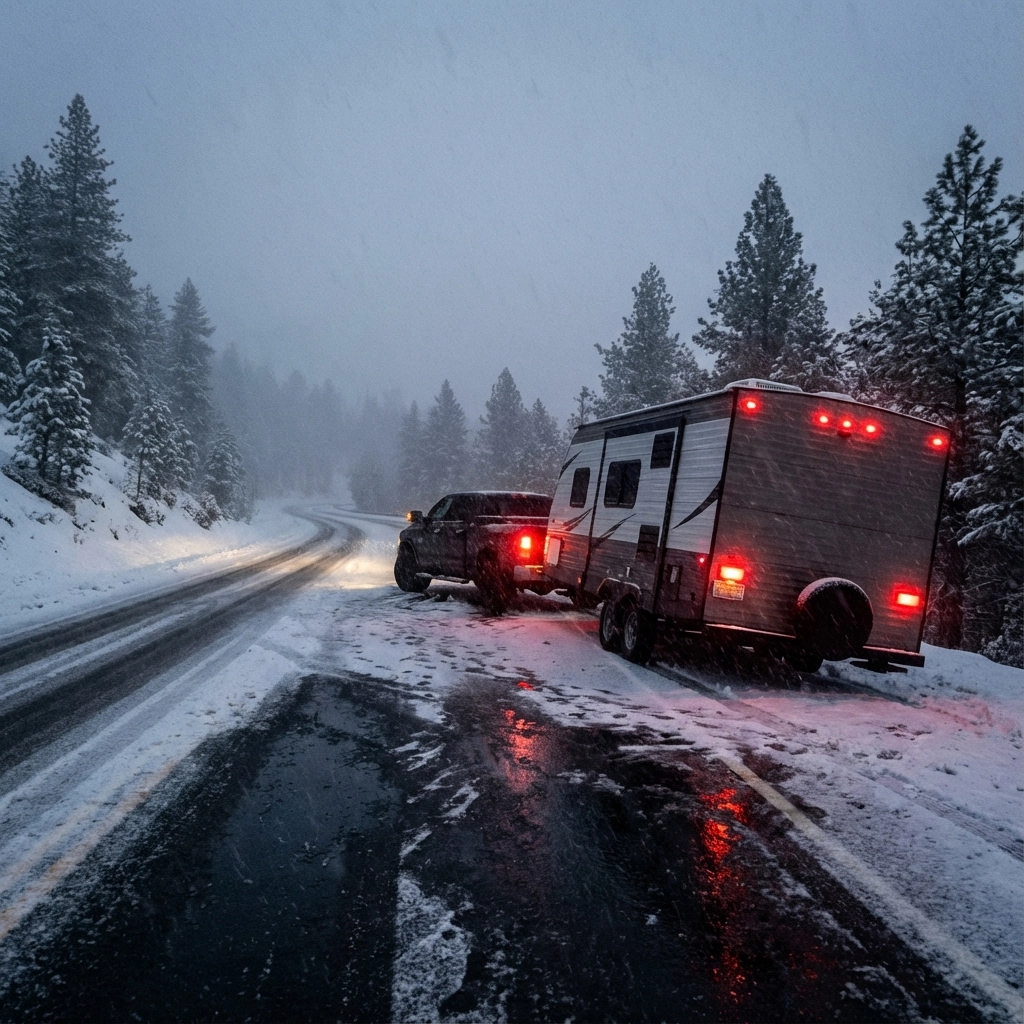
Loss of control scenarios become more complex with a trailer attached. Common winter trailer accidents include:
The physics of trailer towing create a delayed reaction effect where problems develop gradually, then escalate rapidly. Understanding these risks helps you recognize dangerous situations before they become uncontrollable.
Proper preparation begins well before you encounter icy conditions. Tire pressure checks become even more critical in cold weather, as tire pressure drops approximately 1-2 PSI for every 10°F temperature decrease. Under-inflated tires reduce your available traction and increase the likelihood of losing control.
Brake system inspection should include both your tow vehicle and trailer brakes. Ensure brake pads have adequate thickness, brake fluid levels are proper, and all connections are secure. If your trailer uses electric brakes, test the brake controller to verify it’s functioning correctly and adjust the gain setting appropriately for icy conditions.
Hitch and safety equipment require special attention for winter conditions. Apply de-icer spray to prevent freezing of moving parts, check that safety chains are properly attached and sized, and verify your hitch’s weight rating accommodates your trailer’s loaded weight plus any additional winter gear.
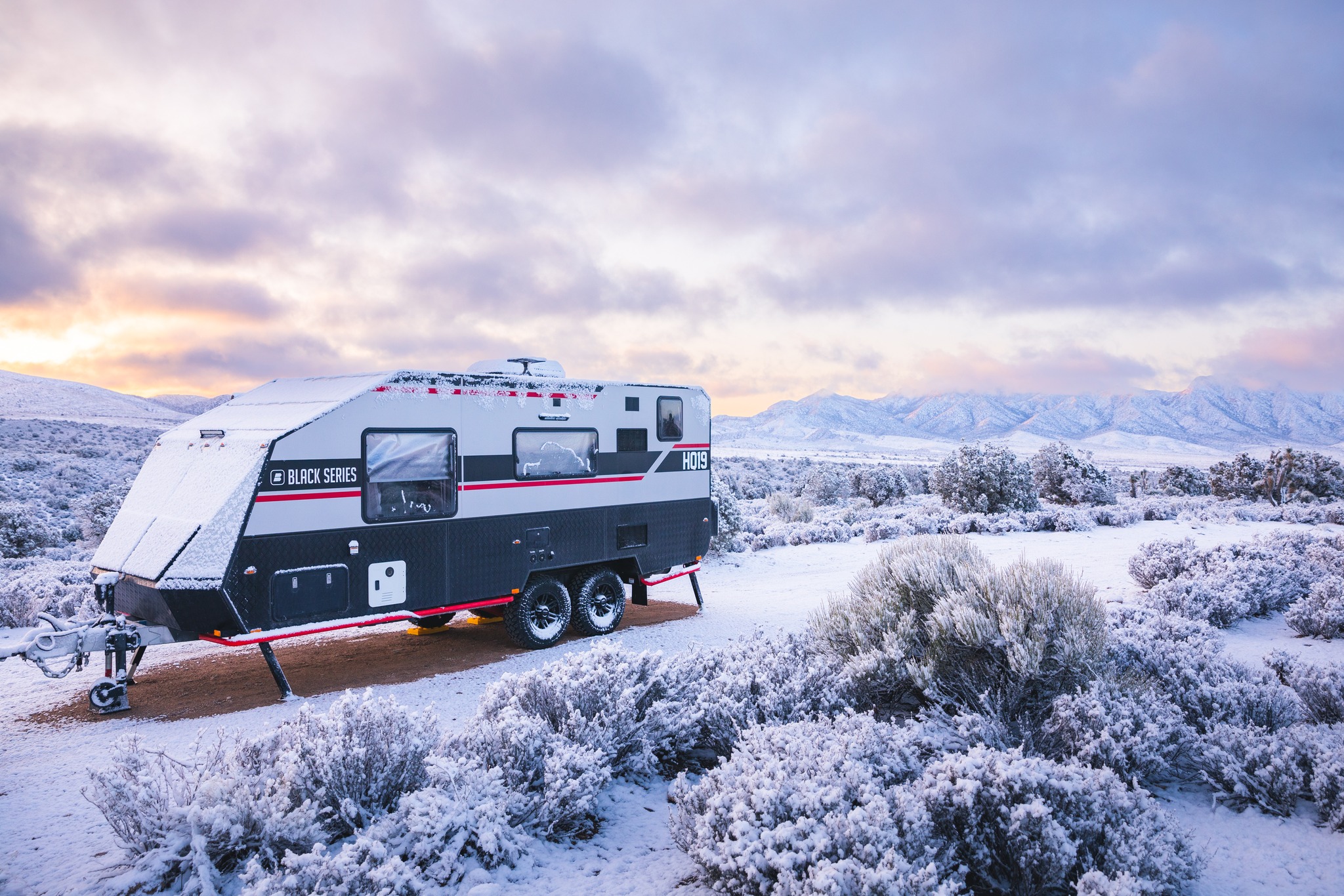
Tire choice dramatically impacts your safety in icy conditions. Standard all-season tires lose significant traction below 45°F, making winter-specific tires essential for serious winter towing. Consider these options:
Winter tires provide the best overall performance for most conditions, with specialized rubber compounds that remain flexible in cold temperatures and tread patterns designed for snow and slush.
Studded tires offer maximum traction on ice but may be restricted or prohibited in certain states and can damage dry pavement.
Tire chains serve as an emergency backup option but should be installed on both the tow vehicle’s drive wheels and the trailer’s wheels when possible.
Leading tire manufacturers like Michelin, Bridgestone, and Continental offer winter tire options specifically rated for towing applications, with reinforced sidewalls and load ratings appropriate for trailer use.
Speed management becomes your most important tool for maintaining control. Reduce your normal towing speeds by at least 25-50% in icy conditions, and avoid using cruise control entirely. Cruise control can cause unexpected acceleration on packed snow and prevents you from making immediate throttle adjustments when traction changes.
Increase following distances to at least 8-10 seconds behind the vehicle ahead of you, compared to the normal 4-6 seconds for dry conditions. This extra distance accounts for your extended stopping distance and provides reaction time if the vehicle ahead encounters problems.
Gentle inputs are essential for maintaining control. Make all steering, acceleration, and braking inputs gradually and smoothly. Sudden movements can break traction and initiate dangerous sway patterns that become difficult to recover from.
Engine braking should be your primary method of speed control. Downshift to use engine compression rather than relying solely on your brakes, which can lock up on ice and cause skidding.
Threshold braking involves applying steady pressure just short of wheel lock-up. If your vehicle has ABS, apply firm steady pressure and let the system work. Without ABS, practice pumping the brakes to maintain steering control.
Trailer brake adjustment requires reducing the gain on your brake controller for icy conditions. Too much trailer braking can cause the trailer wheels to lock and initiate a skid, while too little can cause the trailer to push your tow vehicle.

Getting stuck on ice requires a systematic approach to avoid making the situation worse. Assess your situation first – determine if you’re stuck due to lack of traction, if you’re blocking traffic, and whether you can safely work around your vehicle.
Getting unstuck step-by-step:
Essential tools for winter trailer towing include:
If self-recovery isn’t possible, call for professional towing assistance rather than risking injury or vehicle damage with aggressive recovery attempts.
BlackSeries trailers incorporate several design features that enhance winter performance and safety. All-terrain tires come standard, providing better traction than typical trailer tires. Independent suspension systems help maintain wheel contact with uneven or slippery surfaces, improving stability and control.
Aerodynamic design reduces wind resistance and cross-wind sensitivity, important factors when winter storms create gusty conditions. The low center of gravity design inherent in BlackSeries models provides additional stability during challenging driving conditions.
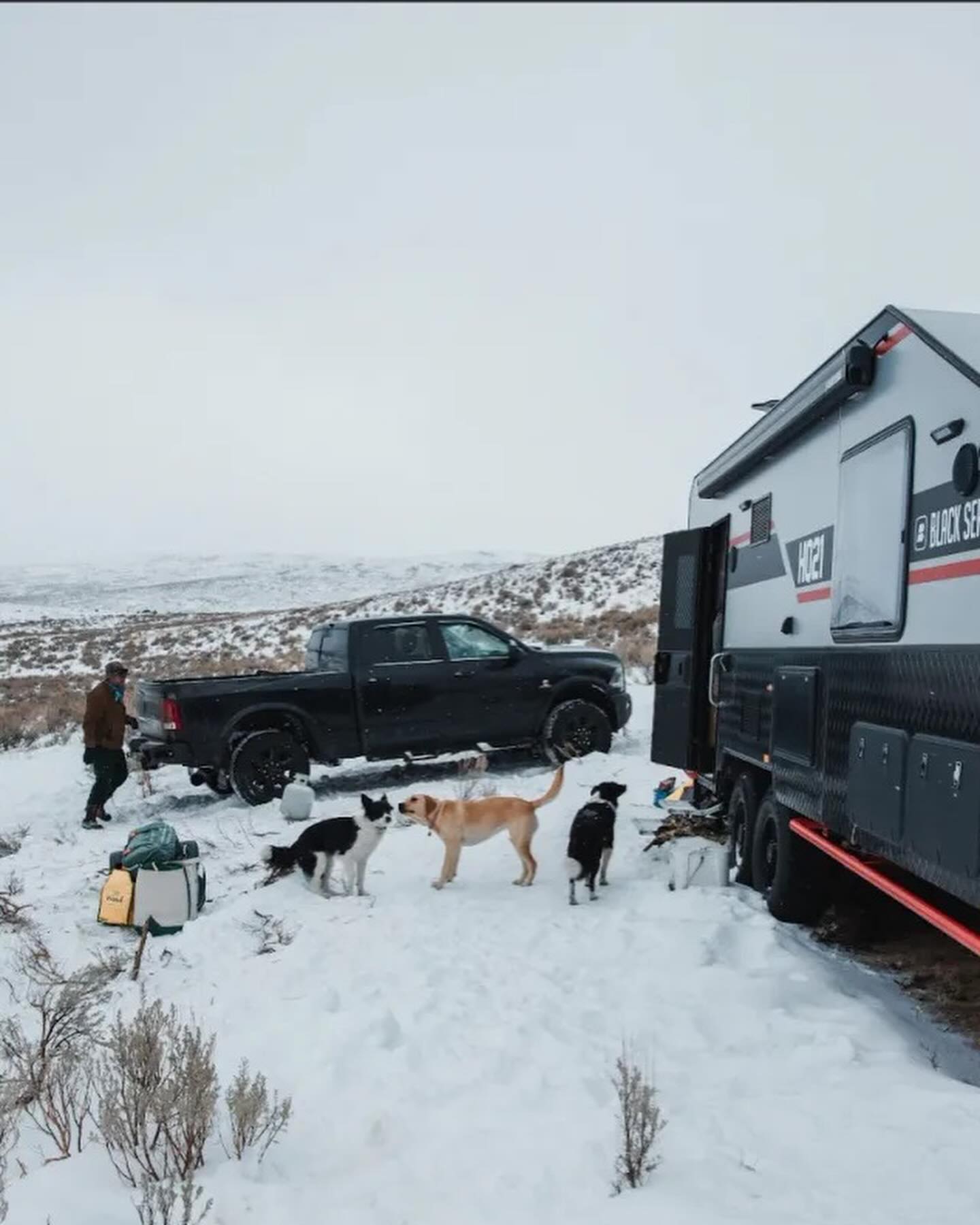
Weight distribution becomes critical for winter towing. BlackSeries trailers are engineered with optimal weight balance to minimize tongue weight variations that can affect handling. Integrated brake systems are properly sized for the trailer’s weight and provide consistent stopping power even in cold conditions.
When selecting any trailer for winter use, consider these features:
For more information about winter-ready features, explore our 2025 off-road travel trailer buying guide to understand how proper trailer selection impacts cold-weather performance.
Pre-trip planning becomes even more important for winter travel. Check weather forecasts for your entire route, not just the departure and destination points. Mountain passes and rural areas can have dramatically different conditions than urban areas.
Maintenance schedules should be accelerated during winter months. Road salt accelerates corrosion, and cold temperatures stress mechanical components. Regular brake inspections, tire pressure monitoring, and bearing maintenance help prevent failures during challenging conditions.
Emergency preparedness should include:
Practice winter driving techniques in a safe environment before you need them on the road. Empty parking lots covered with snow provide opportunities to understand how your specific vehicle and trailer combination behaves when traction is lost.
What are the best tires for winter trailer towing?
Winter-rated tires with load ranges appropriate for your trailer weight provide the best performance. Brands like Michelin LTX Winter and Bridgestone Blizzak DM-V2 offer excellent traction while maintaining durability for towing applications.
How do I prevent my trailer from sliding on icy roads?
Reduce speed, increase following distance, make gentle steering inputs, and ensure your trailer brakes are properly adjusted for icy conditions. Proper tire selection and weight distribution also contribute significantly to stability.
Should I use tire chains on my trailer?
Yes, when conditions warrant chains on your tow vehicle, install them on your trailer wheels as well. This maintains balanced traction between the vehicle and trailer, preventing the trailer from pushing or pulling your tow vehicle.
How much should I reduce my speed when towing in ice?
Reduce your normal towing speed by at least 25-50% in icy conditions. If posted limits are 65 mph and you normally tow at 60 mph, consider 30-45 mph as appropriate for icy roads.
What’s the most important safety equipment for winter trailer towing?
Proper winter tires make the biggest difference in safety, followed by a correctly adjusted brake controller, traction aids like sand or recovery mats, and emergency supplies in case you become stranded.
Winter trailer towing demands respect for changing conditions, proper equipment, and modified driving techniques. By understanding the risks, preparing your equipment, and practicing safe driving techniques, you can successfully navigate icy conditions while protecting yourself and other road users. BlackSeries trailers are designed with winter performance in mind, but even the best equipment requires knowledgeable operation to ensure safety in challenging conditions.