Winter camping and RV storage bring unique challenges, with snow accumulation on your roof being one of the most serious threats to your investment. Snow load, the weight of accumulated snow and ice, can cause devastating damage to RV roofs that aren’t designed to handle heavy winter precipitation. Understanding how to protect your roof from snow load isn’t just about preventing minor repairs; it’s about avoiding catastrophic structural damage that can cost thousands of dollars and render your RV unusable.
RV roofs are engineered for regular weather conditions, but they’re not built like residential roofs. The lightweight construction that makes RVs towable also makes them vulnerable to the immense pressure that snow and ice can create. A few inches of wet, heavy snow can weigh hundreds of pounds, creating stress that leads to sagging, cracking, and complete structural failure.
This comprehensive guide will teach you everything you need to know about snow load protection, from understanding weight limits to implementing effective prevention strategies that will keep your RV safe throughout winter.
Understanding Snow Load and Its Impact on RV Roofs
Snow load refers to the downward force created by snow and ice accumulation on your roof surface. This load varies dramatically depending on snow density, temperature conditions, and your roof’s slope. Fresh, powdery snow weighs approximately 6-8 pounds per cubic foot, while wet, heavy snow can weigh up to 20 pounds per cubic foot, making even a few inches potentially dangerous for RV roofs.
Different roofing materials handle snow load differently. Rubber roofs (EPDM/TPO) are flexible and cost-effective but don’t handle heavy snow well, often sagging or tearing under excessive weight. Fiberglass roofs offer better durability but are prone to cracking with prolonged snow accumulation. Aluminum roofs provide strength but can dent under impact, while composite or reinforced roofs found in premium RVs like BlackSeries models offer the best snow resistance.
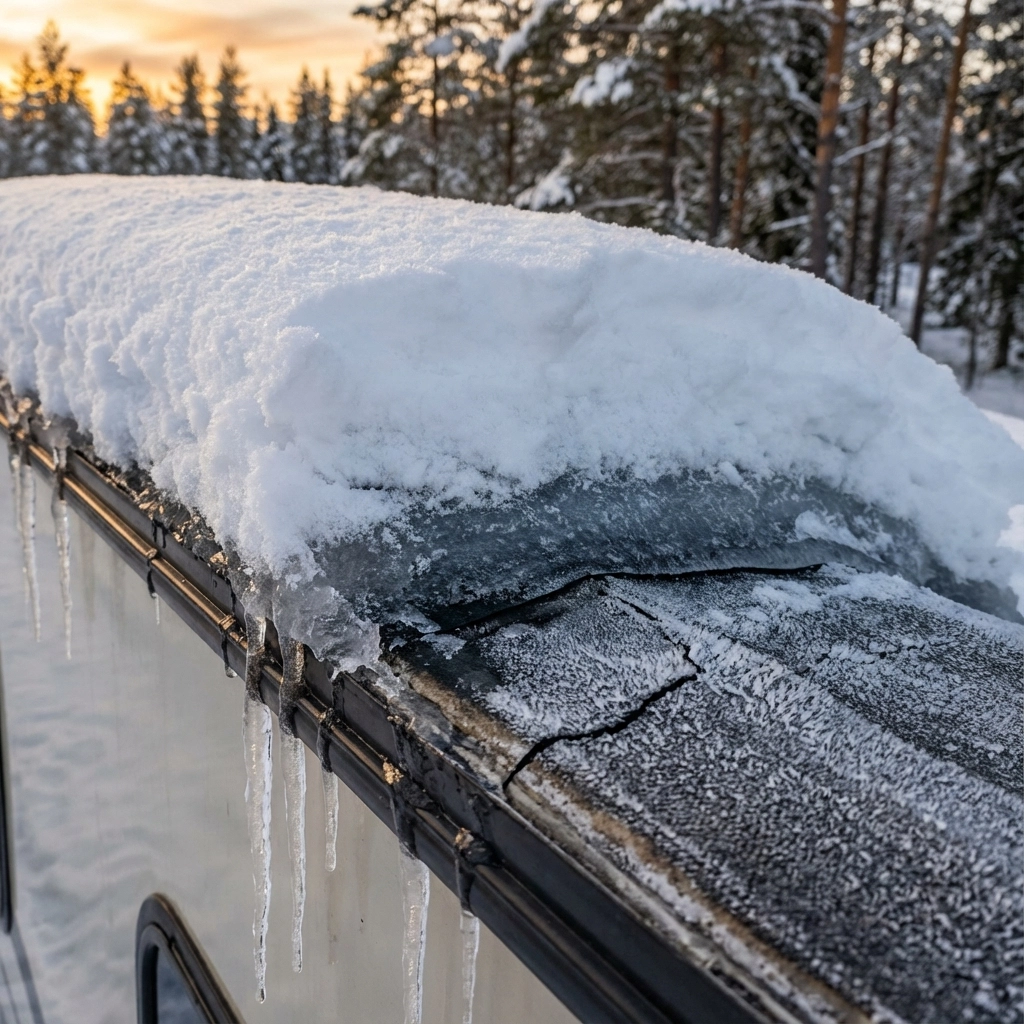
The critical threshold for most RV roofs is surprisingly low. Generally, 12 inches of fresh powder snow or 3-5 inches of packed, wet snow represents the maximum safe load. Beyond these limits, you risk serious structural damage including:
- Roof membrane tears and punctures that allow water infiltration
- Structural sagging that compromises the roof’s integrity permanently
- Seal failure around vents, skylights, and seams
- Insulation damage that reduces energy efficiency
- Complete roof collapse in extreme cases
Best Protection Methods for Snow Load Management
Regular Snow and Ice Removal
The most critical protection strategy is proactive snow removal before dangerous accumulation occurs. Clear snow when it reaches 6-8 inches, regardless of snow type, as weight builds quickly and can overwhelm your roof’s capacity without warning.
Use soft-bristled roof rakes or foam brushes with long handles to remove snow from ground level or a stable ladder. Never walk directly on a snow-covered RV roof, the combination of slippery conditions and potential structural stress creates extreme danger. Avoid metal shovels, ice choppers, or any hard tools that can slice through rubber roofing materials.
When removing snow, start from the roof edges and work toward the center to prevent creating uneven weight distribution. Remove snow in small sections rather than attempting to clear large areas at once, which can stress the roof structure.
Heated Roof Systems
For RV owners who frequently camp in snowy conditions, heated roof systems provide an automated solution that prevents snow accumulation entirely. These systems use low-voltage heating elements integrated into the roof structure to maintain surface temperatures above freezing, causing snow to melt on contact rather than accumulate.
While heated roof systems require professional installation and increase energy consumption, they eliminate the need for manual snow removal and provide continuous protection throughout winter storms. This investment pays dividends for full-time RVers or those who regularly encounter heavy snow conditions.
High-Quality RV Roof Covers
Winter-specific RV covers designed to handle snow weight offer excellent protection when proper removal isn’t feasible. Look for covers with reinforced construction, weather-resistant materials, and designs that distribute snow load evenly across the roof surface.
Quality covers feature angled designs that encourage snow to slide off naturally, reducing accumulation. However, even with covers, you’ll need periodic snow clearing during heavy storms to prevent excessive weight buildup.
Snow Guards and Weight Distribution Systems
Snow guards or snow fences installed on the roof prevent dangerous snow slides while distributing weight more evenly across the roof surface. These systems prevent sudden snow avalanches that can damage awnings, entry stairs, or injure people below.
Snow guards also help maintain more consistent snow distribution, preventing the formation of heavy ice dams that can stress specific roof areas beyond their capacity.

Reinforcing Your RV Roof for Winter
Structural Support Options
For RVs stored during winter months, temporary bracing systems provide additional structural support that prevents roof sagging under snow load. Install adjustable supports between the roof and floor at key stress points, typically along the roof’s center line and at quarter points.
Permanent roof support systems offer a more comprehensive solution for RVs regularly exposed to snow conditions. These systems include ceiling-mounted braces and reinforced framework that distributes weight loads more effectively throughout the RV’s structure.
Pre-Winter Roof Inspection
Conduct a thorough roof inspection before winter to identify and address weak points that could fail under snow load. Check for:
- Cracks or tears in the roof membrane
- Loose or damaged seams around roof edges
- Compromised seals around vents, skylights, and air conditioning units
- Soft spots that indicate underlying structural weakness
- Damaged mounting hardware for roof accessories
Address any issues immediately, even minor problems become major failures under snow load stress. Proper maintenance extends roof life significantly and prevents expensive emergency repairs.
Optimal Winter Storage Strategies
Strategic Parking
Park your RV on a slight slope whenever possible to encourage natural snow runoff. A 5-10 degree angle helps shed snow and prevents accumulation on flat roof sections. Position the RV so prevailing winds help blow snow off rather than creating drifts against one side.
Choose parking locations with southern exposure when available, as increased solar heating helps melt snow more quickly and reduces accumulation time.
Indoor Storage Solutions
Covered storage represents the ultimate protection against snow load. Indoor storage facilities, heated garages, or even temporary structures eliminate snow accumulation entirely while protecting your entire RV from winter weather effects.
While indoor storage requires additional expense, it prevents not only roof damage but also protects plumbing systems, batteries, and interior components from freezing temperatures. For valuable RVs or those used seasonally, indoor storage often proves cost-effective compared to potential repair expenses.
Safe Ice and Snow Melt Products
When manual removal isn’t sufficient, purpose-built ice melt products designed for RV roofs can help manage accumulation. Avoid harsh chemicals like rock salt or calcium chloride that can damage roofing materials and void warranties.
Use products specifically approved by your RV manufacturer, and always follow application guidelines carefully. Apply ice melt sparingly and only when necessary, as overuse can accelerate roof aging.
Post-Storm Inspection and Maintenance
After every significant snowfall, conduct a comprehensive roof inspection to identify stress indicators and potential problems before they become serious damage.
Immediate Assessment Priorities
Check for visible sagging along the roof’s center line or at stress points. Even slight sagging indicates your roof is approaching its load capacity and requires immediate snow removal.
Inspect for new cracks or tears that may have developed under stress. Small damage can quickly become major problems if not addressed promptly.
Clear snow from vents and skylights immediately, as blocked ventilation can cause moisture buildup inside your RV, leading to mold and mildew growth.
Documentation and Repair
Photograph any damage discovered during post-storm inspections for warranty claims or insurance purposes. Document the extent of snow accumulation and weather conditions that caused the damage.
Make repairs promptly using appropriate materials and techniques. For significant damage, consult professional RV service technicians who understand the specific requirements of RV roof systems.
Frequently Asked Questions
Can too much snow on the RV roof cause permanent damage?
Yes, excessive snow load can cause permanent structural damage including roof membrane tears, framework distortion, and complete roof collapse. Most RV roofs can only safely support 20-40 pounds per square foot: much less than residential roofs.
How can I remove ice from the roof without damaging it?
Use soft-bristled roof rakes, foam brushes, or plastic ice scrapers designed for delicate surfaces. Never use metal tools, hot water, or harsh chemicals. Work from ground level or a stable ladder rather than walking on the icy roof surface.
Is a roof cover necessary for winter storage?
While not absolutely essential, quality roof covers provide significant protection and make snow removal easier when required. For long-term winter storage, covers combined with regular maintenance checks offer the best protection for your investment.
Understanding and implementing proper snow load protection strategies ensures your RV roof remains structurally sound throughout winter conditions. Regular maintenance, proactive snow removal, and appropriate storage techniques protect your investment while ensuring your RV is ready for spring adventures. Whether you’re planning winter camping expeditions or storing your RV for the season, these protection methods will help maintain your roof’s integrity for years of reliable service.
For more comprehensive RV maintenance guidance, explore our complete RV maintenance resources and discover how BlackSeries RVs are engineered to handle extreme conditions with confidence.

