Dry camping, also known as boondocking, refers to camping without access to water, electrical, or sewage hookups. This style of off-grid camping has exploded in popularity across the United States as RV enthusiasts seek freedom from crowded campgrounds and rising RV park fees. From dispersed camping sites in National Forests to remote Bureau of Land Management (BLM) lands, millions of Americans are discovering the joy of self-sufficient camping.
The appeal is clear: imagine waking up to stunning desert sunrises in Utah’s red rock country, or falling asleep under star-filled skies in Montana’s wilderness, all while enjoying the comfort and convenience of your own travel trailer. However, successful dry camping requires the right equipment and knowledge.
Black Series travel trailers are specifically engineered for this lifestyle, featuring reinforced chassis with independent suspension systems, comprehensive solar and battery setups, and large water storage capacity. These Australian-inspired designs combine rugged off-road capability with luxury amenities, making them ideal for extended off-grid adventures.
This comprehensive guide will equip you with everything needed to choose, setup, and enjoy dry camping with confidence, whether you’re planning weekend escapes or extended boondocking expeditions across America’s most beautiful remote locations.
What Is Dry Camping? (Dry Camping vs Boondocking vs Dispersed Camping)
Understanding the terminology is crucial for new RVers entering the off-grid camping world. While these terms are often used interchangeably, there are subtle distinctions worth noting.
Dry camping is the broadest term, referring to any camping without electrical, water, or sewer hookups. This can occur at established campgrounds that simply lack utilities, or in completely remote locations.
Boondocking traditionally refers to camping in remote areas away from developed campgrounds, typically on public lands where you’re completely self-sufficient. The term originates from “boondocks,” meaning remote or wild areas.
Dispersed camping is a specific designation used by the U.S. Forest Service and BLM for camping outside of designated campgrounds on public lands. These areas are often free or low-cost but require complete self-sufficiency and adherence to Leave No Trace principles.
In practical terms, all three require your travel trailer to function independently without external utilities, making them essentially equivalent from an equipment and preparation standpoint.
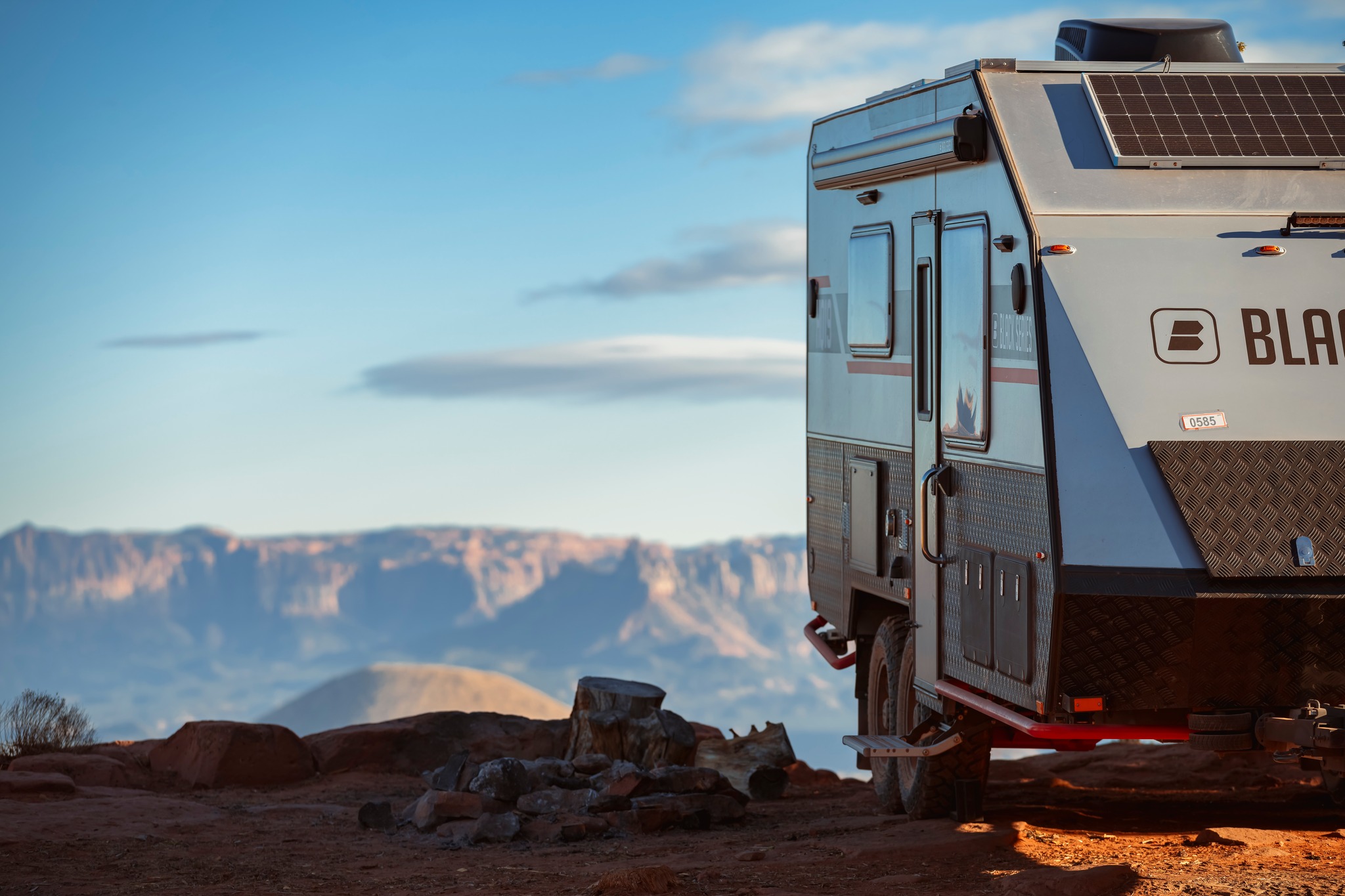
Why Dry Camping Travel Trailers Are Trending in the U.S.
The demographic driving this trend is primarily 25-45 year old professionals and families seeking authentic outdoor experiences. These overlanding enthusiasts and family campers are drawn to the freedom of choosing their own spectacular locations rather than being confined to predetermined campsites.
Several factors contribute to this growing popularity. Rising costs at traditional RV parks, which now often exceed $50-80 per night at popular destinations, make free dispersed camping attractive. Additionally, the increasing availability and affordability of solar panels and lithium battery systems have made self-sufficient camping more accessible than ever.
The sweet spot for dry camping travel trailers typically falls between 13-25 feet in length. This size range balances essential amenities and storage capacity with towability and maneuverability on rough forest service roads and desert tracks. Smaller trailers lack sufficient water and battery capacity for extended stays, while larger units become unwieldy in remote terrain.
Modern dry camping enthusiasts also appreciate the mental health benefits of digital detox and connecting with nature, making remote locations without cell service actually desirable rather than problematic.
How to Choose a Dry Camping Travel Trailer (Step-by-Step)
Selecting the right trailer requires systematic evaluation of your specific needs and camping style.
Step 1: Estimate Your Off-Grid Days
Calculate your typical trip length and multiply by the number of occupants. A family of four planning 5-day trips needs significantly more water and power capacity than a couple on weekend adventures. Conservative estimates suggest 20-30 gallons of fresh water per person for a week-long trip.
Step 2: Check Water & Holding Tanks
Water capacity often becomes the limiting factor in extended dry camping. Look for trailers with 40+ gallon fresh water tanks, and proportional grey/black water holding capacity. Black Series HQ models feature large tank systems specifically designed for extended off-grid stays.
Step 3: Evaluate Power System
Modern lithium battery banks paired with solar panel arrays provide the most reliable off-grid power solution. Look for systems with at least 200-400 amp hours of battery capacity and 400+ watts of solar panels. A quality inverter (2000+ watts) enables use of standard household appliances.
Step 4: Insulation & Climate Readiness
Consider your camping regions and seasons. Pacific Northwest campers need different insulation specs than Southwest desert explorers. Four-season capability requires upgraded insulation, heated holding tanks, and efficient heating systems.
Step 5: Chassis & Off-Road Durability
Accessing remote dispersed camping sites often requires traveling unpaved forest service roads or desert tracks. Look for trailers with increased ground clearance, independent suspension systems, all-terrain tires, and protective skid plating. Black Series trailers feature hot-dipped galvanized chassis with independent trailing arm suspension specifically for rough terrain.
Step 6: Tow Vehicle Fit & Total Weight
Don’t just consider dry weight, factor in fresh water, gear, and supplies. Most dry camping trailers loaded for extended trips weigh 20-30% more than advertised dry weights. Ensure your tow vehicle can handle the gross vehicle weight rating (GVWR) safely.

Best Dry Camping Travel Trailers for Boondocking (Black Series Picks)
Black Series offers several models optimized for off-grid adventures, each designed for specific camping styles and group sizes.
Black Series HQ19 – Balanced Size for Off-Grid Couples & Small Families
The HQ19 represents the sweet spot for luxury off-grid camping. Featuring a spacious interior with queen bed and convertible dinette, this 25-foot trailer sleeps up to 4 people comfortably. The robust electrical system includes multiple solar panels, lithium battery bank, and 2000W inverter. Large fresh water capacity (63 gallons) and comprehensive grey/black tank systems enable week-long boondocking adventures. The hot-dipped galvanized chassis with independent suspension handles rough terrain while maintaining ride quality.
Black Series HQ21 – Long-Stay Off-Grid Basecamp
For extended boondocking or larger groups, the HQ21 maximizes space and storage. This flagship model features enhanced water capacity, expanded solar coverage, and premium interior amenities including full kitchen and bathroom facilities. The reinforced aluminum-frame construction and heavy-duty suspension system excel on challenging backcountry roads. Additional exterior storage and gear mounting points accommodate extended expedition equipment.
HQ17/HQ12 – Compact Boondocking Options
These smaller models cater to adventurers with lighter tow vehicles or those seeking maximum maneuverability in tight forest roads. Despite compact footprints, both models maintain essential off-grid capabilities including solar power, adequate water storage, and rugged chassis construction perfect for accessing remote camping spots.
See full specs on our Black Series travel trailers for dry camping.
Dry Camping Setup & Conservation Checklist
Successful boondocking requires systematic preparation and resource conservation strategies.
Pre-Trip Checklist:
- Verify tire pressure and spare tire condition
- Test brake controller and trailer brakes
- Check battery charge levels and solar panel connections
- Fill fresh water tank completely
- Empty grey and black tanks
- Stock non-perishable food supplies
- Verify propane tank levels
- Pack recovery equipment (traction boards, shovel, tow straps)
Water-Saving Habits:
- Use paper plates and minimal-water cleaning methods
- Take “navy showers” (water on briefly to wet, off while soaping, on to rinse)
- Collect rainwater when possible
- Prioritize greywater reuse for initial dish rinsing
- Use biodegradable soaps to minimize environmental impact
Power-Saving Habits:
- Utilize 12V appliances over inverter-powered devices when possible
- Charge electronics during peak solar production hours
- Use LED lighting exclusively
- Minimize air conditioning use; rely on fans and ventilation
- Cook with propane rather than electric appliances
Leave No Trace / U.S. Rules:
Federal regulations require camping at least 200 feet from water sources, disposing of greywater properly (not on the ground), and packing out all trash. Many dispersed camping areas have 14-day limits and prohibit dumping any waste materials.
Glossary – Dry Camping Terms You’ll See in the U.S.
Boondocking – Camping without hookups, typically in remote locations away from established campgrounds.
Dispersed camping – Camping on public lands outside of designated campgrounds, often free but requiring complete self-sufficiency.
Hookups – Electrical, water, and sewer connections available at developed campgrounds.
Fresh/Grey/Black tank – Fresh water storage, greywater from sinks/showers, and blackwater from toilets respectively.
GVWR – Gross Vehicle Weight Rating, the maximum safe loaded weight of your trailer including cargo and fluids.
Payload – Maximum weight of cargo, water, and gear your trailer can safely carry.
Tongue weight – Downward force the trailer places on your tow vehicle’s hitch, typically 10-15% of total trailer weight.
Solar array – Collection of solar panels that convert sunlight to electricity for charging batteries.
MPPT – Maximum Power Point Tracking controller that optimizes solar panel efficiency.
Inverter – Device converting 12V battery power to 120V AC power for household appliances.
Lithium bank – Lithium battery system providing stored electrical power, more efficient than traditional lead-acid.
Four-season insulation – Enhanced insulation allowing comfortable use in freezing temperatures.
FAQ – Dry Camping Travel Trailers
What’s the difference between dry camping and boondocking?
Dry camping refers to any camping without hookups, while boondocking specifically means camping in remote locations away from established campgrounds. All boondocking is dry camping, but not all dry camping is boondocking.
How many days can a travel trailer dry camp off-grid?
Most well-equipped trailers can support 3-7 days of dry camping, with duration primarily limited by water capacity rather than power. Trailers with large tank systems and efficient resource management can extend this to 10-14 days.
What size travel trailer is best for boondocking in the U.S.?
The optimal size range is 13-25 feet, balancing essential amenities with maneuverability on rough forest service roads. This size provides adequate water/power storage while remaining towable by most pickup trucks and SUVs.
Do I need solar for dry camping?
While not absolutely essential, solar power dramatically improves the dry camping experience by reducing generator dependence and extending off-grid capability. Modern lithium/solar systems have become the standard for serious boondockers.
Are Black Series trailers good for dry camping?
Yes, Black Series trailers are specifically designed for off-grid use, featuring robust chassis construction, large water/battery systems, comprehensive solar packages, and heavy-duty suspension for accessing remote locations safely.
Where can I dry camp legally in the U.S.?
Bureau of Land Management lands, National Forest dispersed camping areas, some state parks, and private boondocking locations like Harvest Hosts offer legal dry camping. Always verify current regulations and obtain required permits.
Conclusion & CTA
Successful dry camping combines adequate resource storage with reliable access to remote locations: exactly what Black Series trailers deliver. The combination of off-road capability through reinforced chassis and independent suspension, paired with comprehensive off-grid systems including solar power and large water capacity, makes these trailers ideal for America’s growing boondocking community.
Whether you’re seeking weekend escapes to National Forest dispersed sites or planning extended expeditions across the Southwest’s incredible BLM lands, the right equipment makes all the difference between merely surviving off-grid and truly thriving in nature’s most spectacular locations.
Ready to start your off-grid adventure? Explore our complete HQ series lineup and discover which Black Series model best fits your boondocking dreams, or download our comprehensive off-grid equipment guide for detailed setup and conservation strategies.

