In 2026, towing with an electric vehicle slashes your range by 30–55%, sometimes more. Real-world EV towing range tests reveal that EPA estimates mean almost nothing once you hook up a trailer. Your actual range depends on vehicle battery capacity, towing speed, trailer weight, and environmental conditions. Most current EVs remain practical only for local towing, though specific configurations are pushing boundaries.
What Is an EV Towing Range Test?
An EV towing range test measures how far an electric vehicle can travel while pulling a trailer under real-world conditions. Unlike EPA range ratings, which test vehicles unloaded on controlled cycles, towing tests simulate actual highway driving with trailers attached.
Why does this matter in 2026? Three reasons:
- Battery technology has evolved. Larger packs (200+ kWh) now appear in trucks like the Chevrolet Silverado EV.
- More EV trucks hit the market. Rivian, Ford, GMC, and Tesla all offer towing-capable electric pickups.
- Consumer expectations are rising. Buyers want honest data, not marketing claims.
The gap between EPA estimates and towing reality has become a critical pain point. A truck rated at 300 miles might deliver only 100–140 miles with a travel trailer attached. Understanding this gap helps you plan trips, choose the right vehicle, and avoid getting stranded.
How Towing Affects EV Range (Real Numbers)
When you tow with an EV, range loss stems from three compounding factors:
- Aerodynamic drag: Trailers create massive wind resistance, especially at highway speeds.
- Added weight: Rolling resistance increases dramatically with trailer mass.
- Motor load: The electric drivetrain works harder, consuming more energy per mile.
Here’s what independent testing reveals for 2026-era electric trucks:
The pattern is clear: expect to lose roughly half your range when towing. Heavier trailers, faster speeds, and headwinds push losses even higher.
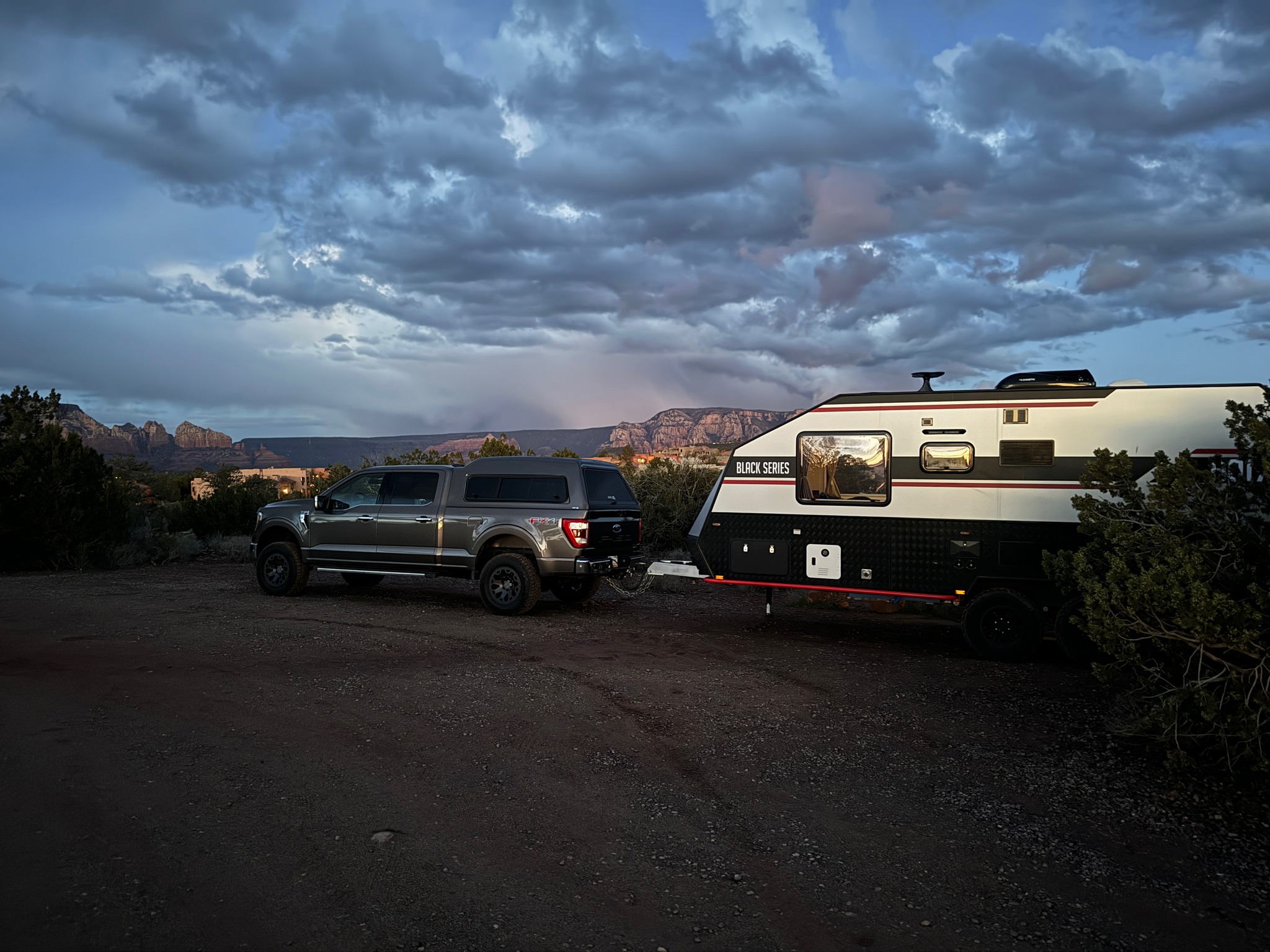
For context, most travel trailers weigh between 2,000–6,000 lbs loaded. At the heavier end, common for off-road and overland trailers, efficiency drops to around 1.0–1.5 miles per kWh. That’s a stark contrast to the 2.5–3.5 mi/kWh most EVs achieve when driving solo.
EV Towing Range Test 2026 – How We Tested
Reliable towing data requires controlled, repeatable methodology. Here’s how real-world EV towing range tests should be structured:
Test Conditions
- Speed: 65–70 mph sustained highway driving (matching typical American road trips)
- Terrain: Mixed flat highway and moderate grades
- Temperature: 60–85°F (efficiency drops significantly in extreme cold or heat)
- Trailer weight: 5,000–7,500 lbs loaded (representative of mid-size travel trailers)
Why Real Testing Beats Manufacturer Claims
Factory estimates often assume ideal conditions: flat roads, moderate temperatures, and lower speeds. Real towing involves:
- Highway speeds that exponentially increase drag
- Elevation changes that drain batteries faster
- Climate control demands (heating or cooling the cab)
- Stop-and-go traffic that varies efficiency unpredictably
At BlackSeries, we design trailers with real-world towing in mind. Our off-road travel trailers are optimized for the 60–65 mph cruise speeds where EVs operate most efficiently, not the 75+ mph that destroys both range and stability.
Best EV Setups for Towing in 2026
Rather than recommending specific models (which change constantly), focus on these configuration priorities:
Battery Capacity
Bigger is better, period. For serious towing:
- Minimum: 150 kWh pack
- Ideal: 200+ kWh (like the Silverado EV’s 205 kWh battery)
Larger batteries compensate for efficiency losses and reduce charging stops.
Torque and Powertrain
Electric motors excel at low-end torque, which benefits towing. Look for:
- 600+ lb-ft torque for trailers over 5,000 lbs
- Dual-motor or tri-motor configurations for better power distribution
Charging Network Access
Your EV’s charging compatibility determines trip viability:
- DC fast charging (350 kW capable): Essential for towing trips
- CCS or NACS compatibility: Ensures access to major networks
- Route coverage: Check charger availability along your planned routes, especially near national parks and remote destinations

Towing Capacity vs. Range Trade-Off
Higher towing capacity doesn’t mean better towing range. In fact, trucks rated for 10,000+ lbs often use that power at the expense of efficiency. Match your EV to your actual trailer weight, not theoretical maximums.
Charging Strategy While Towing
Towing with an EV requires rethinking how you plan charging stops.
DC Fast Charging Is Non-Negotiable
Level 2 charging (240V) works fine at home or overnight stops, but road trips demand DC fast chargers. The 2026 Silverado EV, for example, charges from 10% to 80% in approximately 40 minutes, adding roughly 160 miles of towing range.
Plan Shorter Legs
With towing range cut in half, plan charging stops every 80–120 miles. This seems frequent, but consider:
- Most fast-charging sessions take 30–45 minutes
- That’s a natural break for food, restrooms, and stretching
- Attempting longer legs risks running critically low
Route Planning Tools
Use apps like ABRP (A Better Route Planner) that account for towing weight. Standard navigation often overestimates remaining range when you’re pulling a trailer.
National Park and Remote Charging Gaps
Charging infrastructure remains sparse near many popular camping destinations. If you’re heading to remote locations, verify charger availability along your entire route, not just the first leg.
Common Mistakes That Reduce EV Towing Range
Avoid these efficiency killers:
Driving Too Fast
Every 5 mph above 65 mph significantly increases aerodynamic drag. At 75 mph, you might lose an additional 15–20% range compared to 65 mph. Slow down, you’ll arrive with battery to spare.
Ignoring Tire Pressure
Underinflated tires on both your tow vehicle and trailer increase rolling resistance. Check pressures before every trip and maintain manufacturer-recommended levels for loaded conditions.
Choosing the Wrong Trailer Design
Boxy, high-profile trailers create more drag than streamlined designs. When shopping for a travel trailer, consider how its shape affects your tow vehicle’s efficiency, especially if you’re towing with an EV.
Overloading
Exceeding tongue weight limits or packing excessive cargo compounds efficiency losses. Keep loads reasonable and balanced.
Is EV Towing Practical in 2026?
The honest answer: it depends on your use case.
EV Towing Works Well For:
- Weekend trips under 200 miles one-way with charging infrastructure available
- Local towing (boat ramps, equipment hauling, campgrounds within 100 miles)
- Planned road trips along major highways with DC fast charging coverage
- Owners with home charging who can start every day at 100%
EV Towing Remains Challenging For:
- Remote backcountry access where chargers don’t exist
- Multi-day trips covering 300+ miles daily
- Spontaneous travel without pre-planned charging stops
- Extreme temperatures that further reduce range
EV vs. ICE Towing: The Reality Check
Internal combustion trucks still offer superior flexibility for long-distance and remote towing. A diesel truck can cover 400+ miles between fuel stops; most EVs need 2–3 charging sessions for the same distance when towing.
However, EV towing costs are converging with diesel, especially when using public fast chargers at premium rates. The “cheaper fuel” advantage of EVs largely disappears when towing heavy loads at highway speeds.
For overlanders heading to remote wilderness areas, the kind of terrain BlackSeries trailers are built to conquer, gasoline or diesel remains the practical choice for now.
Checklist: Preparing for EV Towing in 2026
Before your next towing trip:
- ✅ Verify your EV’s towing capacity exceeds your loaded trailer weight
- ✅ Calculate expected range loss (assume 50% reduction minimum)
- ✅ Map DC fast chargers along your route
- ✅ Plan stops every 80–120 miles
- ✅ Check tire pressures on both vehicle and trailer
- ✅ Reduce highway speed to 65 mph or below
- ✅ Confirm charger availability at your destination
FAQ
How much range do EVs lose when towing?
Most electric vehicles lose 35–60% of their unloaded range when towing. A truck rated at 300 miles might only achieve 120–150 miles with a travel trailer attached.
Is EV towing realistic for long trips in 2026?
Yes, for planned trips along routes with DC fast charging infrastructure. Trips exceeding 200 miles require multiple charging stops. Remote destinations without charging access remain impractical.
What is the best EV towing range test method?
Reliable tests use sustained highway speeds (65–70 mph), representative trailer weights (5,000–7,500 lbs), moderate temperatures, and mixed terrain to simulate real driving conditions.
Can you tow a travel trailer with an EV safely?
Absolutely. Modern electric trucks have the power and stability for towing. The limitation is range, not capability. Match your EV’s battery capacity and towing specs to your trailer weight, and plan charging stops accordingly.

