An RV air deflector on a tow vehicle can reduce wind resistance in specific setups, but results vary widely depending on trailer height, speed, and airflow alignment.
Before you invest in an air deflector hoping for dramatic fuel savings, understand these realities:
- Not all towing combinations benefit equally, height difference between truck and trailer is critical
- Improper setup can actually increase drag, not reduce it
- In many scenarios, controlling your cruising speed delivers better results than adding aftermarket accessories
- Real-world testing shows fuel economy improvements ranging from negligible to approximately 1 mpg, far below manufacturer claims of 3+ mpg
This guide breaks down when RV air deflectors actually work, when they don’t, and why BlackSeries approaches wind resistance from an entirely different angle.
What Is an RV Air Deflector?
> Section Summary: An air deflector is designed to guide airflow over a trailer, not block wind. Understanding this distinction is essential before evaluating whether one will work for your setup.
An RV air deflector (also called a wind deflector or cab fairing) is a shaped panel mounted on top of a tow vehicle’s cab or cargo bed. Its purpose is to redirect oncoming airflow upward and over a towed trailer, reducing the turbulence that occurs when fast-moving air collides with a trailer’s flat front face.
Installation Positions
Air deflectors are typically mounted in two locations:
- Cab roof: Common on pickup trucks towing fifth wheels or travel trailers
- Cargo bed front: Used when towing truck campers or when cab-mounted options aren’t feasible
Design Intent: Guiding, Not Blocking
A critical misconception: air deflectors don’t “block” wind. They redirect airflow to create a smoother transition between the tow vehicle and trailer. When properly matched, the deflector angles air upward so it flows over the trailer’s leading edge rather than slamming directly into it.
This distinction matters because simply adding a deflector without considering your specific vehicle-trailer geometry can make aerodynamics worse, not better.
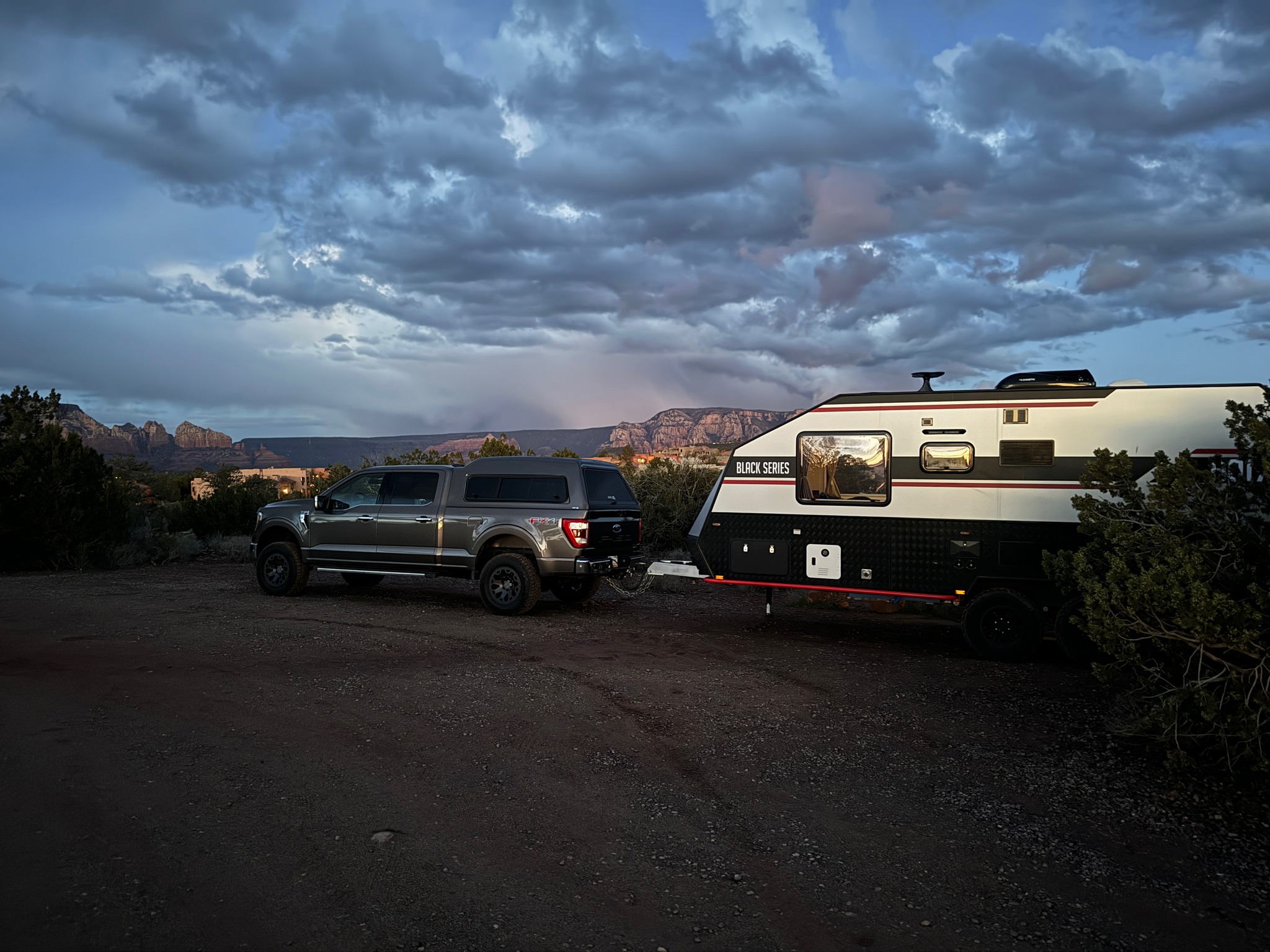
How an Air Deflector Works When Towing
> Section Summary: Effective airflow transition requires precise alignment between deflector angle, gap distance, and trailer height. When these factors align, turbulence decreases. When they don’t, you’re adding drag.
When you tow a trailer at highway speeds, airflow separates as it leaves your tow vehicle’s cab. Without intervention, this separated air creates turbulent vortices that:
- Slam into the trailer’s front face
- Generate aerodynamic drag
- Increase fuel consumption
- Create wind noise and instability
An air deflector attempts to prevent this by angling airflow upward before it separates, creating a smoother “bridge” of air from vehicle to trailer.
When Effective Airflow Transition Occurs
For a deflector to work, the redirected air must actually reach and flow over the trailer. This requires:
- Proper height differential: The deflector’s peak should roughly match the trailer’s roofline
- Minimal gap distance: Deflectors work best when positioned within a few feet of the trailer
- Consistent highway speed: Benefits appear primarily at sustained speeds of 60–70 mph
When any of these factors is off, the deflector simply pushes air into empty space, where it eventually becomes turbulent anyway before reaching the trailer.
Do RV Air Deflectors Actually Work?
> Section Summary: Real-world results are inconsistent. Air deflectors help in specific configurations but provide minimal benefit, or even increase drag, in others.
This is the question every RV owner asks before purchasing. The honest answer: it depends entirely on your setup.
When an Air Deflector CAN Help
Air deflectors deliver measurable benefits when:
- Your tow vehicle is significantly shorter than your trailer: A standard pickup towing a tall travel trailer creates a large “step” in the airflow profile. A deflector can bridge this gap.
- Your trailer has a flat, blunt front end: Travel trailers with vertical front faces present maximum wind resistance. Redirecting air over this surface provides the greatest potential improvement.
- You cruise consistently at 60–70 mph: Aerodynamic effects compound at highway speeds, making deflector benefits more noticeable.
- The gap between truck and trailer is minimal: Fifth wheels and truck campers benefit more than conventional travel trailers towed from a hitch.
Real-world reports confirm deflectors can reduce wind noise significantly and improve stability, particularly for pop-up campers experiencing air pocket lifting at highway speeds.
When an Air Deflector Does NOT Help
Deflectors provide little to no benefit, and may increase drag, when:
- Trailer height matches or falls below the tow vehicle: If air already flows over your trailer naturally, a deflector just adds frontal area
- Your trailer features aerodynamic design: Rounded front profiles and integrated airflow management reduce the need for external intervention
- You drive at varied speeds or primarily below 55 mph: Aerodynamic effects diminish substantially at lower speeds
- The deflector angle doesn’t match your trailer height: One real-world test found that adding a deflector decreased fuel economy by approximately 1 mpg because the angle created additional drag rather than reducing turbulence
For more on how wind resistance affects overall towing performance, see our guide on RV fuel efficiency and aerodynamics.
Fuel Savings vs. Real-World Results
> Section Summary: Manufacturer claims of 3+ mpg improvements rarely match actual testing. Expect modest gains at best, and understand that speed control often outperforms deflector installation.
The Gap Between Claims and Reality
Manufacturers frequently advertise fuel economy improvements of up to 3 mpg with air deflector installation. However, independent testing tells a different story:
One detailed test at sustained 65 mph found that the deflector actually decreased fuel economy by approximately 1 mpg, with angle adjustments failing to improve results. The tester concluded the deflector was adding drag for that particular truck-camper combination.
Why “Feels the Same” Is Common
Many RV owners report their deflector “doesn’t seem to make a difference.” This isn’t imagination, when setup conditions aren’t optimal, deflectors simply don’t deliver meaningful aerodynamic benefits. The fuel consumption difference may fall within normal variation, making any improvement imperceptible.
Air Deflector vs. Other Ways to Reduce Wind Resistance
> Section Summary: Before investing in a deflector, consider whether simpler, more effective methods might serve you better.
Air deflectors represent just one approach to managing wind resistance while towing. Consider how they compare to alternatives:
Key insight: Reducing your cruising speed from 75 mph to 65 mph typically delivers greater fuel savings than any aftermarket aerodynamic accessory, and costs nothing.
For a deeper look at proven methods, explore our article on fuel saving tips for towing trailers.

Common Myths About RV Air Deflectors
> Section Summary: Marketing claims don’t always match physics. Here’s what the data actually shows.
Myth 1: “Installing a Deflector Always Saves Fuel”
Reality: Fuel savings depend entirely on proper matching between deflector angle, height, and trailer configuration. Mismatched setups can actually increase drag and fuel consumption.
Myth 2: “Bigger Deflectors Work Better”
Reality: A larger deflector doesn’t automatically redirect more air effectively. Oversized deflectors often add frontal area (increasing drag) without corresponding aerodynamic benefit.
Myth 3: “Air Deflectors Work for All Towing Setups”
Reality: Deflectors work best for specific configurations, primarily tall trailers towed by shorter vehicles with minimal gaps. Travel trailers on standard hitches often don’t benefit because the distance between truck and trailer allows redirected air to become turbulent before reaching the trailer.
How BlackSeries Designs Trailers with Aerodynamics in Mind
> Section Summary: Rather than relying on aftermarket accessories, BlackSeries addresses wind resistance at the design stage, where it matters most.
At BlackSeries, we approach aerodynamic efficiency differently. Instead of expecting owners to compensate for poor design with add-on accessories, we engineer trailers that manage airflow from the start.
Design-Stage Airflow Optimization
Every BlackSeries trailer undergoes evaluation for:
- Front profile geometry: Reducing blunt surfaces that create turbulence
- Transition points: Minimizing sudden angles where airflow separates
- Component integration: Flush-mounting accessories rather than creating drag-inducing protrusions
Optimized for Real Towing Conditions
We design for the 60–65 mph cruising range where most owners actually travel, not for theoretical maximum speeds. This practical approach means:
- Lower wind resistance at typical highway speeds
- Improved stability during sustained towing
- Better fuel efficiency without requiring aftermarket modifications
System Stability Over Single-Component Fixes
Rather than suggesting owners add deflectors to compensate for design limitations, BlackSeries trailers achieve aerodynamic efficiency through integrated engineering. The result: you spend less on accessories and more time enjoying your destination.
Explore how this philosophy extends across our lineup in our 2025 off-road travel trailer buying guide.
Checklist: Is an RV Air Deflector Right for You?
Before purchasing, evaluate your specific situation:
- Height differential: Is your trailer significantly taller than your tow vehicle’s cab?
- Gap distance: Is the space between truck and trailer minimal (under 3 feet)?
- Cruising speed: Do you consistently travel at 60–70 mph on highways?
- Trailer front design: Does your trailer have a flat, vertical front face?
- Existing optimization: Have you already addressed tire pressure, weight distribution, and roof accessories?
- Cost-benefit: Are you realistic about expected savings (typically 0–1 mpg at best)?
If you answered “no” to multiple questions, an air deflector likely won’t deliver meaningful benefits for your setup. Consider speed management and trailer selection as more effective alternatives.
FAQ
Are RV air deflectors worth it for fuel savings?
For most setups, the fuel savings are modest at best, typically 0–1 mpg under ideal conditions. Manufacturer claims of 3+ mpg rarely match real-world results. If your trailer is significantly taller than your tow vehicle and you cruise consistently at highway speeds, you may see some benefit. Otherwise, controlling your speed delivers better results for free.
Where should an air deflector be installed on a tow vehicle?
Air deflectors mount on the cab roof or cargo bed front, positioned so the deflector’s peak roughly aligns with the trailer’s roofline. Proper angle adjustment is critical, incorrect positioning can increase drag rather than reduce it.
Do air deflectors reduce wind noise?
Yes, this is one of the more consistent benefits reported by users. By smoothing airflow transition between truck and trailer, deflectors can significantly reduce wind noise and eliminate “popping” sounds that occur at highway speeds.
What works better than an air deflector for towing efficiency?
Controlling your cruising speed (60–65 mph instead of 75 mph) typically delivers greater fuel savings than any aftermarket accessory. Other effective methods include removing unnecessary roof accessories, maintaining proper tire pressure, and choosing a trailer with aerodynamic design from the start.
Ready to explore trailers engineered for real-world efficiency? Browse the BlackSeries lineup and discover what thoughtful design can do for your towing experience.

