An RV extended service contract (ESC) is a protective agreement that covers repair costs for your rig’s major components after the factory warranty expires. For off-road enthusiasts, it’s a critical safety net that ensures mechanical, electrical, and appliance failures don’t derail your remote adventures or drain your savings.
What Is an RV Extended Service Contract?
Think of an extended service contract as the bridge between traditional insurance and a manufacturer’s warranty. While insurance covers accidents and external damage, and the factory warranty handles defects during the first year or two, an ESC steps in to protect you from the mechanical breakdowns that happen from normal wear and tear.
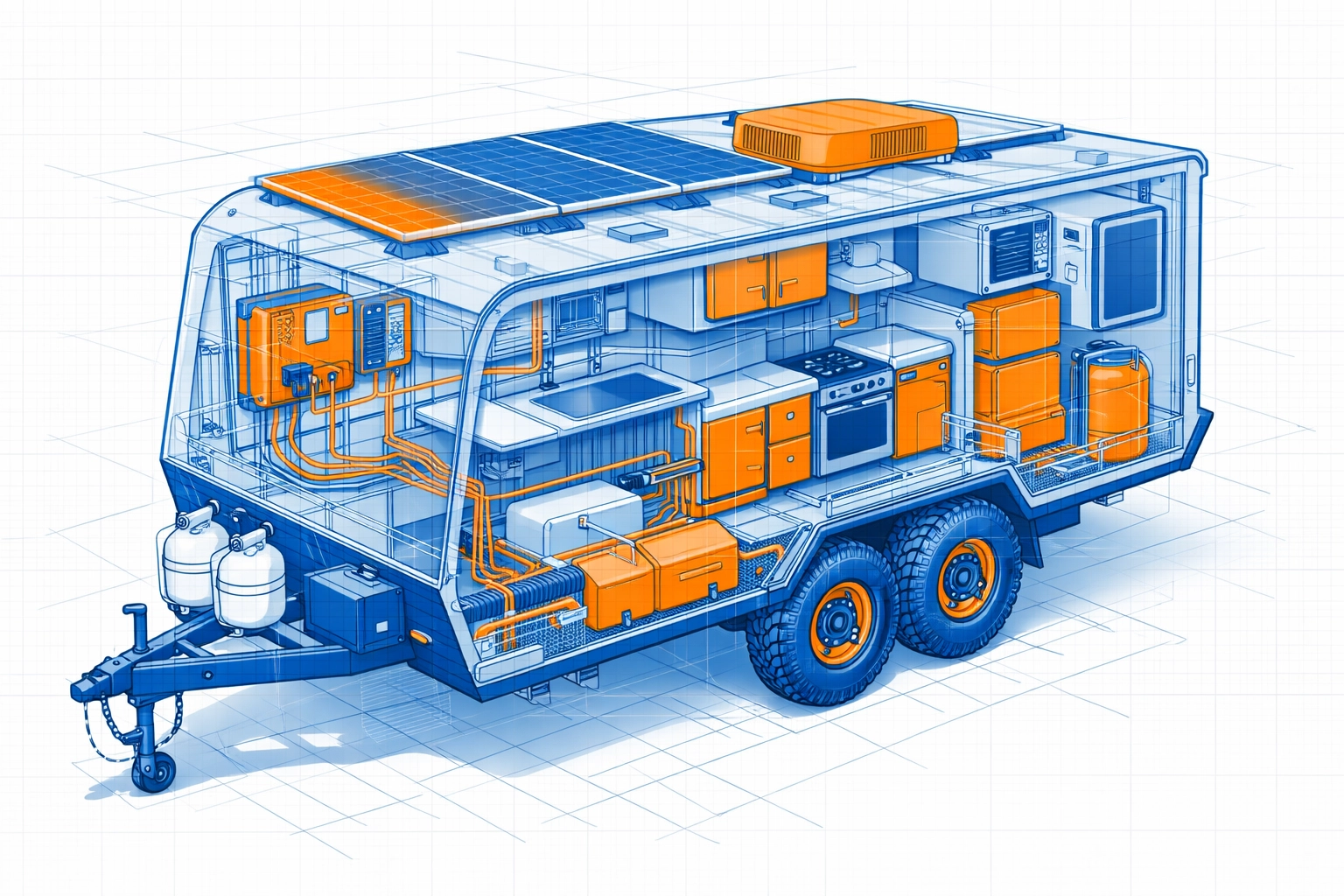
For overlanders pushing their rigs into remote deserts, mountain passes, and forest trails, this distinction matters. Your off-road travel trailer isn’t just sitting in a campground, it’s absorbing constant vibration, temperature swings, and stress on every component from the suspension to the electrical system.
Key Terms You Need to Know
Coverage Scope: The list of components and systems protected under your contract. For off-road rigs, pay special attention to independent suspension, 12V solar arrays, lithium battery banks, and heavy-duty axles.
Qualified Repair Centers: Facilities authorized to perform warranty work. Nationwide networks matter when you’re 1,000 miles from home.
Claim Process: The steps required to get repairs approved and paid for. Look for contracts with 24/7 claims support.
Routine Maintenance: Regular upkeep like oil changes and tire rotations. Most ESCs don’t cover this, but failing to maintain your rig can void the entire contract.
Deductible: The amount you pay out-of-pocket per claim before coverage kicks in. Options typically range from $0 to $500.
How to Choose the Right Extended Service Contract
Picking the wrong ESC is like buying a tent that’s not waterproof, it looks good until you actually need it. Here’s a practical checklist to guide your decision:
Weight Considerations and Coverage
When evaluating contracts, understanding your rig’s specifications helps determine appropriate coverage levels. A compact 16 ft camper weight (around 3,200–3,800 lbs) has fewer systems than a full-size 30 foot rv weight rig (7,000–10,000 lbs). Larger trailers with more appliances, slide-outs, and complex electrical systems typically require more comprehensive protection.
For example, an 18 ft camper weight BlackSeries HQ19 (approximately 4,400 lbs dry) includes independent suspension, solar arrays, and climate control, all components that benefit from extended coverage. Meanwhile, the 24 ft camper weight category (5,000–6,500 lbs) often features dual axles and expanded living quarters, increasing the number of potential failure points.

Best Extended Service Contracts for 2026
1. BlackSeries Official Extended Service Contract
Coverage Period: 2–5 years
Best For: Owners who want factory-backed protection for specialized off-road components
Key Benefits:
- Covers independent suspension systems, reinforced chassis, and off-grid power components
- Direct claims processing through BlackSeries support
- Transferable to future owners, boosting resale value
- No questions about aftermarket modifications, we built the rig, we know how to fix it
Cost: Varies by model and coverage duration. Contact your dealer for specific pricing.
2. Nationwide Third-Party ESC Providers
Coverage Period: 3–7 years
Best For: Cross-country travelers who need a massive repair network
Key Benefits:
- Coverage across all 50 states and Canada
- Trip interruption benefits (meals, lodging, rental car reimbursement)
- Flexibility to choose any licensed repair facility
- 24/7 roadside assistance
Cost: $2,500–$6,000 depending on deductible and coverage level
3. Comprehensive Insurance + ESC Bundles
Coverage Period: Bundled with annual insurance renewal
Best For: Full-timers who want one-stop protection
Key Benefits:
- Combines collision, liability, and mechanical breakdown coverage
- Simplified claims, one provider handles everything
- Often includes gap coverage if your RV is totaled
Cost: Premiums vary widely; expect 15–25% higher than standard RV insurance
Why Extended Service Contracts Protect Your Investment
Avoiding High Repair Costs
Off-road-specific repairs aren’t cheap. Replacing an independent suspension system can cost $3,000–$5,000. A lithium battery bank replacement? Another $2,500–$4,000. HVAC system failures in extreme climates? $1,800–$3,200. An ESC converts these unpredictable expenses into a fixed, manageable cost.
For context, the average weight of camper trailers in the 20–30 ft range (4,500–7,500 lbs) means they’re packing serious systems, generators, water heaters, climate control, entertainment setups. More complexity = more potential points of failure.
Comprehensive Component Coverage
A quality ESC should protect:
- Mechanical Systems: Suspension, brakes, wheel bearings, axles
- Electrical Systems: 12V and 120V wiring, converters, inverters, solar charge controllers
- Appliances: Refrigerators, stoves, water heaters, HVAC units
- Plumbing: Fresh water pumps, wastewater systems, tanks
- Exterior Components: Awnings, jacks, entry steps
For off-road trailer enthusiasts, make sure specialty items like mud-terrain tires, off-grid electrical systems, and heavy-duty outdoor kitchens are explicitly included.
Boosting Resale Value
A transferable ESC is a massive selling point when you’re ready to upgrade. Buyers shopping for a used 30 ft camper weight rig (7,000+ lbs) want peace of mind. Knowing the major systems are covered for another 2–3 years can justify a $5,000–$10,000 higher asking price.
Frequently Asked Questions
What exactly is an RV extended service contract?
It’s a service agreement that covers the cost of repairs and replacement parts for mechanical, electrical, and appliance failures after your manufacturer’s warranty expires. Unlike insurance, it’s specifically designed for wear-and-tear breakdowns, not accidents.
What repairs are typically included in an ESC?
Most contracts cover major systems: engine (if motorized), transmission, suspension, brakes, HVAC, electrical wiring, plumbing, appliances, and generators. Review the fine print, some contracts exclude wear items like tires and batteries unless they fail due to a covered mechanical issue.
How do I choose the best contract for my off-road rig?
Prioritize contracts that explicitly cover off-road components: independent suspension, reinforced chassis, solar arrays, and lithium battery systems. Check the provider’s repair network and whether they offer 24/7 roadside assistance in remote areas.
Does an extended service contract cover routine maintenance?
No. ESCs cover breakdowns and failures, not preventative maintenance like oil changes, tire rotations, or filter replacements. However, maintaining service records is crucial: most contracts require proof of regular maintenance to honor claims.
Is an ESC worth it for occasional users?
It depends on your risk tolerance and budget. If you only take 3–4 short trips per year, a self-insurance strategy (setting aside repair funds) might be more cost-effective. But for frequent travelers racking up miles and exposing their rig to harsh conditions, an ESC provides valuable protection.
Real-World Use Cases
Full-Time RVers
If your BlackSeries trailer is your primary residence, you’re putting serious miles and wear on every system. Full-timers benefit most from comprehensive, bumper-to-bumper coverage with low deductibles. The average travel trailer weights for full-time rigs typically fall in the 6,000–8,000 lb range, meaning complex systems that need protection.
Long-Distance Overlanders
Traveling from Arizona to Alaska? An ESC with nationwide coverage and trip interruption benefits is essential. When you’re 800 miles from the nearest BlackSeries dealer and your HVAC fails in sub-zero temps, having coverage that reimburses hotel stays and emergency repairs is priceless.
New RV Owners
First-time buyers transitioning from tent camping to a full off-road trailer experience often underestimate maintenance costs. An ESC provides immediate peace of mind and protects against unexpected learning-curve expenses.
Final Thoughts
An RV extended service contract isn’t just paperwork: it’s the difference between a minor inconvenience and a trip-ending disaster when you’re 300 miles from cell service. For overlanders pushing their rigs to the limit, that security is worth every penny.
Whether you’re towing a compact HQ12 or a full-featured HQ21, protecting your investment with the right ESC means more time exploring and less time worrying. Review your options, compare coverage details, and choose a plan that matches your adventure style.
Ready to protect your rig? Check out BlackSeries warranty options or contact your dealer to discuss extended service contract plans tailored to your specific model.

