
Your cart (0)
Your cart is empty
Tax included and shipping calculated at checkout
Your cart is empty
Tax included and shipping calculated at checkout

Winter camping and extended RV travel can expose your washing machine to freezing temperatures that spell disaster for unprepared units. Water left in pipes, pumps, and internal components can freeze and expand, causing catastrophic damage including burst pipes, cracked seals, and destroyed pump mechanisms. For BlackSeries RV owners who embrace year-round adventure and off-grid camping, proper winterization isn’t just maintenance, it’s essential protection for your investment.
The cost of replacing a damaged RV washing machine can easily exceed $1,500, not including labor and potential water damage to your RV’s interior. A few hours of preventive winterization can save thousands in repairs and ensure your washing machine is ready when you need it most.
RV washing machines face unique challenges compared to residential units. They’re subjected to road vibrations, temperature fluctuations, and often operate in environments without consistent climate control. When temperatures drop below 32°F (0°C), any residual water in the system becomes a ticking time bomb.
The complex internal plumbing of modern RV washing machines includes multiple water lines, pumps, valves, and drain systems, all potential failure points if water freezes inside them. Unlike your home washing machine that sits in a heated basement, your RV unit may experience sub-freezing temperatures in storage or during winter camping.
Frozen Water Lines: Even small amounts of water left in inlet lines can freeze, expand, and crack the pipes or fittings.
Pump Damage: Water pumps contain internal chambers where residual water can freeze, destroying impeller blades and housing.
Seal Deterioration: Rubber seals and gaskets become brittle in extreme cold, leading to leaks when temperatures rise.
Control System Issues: Electronic components can malfunction when exposed to freezing conditions, especially if moisture is present.
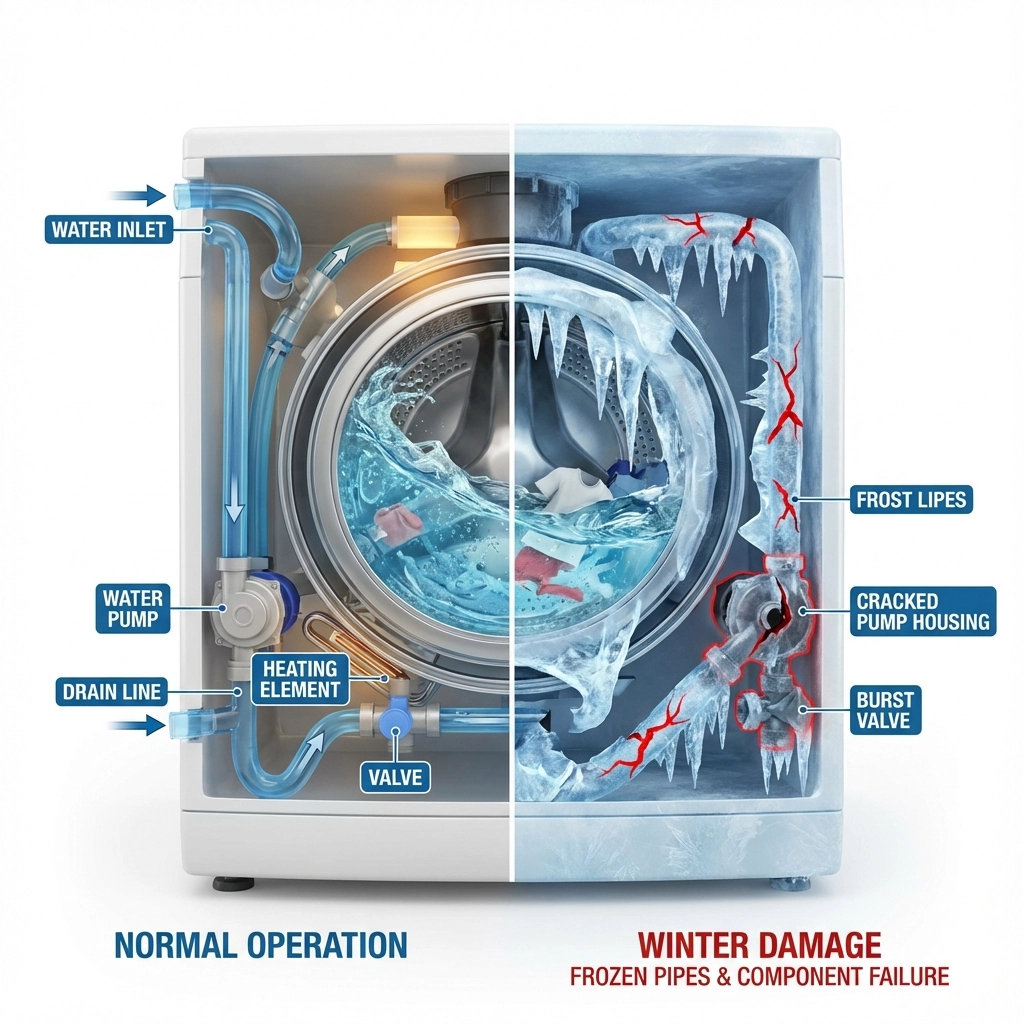
Before beginning the winterization process, gather these essential items:
Primary Supplies:
Optional Enhancement Items:
The key distinction here is using RV-specific antifreeze. Never use automotive antifreeze (ethylene glycol) as it’s toxic and can contaminate your water system. RV antifreeze is specially formulated to be safe for potable water systems while providing freeze protection down to -50°F.
Begin by ensuring your RV is in a level position and the washing machine is completely cool. Disconnect the unit from both electrical power and the RV’s water system. This prevents accidental operation during the process and eliminates water pressure in the lines.
Locate your RV’s main water pump and shut it off. Open a few faucets throughout the RV to relieve system pressure before working on the washing machine connections.
Run one complete drain cycle to remove as much water as possible from the washing machine’s internal systems. However, don’t rely on this alone, washing machines retain water in multiple locations that normal operation doesn’t fully evacuate.
Disconnect the hot and cold water supply lines from the back of the unit. Position containers to catch any water that flows out, then use gravity to drain these lines completely.
This is where most DIY winterization efforts fall short. Use a manual pump or wet/dry vacuum to extract water from:
Professional RV technicians often use compressed air to blow out water lines, but manual extraction works well for most situations.

Add approximately one gallon of RV antifreeze directly to the washing machine drum. Select a short wash cycle (without adding clothes or detergent) and run it for 2-3 minutes. This circulates antifreeze through the internal water paths, pumps, and valves.
Allow the unit to complete its drain cycle. The antifreeze will now coat all internal surfaces and fill low-point traps where water typically collects.
Wrap exposed water lines with pipe insulation or heat tape. Pay special attention to areas where lines pass through unheated compartments or near exterior walls. Even with antifreeze protection, additional insulation provides an extra safety margin.
For BlackSeries RV owners, consider the robust construction of your unit when planning insulation placement. The heavy-duty systems can handle additional protective wrapping without clearance issues.
Leave the washing machine door slightly ajar to prevent moisture accumulation and potential mold growth. Place moisture-absorbing packets inside the drum if your RV will be stored in a humid environment.
Document the date of winterization and the type of antifreeze used for spring preparation reference.
RV washing machines are exposed to ambient temperatures rather than being protected in heated spaces. They also have more complex plumbing systems with multiple low points where water can collect and freeze.
While draining removes most water, complete evacuation is nearly impossible without specialized equipment. Even small amounts of residual water can cause damage when frozen. Antifreeze provides critical protection for water that can’t be drained.
No, never use automotive antifreeze in any RV water system. It contains ethylene glycol, which is toxic and can contaminate your entire fresh water system. Always use propylene glycol-based RV antifreeze.
Successful winterization is indicated by antifreeze flowing from all drain points during the process. In spring, if you find no cracked components and the system operates normally after flushing, your winterization was effective.
Yes, if there’s any possibility of freezing temperatures. Storage facility heating can fail, and even brief exposure to freezing conditions can cause damage. The small cost of winterization provides significant peace of mind.

Develop a routine that includes checking seals and connections before each camping season. Replace worn components proactively rather than waiting for failure. This is especially important for BlackSeries RV owners who push their equipment harder than typical recreational users.
Coordinate washing machine winterization with your entire RV’s cold weather preparation. This includes fresh water tanks, hot water heaters, and all plumbing fixtures. A comprehensive approach ensures no system is overlooked.
When planning your winter RV adventures, remember that proper appliance preparation enables extended cold-weather camping without system failures.
If possible, store your RV in a climate-controlled environment or at minimum, choose storage locations with some weather protection. Even with proper winterization, extreme temperature swings and exposure to elements accelerate component aging.
When warmer weather returns, reversing the winterization process requires care. First, flush the antifreeze from the system by running several wash cycles with just water: no clothes or detergent. The initial flushes may have a pink tint from the antifreeze.
Reconnect all water lines and restore electrical power only after confirming all connections are secure. Test the system with a small load to verify normal operation before resuming regular use.
Proper winterization protects your investment and ensures reliable operation throughout your RV’s lifespan. For BlackSeries RV owners who depend on their equipment in challenging environments, this preventive maintenance is essential for continued adventure readiness.
Taking the time to properly winterize your RV washing machine demonstrates the same attention to detail that BlackSeries puts into building rugged, reliable travel trailers designed for serious adventurers.