Winter RV camping requires proper insulation, heating management, safe driving preparation, and a complete essential gear checklist. The key steps include winterizing your RV, sealing heat-loss points, preparing your heating system, carrying snow-ready equipment, and selecting safe winter campsites. BlackSeries off-road trailers offer superior cold-weather performance through military-grade construction, advanced insulation, and independent suspension systems designed for harsh conditions.
Why Winter RV Camping Is Growing in the U.S.
Winter RV camping has experienced explosive growth across America, with Google Trends data showing a 40%+ increase in winter camping searches over the past five years. This surge stems from several factors: winter campgrounds offer quieter experiences with significantly lower rates, four-season RVs have become more accessible, and adventurous travelers seek year-round outdoor lifestyles.
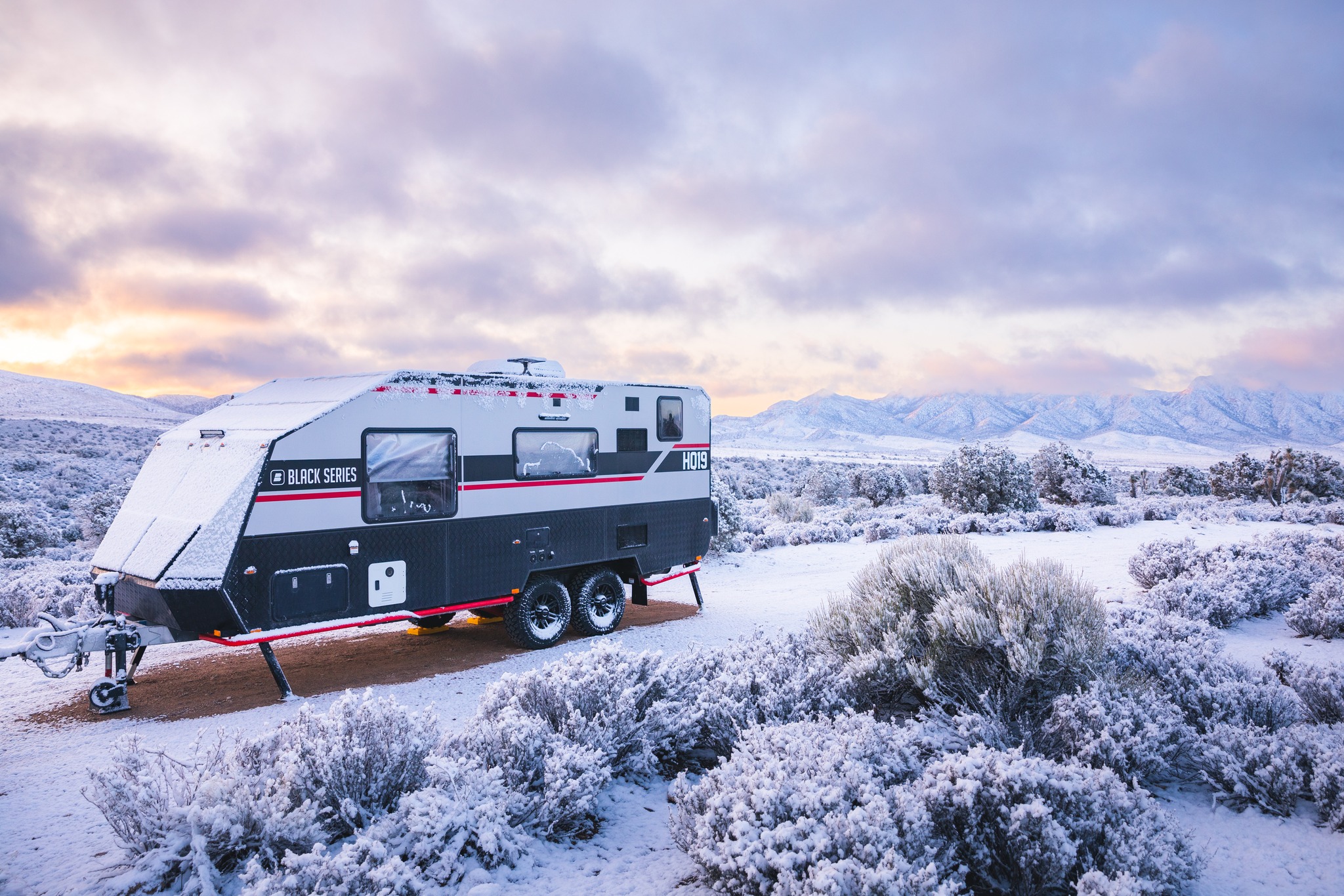
The pandemic accelerated this trend as Americans discovered the freedom of RV travel during traditional off-seasons. Winter destinations like Arizona’s Sonoran Desert, Florida’s state parks, and Colorado’s ski country now report consistent winter bookings. Off-road capable trailers like BlackSeries models have expanded winter camping possibilities by accessing remote, snow-covered locations previously unreachable with standard travel trailers.
Essential Preparations Before Winter RV Camping
RV Winterization Basics
Winterization protects your RV’s water systems from freezing damage. This process involves draining fresh and wastewater tanks, adding RV antifreeze to plumbing lines, and switching systems to winter mode. Different RV types require specific approaches, motorhomes need engine coolant checks, while travel trailers focus on plumbing protection.
Understanding your RV’s classification matters significantly. Four-season RVs come factory-equipped with heated underbellies, dual-pane windows, and enhanced insulation. Three-season units require additional modifications for safe winter use. BlackSeries trailers incorporate four-season design elements standard, including aluminum honeycomb composite construction that maintains structural integrity in extreme cold.
Insulation Tips to Stay Warm in an RV in Winter
Effective RV insulation combines factory features with aftermarket improvements. Start by identifying heat loss points: single-pane windows, thin walls, and uninsulated floors. Add foam board insulation to walls, install thermal curtains over windows, and use reflective bubble wrap on large glass surfaces.
RV skirting creates a crucial thermal barrier underneath your trailer. Custom-fit skirts trap warm air around tanks and plumbing, preventing freeze damage while reducing heating costs. For enhanced protection in areas with dispersed camping opportunities, consider adding heated pads directly on tanks and using pipe heating cables on exposed plumbing.
BlackSeries trailers feature aluminum honeycomb composite walls that provide superior insulation compared to traditional stick-and-tin construction. This aerospace-grade material maintains consistent interior temperatures while resisting thermal bridging that causes heat loss in conventional RV walls.
Heating Systems & Power Management
Common RV Heating Methods Compared
Power Management in Cold Weather
Battery performance drops dramatically in cold temperatures, with lead-acid batteries losing 20-50% capacity below freezing. Lithium batteries maintain better cold-weather performance but still require protection from extreme temperatures.
Plan power consumption carefully during winter camping. Heating systems draw significant power, especially furnace blower fans that run continuously. Consider upgrading to lithium batteries for improved cold-weather reliability, and install battery monitoring systems to track consumption.
BlackSeries trailers can accommodate robust electrical systems including lithium battery banks, solar arrays, and high-capacity inverters. The trailer’s independent suspension system protects electrical components during winter off-road adventures where traditional trailers might suffer damage.

Winter RV Camping Checklist
Pre-Departure Checklist
Essential gear for winter RV camping includes:
✓ Traction aids: Snow chains, traction mats, sand/cat litter
✓ Heating supplies: Extra propane tanks, space heaters, heated hose
✓ Water protection: Tank heaters, antifreeze, heated drinking water hose
✓ Emergency items: Shovel, ice scraper, emergency blankets
✓ Power backup: Generator, extra batteries, solar panels
✓ Safety equipment: CO detector, fire extinguisher, first aid kit
Campsite Setup Checklist
Upon arrival at winter campsites:
✓ Position strategically: Park windbreaks facing prevailing winds
✓ Level and stabilize: Use extended stabilizer pads for snow/soft ground
✓ Install skirting: Deploy RV skirt immediately to trap warm air
✓ Connect utilities: Hookup heated water hose, check electrical connections
✓ Test systems: Verify heating, water flow, and electrical operation
Step-by-Step Guide: How to Start Winter RV Camping
Step 1: Choose Your Winter-Friendly RV and Destination
Select RVs designed for cold weather use. Four-season trailers include enhanced insulation, heated tanks, and robust heating systems. Research winter-accessible campgrounds with full hookups, as water and sewer connections become critical in freezing conditions.
Popular winter RV destinations include:
- Arizona/California deserts: Mild temperatures, diverse landscapes
- Florida state parks: Warm weather, beach access, full amenities
- Colorado ski areas: Snow activities, mountain scenery
- Texas hill country: Moderate climate, spacious campgrounds
Step 2: Master Winter Driving Techniques
Winter RV driving requires modified techniques for safe travel. Increase following distances to account for extended braking on snow/ice. Practice backing up in safe areas before attempting campground maneuvers in snow.
Understanding weight distribution becomes crucial with winter gear additions. Load heavy items low and forward to maintain proper tongue weight. BlackSeries trailers’ low center of gravity and independent suspension provide enhanced stability when towing through winter conditions.
Step 3: Execute Daily Winter Camp Management
Maintain consistent interior temperatures through strategic heating use. Run furnaces on lower settings continuously rather than high-heat cycles that waste fuel and create temperature swings. Keep cabinet doors open under sinks to prevent pipe freezing.
Monitor weather forecasts constantly and prepare exit strategies for severe weather. Winter camping requires flexibility, be ready to relocate if conditions deteriorate beyond your equipment’s capabilities.
Winter RV Driving Tips
Winter towing demands enhanced preparation and modified techniques. Check tire pressure weekly, as cold temperatures reduce pressure significantly. Carry tire chains rated for your RV’s tire size, and practice installation before departure.
Mountain driving requires special attention during winter months. Use lower gears when descending to avoid brake overheating on icy roads. Maintain steady speeds rather than frequent acceleration/deceleration that can trigger trailer sway on slippery surfaces.
BlackSeries trailers’ independent suspension systems provide superior stability on uneven winter terrain. The robust chassis construction handles snow loading without flexing that might damage conventional travel trailers.
Common Winter RV Camping Mistakes
Underestimating propane consumption tops the list of winter camping errors. Cold weather dramatically increases heating fuel use, expect 2-3x normal consumption. Carry extra propane tanks and monitor levels daily.
Ignoring ventilation needs creates dangerous situations. Sealed RVs trap moisture and potentially deadly carbon monoxide. Crack windows slightly even in cold weather, and install battery-operated CO detectors.
Choosing inadequate campsites leads to difficult situations. Avoid sites without wind protection or electrical hookups during your first winter camping experiences. Research campground access roads, many become impassable during snow events.
Neglecting tire preparation causes dangerous driving conditions. Install tire chains before weather deteriorates, not during storms. Check tread depth and consider winter tires for extended cold-weather travel.
Why BlackSeries Excels for Winter RV Camping
BlackSeries off-road trailers offer distinct advantages for winter camping enthusiasts. The military-grade chassis construction provides exceptional durability when navigating snow-covered terrain that would damage conventional travel trailers.
Independent suspension systems maintain stability and protect interior components during challenging winter conditions. This advanced suspension design prevents the flexing and stress that often causes water leaks and electrical failures in traditional travel trailers.
Aluminum honeycomb composite construction delivers superior insulation properties compared to standard RV materials. The composite walls eliminate thermal bridging while maintaining structural strength in extreme temperatures.
Low center of gravity design enhances towing stability in winter driving conditions. Combined with robust construction, BlackSeries trailers handle crosswinds and icy roads with confidence that lighter conventional trailers cannot match.
The HQ19 and HQ21 models incorporate features specifically beneficial for winter camping, including robust electrical systems capable of supporting extended off-grid winter adventures.
Frequently Asked Questions
How cold is too cold for RV camping?
Most RVs can handle temperatures down to 20°F with proper preparation. Below 0°F becomes challenging even for four-season units without supplemental heating and insulation modifications.
Can standard water hoses work in winter RV camping?
Regular hoses freeze quickly in winter conditions. Use heated drinking water hoses rated for your lowest expected temperatures, typically -20°F rated hoses for most winter camping.
How do I keep RV pipes from freezing during winter camping?
Maintain steady interior heat, keep cabinet doors open under sinks, add pipe insulation, and use heating cables on exposed plumbing. In extreme cold, drain systems and use bottled water.
What’s the best heating method for winter RV camping?
Propane furnaces provide reliable primary heat, supplemented by safe electric space heaters when shore power is available. Never use non-RV approved heaters that lack proper ventilation.
Is winter boondocking possible with off-road trailers?
Yes, with proper preparation. BlackSeries trailers equipped with solar panels, lithium batteries, and diesel heaters can support extended off-grid winter camping in appropriate climates and locations.
Winter RV camping opens incredible opportunities for year-round adventure. With proper preparation, quality equipment, and careful planning, you can safely enjoy America’s winter wonderlands from the comfort of your RV. BlackSeries trailers provide the durability and performance needed to make winter camping not just possible, but truly enjoyable.

