Getting stuck is an inevitable part of off-road adventure, especially when towing a travel trailer into remote locations. Recovering a stuck trailer requires assessing terrain, reducing resistance, and using proper recovery tools safely. Unlike vehicle recovery, trailers lack independent propulsion and require different techniques and attachment points. This comprehensive guide covers everything you need to know about safely extracting your off-road travel trailer from mud, sand, snow, and loose terrain.
What Causes a Trailer to Get Stuck?
Understanding why trailers get stuck helps prevent future incidents and informs your recovery strategy. Off-road travel trailers face unique challenges compared to the tow vehicles pulling them.
Terrain-related factors are the primary culprits. Mud creates suction around wheels and trailer frames, while sand offers minimal traction and can cause wheels to dig in deeper. Snow and ice reduce friction dramatically, and loose gravel provides unstable footing that shifts under weight.
Weight distribution issues compound terrain problems. Improper tongue weight, whether too heavy or too light, affects traction on trailer wheels and can cause the rear axle to lose grip. Overloading your trailer beyond its Gross Vehicle Weight Rating (GVWR) increases ground pressure and makes extraction more difficult.
Tire pressure mistakes are surprisingly common. Many drivers keep highway tire pressures (30-35 PSI) when venturing off-road, reducing the tire’s contact patch with the ground. This decreases traction significantly in soft terrain conditions.
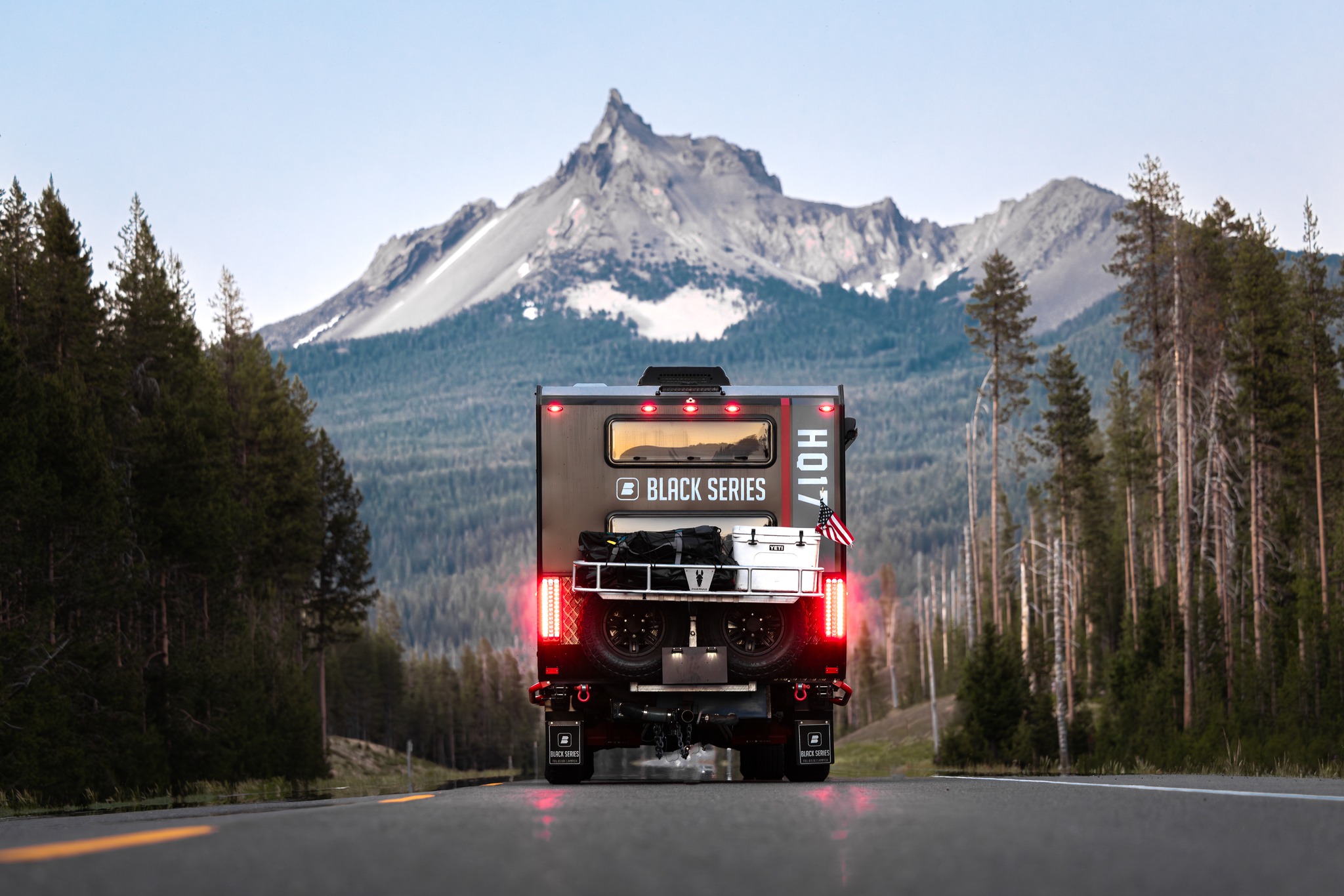
BlackSeries off-road travel trailers are specifically designed to handle challenging terrain with independent suspension systems, higher ground clearance, and robust construction. However, even the most capable trailers can become stuck in severe conditions, making proper recovery knowledge essential for any off-road adventure.
Safety First: What to Do Before Recovery
Before attempting any recovery operation, prioritize safety with this essential checklist:
- Engage parking brake on your tow vehicle and set the transmission to park
- Chock the wheels of both vehicle and trailer to prevent unwanted movement
- Inspect hitch and recovery points for damage or stress fractures
- Clear all bystanders from the recovery area, maintaining a distance equal to 1.5 times the length of any recovery strap being used
- Assess weather conditions and visibility, avoid recovery operations in severe weather when possible
- Check communication between spotter and driver if using multiple people
Never attempt recovery operations alone if avoidable. Having a spotter provides crucial safety oversight and can identify hazards the driver cannot see.
Step-by-Step: How to Recover a Stuck Trailer
Step 1: Assess the Terrain
Different terrain types require specific approaches. Mud recovery focuses on reducing suction and providing solid footing. Look for the firmest ground nearby and plan your extraction path accordingly.
Sand recovery emphasizes flotation and momentum. Identify whether you’re dealing with soft beach sand, desert sand, or packed sand, as each behaves differently under load.
Snow conditions vary dramatically, fresh powder, packed snow, and ice each require different techniques. Check snow depth and whether there’s solid ground underneath.

Step 2: Reduce Resistance
Start by reducing tire pressure to increase your tire’s footprint. For mud and sand, reduce to 15-20 PSI. For snow, try 12-18 PSI. Remember to re-inflate once you reach solid ground.
Clear debris from around trailer wheels and in the planned extraction path. Remove rocks, logs, or other obstacles that could damage the trailer during recovery.
Redistribute weight if possible. Move heavy items from the back of the trailer toward the tongue to improve weight distribution, or temporarily remove items entirely if the situation is severe.
Step 3: Use Proper Recovery Tools
Recovery boards (also called traction boards) are often the first choice for trailer recovery. Place them in front of the trailer wheels to provide solid traction. MaxTrax or similar products work well for this purpose.
Tow straps and recovery straps must be rated for your combined vehicle and trailer weight. Dynamic recovery straps store energy and can provide additional pull force, but require careful use around trailers due to their different attachment points.
Winches offer controlled pulling power. Electric winches can be portable and powered by your vehicle’s electrical system. Always use proper rigging techniques and maintain safe distances.
Step 4: Controlled Pull or Self-Recovery
Execute recovery operations at low speeds to maintain control. Quick, jerky movements can damage trailer hitches or cause loss of control.
Avoid sudden movements that could cause the trailer to whip or jackknife. Smooth, steady pressure works better than aggressive pulling.
Coordinate between driver and spotter using clear hand signals or radio communication. The spotter should position themselves safely and maintain visual contact with both the driver and the stuck trailer.
Best Way to Recover a Trailer From Mud or Sand
Mud recovery requires breaking the suction holding your trailer. Rock the trailer slightly by moving forward and backward in small increments to break the vacuum seal. Use recovery boards to bridge soft spots and provide solid traction points.
Sand recovery emphasizes flotation over digging. Lower tire pressure significantly and use a wide, steady pull rather than spinning wheels that dig deeper holes. Recovery boards work exceptionally well in sand by distributing weight over a larger area.
Why trailers get stuck more easily than tow vehicles comes down to physics. Trailers have no independent power, rely entirely on being pulled, and often have less sophisticated tire treads than dedicated off-road vehicles. Their longer wheelbase also makes them more likely to high-center on obstacles.
Common Trailer Recovery Mistakes to Avoid
Using wrong attachment points tops the list of dangerous mistakes. Never attach recovery straps to trailer ball mounts, electrical connections, or lightweight components. Use frame-mounted recovery points or the trailer’s tongue box if properly reinforced.
Improper dynamic strap use can cause severe damage. Dynamic recovery straps store kinetic energy and release it rapidly, this can overwhelm trailer hitches not designed for such forces. Use static straps for controlled pulls instead.
Ignoring trailer jack stability during recovery creates serious safety hazards. A deployed trailer jack can dig into soft ground or become a pivot point during recovery, potentially causing the trailer to tip or the jack to fail catastrophically.
Exceeding equipment ratings by using undersized straps or attaching to weak points can result in dangerous failures. Always use equipment rated for at least 1.5 times your trailer’s loaded weight.
Recommended Trailer Recovery Gear (Checklist)
Essential recovery equipment for off-road travel trailer adventures includes:
- Recovery boards (minimum 2, preferably 4) rated for your trailer weight
- Portable air compressor for adjusting tire pressure on-location
- Folding shovel for clearing debris and creating traction channels
- Rated tow strap (static) with proper working load limits
- Heavy-duty gloves for handling equipment and protecting hands
- D-ring shackles for secure attachment points
- First aid kit for handling minor injuries during recovery operations
BlackSeries trailers often come equipped with integrated recovery points and storage for essential gear. The rugged construction and thoughtful design features make recovery operations safer and more straightforward than with conventional trailers.
FAQ: Recovering a Stuck Trailer
Can I use a winch to recover a trailer alone?
While possible, winch recovery is safer with a spotter. Use proper anchor points, maintain safe distances from the winch line, and ensure your trailer has adequate attachment points rated for winching forces. Battery-powered portable winches work well for solo recovery operations.
Should I disconnect the trailer first?
Disconnecting should be a last resort when other methods fail. A disconnected trailer becomes much harder to control and reposition. Only disconnect if the terrain makes connected recovery impossible or unsafe.
What tire pressure works best off-road?
For most off-road conditions, reduce tire pressure to 15-20 PSI for improved traction and flotation. Monitor tire temperatures and re-inflate as soon as you return to solid ground to prevent tire damage.
Is trailer recovery different from vehicle recovery?
Yes, significantly. Trailers lack independent propulsion, have different attachment points, and different weight distributions. Recovery techniques must account for these differences to avoid damage and ensure safety.
Getting your off-road travel trailer unstuck safely requires preparation, proper equipment, and patience. Understanding your trailer’s capabilities and limitations: especially with purpose-built off-road units like BlackSeries trailers: helps you adventure confidently knowing you can handle challenging situations when they arise.

