When shopping for an adventure trailer in 2026, two names consistently rise to the top: the BlackSeries HQ19 and the Airstream Basecamp 20X. While both carry the “adventure trailer” label, they represent fundamentally different approaches to off-road travel.
Quick positioning: The HQ19 targets serious overlanders and off-grid enthusiasts who need maximum durability and self-sufficiency for extended remote travel. The Basecamp 20X appeals to travelers seeking Airstream’s iconic design with light off-road capability for occasional backcountry exploration.
Ideal buyers: Choose HQ19 if you’re planning multi-week boondocking, challenging terrain, or year-round off-grid living. Choose Basecamp 20X if you want premium design, lighter towing, and moderate off-road access with highway comfort as priority.
Design Philosophy and Build Approach
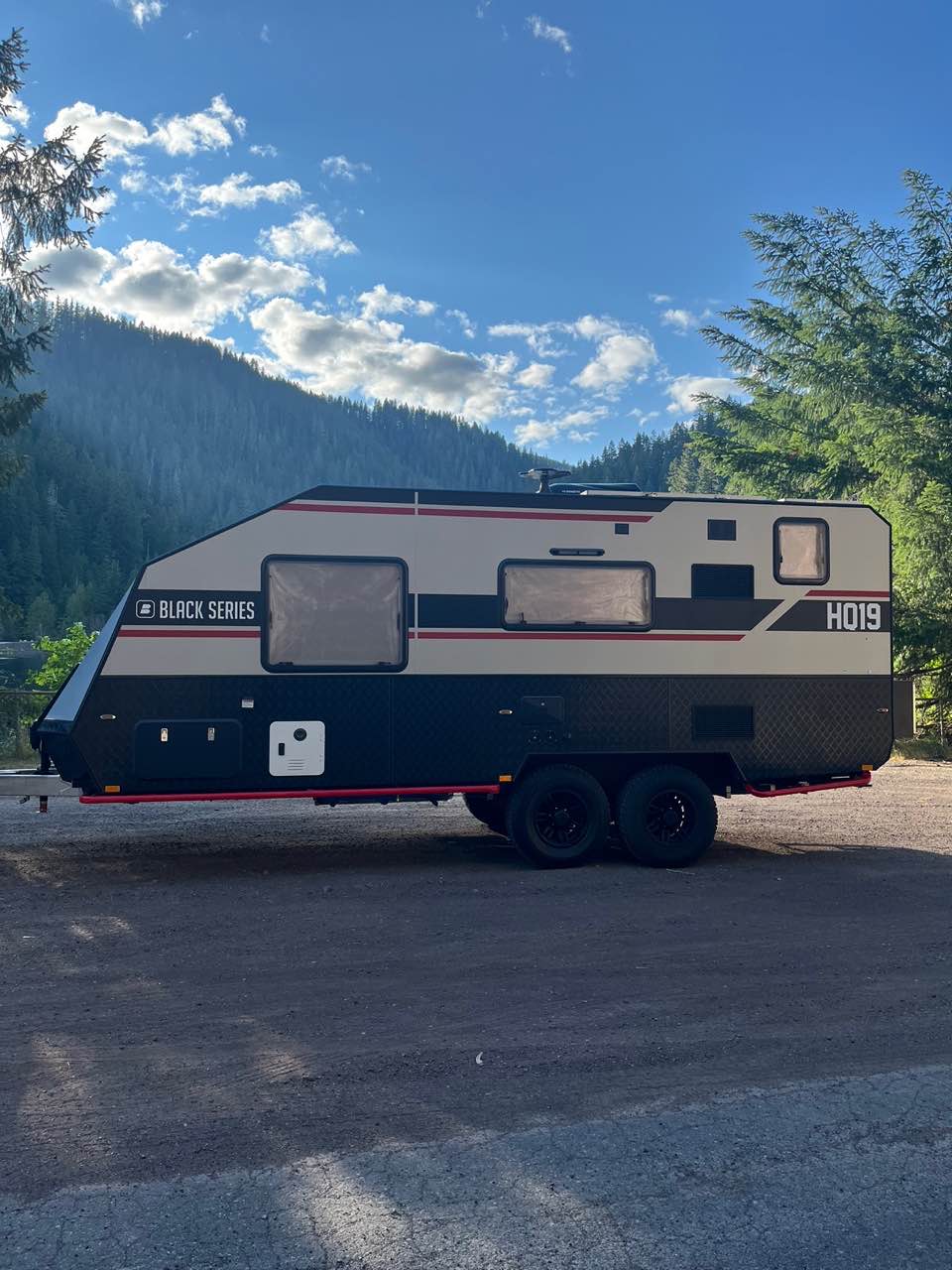
The fundamental difference between these trailers lies in their engineering priorities. BlackSeries built the HQ19 from the ground up as an overlanding platform, prioritizing structural integrity, off-grid capability, and terrain access over weight savings or aerodynamics.
The HQ19 features a full steel chassis with integrated armor plating, designed to handle sustained abuse on corrugated roads, rock crawling, and extreme weather conditions. Every system, from the electrical architecture to the water management, reflects this durability-first approach.
Airstream’s Basecamp 20X represents a different philosophy: lightweight aluminum construction optimized for fuel efficiency and highway stability, with off-road enhancements added as upgrades rather than core design elements. The iconic aluminum shell prioritizes aerodynamics and brand recognition while the “X package” adds capability through suspension lifts and tire upgrades.
Off-Road Capability Comparison
The HQ19 off road trailer comparison clearly favors serious terrain access. While the Basecamp 20X can handle graded dirt roads and established campgrounds with confidence, the HQ19 opens access to locations that would damage conventional trailers.
Off-Grid Power and Systems
Off-grid capability separates weekend campers from extended adventure travelers. The Basecamp 20X vs HQ19 off grid comparison reveals significant differences in self-sufficiency design.
HQ19 Power System:
- 400Ah lithium battery bank (expandable to 800Ah)
- 800-watt solar array with MPPT charge control
- 3000-watt pure sine wave inverter
- 45-gallon fresh water with efficient 12V pumps
- Designed for 7-14 days off-grid without rationing
Basecamp 20X Power System:
- 100Ah AGM battery (upgradeable)
- 180-watt solar panel (optional)
- Modified sine wave converter
- 24-gallon fresh water capacity
- 2-4 days comfortable off-grid use
The power difference reflects each trailer’s intended use case. HQ19 owners regularly spend weeks in remote locations where charging opportunities don’t exist. Basecamp 20X buyers typically mix off-grid camping with RV parks and developed campgrounds.
Interior Space and Comfort
Despite similar exterior lengths, interior layouts prioritize different user experiences. The HQ19 maximizes storage and functionality for extended living, while the Basecamp 20X emphasizes Airstream’s signature design aesthetic.
HQ19 Interior Advantages:
- Modular seating converts to multiple bed configurations
- Oversized water tank and storage compartments
- Industrial-grade finishes designed for heavy use
- Full-size refrigerator and substantial counter space
- Dedicated gear storage for outdoor equipment
Basecamp 20X Interior Advantages:
- Iconic Airstream interior design and materials
- Efficient use of space with premium finishes
- Large windows and open feel
- Wet bath with additional headroom
- Convertible dinette and lounge areas

Long-term livability favors the HQ19’s practical layout, while the Basecamp 20X provides a more luxurious atmosphere for shorter trips.
Towing and Vehicle Compatibility
Towing requirements significantly impact your total investment and daily driving experience.
HQ19 Towing Specs:
- Dry weight: 4,200 lbs
- GVWR: 5,500 lbs
- Tongue weight: 600-700 lbs
- Requires: 3/4-ton truck minimum for safe operation
Basecamp 20X Towing Specs:
- Dry weight: 3,400 lbs
- GVWR: 4,300 lbs
- Tongue weight: 400-500 lbs
- Compatible: Half-ton trucks with proper equipment
The towing difference affects your entire setup. HQ19 buyers typically invest in heavy-duty trucks, while Basecamp 20X owners can often use existing half-ton vehicles. Consider fuel costs, parking limitations, and daily driving comfort when making this decision.
Who Should Choose HQ19?
The HQ19 serves overlanders and serious off-grid travelers who prioritize capability over convenience:
Ideal HQ19 Buyers:
- Overlanding enthusiasts planning multi-week expeditions
- Full-time RVers spending months in remote locations
- Families needing reliable off-grid power and water
- Travelers regularly accessing technical terrain
- Users prioritizing durability over weight savings
The HQ19’s engineering reflects professional expedition standards rather than recreational camping convenience.
Who Should Choose Basecamp 20X?
The Basecamp 20X targets travelers who want adventure capability without sacrificing highway comfort or brand prestige:
Ideal Basecamp 20X Buyers:
- Weekend warriors mixing off-road with developed camping
- Travelers prioritizing fuel efficiency and easy towing
- Buyers wanting Airstream’s design heritage and resale value
- Users accessing moderate terrain with occasional challenges
- Couples or small families taking shorter trips
Frequently Asked Questions
Is HQ19 more off-road capable than Basecamp 20X?
Yes, significantly. The HQ19’s steel chassis, independent suspension, and 35-inch tires provide access to technical terrain that would damage the Basecamp 20X’s aluminum construction.
Which trailer is better for off-grid travel?
The HQ19 excels at extended off-grid use with 400Ah lithium power, 800-watt solar, and 45-gallon water capacity. The Basecamp 20X handles 2-4 days off-grid comfortably but requires more frequent resupply.
Is Basecamp 20X considered an off-road trailer?
The 20X offers light off-road capability suitable for forest service roads and established dispersed camping areas, but lacks the structural integrity for serious overlanding.
What tow vehicle is required for HQ19?
A 3/4-ton truck minimum due to the combined dry weight and tongue weight. Half-ton trucks typically lack sufficient payload capacity for safe operation.
Which is better for long-term travel?
The HQ19’s robust construction, larger tanks, and powerful electrical system better support extended travel, while the Basecamp 20X excels at shorter trips with mixed accommodation types.
The choice between HQ19 and Basecamp 20X ultimately depends on your adventure style. Serious overlanders and off-grid enthusiasts will appreciate the HQ19’s uncompromising capability, while travelers seeking premium design with moderate off-road access will find the Basecamp 20X more appealing. Consider your typical trip length, terrain preferences, and tow vehicle when making this significant investment decision.

