What Is Boondocking in Utah?
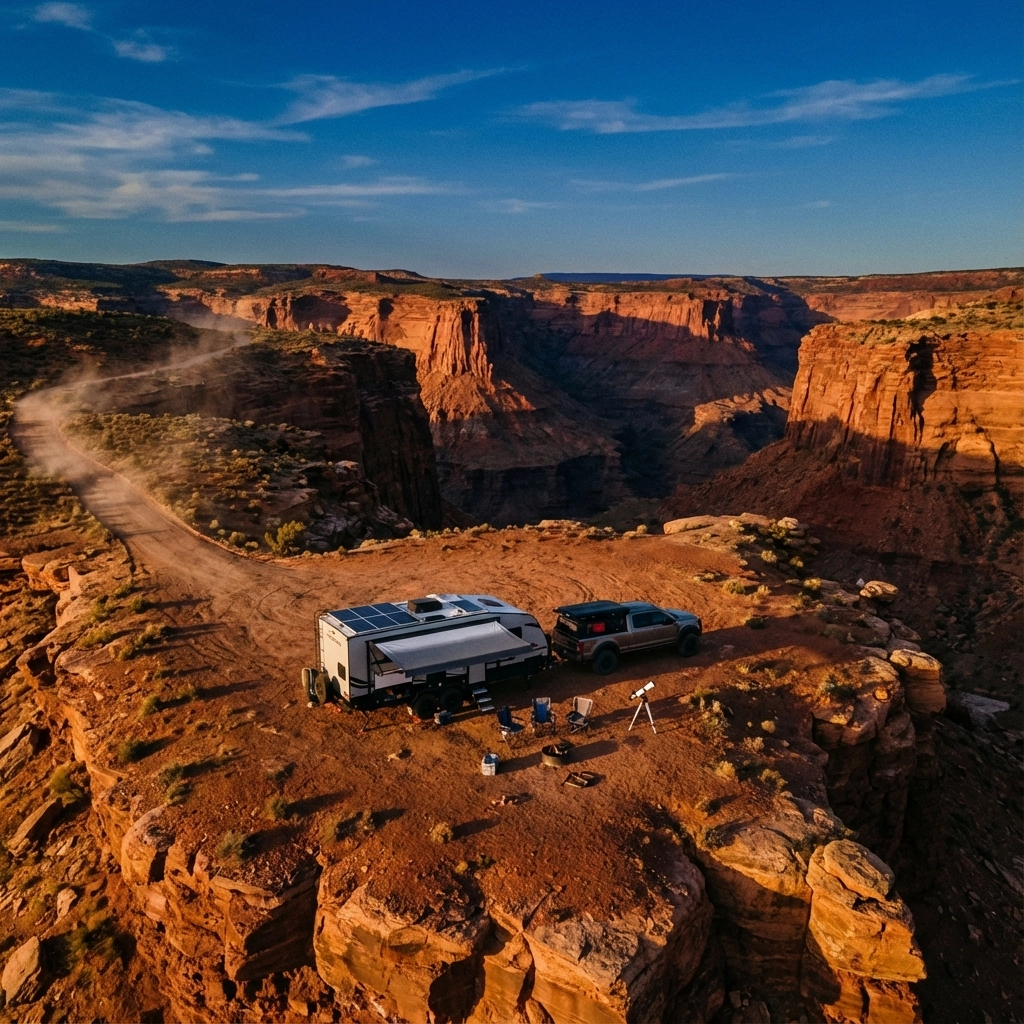
Boondocking in Utah refers to free dispersed camping on public lands, primarily Bureau of Land Management (BLM) areas and national forests, where you camp without hookups for water, electricity, or sewer connections. Utah stands out as a premier boondocking destination because approximately 67% of the state consists of public land, offering virtually unlimited opportunities for off-grid camping.
The key distinction between BLM land and National Parks is access and cost. While National Parks require entrance fees and often mandate reservations for developed campgrounds, BLM lands typically allow free camping for up to 14 days with no reservations needed. This makes Utah’s BLM areas perfect for spontaneous adventures and extended stays.
Why Utah Is One of the Best States for Boondocking
Utah ranks among America’s top boondocking destinations for several compelling reasons. The state contains over 22 million acres of public land, including six national forests, extensive BLM holdings, and generous state trust land policies that welcome campers.
The desert climate provides distinct advantages for off-grid camping. Low humidity reduces condensation issues inside RVs, while abundant sunshine maximizes solar panel efficiency. Utah’s high elevation locations offer cooler temperatures during summer months, extending the comfortable camping season.
The state’s dispersed camping culture is deeply established, with well-maintained dirt roads accessing remote locations and a community of experienced boondockers sharing knowledge about the best spots and practices.
Utah Boondocking Rules and Regulations
Understanding Utah’s boondocking regulations ensures legal and responsible camping experiences. BLM lands follow the standard 14-day stay limit within a 25-mile radius, after which you must move to a different area.
Fire restrictions vary seasonally, typically running from May through October depending on conditions. Always check current fire status through the Utah BLM website before your trip. During fire restrictions, campfires, grills, and even generators may be prohibited.
Leave No Trace principles are mandatory on all public lands. This means camping in previously disturbed areas when possible, disposing of waste properly, and leaving campsites better than you found them. Pack out all trash, including cigarette butts and food scraps.
Water sources on BLM land are rare, so bring all necessary water. Dumping gray water on the ground is prohibited – use a portable gray water tank or disperse gray water away from camps and water sources.
Best Utah Boondocking Locations (By Region)
Southern Utah (Moab, Zion, Escalante)
Valley of the Gods consistently ranks as Utah’s premier boondocking destination. Located near Monument Valley, this BLM area offers stunning red rock formations with scattered camping spots providing panoramic views. The area accommodates RVs of all sizes and rarely reaches capacity.
Moab Area features two primary options: Lone Mesa Dispersed for dramatic scenery near Canyonlands (though requiring a bumpy 8-mile drive), and Klondike Bluffs Dispersed for easier access to Arches National Park with maintained cell service.
Mount Carmel Junction sits perfectly between Zion and Bryce National Parks, offering riverside camping spots with the convenience of a nearby dump station.
Central Utah (Capitol Reef Area)
The Capitol Reef region offers numerous dispersed camping opportunities along scenic byways. Areas near Goblin Valley State Park provide easy access with moderate road conditions suitable for most RVs.
Northern Utah (Uinta Basin)
Spanish Fork’s Sheep Creek Dispersed area serves the Provo region with highway-accessible camping. The nearby Fifth Water Hot Springs trail adds recreational value to your stay.

What You Need for Off-Grid Camping in Utah
Successful Utah boondocking requires proper preparation for self-sufficient camping. Water capacity becomes critical since natural sources are scarce. Plan for 2-3 gallons per person per day for drinking, cooking, and basic hygiene.
Solar power systems with lithium batteries are essential for extended stays. Utah’s abundant sunshine makes solar charging highly effective, but capacity must match your power consumption. A minimum 400-watt solar array with 400 amp-hours of lithium battery storage provides reliable power for most RV needs.
Tire and suspension considerations matter significantly on Utah’s rough roads. All-terrain tires with higher sidewall protection handle sharp rocks and sand better than standard highway tires. Adequate ground clearance prevents damage from rocks and wash crossings.
Heat and dust management becomes crucial during summer months. Quality air filters, window coverings, and ventilation fans help maintain comfortable interior conditions. Consider auxiliary cooling methods like 12V fans for sleeping areas.
Is Utah Boondocking Suitable for Travel Trailers?
Many Utah boondocking locations feature gravel and washboard roads that can challenge standard travel trailers. Ground clearance becomes the determining factor for access to premier camping spots. Standard travel trailers with 8-10 inches of clearance may scrape on high-centered roads or rocky approaches.
Low-profile trailers struggle with Utah’s terrain variations, including wash crossings, embedded rocks, and steep approach angles. This is why off-road capable trailers excel in Utah’s diverse landscape – they’re specifically engineered for these challenging conditions.
Road conditions vary dramatically between locations. While some spots offer easy highway access, the most scenic and secluded areas often require navigating several miles of rough BLM roads that favor higher-clearance, robust suspension systems.
Why BlackSeries Trailers Excel at Boondocking in Utah
BlackSeries trailers are specifically engineered for Utah’s challenging boondocking environment. Our off-road suspension systems feature independent coil-over shocks that absorb impacts from washboard roads and rock obstacles that would damage conventional trailers.
The integrated off-grid power systems come standard with substantial lithium battery capacity and high-wattage solar charging, perfectly matched for Utah’s sunny desert environment. This allows extended stays without generator dependence – crucial when fire restrictions prohibit generator use.
Desert-ready features include enhanced filtration systems, improved sealing against dust infiltration, and thermal management designed for extreme temperature variations. The reinforced chassis and protective rock guards handle Utah’s sharp volcanic rock and desert debris that typically damages standard RV underbellies.
Unlike conventional RVs built for campground use, BlackSeries trailers are tested and proven in exactly the conditions you’ll encounter throughout Utah’s backcountry.
Common Mistakes to Avoid When Boondocking in Utah
Underestimating water consumption ranks as the top mistake among new Utah boondockers. Desert air and increased physical activity significantly increase water needs. Always carry 50% more water than calculated requirements.
Ignoring weather changes can create dangerous situations. Utah weather shifts rapidly, especially at elevation. Spring and fall nights can drop below freezing even when days are warm. Monitor weather forecasts and pack appropriate gear for temperature extremes.
Attempting unsuitable roads with inadequate vehicles or trailers leads to expensive recoveries and potential safety hazards. If road conditions appear questionable, walk the route first or choose alternative locations rather than risking vehicle damage.
Failing to research current conditions – including fire restrictions, road closures, and seasonal access limitations – can result in wasted trips and legal violations.
Frequently Asked Questions
Is boondocking legal in Utah?
Yes, boondocking is legal on BLM land, national forests, and designated state lands throughout Utah. Always verify current regulations and restrictions for specific areas before camping.
Where can I boondock in Utah?
Popular areas include Valley of the Gods, Moab region (Klondike Bluffs and Lone Mesa), Mount Carmel Junction, and numerous locations throughout BLM and national forest lands across the state.
How long can you stay on BLM land in Utah?
The standard limit is 14 days within a 25-mile radius. After 14 days, you must move at least 25 miles away. Some areas may have shorter limits posted.
Is Utah safe for off-grid RV camping?
Utah is generally very safe for boondocking with proper preparation. The main risks involve vehicle breakdown on remote roads and weather exposure. Carry emergency communication devices and inform others of your travel plans.
Do I need an off-road trailer for Utah boondocking?
While not required for all locations, off-road capable trailers provide access to the best camping spots and handle Utah’s challenging road conditions much better than standard travel trailers designed for campground use.
Utah’s diverse landscape and abundant public lands make it an unparalleled boondocking destination. With proper preparation, suitable equipment, and respect for the environment, you’ll discover why experienced RVers consistently rate Utah among their favorite off-grid camping destinations. Whether you’re seeking adventure with BlackSeries capabilities or exploring with family, Utah’s boondocking opportunities offer unforgettable experiences in some of America’s most spectacular landscapes.

