Managing humidity in a travel trailer is essential to prevent condensation, mold growth, and discomfort, especially during cold or wet weather camping. Effective humidity control requires maintaining 30-50% relative humidity through proper ventilation, moisture removal, and smart camping practices.
Why Humidity Is a Common Problem in Travel Trailers
Travel trailers create the perfect storm for humidity issues due to their unique characteristics. The enclosed space traps moisture from multiple sources, while limited ventilation prevents proper air circulation. Unlike traditional homes, RVs have minimal insulation and thermal barriers, making them susceptible to rapid temperature changes.
Human activities generate significant moisture – breathing, cooking, showering, and even sleeping release water vapor into the confined space. A family of four can produce up to 3 gallons of water vapor daily through normal activities. During winter camping, the temperature differential between warm interiors and cold exteriors creates ideal conditions for condensation on windows, walls, and metal surfaces.
Camping in humid regions like the Pacific Northwest or Gulf Coast compounds these challenges. External moisture can infiltrate through door seals, windows, and ventilation systems, overwhelming your trailer’s ability to maintain comfortable humidity levels.
What Causes Condensation in a Travel Trailer
Understanding condensation requires grasping the concept of relative humidity – the amount of water vapor in air relative to the maximum it can hold at a given temperature. When warm, moist air contacts cold surfaces like windows or metal frames, it reaches its dew point, causing water vapor to condense into droplets.
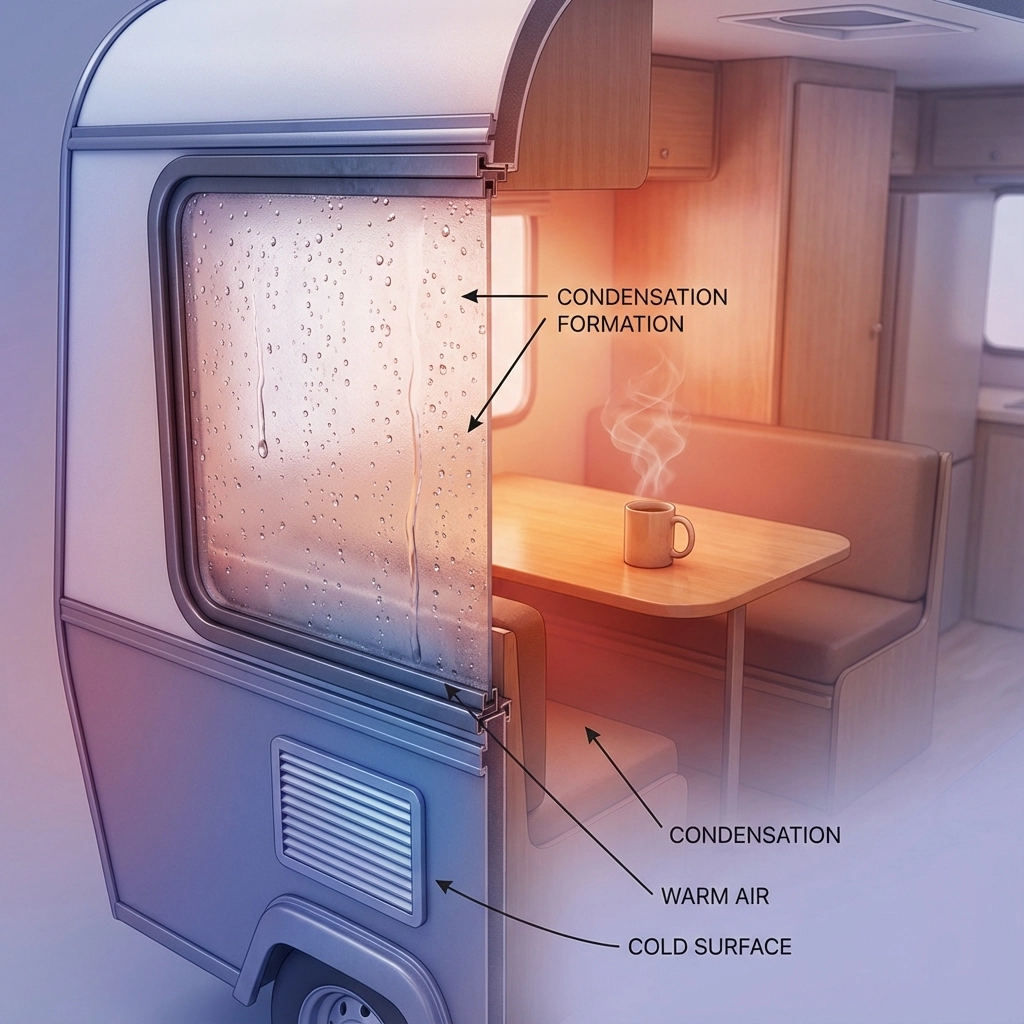
In travel trailers, condensation typically occurs on:
- Windows and skylights (coldest surfaces)
- Metal window frames and door frames
- Exterior walls, especially in poorly insulated areas
- Bathroom fixtures and kitchen surfaces
The problem amplifies at night when interior temperatures drop while humidity levels remain high from cooking, showering, and breathing. Poor air circulation allows moisture to accumulate in corners, closets, and storage areas where it becomes trapped.
Signs You Have a Humidity Problem
Recognizing humidity issues early prevents extensive damage and health concerns. Watch for these warning signs:
Visible condensation appears as water droplets streaming down windows, especially in the morning or after temperature changes. This is your most obvious indicator of excessive moisture.
Mold and mildew growth manifests as dark spots in wall corners, around windows, or in bathroom areas. These fungi thrive in high-humidity environments and can cause respiratory issues.
Musty odors indicate trapped moisture and potential mold growth in hidden areas like storage compartments or behind panels.
Soggy storage areas reveal humidity problems when clothing, bedding, or stored items feel damp or develop a musty smell, particularly in under-bed storage or closets.
How to Control Humidity in a Travel Trailer (Step-by-Step)
Step 1: Improve Ventilation
Ventilation is your primary defense against humidity buildup. Install and utilize multiple ventilation strategies:
Roof vents should run continuously during moisture-generating activities. Many RVers make the mistake of closing vents to retain heat, but proper ventilation prevents more energy loss than heating humid air.
Bathroom and kitchen exhaust fans must operate during and 15-20 minutes after cooking or showering. These high-moisture activities require immediate air exchange.
Cross-ventilation strategy involves creating airflow paths by opening windows on opposite sides of the trailer while running exhaust fans. This ensures complete air circulation rather than stagnant pockets.
Step 2: Use Dehumidifiers
Dehumidifiers provide active moisture removal when ventilation alone isn’t sufficient. Choose between electric and desiccant options based on your power situation.
Electric dehumidifiers work excellently with shore power or generator operation. Size appropriately – a 30-pint unit typically handles most travel trailers effectively. Place units in central locations for maximum coverage.
Desiccant products like DampRid offer passive moisture absorption for boondocking or storage situations. Place containers in closets, under beds, and in storage compartments where air circulation is limited.
Step 3: Manage Moisture Sources
Controlling moisture at its source prevents humidity buildup more effectively than removing it afterward.
Cooking and bathing habits significantly impact interior moisture. Cover pots while cooking, take shorter showers, and always use exhaust fans during these activities. Consider cooking outdoors when weather permits.
Laundry considerations require special attention – never hang wet clothes inside during humid conditions. Use campground laundry facilities or outdoor drying when possible.
Nighttime moisture accumulation occurs naturally through breathing and temperature drops. Crack windows slightly or run a small fan to maintain air circulation while sleeping.
Step 4: Balance Heating and Venting
Many RVers mistakenly believe heating solves humidity problems, but warm air holds more moisture. The key is balancing temperature control with ventilation.
Avoid running heat continuously without ventilation – this traps and concentrates moisture. Instead, use controlled heating cycles combined with strategic ventilation to maintain both comfort and dry conditions.
During winter camping, maintain interior temperatures around 65-68°F rather than overheating, which increases humidity-holding capacity and creates larger temperature differentials with exterior surfaces.
Best Ways to Reduce Humidity in a Travel Trailer
Ventilation practices should follow the “continuous but controlled” approach. Run roof vents and bathroom fans regularly, but adjust speed and timing based on weather conditions and interior activities.
Dehumidifier selection depends on your camping style. For full-hook-up camping, electric units provide consistent control. For boondocking, combination strategies using desiccants and strategic ventilation work best.
Optimal humidity range targets 30-50% relative humidity, with 40% being ideal for comfort and condensation prevention. Use a digital hygrometer to monitor levels throughout your trailer.
Full-time RV living habits require more aggressive humidity management. Establish daily routines including morning window wipe-downs, strategic cooking times, and consistent ventilation schedules.

Managing Humidity in Winter vs Summer
Winter humidity control focuses on condensation prevention. Cold exterior temperatures create significant temperature differentials, making condensation management critical. Prioritize insulation improvements and consistent low-level ventilation over aggressive air exchange that wastes heating energy.
Summer humidity management emphasizes comfort and air circulation. High ambient humidity requires more aggressive ventilation and potentially air conditioning with dehumidification functions. Focus on preventing moisture infiltration from outside sources.
Different strategies include varying ventilation timing, adjusting dehumidifier settings seasonally, and modifying daily routines based on exterior conditions and camping duration.
Common Humidity Control Mistakes to Avoid
Completely sealing the trailer in cold weather traps moisture and creates condensation problems. Always maintain some level of air exchange, even in freezing conditions.
Over-relying on heating without addressing ventilation creates humid, uncomfortable conditions and wastes energy. Heat alone cannot solve moisture problems.
Ignoring storage areas leads to mold growth in hidden spaces. Check under beds, in closets, and storage compartments regularly for moisture accumulation.
Inconsistent monitoring allows problems to develop unnoticed. Use hygrometers and establish daily inspection routines to catch issues early.
How Trailer Design Affects Humidity Control
Modern trailer construction significantly impacts humidity management capabilities. Well-insulated units with thermal barriers reduce temperature differentials that cause condensation. Strategic window placement and built-in ventilation systems improve natural air circulation.
Four-season trailers feature enhanced insulation packages, better window systems, and improved vapor barriers that naturally resist humidity problems. These design elements reduce energy requirements for both heating and humidity control.
Ventilation system design affects air circulation patterns throughout the trailer. Units with multiple roof vents and strategic fan placement provide superior humidity control compared to basic ventilation packages.
Why BlackSeries Trailers Handle Humidity Better
BlackSeries trailers incorporate four-season construction standards that naturally resist humidity problems. The comprehensive insulation package includes thermal barriers and vapor management systems designed for extreme weather conditions across diverse American climates.
Strategic ventilation layouts in BlackSeries units promote natural air circulation patterns that prevent moisture accumulation. Multiple roof vents, positioned bathroom and kitchen exhaust systems, and well-designed air intake paths create effective humidity management without excessive energy consumption.
The robust construction methods used in BlackSeries trailers resist moisture infiltration through seals and joints, preventing external humidity from overwhelming interior management systems. This attention to detail creates more comfortable long-term living conditions and reduces maintenance requirements.
FAQ: Managing Humidity in Travel Trailer
What is the ideal humidity level inside a travel trailer?
Maintain 30-50% relative humidity, with 40% being optimal for comfort and condensation prevention. Use a digital hygrometer to monitor levels and adjust ventilation or dehumidification accordingly.
Why do my RV windows sweat at night?
Window condensation occurs when warm, moist interior air contacts cold glass surfaces. Improve ventilation, reduce interior moisture sources, and consider insulated window covers to minimize temperature differentials.
Is a dehumidifier necessary in winter camping?
Dehumidifiers can be helpful in winter when ventilation alone isn’t sufficient, but prioritize proper insulation and controlled ventilation first. Electric units work well with shore power, while desiccants provide passive moisture control.
Can high humidity damage a travel trailer?
Yes, sustained high humidity can cause mold growth, wood rot, delamination, and interior damage. Proper humidity control protects both your health and your investment in your travel trailer.

