Introduction: Why Off Grid Off Road Camper Trailer Setup Matters in the U.S.
The American overlanding scene has exploded over the past decade, with more adventurers seeking remote destinations beyond traditional RV parks. An off grid off road camper trailer setup enables travelers to explore Bureau of Land Management (BLM) lands, National Forest dispersed camping areas, and remote desert locations for days or weeks without external services.
This self-sufficiency revolution stems from several factors: overcrowded campgrounds, rising costs of hookup sites, and the growing desire for authentic outdoor experiences. Today’s overlanders want to access Utah’s Backcountry Discovery Routes, Colorado’s remote mountain trails, and Arizona’s hidden desert gems: all requiring robust off-grid capabilities.
The best off grid off road camper trailer setup USA market demands include reliable power systems, efficient water management, functional cooking facilities, and chassis built for washboard roads and rocky terrain. Black Series has established itself in this space by engineering trailers specifically for harsh conditions, combining Australian off-road heritage with American overlanding requirements.
What Makes a Complete Off Grid Setup
A properly configured off grid off road camper trailer setup consists of six integrated systems working in harmony. The power system anchors everything, typically featuring 200-800W of solar panels paired with 200-600Ah of lithium batteries. Water systems require 20-50+ gallon fresh tanks, efficient pumps, and waste management solutions.
Climate control becomes critical during temperature extremes, demanding reliable heating via propane furnaces and cooling through 12V fans or DC air conditioning units. Kitchen facilities must function independently with propane cooking, 12V refrigeration, and adequate storage for extended trips.
The chassis and suspension form the foundation, requiring reinforced frames, independent suspension systems, and high ground clearance to reach remote locations safely. Finally, intelligent storage and organization systems keep gear secure during transit while maintaining easy access at camp.
Black Series trailers integrate these elements from the factory, with hot-dip galvanized chassis, independent suspension, and pre-wired electrical systems designed for serious off-grid adventures.
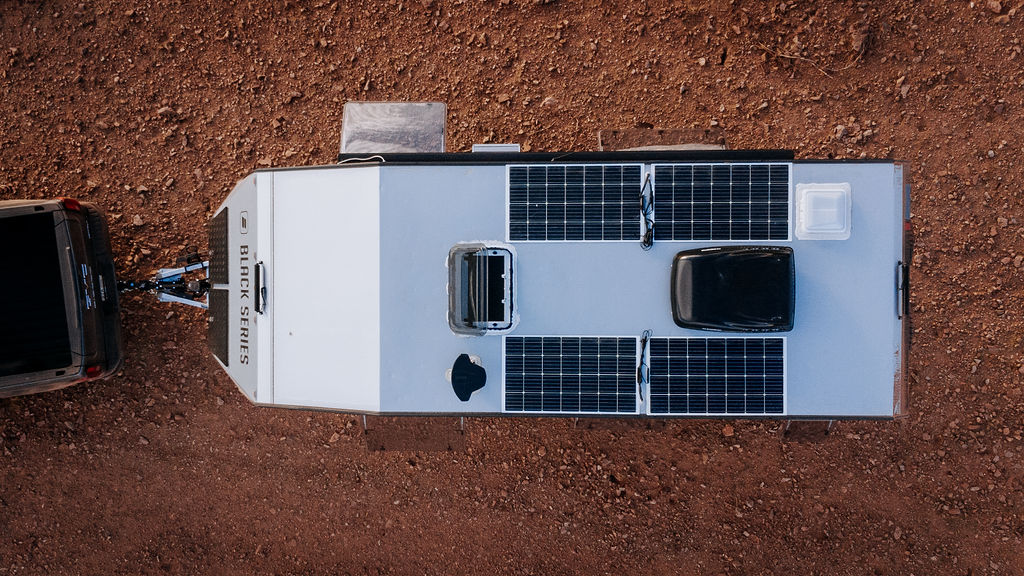
Off Grid Power Setup Fundamentals
The off grid off road camper trailer power setup represents the most critical system determining your independence duration. Modern lithium batteries have revolutionized the market, offering 2,000+ cycle lifespans compared to 300-500 cycles from AGM batteries. LiFePO4 chemistry handles temperature extremes better: crucial for American desert and mountain environments.
Battery Sizing Strategy
Calculate daily consumption first: LED lights use 20-40Ah, 12V compressor fridges consume 30-60Ah, fans require 10-20Ah, and device charging adds 10-20Ah. A typical couple needs 100-150Ah daily, requiring 200-400Ah capacity for 2-3 day autonomy without solar input.
Solar Array Configuration
Solar panels must exceed daily consumption by 20-30% to account for weather and charging inefficiencies. Fixed roof-mounted panels work best for travel trailers, with 400-600W covering most needs. MPPT controllers maximize harvest, especially important during partial shade conditions common in forested areas.
Charging Sources Integration
DC-to-DC chargers from your tow vehicle provide backup charging while driving, typically adding 40-80Ah during travel days. Shore power capability allows battery conditioning when available, while portable generators serve as emergency backup in extreme weather.
The most reliable systems feature Victron components: BMV battery monitors, SmartSolar MPPT controllers, and MultiPlus inverter/chargers create a comprehensive power management ecosystem with smartphone monitoring capabilities.
Water System Configuration
Your off grid off road camper trailer water system determines camping duration more than any other factor. Fresh water consumption varies dramatically: minimalist couples use 5-7 gallons daily, while families with children may consume 15-20+ gallons including showers.
Tank Sizing and Placement
Smaller trailers typically feature 20-30 gallon fresh tanks, while larger units accommodate 40-60+ gallons. Tank placement affects weight distribution and ground clearance: Black Series positions tanks within the protected chassis envelope to prevent damage from rocks and debris.
Pressure and Hot Water Systems
Variable-speed water pumps maintain consistent pressure while consuming less power than traditional fixed-speed units. On-demand propane water heaters provide unlimited hot water without storage tank weight penalties, perfect for overlanding where every pound matters.
Filtration and Purification
Inline carbon filters remove chlorine taste from municipal water sources, while UV purification systems enable safe use of natural water sources when necessary. Gravity-fed systems serve as backup when pumps fail or power runs low.
Grey water management requires either onboard tanks or portable collection systems, depending on local regulations. Leave No Trace principles guide disposal practices, especially critical on public lands.
Kitchen and Refrigeration Systems
Overlanding kitchens must balance functionality with weight and space constraints. Off road camper trailer with kitchen setups typically feature outdoor galley configurations maximizing usable space while keeping cooking odors and heat outside the living area.
Refrigeration Solutions
12V compressor fridges have become the gold standard, offering true refrigeration and freezing capabilities without propane complexity. Dometic and ARB models consume 30-60Ah daily depending on size and ambient temperature. Dual-zone units provide separate fridge and freezer compartments in compact packages.
Cooking Equipment
Two-burner propane stoves handle most cooking needs while conserving fuel. High-BTU burners reduce cooking times and fuel consumption: important during extended trips. Glass covers protect burners during travel while providing additional counter space.
Storage and Organization
Slide-out drawers, pantry systems, and secure latching prevent food spillage during off-road travel. Magnetic spice racks, collapsible cookware, and nested storage maximize space efficiency while maintaining functionality.

Black Series outdoor kitchens feature heavy-duty slides rated for repeated extension/retraction cycles and integrated with awning systems for weather protection. Understanding off-road trailer suspension helps protect kitchen components during rough terrain travel.
Off-Road Chassis and Protection
The foundation of any serious off grid off road camper trailer setup starts with the chassis and suspension system. Standard travel trailer frames often fail on corrugated roads and rocky trails, making purpose-built off-road chassis essential for remote access.
Frame Construction
Hot-dip galvanized steel frames resist corrosion in salt air and provide superior strength compared to painted steel alternatives. Full perimeter welding eliminates stress risers and potential failure points common in bolted assemblies.
Suspension Systems
Independent suspension systems provide superior wheel control and component protection compared to solid axle designs. Each wheel responds independently to terrain irregularities, reducing stress on the frame and protecting interior components from vibration damage.
Ground Clearance and Protection
Minimum 12-inch ground clearance enables navigation over standard trail obstacles, while skid plates protect water tanks, electrical components, and grey water systems from impact damage. Rock guards shield propane tanks and batteries from flying debris.
Weight Distribution
Proper tongue weight (10-15% of total weight) ensures stable towing characteristics while maintaining adequate traction on the tow vehicle’s rear axle. Battery and water placement affects balance: heavier components should mount low and centered for optimal handling.
Step-by-Step Setup Planning Guide
Building the optimal off grid off road camper trailer setup requires systematic planning based on your specific travel patterns and preferences.
Step 1: Define Your Off-Grid Duration
Calculate maximum days between resupply opportunities. Weekend warriors need 2-3 day capacity, while serious overlanders require 7-14+ day autonomy. Extended travelers may need several weeks of self-sufficiency.
Step 2: Audit Power and Water Consumption
Track actual usage during initial trips to validate estimates. Most people underestimate water consumption and overestimate power needs. Actual data drives proper system sizing.
Step 3: Size Electrical Systems
Battery capacity should provide 2-3 days backup without solar input. Solar arrays must generate 120-150% of daily consumption to account for weather and inefficiencies. Inverter sizing depends on largest AC load requirements.
Step 4: Plan Water Storage and Management
Fresh water tanks should hold 2-4 times daily consumption depending on refill opportunities. Grey water capacity should match 60-80% of fresh water capacity. Hot water systems affect both power and propane consumption.
Step 5: Test and Optimize
Start with shorter trips to identify weaknesses and optimize systems before attempting extended expeditions. Document what works and what needs improvement for future upgrades.
Real-World Setup Examples
Weekend Overlanders: Compact Efficiency
Perfect for couples exploring regional destinations, this setup features 200Ah lithium batteries, 400W solar, 25-gallon fresh water, and outdoor galley kitchen. Total dry weight stays under 3,500 lbs for mid-size truck compatibility.
Remote Boondocking: Extended Capability
Designed for 7-10 day autonomy in desert and mountain environments, this configuration includes 400Ah lithium, 600W solar, 50-gallon fresh water, and full outdoor kitchen with indoor backup. Enhanced filtration enables water source flexibility.
Long-Term Overlanding: Maximum Independence
Built for weeks of self-sufficiency, this premium setup features 600Ah+ lithium, 800W+ solar, advanced DC-to-DC charging, 60+ gallon water capacity, and comprehensive kitchen facilities. Perfect for cross-country expeditions and extended backcountry exploration.
Each configuration balances capability with weight and complexity, allowing travelers to match their trailer to intended use patterns rather than over-building for occasional scenarios.
FAQ Section
What is included in a complete off grid off road camper trailer setup?
A complete setup includes power systems (batteries, solar, inverters), water systems (fresh/grey tanks, pumps, filtration), kitchen facilities (propane cooking, 12V refrigeration), climate control (heating/cooling), and reinforced off-road chassis with adequate storage.
How much solar power do I need for off-grid camping?
Most overlanders need 400-600W of solar panels paired with 200-400Ah of lithium batteries. Calculate your daily consumption (typically 100-200Ah for couples) and size solar arrays to generate 120-150% of daily needs.
What size water tank is best for extended off-grid trips?
Water tank sizing depends on consumption patterns and trip duration. Couples typically use 5-10 gallons daily, requiring 30-50 gallon capacity for extended trips. Families may need 50-80+ gallons depending on shower frequency and cooking habits.
Are Black Series trailers suitable for serious off-grid overlanding?
Black Series trailers feature purpose-built off-road chassis, independent suspension, and factory off-grid electrical systems designed specifically for extended backcountry travel. Their hot-dip galvanized frames and reinforced construction handle extreme conditions reliably.
How do I choose between indoor and outdoor kitchen configurations?
Outdoor kitchens provide more space and keep cooking heat/odors outside but limit cold-weather usability. Indoor kitchens work year-round but consume interior space. Many overlanders prefer outdoor primary kitchens with indoor backup facilities for versatility.

