
Your cart (0)
Your cart is empty
Tax included and shipping calculated at checkout
Your cart is empty
Tax included and shipping calculated at checkout

The American RV market continues its explosive growth, with over 11.2 million households owning recreational vehicles as of 2024. Within this surge, lightweight off road camper trailers represent the fastest-growing segment, driven by overlanding enthusiasm and the reality that most Americans drive SUVs or mid-size pickup trucks rather than heavy-duty haulers.
Unlike traditional RV parks and paved campgrounds, today’s adventurers seek access to forest service roads, desert tracks, and backcountry dispersed camping sites. This shift creates demand for trailers that combine highway towing ease with genuine off-road capability, precisely what defines a lightweight off road camper trailer for SUV and small truck owners.
Black Series has established itself in the rugged off-road trailer market, but increasingly offers lightweight options that maintain the company’s signature durability while staying within SUV and small truck towing capacities.
A lightweight off road camper trailer typically weighs between 2,000-4,000 lbs loaded, specifically designed for towing by mainstream SUVs and mid-size pickup trucks while maintaining true off-road capability.
Key characteristics include:
Black Series addresses this market by engineering lightweight models that don’t compromise the robust chassis and independent suspension systems the brand is known for, making them suitable for capable SUVs and small trucks without sacrificing off-road performance.
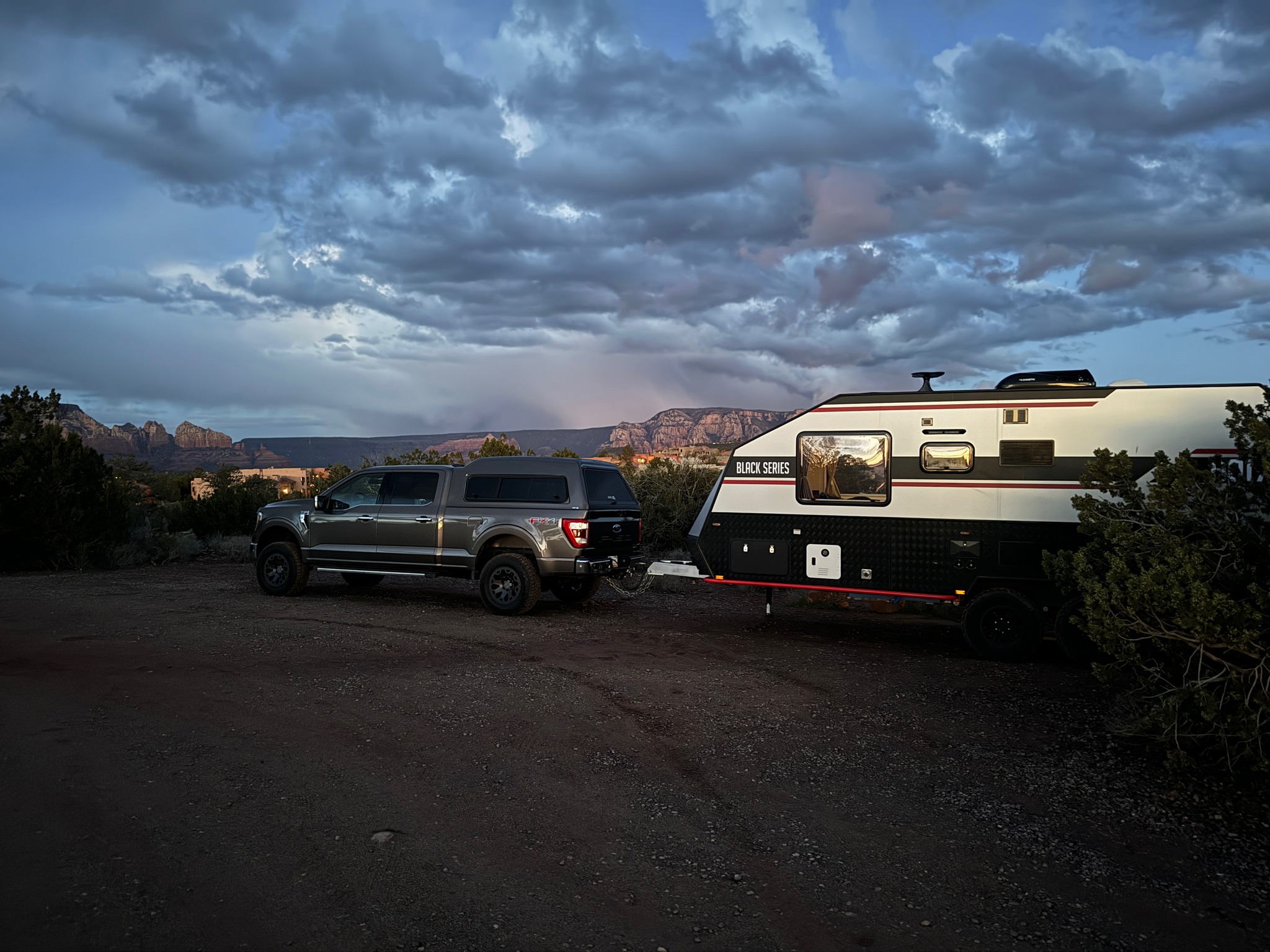
Understanding weight terminology is crucial for lightweight off road camper trailer selection:
Most SUVs and mid-size trucks safely tow 3,500-7,000 lbs, making lightweight off-road trailers the perfect match for popular vehicles like the Toyota 4Runner, Ford Bronco, Chevy Tahoe, and mid-size pickups.
True lightweight off-road trailers feature hot-dip galvanized steel chassis specifically engineered for trail use. Independent suspension systems provide superior articulation and comfort compared to basic leaf springs found on highway-only travel trailers.
Black Series utilizes independent trailing arm suspension even on lightweight models, ensuring the wheels maintain ground contact over rocks, roots, and washboard surfaces while minimizing stress on the trailer frame.
Modern lightweight off-road trailers employ composite panels, aluminum framing, and honeycomb core materials to reduce weight without sacrificing strength. Rock guards, underbody protection, and reinforced mounting points protect vital components during off-road adventures.
Begin by consulting your vehicle’s owner’s manual for exact towing capacity, tongue weight limits, and recommended equipment. Leave 10-20% safety margin below maximum ratings for steep grades, headwinds, and loaded camping gear.
Weekend warriors using forest service roads have different needs than serious overlanders tackling rocky desert trails. Consider:
Examine specifications beyond marketing claims:
The lightest isn’t always best, ultra-light construction may compromise durability for serious off-road use. Best lightweight off road camper trailer USA options find the sweet spot between towing ease and trail-worthy construction.

Weight Range: 2,000-3,200 lbs loaded
Ideal Vehicles: Toyota 4Runner, Jeep Grand Cherokee, Ford Bronco
These compact trailers maximize capability while staying within SUV comfort zones. Features typically include:
Weight Range: 3,200-4,500 lbs loaded
Ideal Vehicles: Toyota Tacoma, Ford Ranger, Chevy Colorado
Small trucks handle slightly heavier trailers with enhanced features:
Prioritizing quick setup and highway manners, these trailers excel for Friday-to-Sunday adventures. Compact layouts, intuitive systems, and streamlined packing make them ideal for regular use without the complexity of expedition-grade rigs.
Despite lightweight classification, these models emphasize self-sufficiency with larger solar arrays, extended battery capacity, and substantial fresh water storage for week-long backcountry stays.
Black Series has built its reputation on uncompromising off-road capability, using hot-dip galvanized steel chassis and independent suspension across its range. Even lightweight-oriented models maintain these core strengths, ensuring durability for American desert, mountain, and forest conditions.
Black Series offers several models optimized for SUV and small truck towing while preserving off-road DNA:
Through intelligent engineering and premium materials, Black Series achieves weight reduction without structural compromise. The company’s “light but tough” philosophy contrasts with fragile ultra-light travel trailers designed only for paved roads.
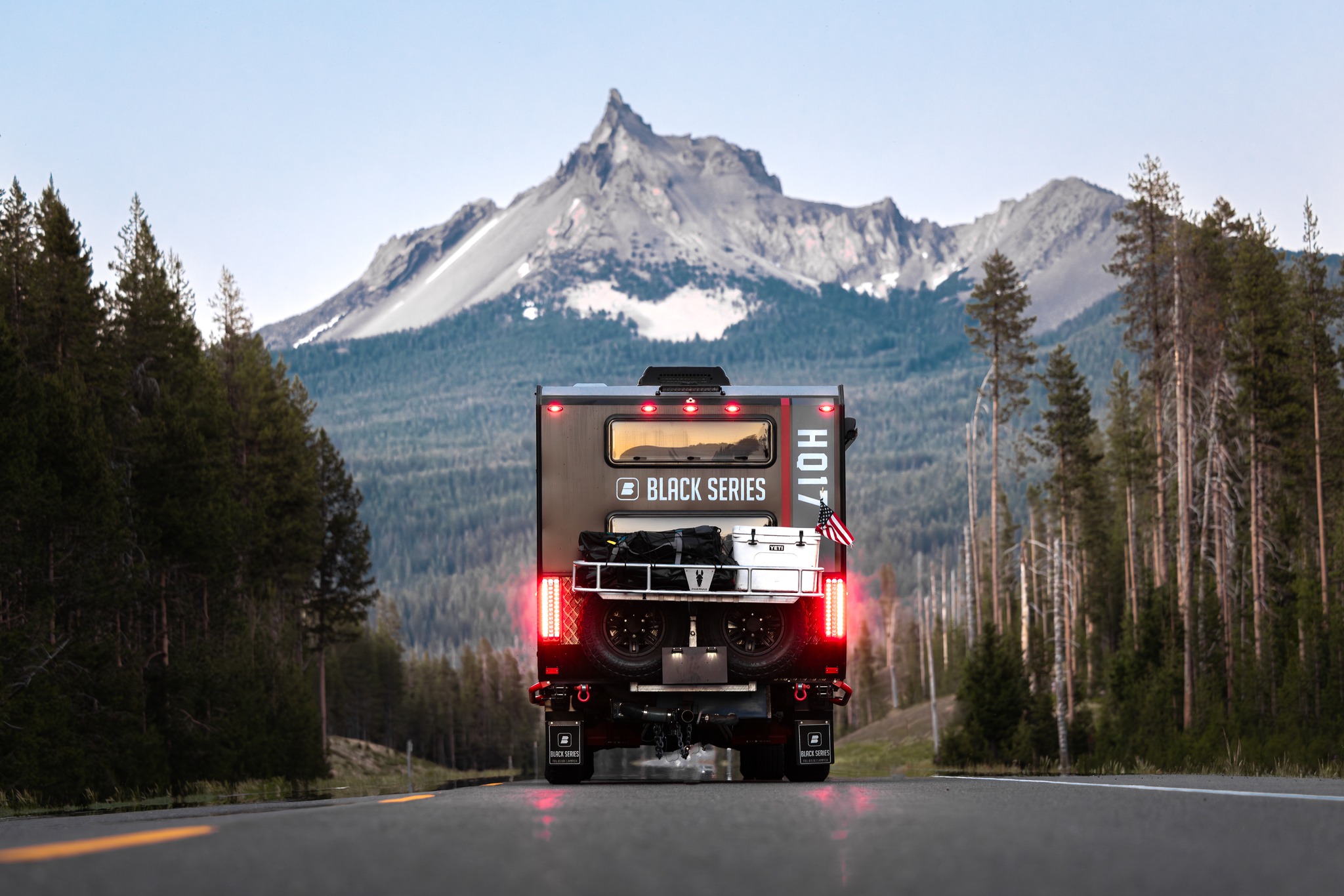
Many professionals own SUVs for daily driving but want overlanding capability on weekends. A lightweight off road camper trailer for SUV enables this transition without requiring a second, heavy-duty tow vehicle.
Typical Setup: Toyota 4Runner + 3,200 lb lightweight trailer
Use Case: National park camping with light trail access
Benefits: One vehicle serves commuting and adventure needs
Budget-conscious families often choose mid-size trucks as their primary vehicle. Lightweight off-road trailers provide family camping capability without forcing expensive upgrades to full-size HD trucks.
Typical Setup: Ford Ranger + 3,800 lb family trailer
Use Case: State park camping with forest service road access
Benefits: Affordable entry into family overlanding
RTT users seeking weather protection and sleeping comfort naturally graduate to lightweight trailers while maintaining trail access and towing simplicity.
Typical Setup: Jeep Gladiator + 2,900 lb expedition trailer
Use Case: Backcountry exploration with base camp comfort
Benefits: Enhanced comfort without losing adventure capability
What is considered a lightweight off road camper trailer?
Typically 2,000-4,000 lbs with genuine off-road suspension, high ground clearance, and reinforced construction, specifically designed for SUV and small truck towing while maintaining trail capability.
Can a midsize SUV tow a lightweight off road camper trailer safely?
Yes, most capable SUVs (4Runner, Grand Cherokee, Bronco) can safely tow 3,500+ lbs when properly equipped with towing packages, weight-distribution hitches, and trailer brakes.
What’s the difference between a lightweight travel trailer and a lightweight off road camper trailer?
Off-road versions feature independent suspension, higher ground clearance, reinforced chassis, skid plates, and all-terrain tires versus highway-only construction of standard travel trailers.
Are lightweight off road camper trailers durable enough for real trails?
Quality manufacturers like Black Series engineer lightweight models with the same robust chassis and suspension as heavier variants, using advanced materials rather than compromising structural integrity.
How much does a lightweight off road camper trailer usually weigh?
Dry weights typically range from 2,000-3,500 lbs, with loaded weights (water, gear, provisions) reaching 3,000-4,500 lbs depending on tank capacity and equipment.
What is the best lightweight off road camper trailer for SUVs in the USA?
The best choice depends on specific needs, but models weighing 2,800-3,400 lbs with independent suspension, 12+ inch ground clearance, and proven off-road chassis provide optimal capability for most SUV owners.
The best lightweight off road camper trailer USA market offers excellent options for adventure-minded families and individuals who want genuine off-road capability without requiring heavy-duty tow vehicles. By choosing quality manufacturers focused on real-world off-road performance rather than just lightweight marketing, adventurers can access amazing destinations while maintaining towing confidence and trail capability.
Best Lightweight Off Road Camper Trailer USA | SUV & Truck最先出现在Black Series RV | Off-Road Travel Trailers, Toy Haulers & Camper Trailers | Off road rv | Off grid rv | Overland rv | Off road trailer | Off road travel trailer | Overland travel trailer。