Winter camping in your off-road travel trailer presents unique challenges that test every system in your rig. When temperatures plummet and snow accumulates, maintaining power independence becomes critical for both comfort and safety. Whether you’re living in your camper during winter months or embarking on extended cold-weather adventures, understanding how to optimize your power systems, insulation, and heating solutions can make the difference between an epic adventure and a dangerous situation.
The 2026 camping season has seen a surge in interest for winter RV camping, with more adventurers seeking remote, snow-covered destinations. This comprehensive guide will equip you with proven strategies to keep your systems running efficiently when grid power isn’t an option.
Understanding Winter Power Challenges for Off-Grid Camping
Winter camping dramatically increases your power demands while simultaneously reducing your ability to generate electricity. Your heating system becomes your largest power consumer, while shortened daylight hours and snow-covered solar panels slash renewable energy production. Cold temperatures also reduce battery capacity and efficiency, creating a perfect storm of increased demand and decreased supply.
Modern off-road travel trailers face additional challenges in winter conditions. Unlike stationary RVs in warmer climates, your rig must perform reliably while navigating harsh terrain and extreme weather variations. Understanding these challenges helps you prepare effective solutions.
Key Winter Power Challenges:
- Reduced solar panel efficiency due to snow coverage and shorter days
- Increased heating demands consuming 60-80% of daily power
- Battery capacity drops 20-50% in freezing temperatures
- Higher electrical loads from fans, pumps, and defrosting systems
- Limited generator run times due to noise restrictions and fuel consumption
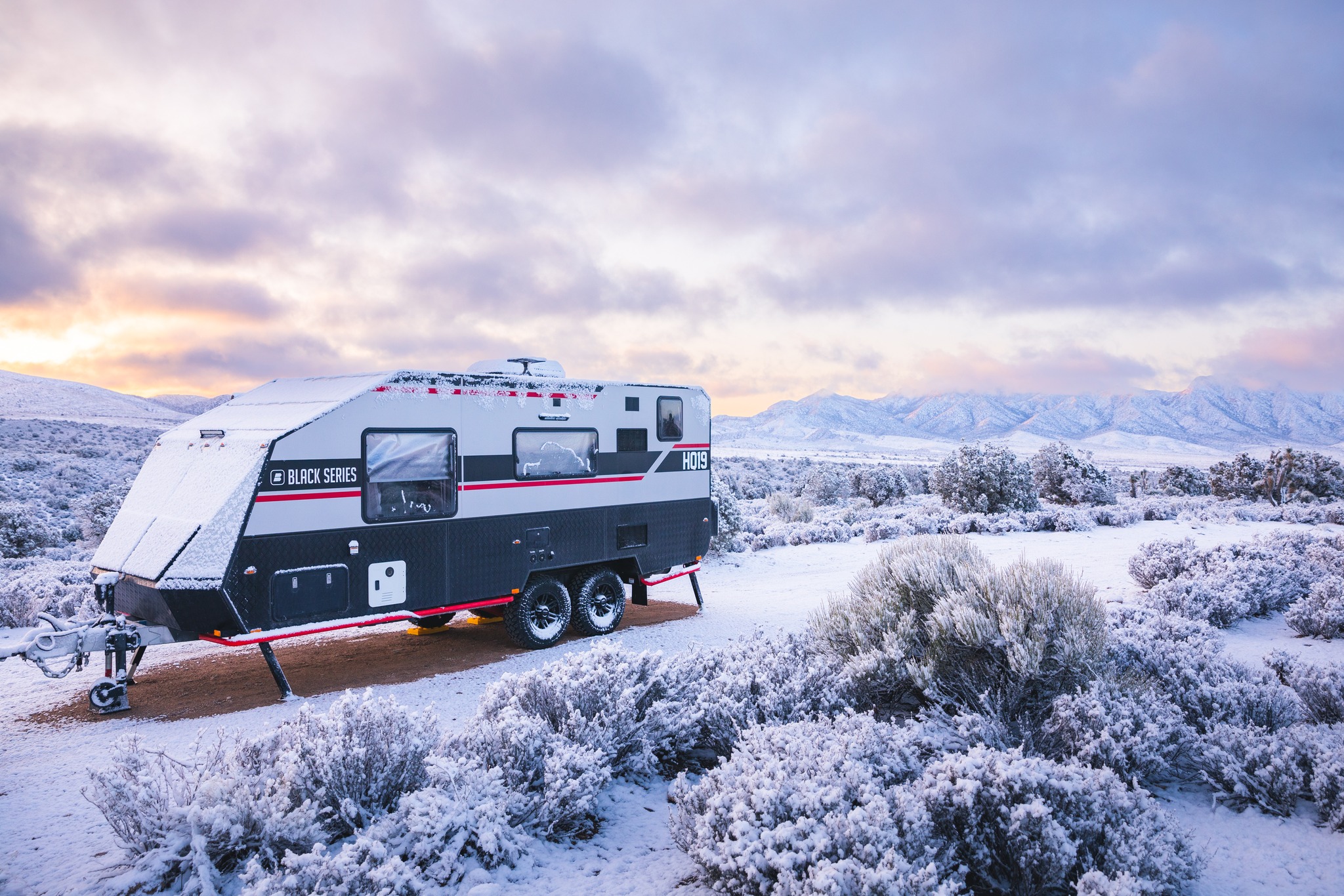
Solar Power Efficiency in Snow Conditions
Solar panels can still generate significant power during winter camping, but you’ll need to adapt your approach. Snow reflects light, actually boosting panel performance when the panels themselves are clear. However, maintaining clean panels becomes your biggest challenge.
Maximizing Solar Efficiency in Snow:
• Panel Positioning: Tilt panels at steeper angles (45-60 degrees) to shed snow naturally and capture low-angle winter sun
• Daily Maintenance: Brush snow off panels every morning using a soft-bristled snow brush
• Anti-Icing Solutions: Apply specialized panel coatings that prevent ice buildup
• Backup Panels: Deploy portable ground-mounted panels in sunny spots away from your rig
Winter solar production typically drops to 25-40% of summer levels, so plan accordingly. A 400-watt panel system that produces 150 amp-hours daily in summer might only generate 40-60 amp-hours in winter conditions.
Pro Tip: Position your rig with panels facing southeast to catch maximum morning sun, which helps melt overnight snow accumulation earlier in the day.
Lithium Battery Performance in Freezing Temperatures
Lithium batteries are the gold standard for off-grid camping, but cold temperatures significantly impact their performance. Understanding these limitations and implementing protective measures keeps your power systems reliable in freezing conditions.
Temperature Impact on Battery Capacity:
- 32°F (0°C): 90-95% capacity
- 20°F (-7°C): 80-85% capacity
- 0°F (-18°C): 70-75% capacity
- -10°F (-23°C): 60-65% capacity
Cold Weather Battery Strategies:
• Insulation Systems: Wrap batteries in insulation or install them in heated compartments
• Battery Warming: Use low-wattage heating pads designed for lithium batteries
• Charging Protocols: Most lithium batteries stop accepting charge below 32°F – install charging controllers with temperature sensors
• Capacity Planning: Size your battery bank 50% larger than summer requirements
Many RVers report success keeping batteries above freezing by routing waste heat from their propane furnace through battery compartments. This passive heating system requires no additional power while providing consistent temperature control.

Propane and Diesel Heating Solutions for Winter RV Camping
Efficient heating is crucial for comfortable winter camping and protecting your RV’s systems. Propane and diesel heaters offer reliable, power-independent warmth, but each has distinct advantages for different camping scenarios.
Propane Heating Systems:
Propane furnaces provide instant heat and work well for shorter trips or when frequent refueling is feasible. Modern propane systems consume 0.5-1.5 gallons per day depending on outside temperatures and RV size.
• Catalytic Heaters: Provide radiant heat with minimal power draw for fans
• Forced Air Furnaces: Heat entire RV quickly but consume more battery power for blowers
• Portable Units: Offer flexibility but require careful ventilation management
Diesel Heating Advantages:
Diesel heaters excel for extended winter camping, offering superior fuel efficiency and reduced condensation compared to propane systems.
• Fuel Efficiency: Consume 0.1-0.3 gallons per hour versus propane’s higher consumption
• Dry Heat: Diesel combustion produces less moisture than propane
• Extended Runtime: Larger fuel capacity enables weeks of autonomous heating
• High Altitude Performance: Maintain efficiency better than propane at elevation
Installation Considerations:
- Position intake and exhaust away from prevailing winds
- Insulate fuel lines to prevent gelling in extreme cold
- Install fuel tank heaters for temperatures below 0°F
- Ensure adequate combustion air supply in sealed RVs
RV Insulation Strategies to Prevent Heat Loss
Proper RV insulation is your first line of defense against winter conditions and the foundation of an efficient heating system. Even the best heater can’t overcome poor insulation, making this investment crucial for winter camping success.
Critical Insulation Upgrade Areas:
• Windows: Install thermal curtains, reflective window covers, or temporary storm windows
• Floor: Add rigid foam insulation panels under the RV or use insulated skirting
• Walls: Upgrade to higher R-value insulation where accessible during renovations
• Ceiling: Focus on areas around vents, lights, and access panels where heat escapes
Thermal Bridge Elimination:
Metal frames and fasteners create thermal bridges that transfer cold directly into your RV. Address these with:
- Thermal break tape on metal window frames
- Foam gaskets around electrical outlets and switches
- Weatherstripping on doors and cabinet openings
- Reflective radiant barriers behind heating vents
Temporary Insulation Solutions:
For existing RVs, several temporary solutions dramatically improve winter performance:
- Reflectix or similar reflective insulation on windows
- Draft stoppers for gaps under doors
- Thick rugs or insulated mats on floors
- Insulated RV skirting to protect underbelly
The goal is creating multiple thermal barriers that trap warm air and prevent cold infiltration. A well-insulated RV can maintain comfortable temperatures with 50-70% less heating fuel consumption.
Protecting Water Lines from Freezing
RV water line freezing ranks among the most common and expensive winter camping problems. Frozen pipes can burst, causing thousands in damage and ending your trip. Prevention requires a multi-layered approach combining heat, insulation, and smart water management.
Freeze Prevention Strategies:
• Heat Tape Installation: Wrap exposed pipes with self-regulating heat tape that activates below 38°F
• Pipe Insulation: Use foam pipe insulation on all accessible water lines
• Cabinet Door Strategy: Keep cabinet doors open to circulate warm air around plumbing
• Faucet Dripping: Allow a pencil-thin stream of water to flow during extreme cold
Advanced Water System Protection:
• Heated Fresh Water Tank: Install tank heaters or position tanks in heated compartments
• Bypass Valves: Install valves to isolate unused sections of plumbing
• Antifreeze Systems: Use RV antifreeze in gray and black tank lines
• Smart Sensors: Install wireless temperature sensors to monitor vulnerable areas
Emergency Thawing Procedures:
When prevention fails, safe thawing prevents pipe damage:
- Shut off water pump immediately
- Open all faucets to relieve pressure
- Apply gentle heat with hair dryer or space heater
- Never use open flames or high heat sources
- Check for leaks once pipes thaw
Many experienced winter campers drain their fresh water systems entirely and rely on stored water jugs, eliminating freeze risk while maintaining water access for cooking and drinking.
Emergency Power Backup and Charging Strategies
Redundant power systems provide crucial safety margins during winter camping when system failures could be life-threatening. Building multiple charging and backup options ensures you maintain essential power for heating, communication, and safety systems.
Multi-Source Charging Strategy:
• Vehicle Alternator: High-output alternators charge house batteries while driving
• Portable Solar: Deployable panels provide backup when fixed panels fail
• Wind Generators: Supplement solar during cloudy winter conditions
• Fuel Cells: Emerging technology offering silent, efficient power generation
Emergency Power Priorities:
When power runs low, prioritize systems in this order:
- Communication devices (cell phone, radio)
- Essential heating (enough to prevent pipe freezing)
- Carbon monoxide detectors and safety systems
- Minimal lighting for safety
- Food preservation in external snow/cold storage
Backup Power Equipment:
• Jump Starters: Power banks capable of running 12V systems for hours
• Inverter Generators: Quiet, efficient backup for battery charging
• Power Stations: Large lithium units providing silent emergency power
• Manual Charging: Hand-crank radios and flashlights requiring no batteries
Store backup equipment in heated areas to ensure reliability when needed. Test all systems before departing and maintain backup fuel supplies appropriate for your trip duration.
Power Management Tips for Extended Off-Grid Stays
Successful winter off-grid camping requires disciplined power management and realistic consumption expectations. Understanding your daily power budget and implementing conservation strategies extends your autonomous camping capability significantly.
Daily Power Budget Planning:
Calculate your winter power consumption including:
- Heating system: 60-100 amp-hours daily
- Lighting: 10-15 amp-hours daily
- Water pump and fans: 5-10 amp-hours daily
- Electronics charging: 10-20 amp-hours daily
- Refrigeration: 20-40 amp-hours daily
Power Conservation Techniques:
• LED Conversion: Replace all incandescent bulbs with LED equivalents
• Smart Heating: Zone heating using space heaters in occupied areas only
• Electronics Management: Charge devices during peak solar hours
• Phantom Load Elimination: Use switches to disconnect idle devices
• Timing Activities: Run high-drain appliances during charging periods
Load Monitoring Systems:
Install battery monitors and power meters to track consumption in real-time. Understanding your actual power usage patterns helps optimize systems and identify inefficiencies before they become problems.
For extended stays in remote areas, consider the guidance from our dispersed camping guide for location selection and regulations that impact your power generation options.
FAQ: Winter Off-Grid Power Independence
How long can I run my RV heater on battery power alone?
Battery runtime depends on your battery capacity, heater efficiency, and outside temperature. A typical 400 amp-hour lithium battery bank can power a propane furnace (drawing 7-8 amps) for 40-50 hours in moderate conditions, or 24-30 hours in extreme cold when the heater runs continuously.
Can solar panels work effectively in winter snow conditions?
Yes, but with reduced output. Clean solar panels can generate 60-80% of their rated power even in winter, thanks to cold temperatures increasing panel efficiency. However, snow coverage and shorter daylight hours typically reduce daily energy production to 25-40% of summer levels.
What’s the minimum battery bank size for winter off-grid camping?
For comfortable winter camping, plan for 600-800 amp-hours of lithium battery capacity, or 1200-1600 amp-hours with lead-acid batteries. This provides 2-3 days of autonomy during poor charging conditions while maintaining essential heating and safety systems.
How do I prevent my RV water lines from freezing without electric heat tape?
Use RV antifreeze in your plumbing system, keep cabinet doors open for air circulation, allow faucets to drip slightly, and position your RV to protect plumbing from prevailing winds. Many winter campers also drain their fresh water system completely and use external water sources.
Is it safe to run a generator inside my RV during winter storms?
Never run generators inside any enclosed space. Position portable generators at least 15 feet from your RV with exhaust directed away from windows and doors. For severe weather, invest in a properly installed permanently-mounted generator with appropriate ventilation and safety systems.
Winter off-grid camping pushes your equipment and skills to their limits, but proper preparation and understanding of power systems enables incredible adventures in pristine, snow-covered landscapes. Focus on redundant systems, conservative power budgets, and proven cold-weather strategies to ensure your winter camping experiences remain safe and enjoyable. Remember that the goal isn’t just surviving winter conditions, but thriving in them while maintaining the comfort and convenience that make RV camping appealing year-round.

