
Your cart (0)
Your cart is empty
Tax included and shipping calculated at checkout
Your cart is empty
Tax included and shipping calculated at checkout

An off-road camper trailer is a purpose-built adventure rig designed to carry the comforts of home through terrains that would shatter a standard trailer. Unlike basic campers, it features a reinforced chassis and independent suspension to handle washboard roads and steep inclines. For the serious adventurer, moving away from a massive 30 foot rv weight and choosing a nimble 18 ft or 24 ft camper weight trailer is the key to remote access. BlackSeries sets the gold standard here, offering luxury amenities inside a battle-ready shell designed for the deepest American backcountry.
Let’s cut through the marketing noise and get to the core of what makes an off-road camper trailer different from everything else on the market.
An off-road camper trailer is a towable living space engineered from the ground up to survive: and thrive: on unpaved, unforgiving terrain. We’re talking reinforced steel chassis, independent suspension systems, high ground clearance (typically 17-21 inches), and off-grid power systems that let you camp for days without seeing another human being.
Here’s where confusion sets in: What’s the difference between an “off road trailer,” “off road campers,” and an off-road camper trailer?
Off road trailer is a broad category that includes utility trailers, cargo haulers, and basic platforms built for rough terrain. They’re tough, but they’re not homes.
Off road campers is an umbrella term that covers everything from truck-mounted units to pop-up hybrids. Great for weekend warriors, but often limited in comfort and capacity.
Off road camper trailer is the sweet spot. It combines the towable convenience of a trailer with the full living amenities of a camper: bathroom, kitchen, climate control, serious water storage: all wrapped in a chassis that laughs at boulder fields and creek crossings.
This is why the off-road camper trailer has become the weapon of choice for overlanders, families, and anyone who refuses to let pavement dictate their adventure.
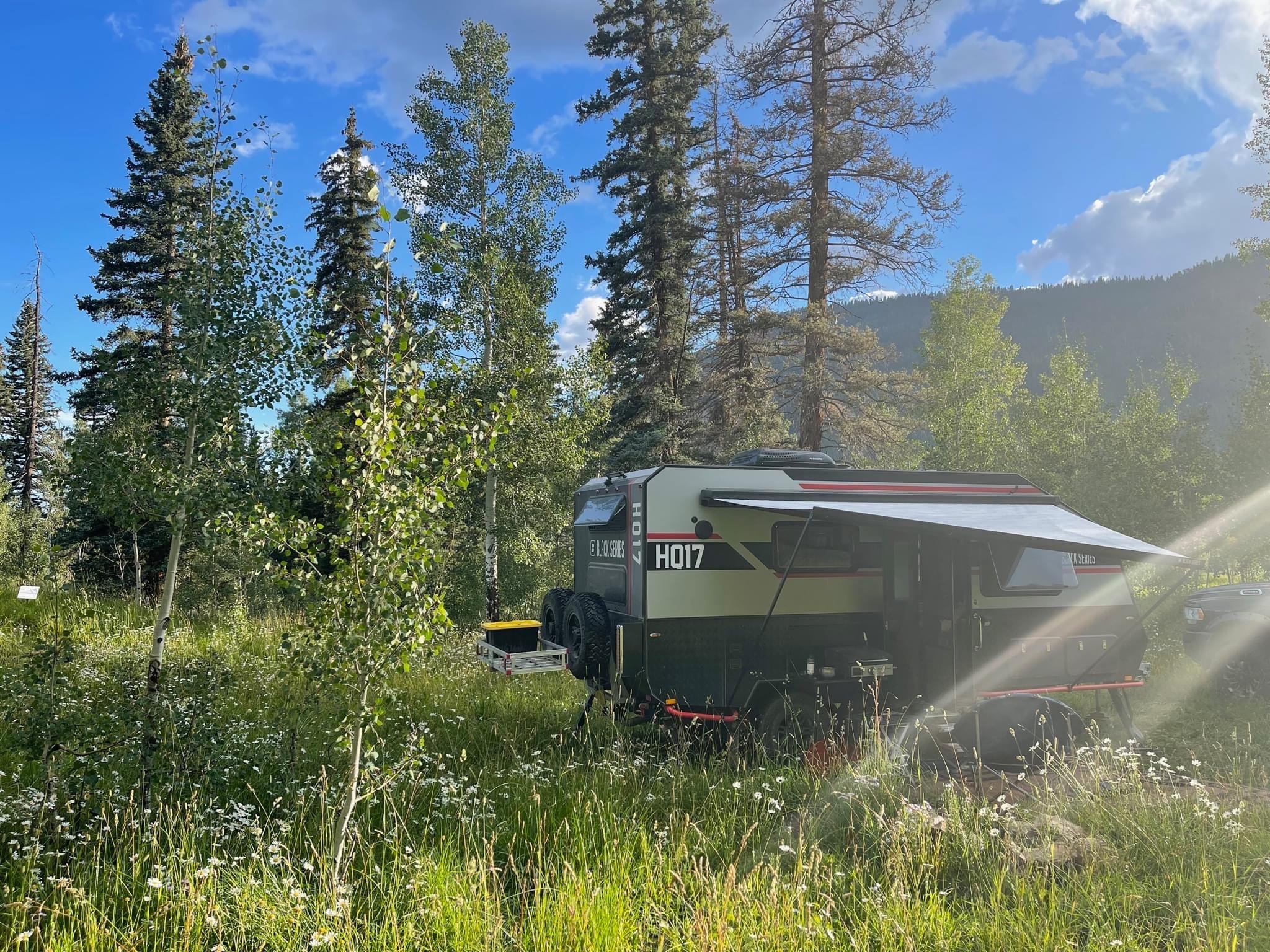
This is where most buyers get burned. They see a standard camper trailer with some aggressive-looking tires and assume it’s “off-road ready.” It’s not. Here’s what actually separates a real off-road travel trailer from a glorified highway camper:
The average travel trailer weights you’ll find at dealerships hover around 5,000-7,500 lbs for something in the 25-30 foot range. The problem? That 30 ft camper weight is dead weight on the trail. You’re dragging a small apartment through terrain that demands nimble, balanced rigs.
A proper off-road camper trailer in the 16 ft to 24 ft camper weight range typically runs 2,500-4,500 lbs: manageable for a mid-size SUV or half-ton truck, and exponentially more capable when the road disappears.
Not all off-road camper trailers are created equal. Here’s what separates the pretenders from the contenders in 2026.
The chassis is your trailer’s skeleton. If it’s weak, everything else is a liability. The best off-road camper trailers use hot-rolled steel frames with powder-coating for corrosion resistance: essential when you’re fording streams and camping in coastal environments.
Independent suspension is non-negotiable. Unlike fixed-axle systems that transfer every jolt directly to the frame (and your spine), independent suspension allows each wheel to react to terrain independently. BlackSeries uses this technology as a core engineering principle, giving their trailers the articulation to handle washboard roads without rattling your fillings loose.
Look for axle-less suspension systems rated for 3,500+ lbs. They provide superior ground clearance and dramatically reduce the “trailer hop” that makes highway trailers dangerous on rough terrain.
Ground clearance determines what you can drive over without becoming a very expensive paperweight. Standard trailers offer 8-12 inches: fine for speed bumps, disastrous for desert washes.
True off-road camper trailers deliver 17-21 inches of clearance, paired with departure angles of 50 degrees or more. This means you can descend steep terrain without dragging your rear end across every rock.
Tires matter equally. All-terrain (AT) or mud-terrain (MT) tires in the 30-33 inch range are standard. Some trailers accommodate up to 40-inch rubber for extreme applications. The average weight of camper tires shifts significantly when you move from highway-rated rubber to proper off-road compounds: but the capability gain is worth every pound.
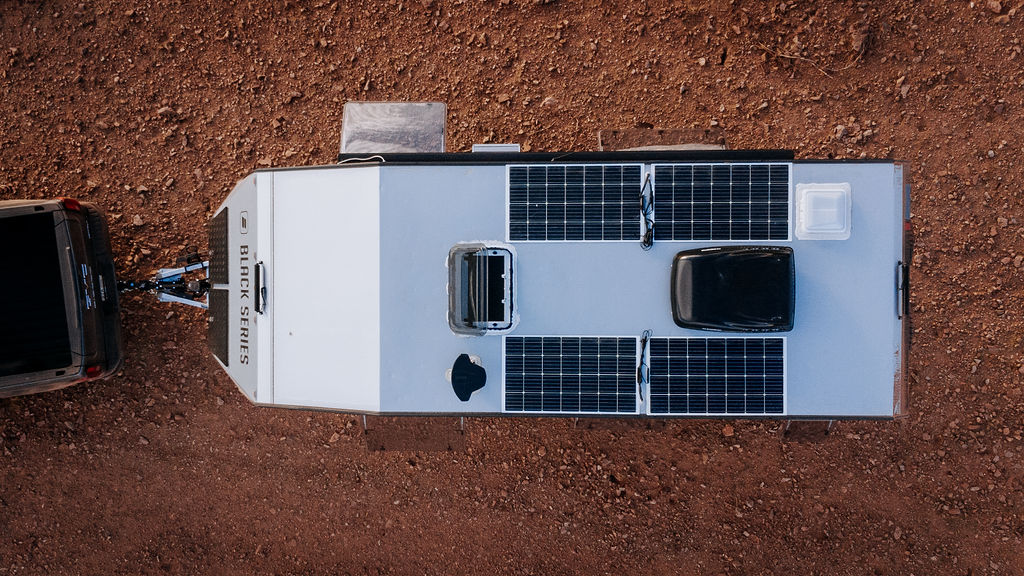
This is where serious adventure camping lives or dies. If you’re dependent on shore power, you’re not overlanding: you’re just camping with extra steps.
Modern off-road camper trailers feature:
With proper solar and lithium systems, a well-designed off-road camper trailer can sustain comfortable off-grid living for 5-7+ days: longer if you’re conservative with power. This is the difference between “camping” and true off road trailer travel.
Here’s where the “camper” part of off-road camper trailer earns its name. The best rigs in 2026 aren’t spartan survival pods: they’re legitimate living spaces.
Look for:
The 30-foot camper weight highway rigs offer more interior space, sure. But they’re anchored to RV parks and paved pullouts. An off-road camper trailer gives you 80% of the comfort in 50% of the footprint: with access to 100% more terrain.
What makes an off-road camper trailer “best” depends entirely on how you plan to abuse it. Here’s how to think about the market in 2026:
If your idea of a good time involves rock crawling to abandoned mining camps and fording rivers that don’t appear on Google Maps, you need maximum ground clearance, bombproof suspension, and a chassis that won’t twist under stress. Compact trailers in the 16 ft camper weight range excel here: lighter, more maneuverable, easier to recover if things go sideways.
The overlanding lifestyle demands balance: enough ruggedness for unpaved National Forest roads and BLM dispersed camping, but enough comfort for extended multi-week trips. The 18 ft camper weight to 24 ft camper weight range hits this sweet spot perfectly. You get full bathrooms, real kitchens, and sufficient solar capacity without the towing headaches of larger rigs.
Planning a six-month sabbatical across the American West? You need everything: off-road capability, off-grid autonomy, and interior livability that won’t drive you insane after week three. This is where premium manufacturers like BlackSeries dominate: engineering trailers that function as mobile homes without sacrificing trail worthiness.
The key insight: the 30 ft rv weight class isn’t built for adventure. It’s built for interstate travel between RV resorts. If remote access matters to you, stay in the 18-24 foot range and invest in quality construction over square footage.
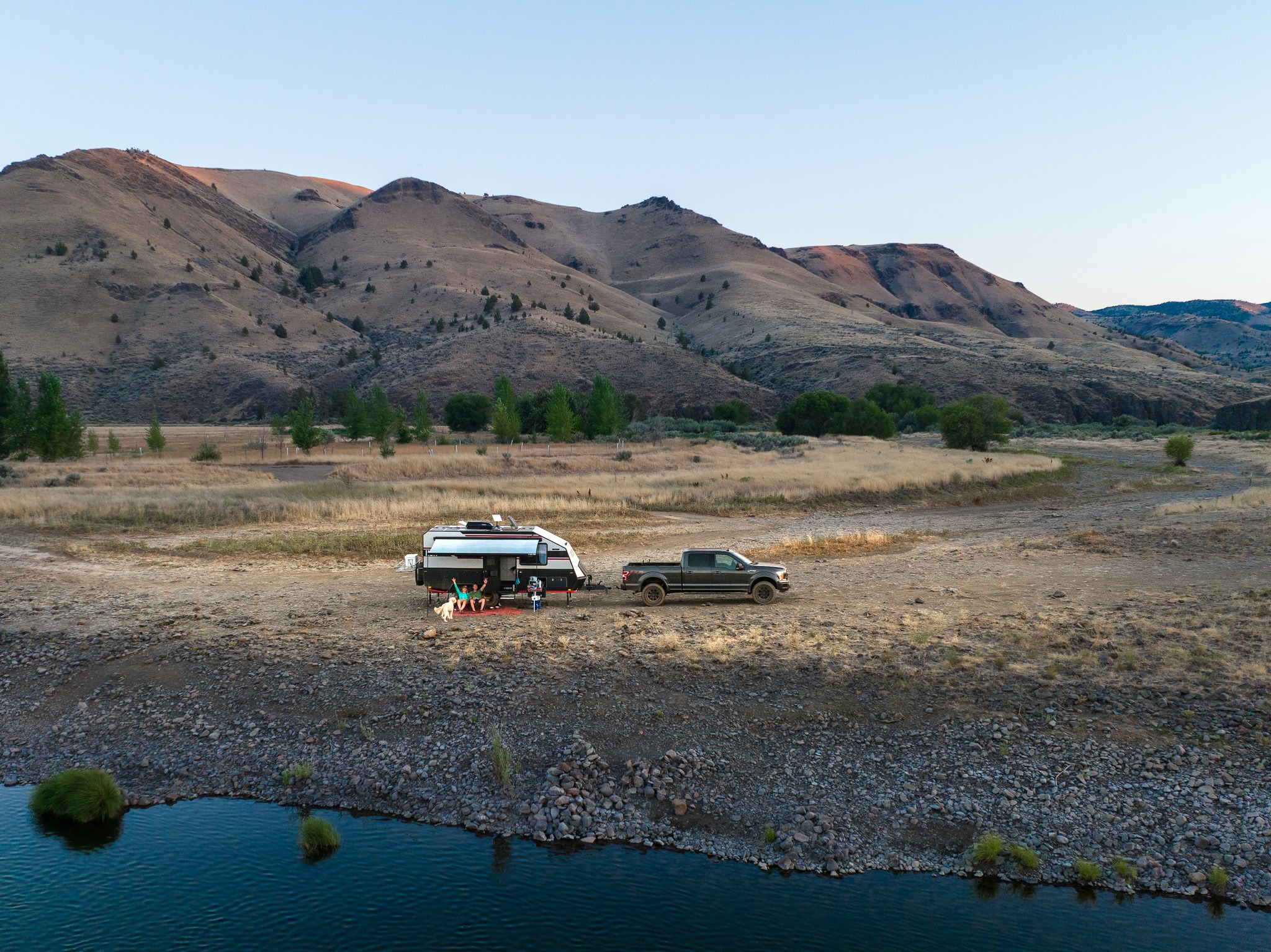
Buying an off-road camper trailer is a significant investment. Here’s how to avoid expensive mistakes.
Your trailer is only as capable as the vehicle pulling it. Match your tow vehicle’s capacity to your trailer’s Gross Vehicle Weight Rating (GVWR) with at least 20% margin for safety.
Don’t forget tongue weight. Most off-road camper trailers run 10-15% of total weight on the hitch: typically 300-600 lbs.
Be honest about where you’ll actually camp. There’s a spectrum:
The average travel trailer weights and builds at dealerships handle light off-road at best. If you’re planning moderate to extreme adventures, don’t compromise on suspension and chassis quality.
Entry-level off-road camper trailers start around $20,000-35,000. Mid-range options run $45,000-75,000. Premium expedition trailers from manufacturers like BlackSeries command $80,000-150,000+.
The premium isn’t just about features: it’s about longevity. Cheap trailers require constant repairs, lose value rapidly, and often fail catastrophically when you need them most. Quality trailers run for decades with basic maintenance and command strong resale value when you’re ready to upgrade.
Consider the RV trade-in process when planning your purchase. Many buyers finance premium trailers by trading in existing RVs through programs like BlackSeries’s trade-in offers.
BlackSeries didn’t start in America: they started in Australia, where “off-road” means something entirely different. The Australian Outback demands engineering that survives corrugated roads, extreme heat, dust infiltration, and multi-week isolation.
That DNA defines every BlackSeries trailer. When they entered the US market, they didn’t soften their builds for American highways. Instead, they optimized for American terrain: the rocky deserts of Utah, the mountain passes of Colorado, the coastal sand of the Pacific Northwest.
The result? Trailers purpose-built for serious adventure camping:
Explore the HQ17, HQ19, and HQ21 to see how Australian engineering translates to American adventure.
What makes a camper trailer truly off road?
Three things: independent suspension, high ground clearance (17+ inches), and a reinforced chassis. Marketing can call anything “off-road,” but these engineering fundamentals separate real capability from aesthetic posturing.
Are off road camper trailers worth it?
If you plan to camp beyond paved roads and developed campgrounds, absolutely. The premium over standard trailers pays for itself in terrain access, durability, and resale value. If you only camp at RV parks, save your money.
Do off road camper trailers have bathrooms?
Most quality off-road camper trailers include full bathrooms with toilet, shower, and sink. This is a major differentiator from basic off-road trailers and pop-up campers.
How much does an off road camper trailer cost in the US?
Entry-level models start around $25,000-35,000. Mid-range trailers run $50,000-80,000. Premium expedition trailers from manufacturers like BlackSeries range from $85,000-150,000+ depending on configuration.
What vehicles can tow an off road camper trailer?
Most off-road camper trailers in the 16-24 ft range can be towed by half-ton trucks or larger SUVs with 5,000+ lb towing capacity. Larger expedition trailers may require 3/4-ton or 1-ton trucks. Always verify your vehicle’s towing capacity exceeds the trailer’s GVWR by at least 20%.