An off-road camper is a heavy-duty mobile basecamp engineered to withstand the brutal vibrations of washboard roads and the steep angles of technical trails. Designed for overlanders and family explorers, it offers true off-grid independence where standard campers fail. While a standard 30 foot rv weight rig is limited to paved parks, a true off-road camper: like a BlackSeries: uses independent suspension and high clearance to unlock remote wilderness. Choosing a high-performance 18 ft or 24 ft camper weight trailer ensures you have the durability to go where others can’t.
What Are Off Road Campers?
Off-road campers are purpose-built adventure rigs designed to handle terrain that would destroy a conventional travel trailer. They’re not your grandpa’s campground cruiser: they’re expedition-grade machines engineered for punishment.
The core difference? Everything from the ground up is built tougher. While the average weight of camper in the standard RV market prioritizes lightweight materials for highway fuel economy, off-road campers use reinforced steel frames, heavy-duty axles, and specialized suspension systems designed for articulation over rough ground.
Here’s the truth most dealers won’t tell you: slapping bigger tires on a standard camper doesn’t make it off-road capable. A true off-road camper requires integrated engineering: the chassis, suspension, body construction, and interior systems all need to work together to absorb impacts without shaking apart.
Think of it this way: a standard trailer is built to roll smoothly down Interstate 10. An off-road camper is built to survive the Mojave Road, the Alpine Loop, or wherever your adventure takes you.
For a deeper dive into the trailer-based adventure category, check out our complete guide to Off Road Trailer Campers.
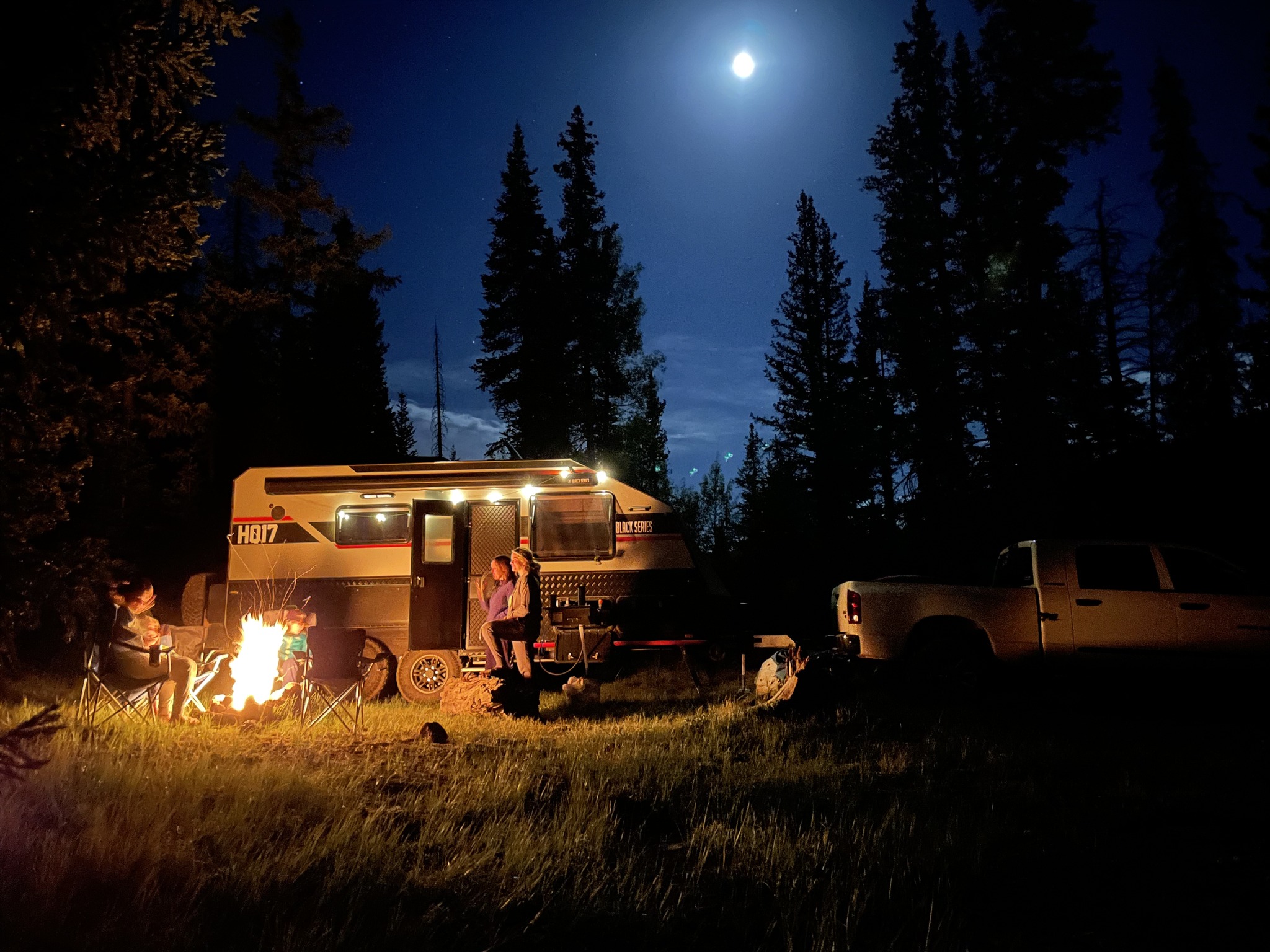
Types of Off Road Campers
Not all off-road campers are created equal. Your choice depends on how you travel, who you travel with, and what level of punishment you’re planning to inflict on your rig.
Off Road Trailer Campers
These fully-enclosed, towable units represent the sweet spot for most serious adventurers. They offer maximum living space, full bathroom capabilities, and multi-day off-grid independence. The 18 ft camper weight to 24 ft camper weight range hits the perfect balance: big enough for families, compact enough for technical trails.
Best for: Families, long-term travel, serious overlanding expeditions
Truck-Mounted Off Road Campers
These slide into your pickup bed, creating a self-contained unit with maximum mobility. They’re nimble and can access tighter trails, but sacrifice interior space and require a dedicated truck.
Best for: Solo travelers, couples, extreme terrain access
Hybrid / Pop-Up Off Road Campers
Lighter and more compact, these feature expandable sleeping areas that fold down for travel. They offer easier towing with moderate off-road capability, but less weather protection than hard-sided options.
Best for: Weekend warriors, lighter tow vehicles, budget-conscious adventurers
For more on the off-road travel trailer category specifically, we’ve got you covered.
Key Features of the Best Off Road Campers
What separates a real off-road camper from marketing hype? These non-negotiable features.
Chassis & Independent Suspension
The foundation of any serious off-road camper is its chassis. Look for welded steel construction with integrated mounting points: not bolt-on brackets that can fatigue and fail.
Independent suspension is the game-changer. Unlike solid axles that transfer every bump directly to the body, independent systems allow each wheel to move separately. This means better tire contact, less body stress, and a dramatically smoother ride over rough terrain. BlackSeries rigs feature this as standard equipment because there’s simply no substitute.
Ground Clearance & Tires
Minimum 14 inches of ground clearance is the baseline for serious trails. Combine that with all-terrain tires rated for off-highway use, and you’ve got a rig that can clear obstacles without scraping.
Compare this to the average travel trailer weights category, where ground clearance often measures 8-10 inches: fine for gravel campground roads, disastrous for actual backcountry access.
Off-Grid Power & Water Systems
True independence requires serious resources:
- Solar panels: 400W minimum, 600W+ preferred
- Lithium batteries: 200Ah+ capacity for multi-day stays
- Fresh water: 50+ gallon tanks
- Grey water management: Proper holding capacity
These systems let you stay out for a week or more without needing hookups: the whole point of going off-road in the first place.
Interior Comfort for Real Travel
Off-road campers with bathroom facilities aren’t just a luxury: they’re a necessity for extended backcountry stays. Look for:
- Four-season insulation for temperature extremes
- Shock-mounted cabinetry that won’t rattle apart
- Full wet bath or dry bath configurations
- Quality sleeping surfaces because recovery matters

Best Off Road Campers in the USA (Buyer Perspective)
When evaluating the “best” off-road camper, you need to match capability to your actual use case. Here’s how to think about it:
Best for Extreme Terrain
If you’re tackling technical trails, rock crawling access roads, or genuine expedition routes, prioritize:
- Maximum ground clearance (16″+)
- Shortest wheelbase practical for your needs
- The 16 ft camper weight class for tight switchbacks
- Proven suspension articulation
Best for Overlanding
The overlanding sweet spot balances capability with comfort. Look for:
- Independent suspension with quality shocks
- Comprehensive off-grid systems
- The 18 ft to 24 ft camper weight range
- Full interior amenities including bathroom
Best for Long-Term Adventure Travel
Extended travel (months, not weekends) demands durability and livability:
- Premium construction materials
- Excellent resale value
- Comprehensive warranty support
- Proven reliability track record
BlackSeries occupies a unique position in 2026’s off-road camper market: Australian engineering standards applied to American terrain requirements. While 30-foot camper weight highway rigs dominate RV parks, BlackSeries builds purpose-driven adventure machines.
Explore our complete Off Road RV guide for additional buyer insights.
Off Road Camper Buying Guide
Before you write a check, work through these critical considerations:
Tow Vehicle Matching
Your truck or SUV needs adequate:
- Towing capacity: Check the actual GVWR, not just marketing claims
- Payload capacity: Often the limiting factor people overlook
- Wheelbase: Longer is more stable for towing
A 30 ft rv weight highway rig requires a heavy-duty truck. A well-designed 18 ft camper weight off-road trailer can be pulled by a capable mid-size SUV or half-ton pickup.
Assess Your Off-Road Grade
Be honest about where you’ll actually go:
- Grade 1: Maintained gravel roads, occasional rough patches
- Grade 2: Unmaintained forest roads, moderate obstacles
- Grade 3: Technical trails, significant obstacles, expedition routes
Buy for one grade above your current comfort level: you’ll grow into it.
Budget Reality
Entry-level off-road capable: $40,000-$60,000
Mid-range adventure rigs: $60,000-$100,000
Premium expedition class: $100,000+
Remember: cheap trailers cost more in repairs and replacements. The 30 ft camper weight bargain rigs that flood the highway market simply won’t survive backcountry use.
Resale Value Matters
Quality off-road campers hold value exceptionally well. BlackSeries models consistently command strong resale prices because they’re built to last and buyers know it. If you’re considering an upgrade path, check out our RV Trade-In resources.
Why BlackSeries Off Road Campers Are Different
BlackSeries didn’t start building trailers for American campgrounds: we started building expedition-grade rigs for the Australian Outback, one of the most punishing environments on Earth.
Australian Engineering Standards: Every BlackSeries is built to survive conditions that would destroy conventional trailers. Reinforced steel chassis, independent suspension, and integrated systems designed as a complete unit.
Optimized for American Terrain: We’ve adapted our engineering specifically for US adventures: from Mojave Desert heat to Rocky Mountain altitude to Pacific Northwest moisture.
Built for the Long Haul: Our trailers aren’t designed to last five years and hit the junkyard. They’re built for decades of adventure, which is why our resale values consistently outperform the market.
Ready to explore the lineup? Visit BlackSeries.net to see our complete off-road travel trailer collection.
FAQ – Off Road Campers
Are off road campers worth it?
Absolutely: if you actually plan to leave paved roads. The premium you pay for proper off-road engineering saves money in repairs, extends usable life, and unlocks access to places standard campers simply cannot go.
What makes a camper truly off road?
Three essentials: independent suspension for articulation, adequate ground clearance (14″+), and reinforced construction throughout. Marketing claims are meaningless without these fundamentals.
Do off road campers have bathrooms?
Quality off-road campers include full bathroom facilities: wet bath or dry bath configurations with toilet, shower, and sink. Extended backcountry stays demand proper facilities.
How much do off road campers cost in the US?
Expect $40,000-$150,000+ depending on size and features. Avoid the temptation of budget options: the average travel trailer weights market produces rigs that won’t survive real off-road use.
What vehicles can tow an off road camper?
Most half-ton and three-quarter-ton trucks handle off-road trailers easily. Capable SUVs can tow smaller models. Always verify towing AND payload capacity before purchasing.
Ready to upgrade your adventure capability? Explore our RV Trade-Up program or get a trade-in quote for your current rig.

