A true off-road chassis suspension system provides structural strength, articulation, and stability for trailers and campers used in extreme terrain. BlackSeries designs heavy-duty, independent suspension systems specifically for U.S. off-road conditions, engineered to handle desert washes, mountain switchbacks, and everything in between.
Whether you’re planning a weekend escape to Moab or a month-long expedition through Baja, your trailer’s chassis suspension determines whether you arrive relaxed or rattled. This guide breaks down everything you need to know about off-road chassis suspension, why standard systems fail in demanding environments, and how to choose the right setup for serious American overlanding.
What Is Off-Road Chassis Suspension?
Definition and Core Components
Off-road chassis suspension refers to the integrated system of structural and mechanical components that support a trailer’s weight, absorb terrain impacts, and maintain wheel contact across uneven surfaces. Unlike standard highway trailer suspension, off-road systems are purpose-built to handle extreme loads, constant articulation, and punishing vibration.
The core components of a true off-road chassis suspension system include:
- Chassis Frame – The structural backbone, typically constructed from heavy-gauge steel with reinforced cross-members and gusseted corners for maximum rigidity.
- Control Arms – These connect the wheels to the chassis and control vertical wheel movement while maintaining proper alignment under stress.
- Independent Suspension – Each wheel operates independently, allowing one side to articulate without affecting the other, critical for maintaining traction on uneven terrain.
- Coil Springs and Shock Absorbers – These work together to absorb impacts and control rebound. Quality off-road systems use long-travel shocks with progressive spring rates.
- Bearings and Hubs – Heavy-duty hub assemblies with sealed bearings handle lateral forces and protect against dust, water, and debris infiltration.
- Braking Systems – Electric drum or disc brakes rated for trailer weight, with proper heat dissipation for extended mountain descents.
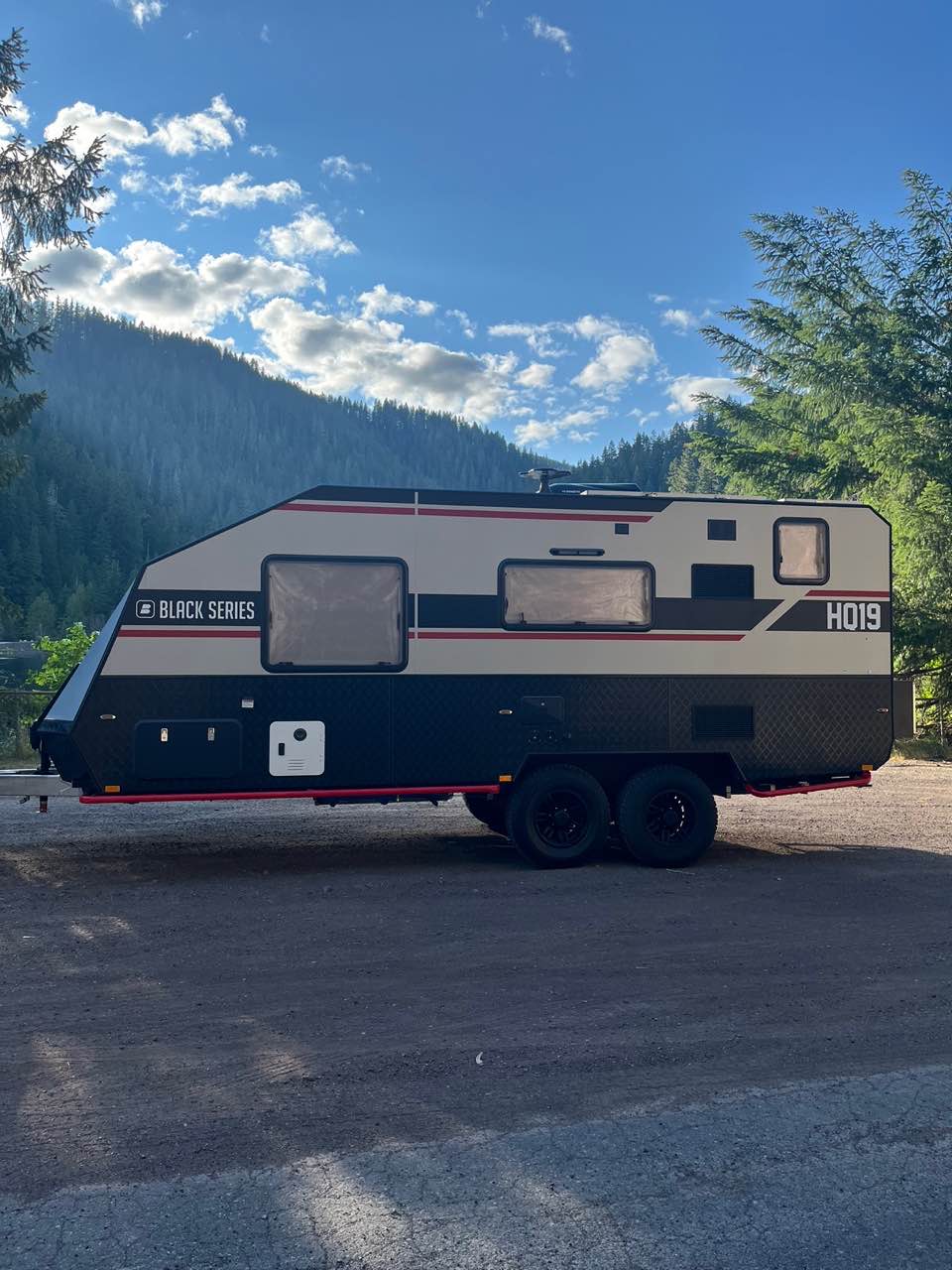
Why Standard Trailer Suspension Fails Off-Road
Most travel trailers sold in the United States use leaf-spring suspension with solid beam axles. This design works adequately on paved highways but breaks down quickly when conditions turn rough.
Highway vs. Off-Road Stress
Standard leaf springs are designed for consistent, predictable loads on smooth surfaces. Off-road environments introduce sudden impacts, lateral forces, and constant vibration that exceed design parameters. The result? Premature wear, cracked springs, and broken U-bolts.
Articulation Limits
Solid axle systems force both wheels to move together. When one wheel drops into a rut, the opposite wheel lifts, reducing traction and transferring stress directly to the chassis. This lack of articulation causes trailers to “hop” and bounce unpredictably.
Heat and Vibration Issues
Corrugated roads (washboard) create sustained high-frequency vibration that standard suspensions cannot absorb effectively. This vibration transfers to the chassis, loosening fasteners, cracking welds, and damaging interior components. Standard brake systems also overheat on long descents, leading to brake fade and dangerous loss of stopping power.
Why BlackSeries Off-Road Chassis Systems Stand Out
Engineered for the U.S. Market
BlackSeries suspension systems are specifically designed for the terrain American overlanders actually encounter. This isn’t generic off-road engineering, it’s purpose-built for:
- Desert Trails – Sandy washes, rocky creek beds, and extreme temperature swings from Death Valley to the Sonoran Desert.
- Forest Roads – Rutted logging roads, root-covered trails, and muddy conditions found throughout the Pacific Northwest and Appalachian regions.
- Rocky Terrain – Technical boulder fields, shelf roads, and high-altitude mountain passes where precise wheel placement matters.
Heavy-Duty Construction
Every BlackSeries chassis starts with a heavy-gauge steel frame featuring fully welded construction, reinforced mounting points, and integrated recovery points. Key specifications include:
- Load Ratings – Chassis engineered to exceed GVWR requirements with substantial safety margins for gear, water, and supplies.
- Corrosion Resistance – Powder-coated frames and galvanized hardware resist rust in wet climates and salt-air coastal environments.
- Impact Protection – Skid plates and rock sliders protect vulnerable components from trail damage.

Independent Suspension Technology
The defining feature of BlackSeries off-road capability is true independent suspension. Each wheel assembly operates autonomously, delivering:
- Better Wheel Articulation – When one wheel encounters an obstacle, the opposite wheel maintains ground contact. This keeps the trailer stable and predictable.
- Smoother Ride – Independent systems isolate impacts, reducing the jarring transfers that fatigue tow vehicles and damage trailer contents.
- Reduced Chassis Stress – Forces dissipate through the suspension rather than the frame, extending chassis life and preventing weld failures.
Types of Off-Road Suspension Systems
Independent Suspension vs. Solid Axle
Choosing between independent and solid axle suspension is one of the most important decisions when selecting an off-road trailer. Here’s how they compare:
For serious overlanding, independent suspension delivers measurably better performance. The improved articulation alone can mean the difference between clearing an obstacle smoothly and bottoming out your chassis.
How to Choose the Right Off-Road Chassis Suspension
Step-by-Step Checklist
Selecting the best off-road suspension for overlanding requires matching system capabilities to your specific needs. Follow this checklist:
1. Determine Trailer Weight
Calculate your loaded trailer weight, including water, gear, and supplies. Your suspension system must handle this weight with reserve capacity for safety margins.
2. Define Terrain Type
Be honest about where you’ll actually travel. Weekend forest road camping requires different capabilities than technical rock crawling or extended Baja expeditions.
3. Consider Load Capacity
Factor in additional weight from accessories: roof racks, spare tires, jerry cans, and gear boxes. Suspension should handle maximum realistic loads without bottoming out.
4. Choose Independent vs. Beam Axle
For anything beyond maintained gravel roads, independent suspension provides substantial advantages in comfort, control, and longevity.
5. Match Wheel and Brake System
Ensure your suspension, wheels, and brakes work as an integrated system. Larger wheels may require brake upgrades; heavier loads demand better heat dissipation.
6. Plan Maintenance Schedule
All suspension systems require service. Independent systems have more components to inspect but typically offer better serviceability with replaceable individual parts.
Best Off-Road Suspension for Overlanding – Buyer Guide
When evaluating the best off-road suspension for overlanding, consider these critical factors:
Real-World Performance
Look beyond specifications to actual trail performance. How does the suspension handle sustained washboard? Does it maintain composure over sudden drops? Request demonstration videos or, better yet, test tow before purchasing.
Comfort Over Distance
Overlanding means long days on rough roads. Suspension that performs well for five miles may become punishing over fifty. Quality systems use progressive-rate springs and proper shock valving to deliver comfort mile after mile.
Durability and Build Quality
Inspect weld quality, hardware grade, and component sourcing. Premium systems use name-brand shocks (Bilstein, Fox, or equivalent), forged steel components, and sealed bearings designed for harsh conditions.
Serviceability
Eventually, components wear. The best off-road suspension for overlanding uses readily available parts and allows field service when necessary. Proprietary components that require dealer service create expedition risks.
Warranty and Support
Reputable manufacturers stand behind their suspension systems with meaningful warranties. BlackSeries warranty coverage reflects confidence in engineering and build quality.
Design Features That Improve Ground Clearance
Independent Suspension
Independent suspension inherently improves ground clearance by eliminating the low-hanging solid axle that limits obstacle negotiation. With no center differential or axle tube to catch on rocks, independent systems provide cleaner underbody profiles.
Larger All-Terrain Tires
BlackSeries trailers accommodate larger tire sizes that increase ground clearance while improving traction and flotation. Properly matched to suspension geometry, bigger tires transform off-road capability.
Reinforced Chassis
Strategic chassis reinforcement adds strength without adding unnecessary weight that reduces ground clearance. High-clearance designs position components above the danger zone while maintaining structural integrity.
Maintenance Tips for Long-Term Reliability
Keeping your off-road chassis suspension performing at peak capability requires consistent attention:
Inspection Intervals
Check suspension components before and after every trip. Look for loose hardware, damaged boots, leaking shocks, and unusual wear patterns.
Shock Absorber Checks
Bounce-test your trailer. It should settle quickly without continued oscillation. Weeping fluid or visible damage means replacement is needed.
Bolt Torque
Vibration loosens fasteners. Re-torque all accessible suspension bolts to manufacturer specifications after initial break-in and periodically thereafter.
Bearing Maintenance
Wheel bearings require inspection and repacking according to schedule. Neglected bearings fail catastrophically, often at the worst possible moment.
Bushing Inspection
Rubber and polyurethane bushings wear over time. Cracked, torn, or excessively worn bushings compromise suspension geometry and should be replaced promptly.
Real-World Use Cases
Moab, Utah – Red Rock Technical Terrain
BlackSeries owners regularly tackle Moab’s demanding trails, from the moderate White Rim to more technical routes. The independent suspension’s articulation handles slickrock undulations and ledge drops that would stress conventional trailers to failure. Owners report significantly reduced trailer sway and improved tow vehicle control compared to previous leaf-spring trailers.
Baja Peninsula – Desert Expedition
Extended Baja trips subject trailers to hundreds of miles of washboard, sand, and rock. BlackSeries chassis systems have completed multi-week expeditions without suspension failures. The heavy-duty construction resists the corrosive combination of salt air, fine dust, and extreme temperature cycling.
Pacific Northwest – Forest Roads and Rain
Wet, muddy conditions and root-covered forest roads demand suspension that maintains traction while protecting the chassis from water intrusion. Sealed bearings and corrosion-resistant coatings keep BlackSeries trailers performing through seasons of Pacific Northwest exploration.
Customer feedback consistently highlights reduced fatigue, both for tow vehicles and drivers, on extended trips. The smoother ride translates to less wear on truck suspension, better fuel economy, and more comfortable camp arrivals.
Frequently Asked Questions
Q1: What is off-road chassis suspension?
A: Off-road chassis suspension is a reinforced trailer chassis combined with independent suspension designed to handle extreme terrain, heavy loads, and long-distance off-road travel. It includes heavy-gauge frames, quality shocks, sealed bearings, and integrated braking systems.
Q2: Is independent suspension better for off-road trailers?
A: Yes. Independent systems provide better articulation, smoother ride quality, and significantly less stress on the chassis compared to solid axles. Each wheel responds independently to terrain, maintaining traction and stability.
Q3: Can I upgrade my existing trailer suspension?
A: Many trailers can be upgraded with heavy-duty suspension kits, but compatibility depends on frame design, mounting points, and load ratings. Some trailers require extensive modification; others cannot be practically upgraded. Consult with suspension specialists before investing.
Q4: How much does quality off-road suspension cost?
A: Entry-level performance upgrades start around $1,500–2,500 for shock and spring packages. Complete independent suspension systems range from $3,000–8,000 or more depending on specifications. Factory-integrated systems like those on BlackSeries trailers offer the best value when purchased as complete units.
Q5: Why choose BlackSeries suspension systems?
A: BlackSeries systems are engineered specifically for rugged American off-road environments with proven durability across thousands of customer miles. The integrated design ensures all components work together optimally, backed by manufacturer warranty and support.
Final Thoughts
Your trailer’s chassis suspension isn’t just a comfort feature: it’s the foundation that determines where you can go and how long your equipment lasts. Standard highway suspension simply cannot handle the demands of real American overlanding.
BlackSeries builds off-road chassis suspension systems that match the ambitions of serious overlanders. From the steel frame up through independent suspension, every component is selected and tested for the terrain you want to explore.
Ready to experience the difference? Explore the complete BlackSeries lineup and discover why discerning overlanders choose purpose-built suspension for their adventures.

