If you’re planning family overland adventures in the U.S., an off road trailer with bunk beds combines true all-terrain capability with sleeping efficiency, eliminating the friction of tent setup, campground hunting, and hotel bookings during multi-day remote trips. The key considerations are sleeping capacity (4-6 people), genuine off-road capability (not just marketing packages), and extended off-grid sustainability (3-7 days minimum).
Quick Decision Framework:
- Sleeping capacity: 4-6 people across separate bunk zones
- Off-road capability: Independent suspension + 12+ inch ground clearance
- Off-grid duration: 3-7 days with water, power, and waste management
Jump to HQ19 vs HQ21 Comparison
What Counts as an “Off Road Trailer with Bunk Beds”?
True Off-Road vs “Off-Road Package”
Genuine off-road trailers feature independent suspension systems, reinforced chassis, and 12+ inch ground clearance. Many manufacturers slap “off-road package” labels on standard travel trailers with just upgraded tires and skid plates, insufficient for serious terrain.
Bunk Beds vs Bunkhouse Terminology
In American RV terminology, “bunk beds” typically refers to stackable sleeping surfaces, while “bunkhouse” describes a dedicated sleeping area with multiple beds. Family off road camper trailers with bunks maximize sleeping density without expanding overall footprint.
Overland Trailer Distinction
Overland trailers prioritize off-grid independence through robust electrical systems, increased water storage, and reinforced construction. Unlike campground-focused travel trailers, they’re engineered for remote terrain access and extended self-sufficiency.
How to Choose the Right Off Road Trailer with Bunk Beds
Step 1: Evaluate Sleep Configuration and Safety
Bunk Dimensions and Load Capacity
- Measure actual mattress space (not just “sleeps 4” claims)
- Verify weight ratings for upper bunks (typically 250-300 lbs)
- Check safety rails and ladder stability
- Ensure adequate headroom for sitting up
Night Access and Movement
Test how family members navigate between bunks during nighttime bathroom trips without waking others. Wide aisles and strategic lighting placement are crucial.
Step 2: Assess Vehicle Compatibility
Towing Requirements
- Gross trailer weight including gear load
- Tongue weight (typically 10-15% of total)
- Brake controller compatibility
- Tire pressure monitoring systems
Maneuverability Factors
Shorter wheelbases handle technical terrain better, while longer trailers provide more interior space. Consider your typical trail difficulty and campsite access.
Step 3: Verify Off-Grid Capabilities
Power Systems
- Battery capacity for multi-day trips (minimum 400Ah lithium)
- Solar charging capability (400W+ panels recommended)
- Inverter capacity for AC appliances
- 12V LED lighting throughout
Water and Waste Management
- Fresh water capacity (40+ gallons for families)
- Grey and black water tank sizes
- Hot water system type (tankless vs tank)
- Exterior rinse stations for muddy gear
Step 4: Inspect Build Quality for Overland Use
Structural Integrity
- Aluminum or steel frame construction
- Reinforced mounting points for gear
- Vibration dampening for rough roads
- Access panels for maintenance

Best Off Road Bunkhouse Trailer: Key Features to Prioritize
Layout Efficiency
2-Bunk vs 4-Bunk Configurations: Two-bunk layouts offer more storage and conversion flexibility, while four-bunk setups maximize sleeping capacity for larger families or group trips.
Convertible Furniture: Look for bunks that convert to seating during daytime use, dining areas that transform into additional beds, and storage compartments that double as work surfaces.
Space Utilization
Traffic Flow: Wide aisles prevent bottlenecks during peak morning and evening routines. Side-entry doors often provide better access than rear doors in tight campsites.
Storage Integration: Dedicated gear storage prevents bunks from becoming equipment dumps. External compartments keep dirty outdoor gear separate from sleeping areas.
Long-Distance Comfort Features
Climate Control: Efficient heating and ventilation systems with separate zones for bunk areas help manage temperature variations between adult and children’s sleeping preferences.
Privacy and Noise Control: Solid dividers or curtains between sleeping zones reduce sleep disruptions. Sound-dampening materials minimize road noise transmission.
Why BlackSeries HQ19 & HQ21 Excel for Family Overland Travel
HQ21: Maximum Family Capacity
The BlackSeries HQ21 features four dedicated bunk beds designed specifically for family and group travel scenarios. The layout accommodates up to 6 people across separate sleeping zones while maintaining generous storage throughout.
Key Family Advantages:
- Dedicated bunkhouse area with privacy curtains
- Independent climate control zones
- External gear storage preventing interior clutter
- Full wet bath with standing shower
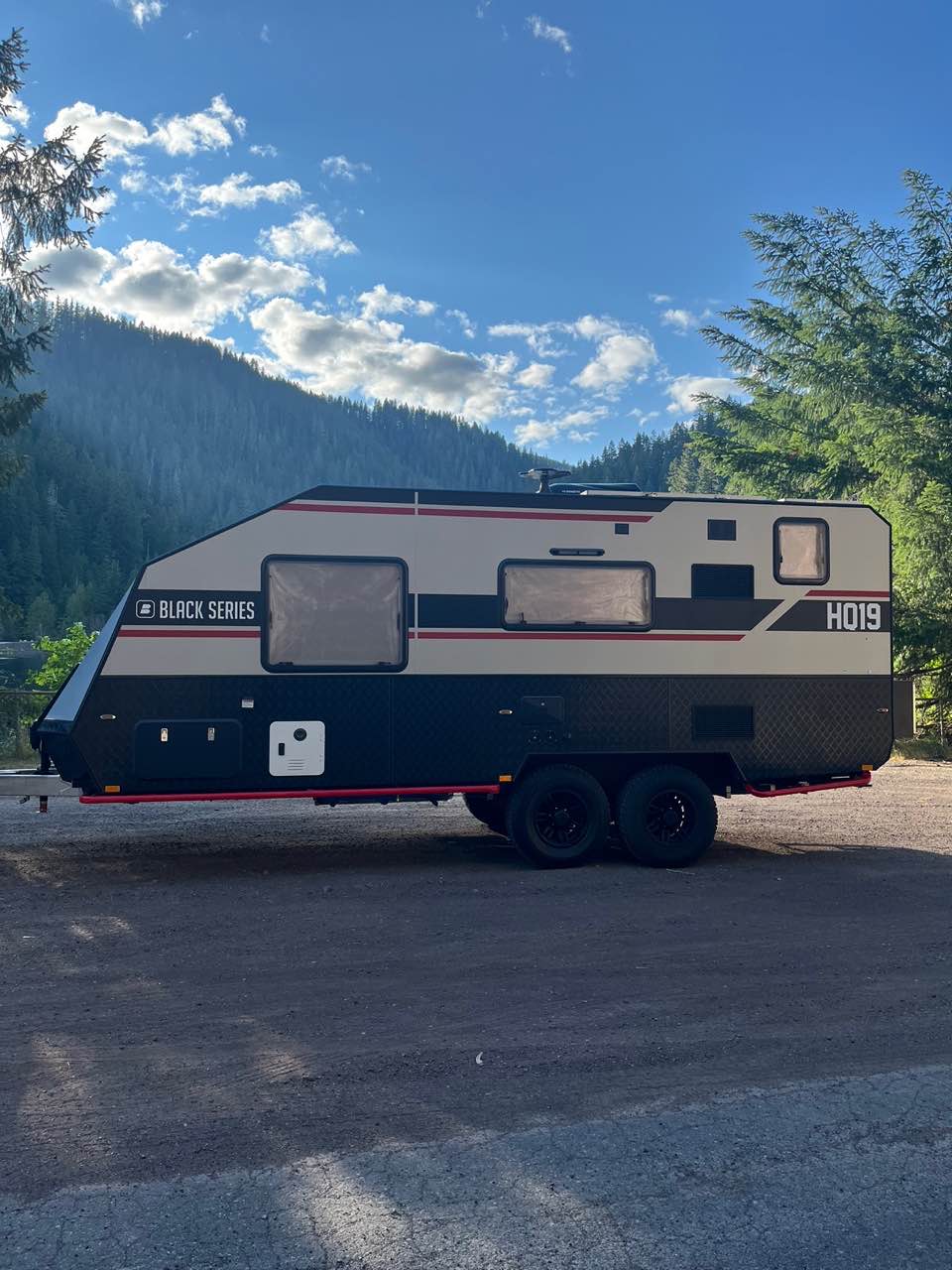
HQ19: Compact Versatility
The HQ19 balances sleeping capacity with maneuverability through convertible bunk/seating configurations. Four single bunks transform into lounge seating during daytime use, optimizing space efficiency.
Efficiency Features:
- Dinette conversion for additional sleeping
- Compact kitchen with full functionality
- Streamlined profile for technical terrain
- Simplified systems for easier maintenance
The Overland Advantage
Both models prioritize sleeping independence from ground-based systems, critical for family safety and comfort in challenging weather, muddy conditions, or unfamiliar terrain. This separation from external camping setup dramatically improves trip efficiency and reduces weather-related stress.
HQ19 vs HQ21: Which One Should You Choose?
Family Size and Composition
2 Adults + 2 Children: HQ19 provides adequate space with room for gear and comfort
2 Adults + 3+ Children or Group Travel: HQ21 offers necessary capacity without overcrowding
Trip Duration and Frequency
Weekend Adventures: HQ19’s compact size suits quick getaways and easier towing
Extended Expeditions: HQ21’s larger fresh water capacity (60 vs 45 gallons) supports longer off-grid stays
Terrain and Access Considerations
Technical Trails: HQ19’s shorter length and lighter weight improve maneuverability
Base Camp Setups: HQ21’s expanded living space enhances long-term comfort
Recommended Decision Matrix:
- Young families (kids under 10): HQ19 sufficient for most trips
- Teenagers or group travel: HQ21 provides necessary space and privacy
- Frequent off-grid travel: HQ21’s larger systems support extended independence
- Tight storage/towing limitations: HQ19 offers full functionality in compact package
Real-World Family Scenarios
Scenario 1: 7-Day Utah Adventure
Challenge: Family of four exploring remote Utah canyons with no services
Solution: HQ19 configuration with strategic packing, parents in main bed, kids in convertible bunks, gear stored externally
Key Success Factor: Solar charging maintains electronics and lighting without generator noise
Scenario 2: Rainy Pacific Northwest Trip
Challenge: Extended wet weather requiring indoor time and muddy gear management
Solution: HQ21’s separate bunk area prevents main living space contamination, external gear storage keeps mud outside
Efficiency Gain: Kids maintain independent sleep schedules while parents enjoy evening space
Scenario 3: Multi-Family Group Travel
Challenge: Two families coordinating camping logistics across different skill levels
Solution: HQ21 accommodates visiting family members while maintaining privacy zones
Flexibility: External kitchen setup serves larger group without cramping interior space
FAQ: Off Road Trailer with Bunk Beds
What is the difference between off-road trailers and regular bunkhouse trailers?
Off-road trailers feature independent suspension, higher ground clearance (12+ inches), reinforced frames, and robust off-grid systems. Regular bunkhouse trailers prioritize interior space but lack terrain capability and extended power/water independence.
Are bunk beds safe in off-road trailers?
Yes, when properly engineered. Quality overland trailers use reinforced mounting systems, safety rails, and weight-rated construction. BlackSeries bunks are tested for off-road vibration and include safety features like rounded corners and non-slip surfaces.
How many people can sleep in an off road trailer with bunk beds?
Capacity varies by model. The HQ19 sleeps 4-5 people (convertible configuration), while the HQ21 accommodates up to 6 people across dedicated bunk areas. Consider actual comfort space, not just manufacturer ratings.
Can you run off-grid for multiple days with a family bunkhouse trailer?
Yes, with proper system sizing. Plan for 400Ah+ lithium batteries, 400W+ solar panels, and 40+ gallon fresh water capacity for 3-4 day family trips. The HQ21’s 60-gallon capacity extends this to 5-7 days with conservation.
HQ19 vs HQ21: which is better for children?
The HQ19 works well for younger children (under 12) who adapt easily to convertible spaces. The HQ21 better suits teenagers or mixed-age groups requiring privacy and dedicated sleeping areas. Consider current family dynamics and 3-5 year growth projections.
What towing capacity do I need for an off road bunkhouse trailer?
The HQ19 requires approximately 7,500 lbs towing capacity when fully loaded, while the HQ21 needs 9,000+ lbs capacity. Factor in gear weight, water, and safety margins when selecting your tow vehicle.

