Short bursts of cold air during RV furnace startup are normal, but if cold air continues with no heat, it usually points to a gas, ignition, or safety system problem.
Nothing ruins a cozy evening in your RV like firing up the furnace only to get blasted with cold air. While this can be frustrating, especially on chilly nights, the good news is that most RV furnace cold air issues have straightforward solutions you can handle yourself.
Understanding why your furnace might blow cold air, and knowing when it’s normal versus problematic, can save you from unnecessary service calls and keep you comfortable on your adventures.
Is It Normal for an RV Furnace to Blow Cold Air?
Yes, it’s completely normal for your RV furnace to blow cold air during certain parts of its operation cycle. Here’s what you should expect:
During startup: Your furnace will blow cold air for 15-30 seconds before heat begins. This happens because the blower fan must reach minimum airflow before the propane ignition sequence starts: it’s a built-in safety feature.
During shutdown: After your thermostat is satisfied and the furnace stops heating, the fan continues running for 45-90 seconds (sometimes up to 5 minutes) to purge any remaining heat and gases from the system.
Between cycles: If your thermostat calls for heat again shortly after the previous cycle ended, you might experience brief cold air while the system restarts.
However, if your furnace runs for several minutes without producing any heat, or if it never transitions from cold to warm air, you likely have a problem that needs attention.
How an RV Furnace Works (Simple Explanation)
Understanding your RV furnace’s basic operation helps you diagnose issues more effectively. Here’s the simplified sequence:
- Thermostat signal: When your thermostat calls for heat, it sends a 12-volt signal to the furnace control board
- Blower activation: The control board starts the blower fan to establish proper airflow
- Sail switch verification: A small paddle (sail switch) confirms adequate airflow is moving through the system
- Ignition sequence: Only after proper airflow is confirmed does the control board open the gas valve and activate the igniter
- Heat production: Propane burns in the combustion chamber while the blower circulates heated air through your RV
- Cycle completion: When the thermostat is satisfied, gas flow stops but the fan continues running to cool the heat exchanger
This sequence explains why airflow always precedes heating: the system won’t attempt ignition without proper ventilation, preventing dangerous gas buildup.
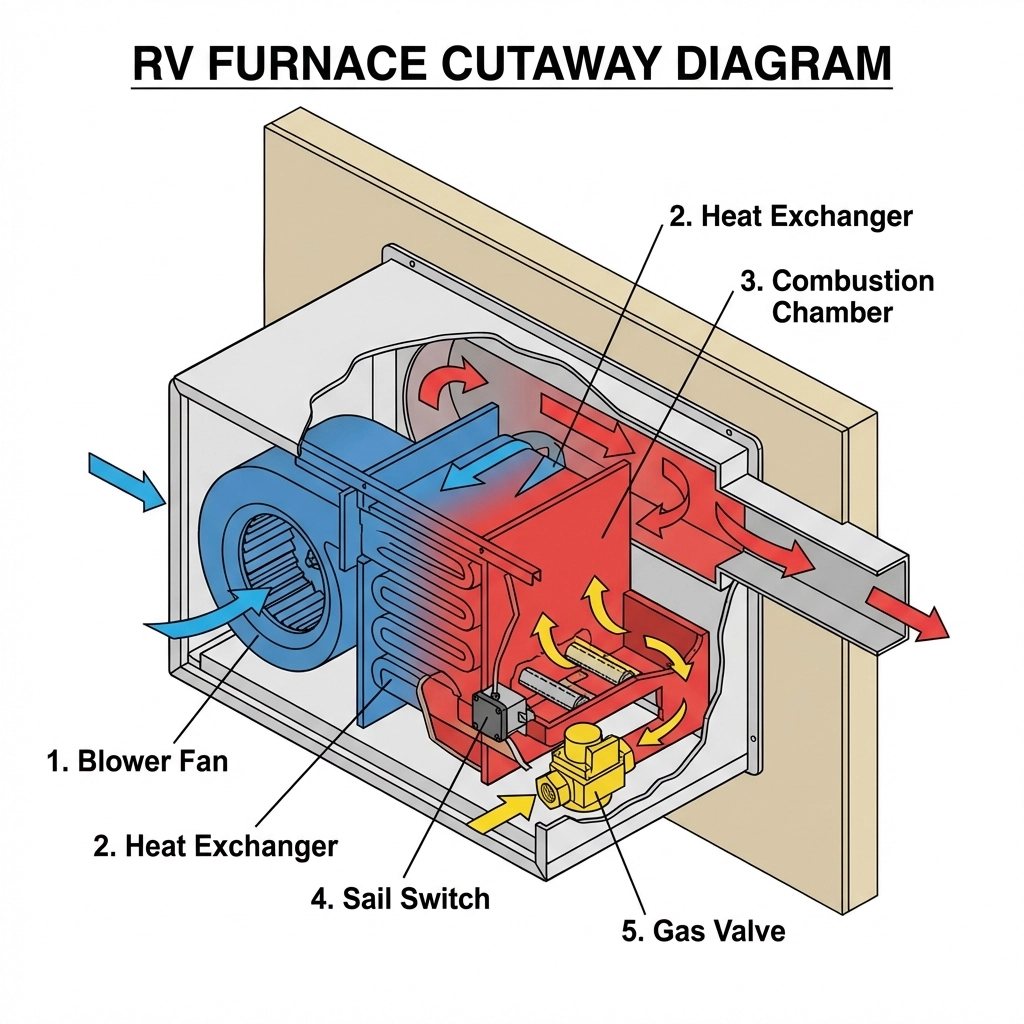
Common Reasons an RV Furnace Is Blowing Cold Air
When your furnace produces only cold air beyond the normal startup period, several culprits are typically responsible:
Low or Empty Propane Supply
Your furnace needs adequate propane pressure to ignite and maintain a flame. Common propane-related issues include:
- Empty tanks: Even if your gauge shows gas, extremely low levels can cause pressure problems
- Closed valves: Check that your main propane valve and any inline valves are fully open
- Cold weather effects: In freezing temperatures, propane doesn’t vaporize as efficiently, reducing available pressure
- Regulator problems: A frozen or faulty LP regulator can restrict gas flow
Ignition Failure or Faulty Sail Switch
The sail switch is a critical safety component that can prevent ignition when compromised:
- Debris accumulation: Dust, pet hair, and food particles collect in return air areas (often under the refrigerator)
- Blocked airflow: Poor ventilation prevents the sail switch from detecting adequate airflow
- Switch malfunction: The switch itself may fail mechanically or electrically
- Timing issues: If ignition doesn’t occur within 30 seconds, the system locks out for safety
Dirty Burner or Orifice
After extended storage or in dusty conditions, your furnace’s combustion components can become contaminated:
- Clogged orifice: The tiny gas orifice can become blocked by dirt or spider webs
- Burner contamination: Dust on the burner assembly affects proper flame patterns
- Combustion air issues: Blocked intake or exhaust vents prevent proper combustion
- Carbon buildup: Long-term use without maintenance creates deposits that affect performance
Thermostat or Control Board Issues
Electrical problems can prevent proper furnace operation:
- Wrong settings: Thermostat set to cooling mode or incorrect fan settings
- Low battery voltage: RV furnaces require adequate 12-volt DC power to operate
- Blown fuses: Check your 12-volt fuse panel for furnace-related fuses
- Faulty control board: The furnace’s brain may fail and require professional replacement
Safety Lockout After Failed Ignition
Modern RV furnaces include safety features that shut down the system after failed ignition attempts:
- Three-strike rule: After three unsuccessful ignition attempts, the furnace locks out
- Manual reset required: You must reset the system at the thermostat before it will try again
- Underlying causes: Lockouts usually indicate another problem that needs addressing first
How to Fix RV Furnace Blowing Cold Air (Step-by-Step)
Follow these systematic troubleshooting steps to diagnose and fix your cold air problem:
Step 1 – Confirm Propane Supply and Valves
Start with the most basic requirements:
- Check propane tank levels using your gauge or by weighing the tank
- Verify all propane valves are fully open (main tank valve and any inline shutoffs)
- Test other propane appliances (stove, water heater) to confirm gas flow
- In cold weather, consider using tank warmers or insulation to prevent regulator freezing
Step 2 – Reset the Furnace System Safely
Clear any potential lockout conditions:
- Turn your thermostat to “Off” and wait 30 seconds
- Turn the thermostat back to “Heat” and set temperature above current room temperature
- Ensure fan setting is on “Auto” (not “Hi” or “Low” which may activate AC instead)
- Listen for the blower to start and wait for ignition sequence
Step 3 – Check Airflow and Intake/Exhaust
Verify proper ventilation throughout the system:
- Locate and clean the return air grille (usually near the floor or under refrigerator)
- Remove any visible debris, pet hair, or obstructions
- Check that all interior vents are open and unblocked
- Inspect exterior exhaust vent for spider webs, mud dauber nests, or soot buildup
Step 4 – Inspect Thermostat Settings
Ensure your controls are configured correctly:
- Confirm thermostat is set to “Heat” mode, not “Cool”
- Check that desired temperature is set higher than current room temperature
- Verify your RV’s 12-volt battery is charged (furnace requires DC power for controls)
- Test thermostat by raising temperature setting significantly
Step 5 – Know When to Stop and Call a Technician
Some repairs require professional expertise and tools:
- If steps 1-4 don’t resolve the issue
- When you suspect gas leaks (smell propane odor)
- If the control board or sail switch needs replacement
- When combustion components require deep cleaning or adjustment
Safety Warning: Never attempt to disassemble the furnace’s combustion chamber or gas components without proper training. Improper work on gas appliances can create carbon monoxide or fire hazards.

RV Furnace Fan Runs but No Heat : What That Means
One of the most common furnace complaints is when you hear the fan running but feel no warm air. This specific symptom usually indicates:
The blower is working correctly – Your 12-volt electrical system and fan motor are functioning properly.
The heating cycle never starts – The problem lies somewhere in the ignition sequence before propane ignition occurs.
Most likely causes include:
- Propane supply issues (empty tank, closed valve, regulator problems)
- Blocked airflow preventing sail switch activation
- Failed ignition components requiring professional service
- Thermostat miscommunication with the control board
This scenario is actually easier to diagnose than complete furnace failure because it narrows down the problem area significantly.
Temporary workarounds vs. real fixes:
- Temporary: Use alternative heating sources (space heaters, heated blankets) while diagnosing
- Real fix: Address the underlying ignition or gas supply problem
Don’t rely on temporary heating solutions for extended periods: they consume more power and may not provide even heat distribution throughout your RV.
Preventing Future RV Furnace Problems
Regular maintenance keeps your furnace running reliably:
Monthly during use:
- Clean return air areas of dust and debris
- Check and clean interior vent registers
- Verify propane levels before extended trips
Seasonal maintenance:
- Have furnace professionally serviced annually
- Inspect and clean exterior exhaust vent
- Test system operation before cold weather arrives
- Check 12-volt connections and battery condition
Storage preparation:
- Cover exterior vents to prevent pest intrusion
- Consider running furnace briefly each month to prevent component stagnation
- Ensure proper ventilation around propane tanks
FAQs About RV Furnace Blowing Cold Air
Q: How long should I wait for my RV furnace to produce warm air?
A: Under normal conditions, you should feel warm air within 30-45 seconds of hearing the ignition sequence start. If you only hear the fan running after 2-3 minutes, there’s likely an ignition problem.
Q: Can I run my RV furnace if it’s only blowing cold air?
A: Don’t continue running the furnace if it’s not producing heat after several minutes. This wastes propane, drains your battery, and may indicate a safety issue that needs attention.
Q: Why does my furnace work sometimes but not others?
A: Intermittent problems often relate to borderline propane pressure, dirty sail switches, or low battery voltage. These conditions may work under some circumstances but fail when stressed.
Q: Is it safe to use space heaters instead of fixing my furnace?
A: Space heaters are fine for temporary use but consume significant battery power and create uneven heating. Address furnace problems promptly for comfort and safety.
Q: How much does professional RV furnace repair typically cost?
A: Basic service calls range from $150-300, while component replacement (control boards, sail switches) can cost $200-500 depending on parts and labor in your area.
Understanding your RV furnace helps you stay comfortable and safe during your adventures. While some cold air is normal during operation, persistent issues usually have identifiable causes and solutions. When in doubt, prioritize safety and consult with qualified RV service professionals: especially for gas-related repairs.
For RVs designed to handle extreme conditions and reliable heating systems, explore BlackSeries RV’s off-road capable trailers that are engineered for comfort in any environment.

