An off-road travel trailer is a rugged, purpose-built RV designed to handle terrain where standard trailers fail. Unlike typical highway campers, these rigs feature reinforced chassis, independent suspension, and high ground clearance, making them essential for adventurers exploring BLM land or remote national forests. While a standard 30 foot rv weight unit is limited to paved parks, a BlackSeries off-road travel trailer offers the durability and off-grid capacity to turn extreme landscapes into your personal backyard, without sacrificing luxury.
What Are Off Road Travel Trailers?
Let’s cut through the marketing noise. An off-road travel trailer is an expedition-grade camping unit engineered to go where regular RVs simply can’t. We’re talking hot-dipped galvanized steel frames, independent suspension systems, and ground clearance that laughs at rocks and ruts.
Off-Road vs. Overland: What’s the Difference?
These terms get thrown around interchangeably, but there’s a distinction worth knowing:
- Off-road trailers are built to survive punishment, think rocky trails, deep sand, and creek crossings.
- Overland trailers focus on self-sufficient, long-distance travel across varied terrain.
The reality? In 2026, the best units, like those from BlackSeries, combine both philosophies. You get the chassis strength to tackle Moab and the solar capacity to stay parked for weeks.
Where Do People Actually Use These Things?
If you’re asking this question, you’re probably still camping at KOAs. No judgment, but here’s where off-road trailers shine:
- BLM land across Nevada, Utah, and Arizona
- National Forest dispersed camping (free camping, anyone?)
- Desert exploration in the Mojave or Sonoran
- Mountain access roads in Colorado and Montana
- Beach camping in Baja or the Outer Banks
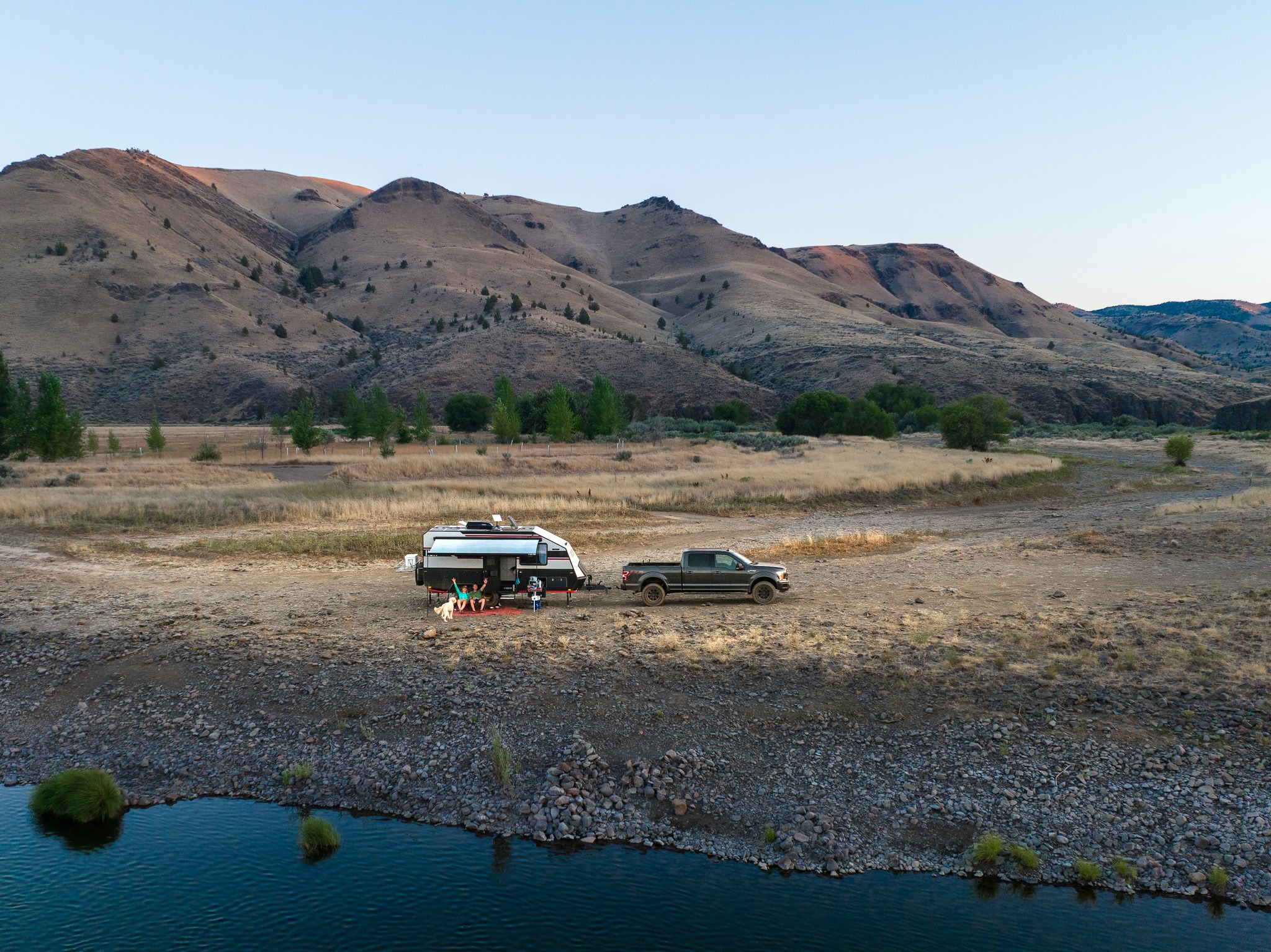
Why Choose an Off Road Travel Trailer Instead of a Standard RV?
Here’s the uncomfortable truth: that 30-foot camper weight monster you’ve been eyeing? It’s a highway-only proposition. The moment you leave asphalt, you’re risking bent frames, blown tires, and a very expensive tow bill.
Off-road travel trailers solve this problem from the ground up.
Terrain Clearance That Actually Matters
Standard trailers sit low, maybe 8-10 inches of clearance. Hit a rock wrong, and you’re looking at punctured tanks or damaged axles. Quality off-road units offer 15-23 inches of ground clearance, meaning you can actually use those “primitive roads” on the map.
Suspension Built for Punishment
The average travel trailer weights you see advertised assume smooth highways. Off-road trailers use independent suspension systems, axle-less designs, trailing arm setups with dual shocks, or coil-spring configurations, that absorb impacts instead of transferring them to your frame (and your spine).
Chassis Strength You Can Trust
When comparing the average weight of camper units, remember: it’s not just about how heavy something is, but how that weight is distributed and supported. Off-road trailers use reinforced cross-bracing and strategic mounting points designed for torsional stress.
Comparison Table: Standard vs. Off-Road Travel Trailer
Key Features of the Best Off Road Travel Trailers
Not all “off-road” labels are created equal. Some manufacturers slap aggressive tires on a standard frame and call it adventure-ready. Here’s what actually matters in 2026.
Chassis & Suspension
The foundation determines everything. Look for:
- Hot-dipped galvanized steel construction (rust-proof, not just rust-resistant)
- Independent suspension with 4-5 inches of wheel travel
- Reinforced mounting points at stress junctions
- Electronic stability control with off-road-specific calibration
Ground Clearance & Tires
Your 16 ft camper weight advantage means nothing if you’re dragging frame on every obstacle. Prioritize:
- Minimum 15 inches of clearance (20+ for serious trails)
- All-terrain or mud-terrain tires rated for the conditions you’ll face
- Full-size spare mounted accessibly
- Fender clearance for larger tire upgrades

Water, Power & Off-Grid Capability
The 2026 market has shifted hard toward “off-grid luxury.” Customers expect, and deserve, both capability and comfort:
- Battery capacity: 300Ah minimum; 600-1,000Ah for extended trips
- Solar: 400W baseline; 800-1,800W for serious independence
- Inverter: 2,000-3,000W for running appliances
- Water storage: 50+ gallons freshwater minimum
Interior Built for Adventure: Off Road Travel Trailers with Bathroom
Here’s where 2026 expectations have evolved dramatically. Off road travel trailers with bathroom facilities are no longer luxury, they’re expected. The best units include:
- Wet bath or dry bath configurations with quality fixtures
- Four-season insulation for year-round use
- Durable, wipe-clean interior surfaces
- Thoughtful storage that stays organized on rough roads
Best Off Road Travel Trailers in the USA (2026 Buyer Perspective)
Rather than naming competitors (you know who they are), let’s talk about what defines “best” in different categories.
Best for Overlanding
Look for balanced weight, substantial solar, and comfortable sleeping for two. An 18 ft camper weight profile often hits the sweet spot, agile enough for trails, spacious enough for extended trips.
Best for Full-Time Adventure
Full-timers need durability that survives daily use. Focus on:
- Residential-quality appliances
- Massive water and power storage
- Four-season capability
- Strong resale value for eventual upgrades
Best for Extreme Terrain
When trails get serious, weight becomes critical. A 24 ft camper weight unit can still be nimble if engineered correctly, but every pound matters. Prioritize suspension travel, approach/departure angles, and chassis protection.
Off Road Travel Trailer Buying Guide
What Size Do You Actually Need?
Here’s where ego meets reality. That 30 ft rv weight dream rig? It won’t fit on half the roads you want to explore. Consider:
- Solo/couples: 16-19 ft (easier towing, more access)
- Families: 19-24 ft (space without sacrifice)
- Full-timers: 21-24 ft (livability meets capability)
Is Your Tow Vehicle Compatible?
Before falling in love with any trailer, know your numbers:
- GVWR (Gross Vehicle Weight Rating) of the trailer
- Tongue weight (typically 10-15% of trailer weight)
- Your vehicle’s towing capacity (check the door sticker, not the brochure)
The 30 ft camper weight category often requires heavy-duty trucks. Lighter off-road trailers can be pulled by mid-size trucks and SUVs, opening up more vehicle options and better fuel economy.
Understanding Off-Road Ratings
Not every “off-road capable” trailer handles the same terrain:
- Light duty: Graded dirt roads, some ruts
- Moderate duty: Forest service roads, rocky sections
- Expedition grade: Technical trails, water crossings, extreme conditions
Budget Reality Check
Quality off-road trailers range from $40,000 to $150,000+. But consider total cost of ownership:
- Cheaper trailers often need expensive upgrades
- Premium builds hold value better (important when you’re ready to trade up)
- Warranty coverage varies dramatically
Why BlackSeries Off Road Travel Trailers Stand Out
We’re obviously biased, but here’s why BlackSeries has earned its reputation in the expedition trailer space.
Australian Engineering Heritage
Australia’s outback demands more than American highways ever will. BlackSeries trailers are designed with that DNA, built to survive conditions that would destroy standard RVs.
Optimized for US Terrain
While the engineering is Australian, the application is distinctly American. Our trailers are configured for:
- Desert heat in the Southwest
- Mountain cold in the Rockies
- Humidity in the Southeast
- Everything in between
Resale Value That Rewards Ownership
Off-road capability translates to sustained demand. When you’re ready to explore our RV Upgrade Program or get a trade-in quote, you’ll find BlackSeries trailers hold their value far better than highway-bound alternatives.
Clear Model Progression
From the HQ17 to the HQ21, our lineup offers logical upgrade paths. Start where your needs are today; grow into more capability tomorrow through our exchange program.
FAQ – Off Road Travel Trailers
Are off road travel trailers worth it?
If you’re camping exclusively at developed campgrounds, probably not. But if you want access to remote BLM land, dispersed camping, and trails that standard RVs can’t handle, absolutely. The capability difference justifies the investment.
Can you live full-time in an off road travel trailer?
Yes, and increasingly people do. Modern off-road trailers with proper insulation, substantial water/power systems, and quality interiors support full-time living. The key is choosing a model designed for daily use, not weekend warriors.
Do off road travel trailers have bathrooms?
The best ones do. Off road travel trailers with bathroom facilities have become standard in the premium segment. Expect wet baths or dry baths with real fixtures: not porta-potty compromises.
How much do off road travel trailers cost in the USA?
Entry-level models start around $40,000. Mid-range expedition trailers run $60,000-$90,000. Premium units like BlackSeries range from $80,000-$150,000+, depending on configuration and features.
What vehicles can tow an off road travel trailer?
This depends entirely on trailer weight. Lighter models (under 5,000 lbs) can be towed by mid-size trucks and SUVs like the Toyota 4Runner or Ford Ranger. Heavier units require half-ton or three-quarter-ton trucks. Always verify your specific vehicle’s towing capacity before purchasing.
Ready to see what off-road capability actually looks like? Explore the BlackSeries lineup and discover why adventurers across America are trading highway limitations for expedition freedom.

