Yes, recycling grey water in your RV is absolutely possible and increasingly essential for sustainable off-grid living. With the right equipment and safety protocols, you can significantly extend your water supply, reduce environmental impact, and enjoy longer boondocking adventures without constantly hunting for dump stations.
Grey water recycling transforms wastewater from your sinks and showers into a valuable resource for toilet flushing, exterior cleaning, and dust control. For RV enthusiasts pursuing extended off-grid adventures, this sustainable approach can extend your water autonomy by 3-7 days depending on your setup and conservation habits.
What Is Grey Water in an RV?
Grey water refers to the relatively clean wastewater generated from your RV’s bathroom sink, kitchen sink, and shower drains. Unlike black water (which comes from toilets and contains human waste), grey water contains only soap residue, food particles, and general dirt from washing.
What counts as grey water:
- Bathroom sink drainage
- Kitchen sink water (after dishwashing)
- Shower and bathtub drainage
- Washing machine discharge (if equipped)
What is NOT grey water:
- Toilet waste (black water)
- Water containing chemicals, grease, or hazardous materials
- Diaper wash water or any contaminated drainage
Most RV grey water tanks range from 20-80 gallons, with larger Class A motorhomes typically having 60-80 gallon capacity, while travel trailers usually feature 20-40 gallon tanks. Understanding your tank capacity is crucial for planning recycling systems and conservation strategies.
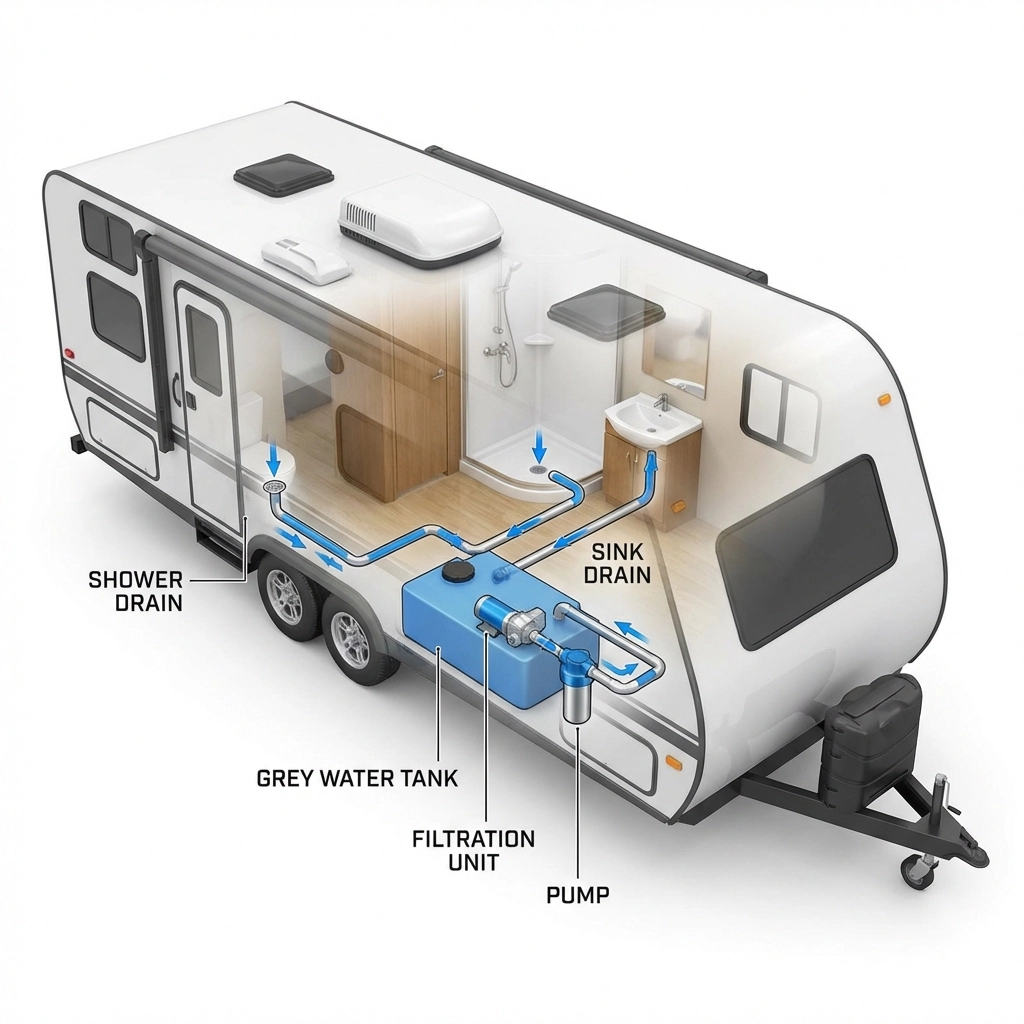
Why Recycling Grey Water Matters for RV & Off-Grid Travel
Water scarcity across the American Southwest makes grey water recycling increasingly valuable for RV travelers. States like Arizona, Nevada, and California face ongoing drought conditions, making water conservation both environmentally responsible and practically necessary.
Extended boondocking capabilities represent the primary benefit for most RVers. Without grey water recycling, the average family of four exhausts their fresh water supply within 2-3 days. Recycling can extend this to 5-7 days, dramatically increasing your freedom to explore remote locations.
Environmental regulations on public lands continue tightening. Bureau of Land Management (BLM) and National Forest Service areas increasingly restrict grey water discharge, even requiring some campers to pack out all wastewater. Recycling systems help you comply with these evolving regulations while maintaining comfort.
The sustainability trend in the overland RV market reflects growing environmental consciousness among outdoor enthusiasts. Modern RV owners increasingly view water recycling as essential equipment, similar to solar panels or lithium batteries.
Is It Legal to Recycle Grey Water in an RV in the US?
Grey water reuse is generally legal for RV applications, though regulations vary significantly by location. Federal oversight remains minimal, leaving most regulation to individual states and local jurisdictions.
Common legal principles include:
- On-site reuse versus discharge: Most jurisdictions permit grey water recycling for toilet flushing or cleaning within your RV system
- Private land versus public land: Private property owners set their own rules, while public lands follow federal/state guidelines
- Surface dumping restrictions: Even treated grey water typically cannot be dumped directly on the ground in most areas
Best practices for compliance:
- Research specific regulations for your destination areas
- Use only biodegradable soaps in your system
- Never dump grey water within 200 feet of water sources
- Carry documentation of your recycling system for rangers if questioned
FAQ: Is grey water reuse allowed while boondocking?
Yes, internal recycling (like using filtered grey water for toilet flushing) is typically permitted on public lands. Surface disposal remains restricted in most areas.
FAQ: Can I dump treated grey water on the ground?
This varies by location. Some private campgrounds allow it, but most public lands prohibit surface disposal regardless of filtration level.
How to Recycle Grey Water in an RV (Step-by-Step)
Step 1: Collecting Grey Water Safely
Install collection points at your sink and shower drains using diverter valves or collection containers. Position your grey water tank below collection points when possible to utilize gravity flow. Ensure all collection pipes slope toward your storage tank to prevent standing water and bacterial growth.
Step 2: Filtering & Treating Grey Water
Basic filtration removes debris and soap residue:
- Install 5-micron sediment filters to catch food particles and hair
- Add activated carbon filters to remove soap residue and odors
- Consider UV sterilization for extended storage (optional but recommended)
- Use only biodegradable, phosphate-free soaps to minimize contamination
Step 3: Reusing Grey Water
Primary applications for recycled grey water:
- Toilet flushing: Most common and practical use, can extend fresh water supply significantly
- Exterior cleaning: Vehicle washing, equipment cleaning, exterior maintenance
- Dust control: Spraying around campsite to minimize dust (where permitted)
Never use recycled grey water for drinking, cooking, or personal hygiene, even after filtration.

RV Grey Water Recycling System Options (Pros & Cons)
Manual Bucket System
Pros: Low cost ($50-100), simple installation, no electrical requirements
Cons: Labor-intensive, limited capacity, requires manual monitoring
Best for: Weekend warriors, small RVs, budget-conscious users
Inline Filtration Systems
Pros: Automatic operation ($200-500), moderate capacity, relatively simple installation
Cons: Requires 12V power, limited filtration capacity, regular filter replacement needed
Best for: Most travel trailers, moderate off-grid use
Integrated RV Plumbing Modifications
Pros: Seamless operation ($800-1500), high capacity, professional installation
Cons: Expensive, complex installation, may void warranties
Best for: Full-time RVers, Class A motorhomes, permanent setups
Portable Grey Water Recycling Kits
Pros: Flexible setup ($300-700), works with any RV, easy to remove/upgrade
Cons: Moderate complexity, requires setup time, external components
Best for: Off-road travel trailers, boondocking enthusiasts
Grey Water Recycling for Boondocking & Overlanding
Grey water recycling transforms extended off-grid capabilities for serious boondockers. A properly configured system can add 3-7 additional days to your water autonomy, depending on conservation habits and system efficiency.
Desert environment considerations include protecting filtration components from extreme temperatures and dust infiltration. Position tanks and filters in shaded areas and consider insulation for both hot and cold weather protection.
Forest environment advantages include cooler temperatures that reduce bacterial growth risk and generally more permissive regulations for grey water management.
Cold weather adaptations require heated tanks or indoor storage to prevent freezing. Consider drain-down capabilities for winter camping or add tank heaters for year-round operation.
BlackSeries RV compatibility: Our off-road travel trailers feature robust plumbing systems and ample storage bay space specifically designed to accommodate grey water recycling systems. The higher water capacity and reinforced mounting points make our trailers ideal platforms for extended off-grid water recycling setups.
Common Mistakes to Avoid When Recycling RV Grey Water
Using harsh soaps represents the most common error. Standard household detergents contain phosphates and chemicals that interfere with filtration and can damage pumps. Always use biodegradable, RV-specific soaps designed for grey water systems.
Cross-contamination between grey and black water poses serious health risks. Never allow any black water to enter your grey water recycling system. Install separate collection points and clearly label all components.
Illegal dumping assumptions can result in fines and environmental damage. Research local regulations thoroughly before assuming treated grey water can be discharged on the ground.
Over-filtering myths lead to unnecessary expense and complexity. Basic sediment and carbon filtration suffices for most RV applications. Expensive reverse osmosis or advanced treatment systems rarely provide meaningful benefits for toilet flushing applications.
FAQs About Recycling Grey Water RV
Can I drink recycled grey water?
No, never drink recycled grey water regardless of filtration level. Even advanced filtration cannot guarantee removal of all contaminants and bacteria. Use recycled grey water only for toilet flushing, cleaning, and dust control.
Does recycling grey water damage RV plumbing?
Properly filtered grey water poses minimal risk to standard RV plumbing systems. Use appropriate filtration, biodegradable soaps, and regular system maintenance to prevent damage. Check manufacturer warranties before installation.
Is grey water recycling worth it for weekend trips?
For trips under 3-4 days, simple conservation measures often suffice. Grey water recycling becomes most valuable for week-long or longer boondocking adventures where water resupply proves challenging.
What soaps are safe for grey water recycling?
Use biodegradable, phosphate-free soaps specifically designed for RV use. Brands like Thetford, Camco, and Eco-Me offer suitable options. Avoid antibacterial soaps, bleach-based cleaners, and standard household detergents.
How often should I clean my grey water recycling system?
Clean tanks and replace filters every 2-3 months or after 30-50 days of use. More frequent cleaning may be necessary in dusty environments or with heavy usage. Monitor for odors or reduced flow as indicators for maintenance needs.
Grey water recycling represents a practical step toward sustainable RV living, enabling extended off-grid adventures while minimizing environmental impact. With proper planning, equipment selection, and maintenance, you can significantly extend your water autonomy and enjoy greater freedom in choosing camping locations. For more comprehensive guides on off-grid RV systems, explore our complete RV buying guide and discover how BlackSeries RV trailers support sustainable adventure travel.

