Whether you’re boondocking in the Southwest desert or setting up camp in a remote forest clearing, leveling your travel trailer without concrete is not only possible but essential for comfortable off-grid living. From lightweight 16 ft campers to heavy-duty 30-foot RV units weighing over 10,000 pounds, every trailer needs proper leveling regardless of ground conditions.
The key difference between camping at developed RV parks and true off-grid adventures is learning to work with natural terrain. While concrete pads provide uniform support, off-road travel trailer enthusiasts must master techniques that work on dirt, gravel, sand, and uneven forest floors.
Why Leveling a Trailer Without Concrete Is Challenging
Leveling on natural ground presents unique obstacles that concrete eliminates. Unlike solid concrete pads that distribute weight evenly, soft earth creates pressure points that can cause settling, instability, and potential damage to your trailer’s frame.
Load Distribution Problems: A typical 30 ft camper weight ranges from 7,000 to 12,000 pounds, concentrated on small contact points through stabilizer jacks and tires. Concrete spreads this load across its entire surface, while dirt or gravel creates localized pressure that can cause sinking or shifting.
Soil Compression and Settling: Natural ground compresses under weight over time. What appears level initially may become tilted after 24-48 hours as the soil settles. This is especially problematic with heavier units, a 24 ft camper weight averaging 6,000-8,000 pounds creates significant ground pressure.
Understanding Stability vs. Leveling: Many RV owners confuse these concepts. Leveling ensures your refrigerator operates properly and doors don’t swing open. Stability prevents the trailer from rocking or bouncing during occupancy. Both are crucial, but stability must come first for safety.
Slope and Drainage Challenges: Natural campsites rarely offer the perfectly flat, well-drained surfaces of RV parks. Slopes affect tongue weight distribution, while poor drainage can create muddy conditions that compromise stability.
Ground Types You May Camp On (US Scenarios)
Understanding different ground conditions helps you choose the right leveling strategy before unhitching your trailer.
Dirt and Soil: The most common off-grid surface varies dramatically in firmness. Test soil strength by walking around your intended setup area. If your boots leave deep impressions, expect your trailer to settle significantly.
Gravel Pads: Semi-developed sites often provide loose gravel surfaces. While better than dirt for drainage, gravel can shift under point loads, requiring jack pads to distribute weight.
Sand and Desert Terrain: Popular with Southwest boondockers, sand presents the highest settling risk. Even a lightweight 18 ft camper weight of 4,000-5,000 pounds can sink several inches overnight in soft sand.
Forest Floors: Organic matter decomposes, creating soft spots and hidden obstacles. Always clear the area of branches, pine cones, and debris before positioning your trailer.
How to Level a Trailer Without a Concrete Pad (Step-by-Step)

Follow this systematic approach to achieve safe, stable leveling on any natural surface.
Step 1: Choose the Best Position Before Leveling
Survey your campsite while still hitched to your tow vehicle. Look for the most naturally level area with good drainage, it’s easier to find a better spot than to overcome a severely sloped site.
Slope Assessment: Use a smartphone leveling app or bubble level to check the natural ground slope. Anything exceeding 6-8 degrees requires careful block stacking and may not be safe for extended stays.
Drainage Awareness: Avoid low spots where rainwater might collect. Position your trailer with the tongue slightly downhill when possible to prevent water from pooling around your setup.
Step 2: Stabilize the Ground First
Before placing any leveling equipment, prepare the foundation. Remove loose rocks, sticks, and debris that could create pressure points or instability.
Load-Spreading Principle: For soft ground, place plywood sheets or large pads under your leveling blocks. This distributes the average travel trailer weight over a larger area, reducing settling and improving stability.
Step 3: Level Side-to-Side
Most RVs require side-to-side leveling first, as this is typically the more dramatic adjustment needed on natural terrain.
Leveling Block Strategy: Start with your lowest side and stack blocks incrementally. Commercial RV leveling blocks support 30,000+ pounds when properly stacked, adequate for any standard travel trailer.
Stacking Limits: Never exceed 4 inches of lift with stacked blocks. Beyond this height, the setup becomes unstable and potentially dangerous. If you need more lift, find a different campsite.
Step 4: Level Front-to-Back
Once side-to-side is corrected, use your tongue jack to achieve front-to-back level. This process is typically easier than lateral adjustments.
Tongue Jack Techniques: Extend or retract the tongue jack while monitoring your level. With heavier units, you may need jack pads under the tongue wheel to prevent sinking.
Step 5: Deploy Stabilizers Correctly
Critical Safety Point: Stabilizer jacks are designed to prevent bounce and sway, never use them to lift or level your trailer. Deploy them only after achieving proper level through blocks and tongue jack adjustment.
Proper Deployment: Extend stabilizers until they barely touch the ground, then add 1/4 to 1/2 turn for light contact pressure. Over-tightening can stress your trailer’s frame and actually reduce stability.
Best Tools for Leveling on Dirt or Gravel
Investment in quality leveling equipment pays dividends in setup time, safety, and peace of mind during extended off-grid stays.
Heavy-Duty Leveling Blocks: Commercial blocks like Camco or Andersen Levelers support 30,000-40,000 pounds, far exceeding the average weight of camper units. Yellow plastic blocks stack easily and resist splitting, while interlocking designs provide additional stability.
Jack Pads and Load Plates: Essential for soft ground, these distribute weight over larger areas. Rubber pads work well on gravel, while larger composite plates excel in sand or soft dirt. Size them appropriately for your trailer’s weight class.
Precision Leveling Tools: Digital levels provide more accuracy than traditional bubble levels, crucial for refrigerator operation and overall comfort. Smartphone apps offer convenience but verify accuracy against known level surfaces first.
Traction Boards as Alternatives: Recovery boards like MAXTRAX serve double duty, helping stuck vehicles and providing stable platforms for jacks in sandy conditions. Their large surface area and aggressive grip patterns prevent sinking.
Common Mistakes When Leveling Without Concrete
Learning from others’ errors prevents dangerous situations and expensive repairs during your off-grid adventures.
Over-Stacking Blocks: Exceeding safe stacking height creates an unstable foundation. Multiple thin blocks are safer than fewer thick ones, but always respect manufacturer limits.
Leveling on Loose Soil: Attempting to level directly on soft ground without load-spreading measures leads to settling and potential instability. Always test ground firmness before proceeding.
Using Stabilizers to Lift: This mistake can bend or break stabilizer jacks and stress your trailer’s frame. Stabilizers stabilize, they don’t lift. Complete all leveling before deploying stabilizers.
Ignoring Overnight Settling: Natural ground compresses under sustained weight. Check level again after 12-24 hours, especially on first setups or in soft conditions. Re-adjust as needed for safety and appliance function.
Off-Grid Trailer Leveling for Long-Term Stays
Extended boondocking requires different strategies than overnight stops, with greater attention to ground conditions and weather impacts.
Multi-Day Considerations: For stays longer than a few days, expect some settling regardless of ground type. Plan to re-check and adjust leveling every 2-3 days initially, then weekly for extended stays.
Weather Impact Monitoring: Rain saturates soil, potentially causing additional settling. Freeze-thaw cycles in mountain environments can shift your entire setup. Monitor conditions and adjust accordingly.
Safety Check Schedule: Weekly inspection of all leveling equipment prevents problems before they become dangerous. Check block alignment, stabilizer pressure, and overall trailer stability during your routine maintenance.
Seasonal Considerations: Summer heat expands materials while winter cold contracts them. Spring thaws can dramatically alter ground conditions, potentially requiring complete releveling.
FAQs About Leveling Trailer Without Concrete
Can I level a trailer on dirt safely?
Yes, with proper techniques and equipment. Use load-spreading pads under blocks, test ground firmness, and monitor for settling over time. Most trailer manufacturers design their products to handle off-grid conditions when properly leveled.
How many leveling blocks are too many?
Never exceed 4 inches of total lift with stacked blocks. Beyond this height, the setup becomes unstable and potentially dangerous. If you need more lift, find a different parking spot or consider the site unsuitable.
Do I need jack pads on gravel?
Jack pads help distribute weight and prevent sinking on gravel surfaces, especially with heavier trailers. They’re not always mandatory but significantly improve stability and make future setup easier.
Is extended parking without concrete safe?
Yes, for weeks or even months with proper preparation. Monitor settling, maintain leveling equipment, and be prepared to adjust as ground conditions change. Many full-time RVers successfully boondock long-term using these techniques.
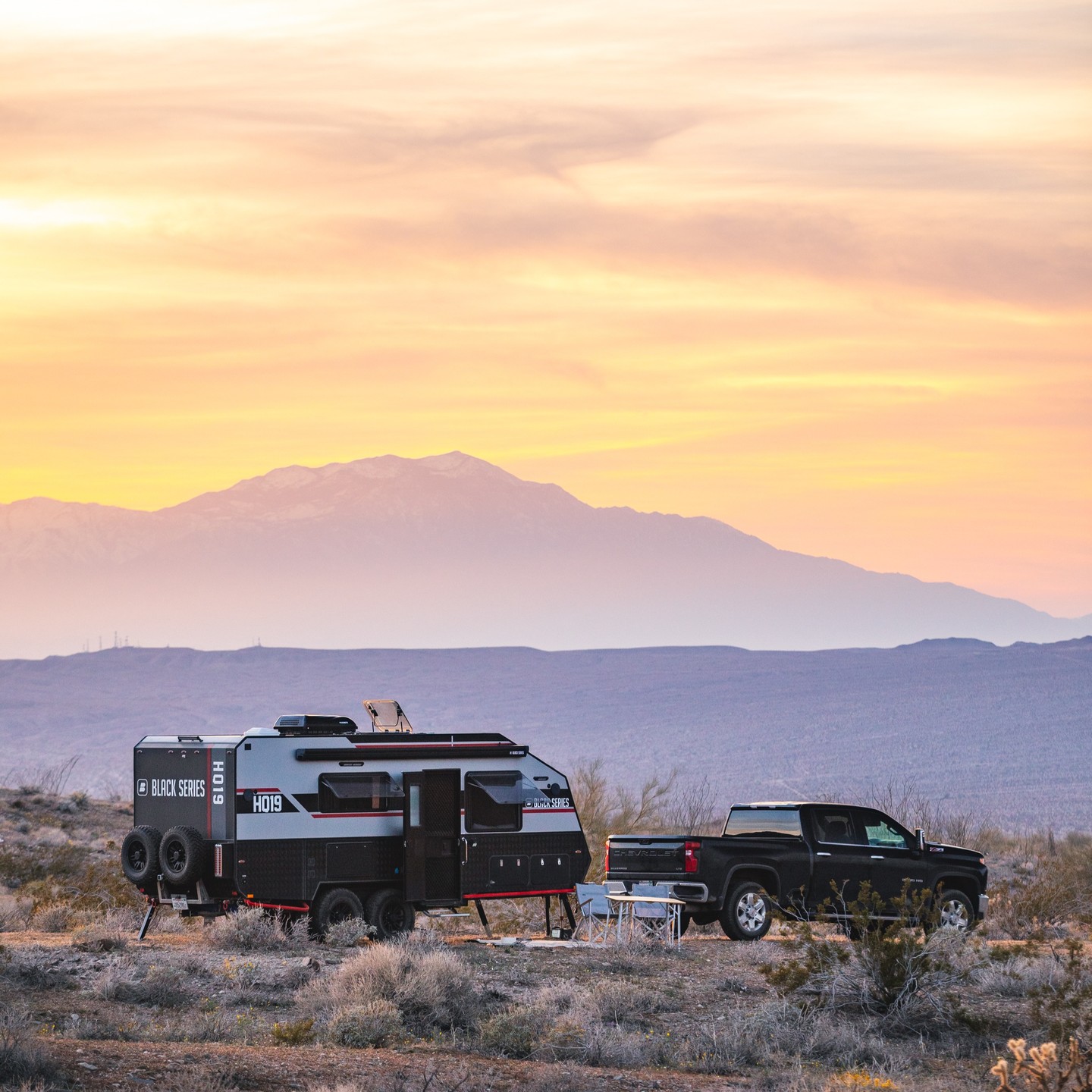
Why BlackSeries Trailers Are Built for Uneven Ground
BlackSeries off-road travel trailers incorporate design elements specifically engineered for challenging terrain and extended off-grid use.
Off-Road Chassis Design: Reinforced frames and heavy-duty suspension systems handle the stresses of uneven ground better than standard RV construction. This engineering approach reduces frame flex and maintains structural integrity during leveling procedures.
Advanced Suspension Systems: Independent suspension allows each wheel to conform to terrain irregularities while maintaining trailer stability. This flexibility reduces the extreme leveling requirements common with traditional axle designs.
Stability-First Engineering Philosophy: Every BlackSeries trailer prioritizes stability and durability over luxury features that might compromise off-grid performance. This focus makes them ideal platforms for serious boondocking and extended wilderness camping.
Higher Ground Clearance: Additional clearance accommodates larger leveling blocks and provides room for stabilizer jacks without bottoming out on uneven terrain: a crucial advantage when crossing rough terrain to reach remote campsites.
Whether you’re towing a compact 16 ft camper or a substantial 30-foot RV, mastering off-grid leveling techniques opens up unlimited camping possibilities beyond developed RV parks. With proper equipment, careful site selection, and attention to safety protocols, you can achieve stable, comfortable camping anywhere your adventures take you.

