RV air conditioning issues are common in extreme heat, but prolonged warm airflow usually signals airflow problems, power issues, or AC unit malfunctions that need immediate attention.
What Does “RV AC Not Cooling” Actually Mean?
When RV owners say their AC “isn’t cooling,” they often mean different things. Understanding what’s normal versus problematic helps you diagnose issues faster.
A properly functioning RV air conditioner should create approximately a 20-degree temperature difference between the intake and exhaust air. Unlike residential AC units that can maintain precise temperatures regardless of outside conditions, RV air conditioners work more like oversized window units with inherent limitations.
RV air conditioning differs from home systems in several key ways:
- Lower BTU capacity relative to space being cooled
- Roof-mounted design exposes the unit to direct sunlight
- Limited insulation compared to stick-built homes
- 12V electrical systems that may struggle with high-demand appliances
The goal isn’t to make your RV feel like a refrigerator, but to create a comfortable temperature drop from outside conditions. In 95°F weather, achieving an interior temperature of 75-80°F represents excellent performance for most RV units.
Is It Normal for an RV AC to Struggle in Extreme Heat?
Yes, RV air conditioners naturally struggle when outside temperatures exceed 95°F, especially with direct sun exposure. This isn’t necessarily a malfunction, it’s a design limitation.
Several factors affect normal cooling performance:
- Outside temperature: Every 10°F increase in ambient temperature reduces cooling efficiency
- Sun exposure: Direct sunlight on your RV roof can add 20-30°F to the AC unit’s operating temperature
- Insulation quality: Older RVs or those with minimal insulation lose cool air faster
- Humidity levels: High humidity makes the same temperature feel warmer and forces the AC to work harder
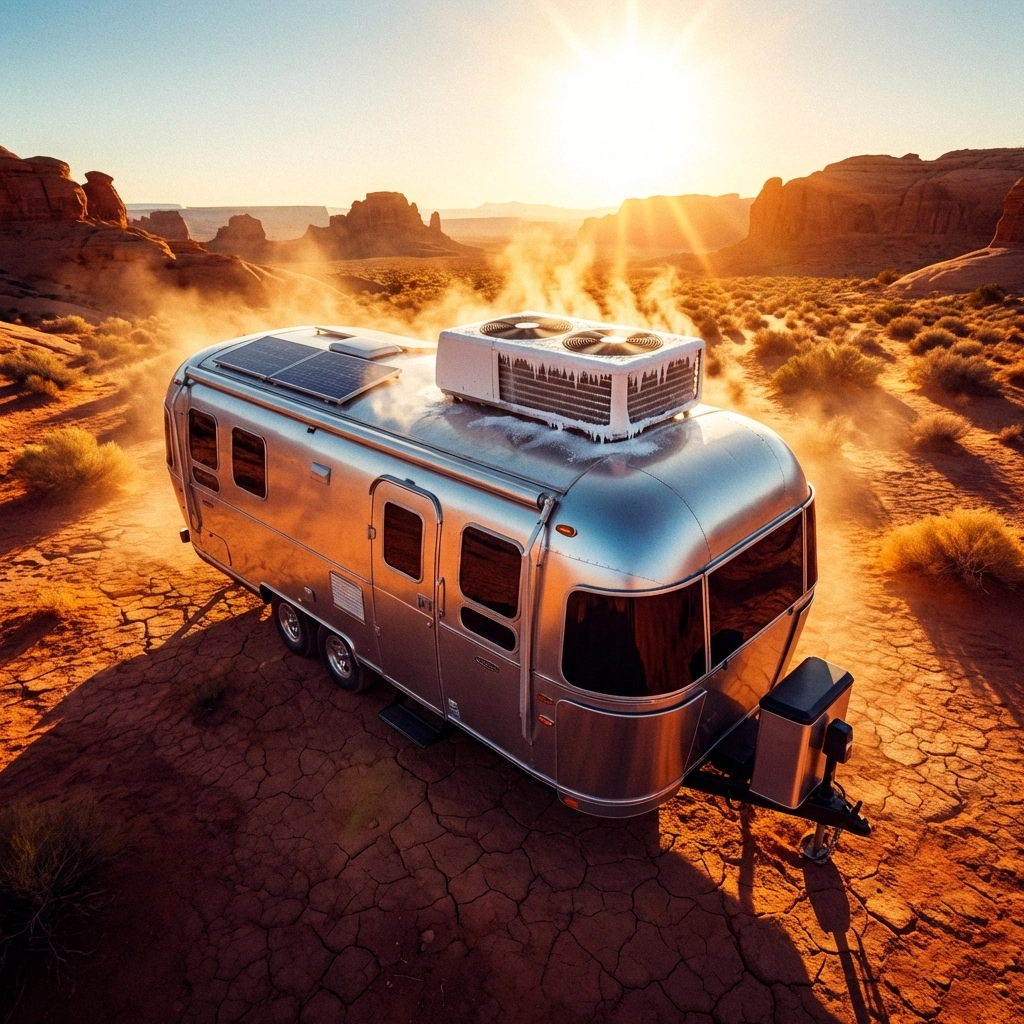
However, if your AC blows completely warm air, cycles on and off rapidly, or fails to create any temperature difference, you’re dealing with a mechanical problem rather than normal heat limitations.
Common Reasons Your RV AC Is Not Cooling Enough
Dirty or Clogged Air Filters
Dirty filters represent the most common and easily fixed cooling problem. Clogged intake filters restrict airflow by up to 50%, preventing proper heat exchange across the evaporator coils.
RV air filters should be checked monthly during active use and replaced or cleaned when visibly dirty. If you’ve been traveling through dusty areas or high-pollen regions, filters may need attention more frequently.
Poor Airflow or Blocked Vents
Restricted airflow kills cooling performance even with a perfectly functioning AC unit. Common airflow problems include:
- Closed or blocked interior vents reducing air circulation
- Ductwork leaks allowing cool air to escape before reaching living spaces
- Furniture or storage blocking return air pathways
- Collapsed or disconnected ducts from road vibration
Electrical Power Issues
RV air conditioners demand substantial electrical power, typically 12-15 amps for operation. Insufficient power creates multiple problems:
- Low campground voltage (below 105V) prevents compressors from starting properly
- Weak generator output struggles to maintain consistent power under load
- Poor electrical connections create voltage drops that starve the AC unit
Many RV parks experience voltage sags during peak demand periods, especially on hot afternoons when everyone runs their air conditioning simultaneously.
Frozen Evaporator Coil
Ironically, a frozen evaporator coil prevents cooling despite ice formation. This happens when:
- Restricted airflow allows moisture to freeze on cold coils
- High humidity conditions combined with continuous operation
- Dirty coils that can’t shed heat properly
A frozen coil requires the AC to be turned off until ice melts completely, usually 2-4 hours, before normal operation can resume.
Undersized or Aging AC Unit
If your RV originally came with a single 13,500 BTU unit but you’ve added insulation, upgraded to LED lighting, or increased interior square footage, the AC may simply be undersized for current demands.
Additionally, older AC units lose efficiency over time as seals degrade and refrigerant slowly leaks from the sealed system.
How to Fix RV AC Cooling Problems (Step-by-Step)
Step 1 – Check Filters and Vents
Start with the simplest solutions:
- Remove and inspect your AC intake filter
- Clean or replace if dirty or clogged
- Verify all interior vents are open and unobstructed
- Check that furniture isn’t blocking return air pathways
Step 2 – Verify Power Supply and Voltage
Power problems cause most “mysterious” AC failures:
- Test voltage at your electrical hookup using a multimeter
- Ensure readings stay above 105V under AC load
- Check that your generator can handle the AC’s electrical demand
- Inspect electrical connections for corrosion or looseness
Step 3 – Improve Airflow Inside the RV
Enhanced air circulation helps even undersized units perform better:
- Add interior ceiling fans to move cool air throughout the RV
- Crack roof vents slightly to allow hot air to escape
- Close window coverings to reduce solar heat gain
- Consider portable fans to improve air movement in problem areas
Step 4 – Reset and Monitor AC Performance
Sometimes a simple reset resolves electronic control issues:
- Turn off the AC unit completely for 5-10 minutes
- Check thermostat settings and mode selection
- Restart and monitor temperature differential between intake and exhaust
- Allow 20-30 minutes for the system to reach steady-state operation
Step 5 – Know When Professional Service Is Needed
Call a qualified RV technician if you notice:
- No temperature difference between intake and exhaust air after 30 minutes
- Strange noises, burning smells, or electrical arcing
- Refrigerant leaks (oily residue around connections)
- Compressor failure (unit hums but doesn’t cool)
Best Ways to Improve RV AC Cooling Performance

Smart RV positioning and preparation dramatically improves cooling efficiency:
Park strategically: Choose shaded sites when possible, or position your RV so the AC unit faces away from afternoon sun. Even partial shade can reduce cooling load by 25%.
Use reflective window covers: Install reflective panels or window tinting to block solar heat gain through windows and skylights.
Enhance insulation: Add foam board insulation to single-pane windows or upgrade roof vents with insulated models.
Pre-cool your RV: Start your AC early in the morning when outside temperatures are lower, rather than waiting until the interior becomes unbearably hot.
RV AC Not Cooling vs Blowing Warm Air
Common Mistakes RV Owners Make with Air Conditioning
Many RV owners expect residential-level performance from their roof-mounted units, leading to frustration and unnecessary repairs. RV air conditioners work best when you understand their limitations and plan accordingly.
Ignoring power supply quality represents another frequent mistake. Running AC on insufficient generator power or poor campground electrical service creates problems that seem like equipment failures but are actually power-related.
Skipping routine maintenance allows small problems to become major failures. Monthly filter checks and annual professional service prevent most cooling issues.
Blocking airflow with improperly placed furniture or decorations reduces cooling efficiency more than most owners realize.
FAQs About RV AC Not Cooling Enough
Why is my RV AC running but not cooling?
If your AC runs but produces no cool air, check power supply first, then filters and airflow. Complete lack of cooling usually indicates electrical problems, refrigerant leaks, or compressor failure requiring professional diagnosis.
Can low voltage cause RV AC problems?
Yes, low voltage is a primary cause of RV AC issues. Voltages below 105V prevent compressors from starting properly, while fluctuating power causes cycling problems that appear to be equipment failures.
How hot is too hot for an RV AC to work?
Most RV air conditioners struggle when ambient temperatures exceed 95°F with direct sun exposure. While they’ll still function, expect reduced cooling capacity and longer run times to achieve comfortable interior temperatures.
Should I upgrade my RV air conditioner?
Consider upgrading if your current unit consistently fails to maintain comfortable temperatures in moderate weather, if you’ve increased your RV’s interior space, or if your unit is over 10 years old and requiring frequent repairs.
How BlackSeries Designs RVs for Better Cooling Performance
At BlackSeries, we understand that effective climate control is crucial for comfortable off-grid adventures. Our travel trailers incorporate thoughtful design elements that enhance cooling efficiency even in extreme environments.
Our approach includes strategic insulation placement, oversized roof vents for natural air circulation, and electrical systems designed to handle high-demand appliances without voltage drops. We test our units in desert conditions to ensure reliable performance when you’re miles from the nearest RV service center.
Every BlackSeries RV features ducted air conditioning systems with properly sized distribution networks, eliminating the hot spots common in many production RVs. Our focus on off-road capability extends to climate control: because comfort shouldn’t be compromised whether you’re parked at a full-hookup campground or boondocking in the Arizona desert.

