Light vibration during operation is completely normal for an RV water pump. However, persistent, strong vibrations or those accompanied by noise usually indicate installation, plumbing, or pressure system issues that need attention.
Is It Normal for an RV Water Pump to Vibrate?
Every RV water pump will produce some level of vibration when operating – this is simply the nature of how these diaphragm-style pumps work. The pump’s internal mechanism creates pressure pulses as it moves water through your system, which naturally generates minor vibrations.
Normal vibration feels like a gentle, consistent humming that stops when the pump shuts off. You might feel slight movement if you touch the pump housing, but it shouldn’t be jarring or concerning.
Problematic vibration is different. This includes:
- Violent shaking that you can feel throughout the RV
- Vibration that continues after the pump stops
- Rhythmic knocking or banging sounds
- Vibration that gets progressively worse over time
The key difference between normal operation and a problem is intensity and accompanying symptoms. If your water pump sounds like a jackhammer or makes your dishes rattle, that’s definitely not normal and needs fixing.
Common Reasons Your RV Water Pump Is Vibrating
Understanding why your water pump vibrates excessively helps you target the right solution. Most vibration problems aren’t actually caused by the pump itself, but by how it’s installed or how water moves through your plumbing system.
Loose Mounting or Hard Mounting Surface
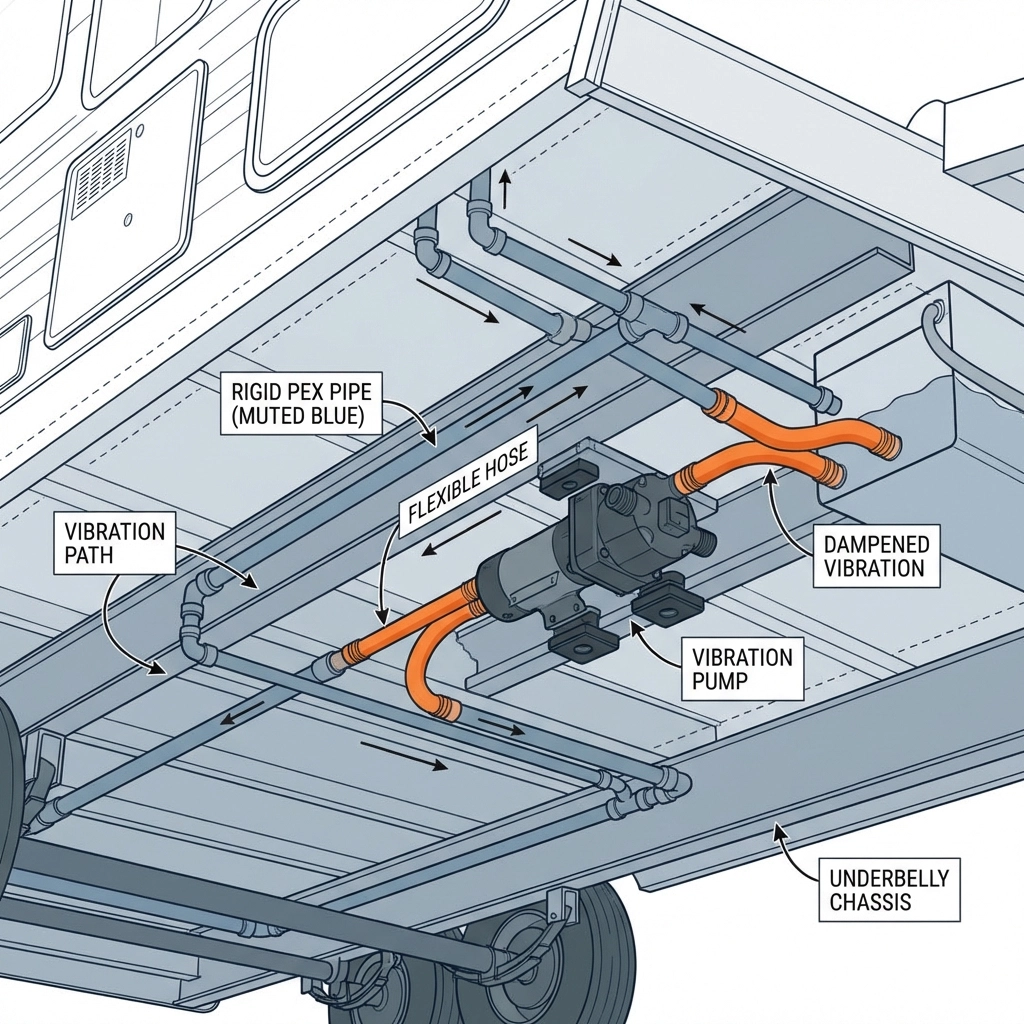
One of the most common causes of excessive pump vibration is improper mounting. Many RV manufacturers mount water pumps directly to solid surfaces like floors or walls without any vibration isolation. This creates a direct path for pump vibrations to transfer throughout your entire RV structure.
When pumps are mounted too rigidly or with loose fasteners, every operating pulse gets amplified through your floors, walls, and cabinets. Missing or deteriorated rubber isolation pads make this problem even worse.
Water Lines Transmitting Vibration
Rigid PEX plumbing lines can act like tuning forks, transmitting pump vibrations throughout your water system. When there’s no flexible connection between the pump and your rigid supply lines, every pump pulse travels directly through the pipes to fixtures and fittings.
This creates what’s called “water hammer” – the banging sound you hear when water moving through pipes suddenly changes direction or speed. Missing flexible hose sections at the pump inlet and outlet are usually the culprit.
Air in the Water System
Air trapped in your water lines creates cavitation, which dramatically increases pump vibration and noise. This commonly happens after:
- Filling your fresh water tank from empty
- Winterizing and de-winterizing your RV
- Any work done on your water system
When air pockets compress and decompress with each pump cycle, they create pressure spikes that cause violent vibrations throughout your plumbing.
Incorrect Pressure Settings
Water pumps that cycle on and off rapidly (faster than every 2 seconds) create excessive pressure pulses. This rapid cycling often results from incorrect pressure switch settings or missing accumulator tanks.
High water pressure also causes problems. When pressure exceeds your system’s design limits, water slams into fittings and fixtures with significant force, creating vibrations that travel back through the entire system.
Worn or Aging Water Pump
Over time, internal pump components wear down. Diaphragms can develop tears, bearings can become loose or damaged, and debris can damage the impeller. These mechanical issues create irregular pump operation that manifests as increased vibration and noise.
How to Fix RV Water Pump Vibration (Step-by-Step)
Solving pump vibration usually requires a systematic approach. Start with the simplest solutions before moving to more complex fixes.
Step 1 – Check Mounting and Fasteners
First, locate your water pump and inspect its mounting system. Tighten any loose screws or bolts, but don’t over-tighten them. The goal is secure mounting without creating a rigid connection.
Add rubber isolation pads between the pump and its mounting surface if they’re missing. You can use dedicated pump isolation pads, or even cut pieces from a computer mouse pad. These pads absorb vibrations and prevent them from transferring to your RV’s structure.
Step 2 – Add Flexible Hose Connections
Install short sections of flexible water hose between your pump and the rigid PEX lines. These “vibration loops” should be 6-12 inches long and positioned at both the pump inlet and outlet.
The flexible hose acts as a vibration dampener, preventing pump pulses from traveling through your rigid plumbing. Make sure these connections are properly clamped to prevent leaks.
Step 3 – Bleed Air from the System
Turn on each faucet in your RV one at a time, starting with the one closest to your water pump. Let each faucet run until water flows smoothly without sputtering or air bubbles. Don’t forget about your shower, outdoor kitchen, and any other water outlets.
This process removes trapped air that could be causing cavitation and irregular pump operation. It’s especially important after any work on your water system or after winterizing.
Step 4 – Inspect Pressure and Flow
Observe your pump’s cycling behavior. If it turns on and off rapidly during normal water use, adjust the pressure switch. Most pumps have an adjustment screw that you can turn clockwise (in small increments) to reduce sensitivity.
Consider installing an accumulator tank if rapid cycling continues. These small pressure vessels smooth out water delivery and reduce how often your pump needs to start and stop.

RV Water Pump Vibration vs Noise: What’s the Difference?
Understanding the specific symptoms helps diagnose the underlying problem:
The combination of symptoms provides important clues about where to focus your troubleshooting efforts.
When RV Water Pump Vibration Signals a Bigger Problem
Excessive vibration can indicate more serious issues developing in your RV’s water system. Watch for these warning signs:
Hidden leaks often develop when excessive pressure and vibration stress plumbing joints. Check behind walls and under fixtures for water damage, especially if vibration has been ongoing for weeks or months.
Premature pump failure becomes more likely when vibration issues aren’t addressed. The constant stress on internal components accelerates wear and can lead to complete pump failure at inconvenient times.
Plumbing joint fatigue occurs when repeated vibration loosens connections throughout your water system. This can create multiple small leaks that are difficult to locate and repair.
Electrical mounting damage happens when severe vibration loosens or breaks the pump’s electrical connections, potentially creating fire hazards or system failures.
Preventing RV Water Pump Vibration Long-Term
Regular maintenance prevents most vibration problems from developing:
Annual inspection checklist:
- Test pump mounting security and isolation pads
- Check flexible hose connections for wear or damage
- Verify proper pressure switch operation
- Inspect accumulator tank pressure (if equipped)
- Listen for changes in pump operation sounds
Best installation practices include using proper vibration isolation, installing flexible connections at the pump, and ensuring adequate clearance around the pump for service access.
For off-grid usage, consider that extended dry camping puts more stress on your water pump. Monitor its operation more closely and address minor vibrations before they become major problems.
Cold-weather effects can temporarily increase vibration as water and components reach different temperatures. This is usually temporary, but persistent cold-weather vibration might indicate inadequate insulation or protection.
FAQs About RV Water Pump Vibrating
Is it bad if my RV water pump vibrates?
Minor vibration is normal, but excessive vibration can damage your plumbing system and lead to premature pump failure. Address persistent or severe vibration promptly.
Can vibration damage RV plumbing?
Yes, ongoing vibration stresses joints and connections throughout your water system. Over time, this can cause leaks, loose fittings, and damage to fixtures.
Should I replace a vibrating RV water pump?
Not necessarily. Most vibration problems are caused by installation or system issues, not pump defects. Try the troubleshooting steps first before considering replacement.
Does an accumulator tank reduce vibration?
Yes, accumulator tanks significantly reduce pump cycling frequency and smooth out water pressure delivery, which reduces overall system vibration.
How BlackSeries Designs RV Water Systems for Reduced Vibration
At BlackSeries RV, we understand that a quiet, smooth-operating water system enhances your off-grid camping experience. Our travel trailers incorporate thoughtful design elements specifically aimed at minimizing pump vibration and noise.
Our pump placement considers both accessibility and vibration isolation. Rather than mounting directly to structural elements, we use strategic positioning and proper isolation materials to prevent vibration transmission throughout the trailer.
Flexible plumbing integration comes standard in our systems. We include appropriate flexible connections and vibration loops to prevent water hammer and reduce system stress during off-road travel.
Designed specifically for off-road conditions, our water systems must withstand the additional stresses of rough terrain while maintaining reliable, quiet operation. This durability focus means fewer vibration-related problems during your adventures.
Our emphasis on reliability and comfort extends to every system component, ensuring that maintenance issues don’t interrupt your camping experience. When you’re boondocking miles from the nearest RV service center, reliable systems become essential for trip success.

