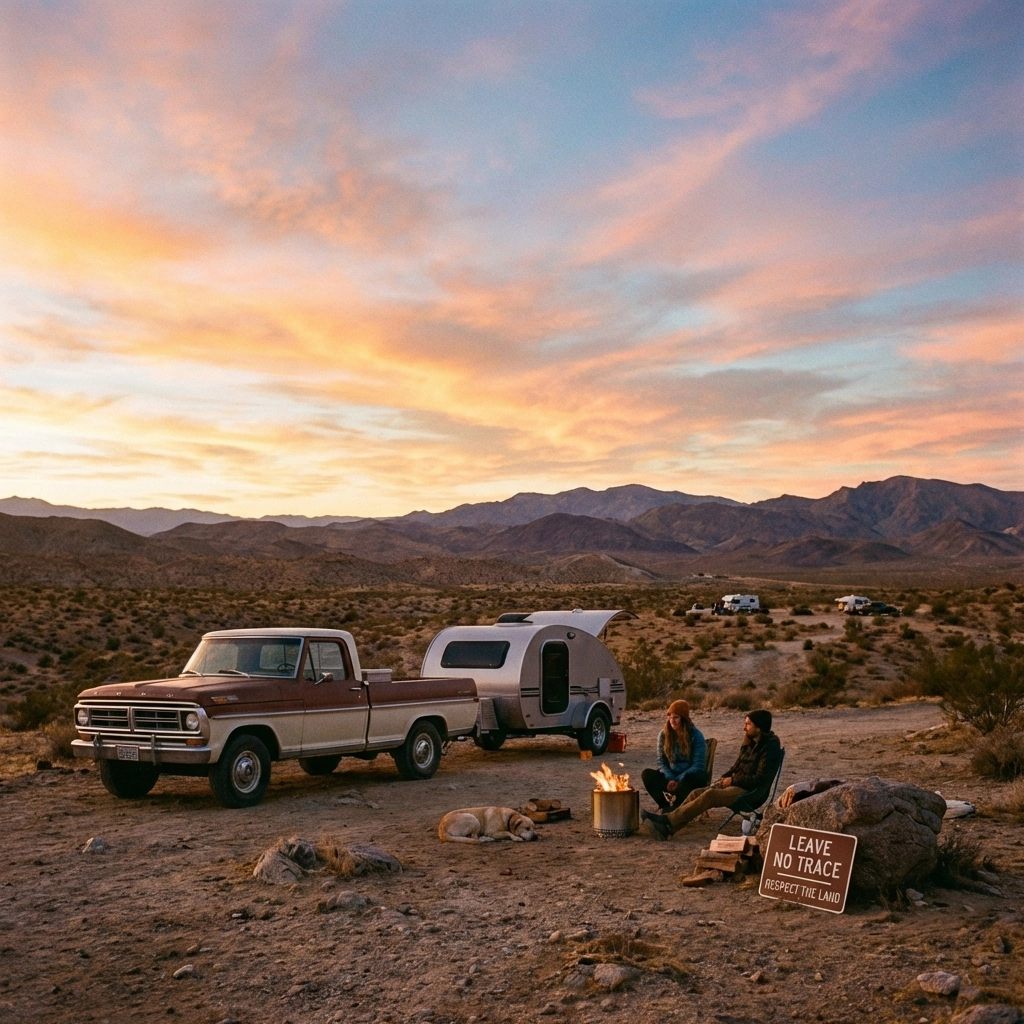
Boondocking is much more than free camping: good manners and self-discipline keep sites open and conflict-free. Whether you’re new to dispersed camping or looking to refine your off-grid practices, understanding proper boondocking etiquette is essential for preserving these incredible outdoor opportunities for future generations.
What Is Boondocking Camping Etiquette?
Boondocking camping etiquette refers to the unwritten rules and respectful behaviors that govern camping on public lands without hookups or facilities. Unlike developed campgrounds with posted rules and camp hosts, boondocking relies entirely on camper self-discipline and mutual respect.
The foundation of boondocking etiquette stems from the Leave No Trace Center for Outdoor Ethics principles, which emphasize minimal environmental impact and consideration for other outdoor enthusiasts. These guidelines help preserve fragile ecosystems while maintaining access to dispersed camping areas across federal and state lands.
What sets boondocking etiquette apart from traditional campground rules is the emphasis on self-sufficiency and environmental stewardship. You’re not just following posted regulations: you’re actively protecting the very places that make off-grid camping possible.
Why Camping Etiquette Matters When Boondocking
Public land access for dispersed camping is increasingly fragile, making proper etiquette more critical than ever. Popular boondocking areas face mounting pressure from growing numbers of RV enthusiasts, and poor behavior by even a small percentage of campers can result in permanent closures.
Area closures happen more frequently than many realize. When campers repeatedly violate basic etiquette: leaving trash, dumping gray water, or overstaying time limits: land management agencies often respond by restricting or eliminating camping access entirely. These closures affect thousands of responsible campers who lose access to prime boondocking locations.
Conflicts between campers also escalate when etiquette breaks down. Disputes over noise levels, space invasion, and resource sharing can turn peaceful camping experiences into stressful confrontations. Local communities near popular boondocking areas may also push for restrictions when they encounter problems with inconsiderate campers.

The long-term impact extends beyond individual camping trips. Poor etiquette by some campers threatens the entire culture of off-grid camping freedom that attracts people to boondocking in the first place. Maintaining access to these special places requires every camper to act as a steward of the land and a considerate neighbor to fellow outdoor enthusiasts.
Boondocking Etiquette Rules Every Camper Should Follow
Understanding and following these core etiquette rules helps ensure positive experiences for everyone sharing public lands:
Respect distance from other campers. Even on vast open lands, maintain reasonable spacing between campsites. Generally, camp at least 100-200 feet from other RVs unless the area design naturally creates closer proximity. Never park directly in front of another camper’s site or block their scenic views.
Follow posted stay limits religiously. Most Bureau of Land Management (BLM) and National Forest areas allow 14-day stays before you must move at least 25 miles away. Respect these limits even when you don’t see enforcement: violations put camping access at risk for everyone.
Obey all posted signage and restrictions. Signs about vehicle access, camping boundaries, and environmental protections exist for good reasons. Ignoring posted restrictions often leads to fines and contributes to future camping limitations.
Keep vehicles on existing roads and designated areas. Creating new vehicle tracks damages fragile desert and forest ecosystems. Use established roads and camping spots marked by bare ground and existing fire rings rather than blazing new trails.
Never claim public land as private property. Some long-term campers attempt to “reserve” favorite spots with personal items or intimidate newcomers. Public lands belong to everyone: no one has exclusive rights to any dispersed camping area.
Noise, Space, and Privacy Etiquette While Boondocking
Successful boondocking requires heightened awareness of how your activities affect others in the absence of campground noise regulations and defined site boundaries.
Generator use represents the biggest noise concern. While most areas don’t prohibit generators, the unwritten rule limits operation to daytime hours: typically 8 AM to 6 PM. Even during acceptable hours, run generators only when necessary and choose the quietest models available. Many experienced boondockers invest in solar power systems to minimize generator dependence entirely.
Vehicle spacing expectations vary by terrain and popular demand. In wide-open desert areas, maintain greater distances to preserve each camper’s sense of solitude. In more confined areas like forest clearings, closer proximity may be unavoidable, making quiet consideration even more important.
Nighttime lighting courtesy makes a significant difference. Bright exterior lights interfere with others’ sleep and diminish the spectacular stargazing that draws many people to remote areas. Use minimal lighting and shield fixtures to direct light downward rather than outward.
Respecting the solitude culture means understanding that many boondockers specifically seek escape from crowded, noisy environments. Keep music volumes low, avoid loud conversations that carry across camping areas, and teach children to be mindful of noise levels in these special places.
Waste, Water, and Sanitation Etiquette Off-Grid
Proper waste management represents the most critical aspect of boondocking etiquette, with violations carrying both legal consequences and severe environmental impact.
Trash disposal requires zero-tolerance standards. Pack out every piece of garbage, including food scraps, cigarette butts, and packaging materials. “Biodegradable” doesn’t justify leaving organic waste: orange peels, eggshells, and coffee grounds attract wildlife and create unsightly messes that can persist for months in arid climates.
Gray water disposal must follow strict protocols. Never dump dishwater, shower runoff, or other gray water directly onto the ground. Even biodegradable soap can harm soil chemistry and plant life. Collect all gray water in tanks or containers for proper disposal at designated dump stations.
Human waste management requires planning and proper equipment. Use established vault toilets when available, or employ portable camping toilets with waste tank systems. Burying waste is generally prohibited in most dispersed camping areas and inappropriate in desert environments where decomposition occurs slowly.
The “it’s natural so it’s harmless” mindset causes significant problems in popular boondocking areas. High concentrations of campers overwhelm natural systems’ ability to process organic waste, leading to water contamination, soil damage, and unpleasant conditions for future visitors.
Common Boondocking Etiquette Mistakes New Campers Make
Understanding these frequent mistakes helps new boondockers avoid problems and develop good habits from the start.
Treating boondocking like developed campgrounds represents the most common error. New campers often expect the same waste disposal, water access, and noise tolerance found in established campgrounds. Boondocking demands much higher self-sufficiency and environmental awareness.
Assuming “no one will notice” leads to cavalier attitudes about waste disposal, noise levels, and stay limits. Even remote areas see regular use by other campers, land management personnel, and local residents who report violations and inappropriate behavior.
Overstaying popular locations creates problems beyond simple rule violations. Extended stays in prime spots prevent other campers from enjoying these areas and often result in soil compaction, vegetation damage, and accumulation of waste problems.
Ignoring local community concerns becomes problematic when boondockers camp near small towns or private property. Respecting local customs, supporting nearby businesses when possible, and maintaining good relations with residents helps preserve camping access in these areas.
Inadequate preparation frequently leads to etiquette violations when campers run out of essential supplies and resort to inappropriate shortcuts like dumping waste or creating excessive noise while trying to solve problems.
FAQs About Boondocking Camping Etiquette
What is proper etiquette for boondocking?
Proper boondocking etiquette centers on self-sufficiency, environmental protection, and consideration for other campers. The core principles include packing out all waste, maintaining quiet hours, respecting stay limits, keeping vehicles on established roads, and leaving campsites cleaner than you found them. Follow Leave No Trace principles and treat public lands with the same care you’d show a friend’s property.
How far should you camp from others while boondocking?
Generally maintain 100-200 feet distance from other campsites when terrain allows, though this varies by location and availability. In open desert areas, greater spacing preserves the solitude experience, while forested areas may naturally create closer proximity. The key is avoiding direct interference with others’ privacy, views, and access routes while respecting the established camping patterns in each area.
Is boondocking really free?
While most boondocking doesn’t require campground fees, it’s not entirely “free” camping. Costs include fuel for accessing remote areas, self-sufficiency equipment like solar panels and water storage, and potential fees for waste disposal at dump stations. More importantly, boondocking requires the “payment” of responsible behavior and environmental stewardship to maintain access to these special places.
Why are some boondocking areas closed to camping?
Boondocking area closures typically result from accumulated damage caused by poor camper behavior, including excessive trash accumulation, soil erosion from off-road driving, wildlife habituation from food waste, vegetation damage, and conflicts with local communities. Environmental concerns, such as protecting sensitive ecosystems or archaeological sites, also trigger closures. Once closed, areas rarely reopen to camping, making prevention through good etiquette essential.
Responsible boondocking etiquette ensures these incredible off-grid experiences remain available for current and future generations of outdoor enthusiasts. By following these guidelines and treating public lands with respect, every camper contributes to preserving the freedom and beauty that makes boondocking so special.

