Whether you’re setting up at a developed campground or venturing into remote boondocking territory with your off-road travel trailer, understanding wildlife safety isn’t just smart, it’s essential. Every year, improper human-wildlife interactions lead to injuries, property damage, and even campground closures across America’s wilderness areas.
The good news? Most wildlife encounters can be prevented with the right knowledge and preparation. This comprehensive guide covers everything you need to know to camp safely among North America’s diverse wildlife, from basic prevention strategies to specific protocols for different animals and camping scenarios.
Why Wildlife Safety Matters When Camping in the US
Wildlife safety has become increasingly critical as more Americans embrace outdoor recreation. The fundamental difference between developed campgrounds and boondocking lies in your level of exposure and available resources.
Campgrounds vs. Boondocking Exposure: Developed campgrounds typically offer bear-proof trash receptacles, regular ranger patrols, and immediate assistance if needed. When boondocking or dry camping in remote areas, you’re entirely responsible for your own wildlife safety protocols, with no backup services available.
Human-Wildlife Conflict Statistics: According to the National Park Service, most wildlife incidents stem from improper food storage and trash disposal. Bears that become food-conditioned often need to be relocated or euthanized, making your prevention efforts literally life-saving for the animals themselves.
Wildlife Habituation Risks: When animals associate humans with easy food sources, they lose their natural fear and become increasingly bold. This habituation process puts future campers at risk and forces wildlife managers to take drastic action.
Campground Closures: Poor camper behavior regularly leads to temporary or permanent closures of popular camping areas. The National Park Service and Leave No Trace Center for Outdoor Ethics emphasize that responsible camping practices protect both wildlife and access for future generations.
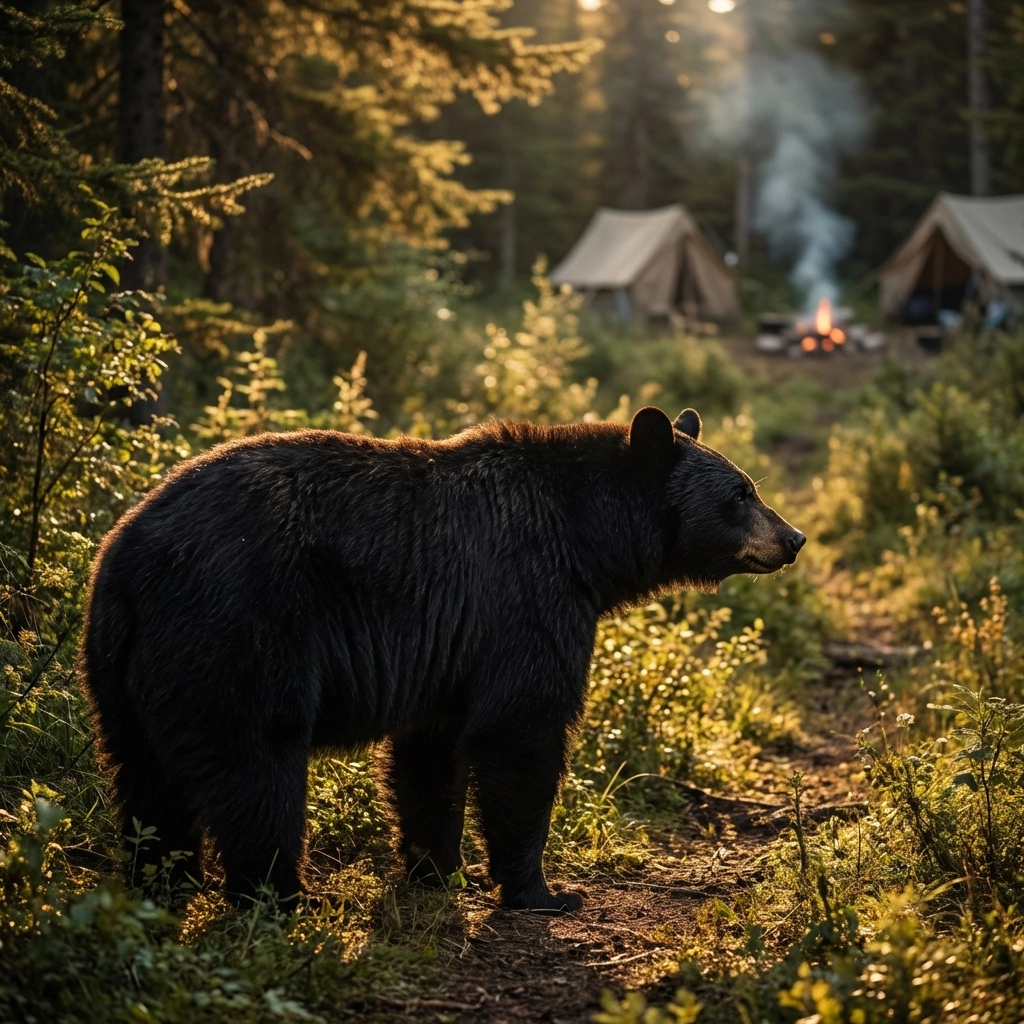
Common Wildlife Campers Encounter in North America
Understanding what animals you might encounter helps you prepare appropriate prevention and response strategies:
The risk level varies significantly by geographic region and season. Research your specific camping destination through park websites or by contacting local rangers before departure.
How to Stay Safe from Wildlife While Camping (Step-by-Step)
Follow these four essential steps to minimize wildlife encounters and stay safe in the outdoors:
Step 1 – Choose a Safe Campsite Location
Distance from Water Sources: Set up camp at least 200 yards from streams, lakes, or ponds where animals commonly drink, especially during dawn and dusk hours.
Avoid Animal Trails: Look for obvious game trails (worn paths through vegetation) and position your campsite away from these natural highways. Animals use these routes regularly and may not appreciate finding your tent in their path.
Wind Direction Considerations: Position your sleeping area upwind from cooking and food storage areas to prevent food odors from drifting toward your tent throughout the night.
Step 2 – Store Food and Trash Properly
Bear-Resistant Containers: Use certified bear-resistant food containers or bear canisters in designated areas. These containers meet specific standards for latching mechanisms that bears cannot manipulate.
Sealed Storage Principles: Everything with a scent, food, toiletries, soap, deodorant, toothpaste, must be stored in sealed, odor-proof containers away from your sleeping area.
Vehicle Storage: If bear canisters aren’t required, store scented items in your vehicle’s hard-sided compartments. Many modern off-road travel trailers feature secure exterior storage compartments specifically designed for this purpose.

Step 3 – Keep a Clean Camp
Cooking Area Separation: Establish your cooking area at least 100 yards from your sleeping area. This creates a “triangle” layout with cooking, sleeping, and food storage areas separated.
Odor Management: Clean all cooking utensils immediately after use and strain food particles from dishwater before disposing of gray water at least 200 yards from camp.
Pack Out Everything: Follow Leave No Trace principles by packing out all trash, food scraps, and organic waste. What seems biodegradable to humans often attracts wildlife and disrupts natural ecosystems.
Step 4 – Know How to React to Wildlife Encounters
Never Feed Wildlife: Feeding wild animals is illegal in most public lands and creates dangerous situations for future visitors. Even small animals like chipmunks can become aggressive when food-conditioned.
Maintain Proper Distance: Stay at least 100 yards from bears and wolves, and 25 yards from all other wildlife including deer, elk, and moose. If your presence causes an animal to move or change behavior, you’re too close.
Noise vs. Calm Response: Make noise while hiking to avoid surprising animals, but remain calm and avoid sudden movements during actual encounters. Speak in low, calm tones rather than screaming or running.
Bear Safety Tips for Campers and Boondockers
Bears present the most serious wildlife threat to campers across much of North America. Here’s what you need to know:
Where Bears Are Common: Black bears inhabit most forested regions of the US and Canada, while grizzly bears are found in Alaska, northwestern Montana, northern Idaho, northwestern Wyoming, and parts of Washington state.
Bear Spray Basics: Carry EPA-approved bear spray that shoots 30-40 feet and creates a wide dispersal pattern. Practice using inert training canisters before your trip, and ensure all group members know how to deploy bear spray quickly.
Nighttime Food Storage Rules: All scented items must be secured before dark. This includes soap, deodorant, toothpaste, medications, and even clothing worn while cooking. Store these items in bear canisters, bear lockers, or properly hung at least 12 feet high and 4 feet from tree trunks.
Bear Encounter Protocol: If you see a bear, don’t run. Back away slowly while speaking in calm, monotone voice. If the bear approaches within 30 feet, deploy bear spray. For grizzly attacks, play dead by lying flat on your stomach with your backpack protecting your neck and vital organs.
Wildlife Safety Tips for Boondocking & Off-Grid Camping
Boondocking and off-grid camping present unique wildlife challenges that require extra preparation and vigilance:
No Ranger Presence: Without regular ranger patrols, you’re entirely responsible for monitoring and managing wildlife situations. This includes being aware of increased wildlife activity and knowing when to relocate your campsite.
Increased Wildlife Curiosity: Remote areas often have wildlife that’s less accustomed to humans, making animals either more skittish or more curious about your presence. Both behaviors can create unpredictable situations.
Added Camper Responsibility: You must be completely self-sufficient in wildlife management, from proper waste disposal to emergency response planning. There’s no backup plan if your initial prevention strategies fail.
Plan Exit Routes: Always identify multiple routes away from your campsite and keep your vehicle ready for quick departure. When boondocking with an off-road travel trailer, ensure your tow vehicle remains accessible and your trailer can be quickly secured for movement.
Modern off-road trailers like those from BlackSeries are specifically designed for remote camping scenarios, featuring secure exterior storage compartments and robust construction that can withstand wildlife encounters while providing safe interior space when needed.
Common Wildlife Safety Mistakes Campers Make
Learn from others’ mistakes to avoid potentially dangerous situations:
Leaving Food Unattended: Even brief moments away from your campsite can result in wildlife getting into improperly stored food. Animals can destroy your supplies and become conditioned to associate your campsite with easy meals.
Assuming Small Animals Are Harmless: Raccoons, squirrels, and even birds can carry rabies or other diseases. They can also cause significant damage to camping equipment while searching for food. Javelinas in the Southwest can be particularly aggressive when protecting young or feeling cornered.
Sleeping with Food Inside Tents: This mistake puts you in direct danger by attracting animals to your sleeping area. Even “sealed” food packages retain odors that wildlife can detect from considerable distances.
Improper Trash Disposal: Burning trash attracts animals to the scent and leaves food residue behind. Burying garbage doesn’t work either, many animals are excellent diggers and will excavate buried waste, creating a dangerous mess.
Overconfidence in Vehicle Protection: While vehicles provide safety during encounters, leaving doors unlocked or windows open invites problems. Bears can and will break into vehicles that contain food or scented items.
FAQs About Wildlife Safety for Campers
Is camping safe in bear country?
Yes, camping in bear country is safe when you follow proper protocols. Millions of people camp safely in bear habitats every year by using bear-resistant food storage, maintaining clean campsites, and carrying bear spray. The key is preparation and vigilance, not avoidance of these beautiful wilderness areas.
How do you keep animals away from your campsite?
Keep animals away by eliminating attractants: store all scented items in bear-resistant containers, maintain a clean campsite, cook and eat away from sleeping areas, and dispose of gray water properly. Make noise during daily activities so animals know you’re present and can avoid you naturally.
What smells attract wildlife while camping?
Wildlife is attracted to all food odors, toiletries (soap, toothpaste, deodorant), cooking smells, trash, pet food, and even laundry detergent or fabric softener. Essentially anything with a scent stronger than natural outdoor odors can attract curious animals to investigate your campsite.
Is boondocking more dangerous for wildlife encounters?
Boondocking does increase your wildlife encounter risk due to remote locations, lack of ranger presence, and potentially less human-habituated animals. However, proper preparation, quality equipment, and strict adherence to safety protocols make boondocking safely achievable. Many experienced campers prefer remote locations specifically because wildlife viewing opportunities are enhanced when you’re properly prepared.
Can you use regular food containers for bear protection?
No, regular food containers, coolers, or plastic bins will not stop determined bears. Only certified bear-resistant containers that meet Interagency Grizzly Bear Committee standards provide adequate protection. These containers feature specific latching mechanisms that bears cannot manipulate but humans can operate easily.
Wildlife safety doesn’t have to limit your camping adventures: it simply requires respect, preparation, and proper execution of proven strategies. Whether you’re car camping at a developed campground or boondocking in remote wilderness with your off-road travel trailer, following these guidelines helps ensure both your safety and the wellbeing of the wildlife that call these places home.

