When boondocking, you cannot simply discard or bury trash. The responsible approach requires reducing waste generation, securing storage during your stay, and disposing of all garbage at designated legal facilities only.
Why Garbage Disposal Is a Big Issue When Boondocking
Boondocking presents unique challenges that make proper waste management both critical and complex. Unlike developed campgrounds with daily trash collection, remote off-grid locations offer no waste services whatsoever.
No On-Site Trash Services
Most boondocking sites, whether on Bureau of Land Management (BLM) land, National Forest Service areas, or remote state lands, provide zero waste management infrastructure. You’re entirely responsible for every piece of trash you generate during your stay.
Wildlife Attraction Risks
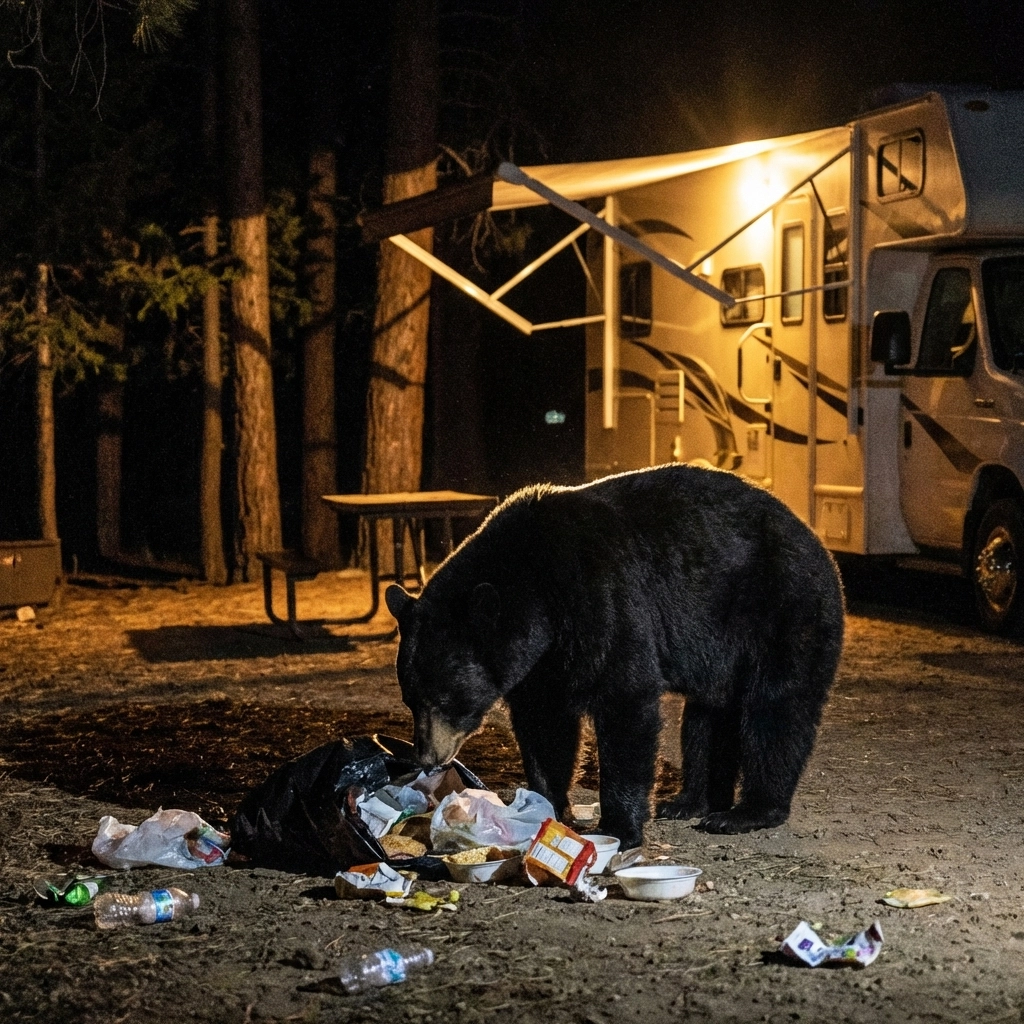
Improperly stored or disposed garbage creates serious safety hazards. Food scraps and aromatic waste attract bears, coyotes, raccoons, and other wildlife to your campsite. This puts both you and the animals at risk, as wildlife that becomes habituated to human food sources often must be relocated or euthanized by park authorities.
Environmental Damage
Leaving trash in natural areas causes lasting environmental harm. Plastic waste can persist for hundreds of years, while organic waste disrupts local ecosystems. Even “biodegradable” items like fruit peels and coffee grounds aren’t native to most ecosystems and can alter soil chemistry or introduce invasive species.
Legal Penalties and Campsite Closures
Illegal dumping on public lands carries hefty fines ranging from $300 to $5,000 depending on the jurisdiction and amount of waste. More importantly, irresponsible campers cause land managers to restrict or close popular boondocking areas entirely, limiting future access for everyone.
Is It Legal to Dispose of Trash While Boondocking?
Understanding the legal framework around waste disposal on public lands is essential for responsible boondocking.
Federal Lands vs State Lands
Federal agencies like the BLM and Forest Service operate under the fundamental principle of “Pack It In, Pack It Out.” This means anything you bring to public lands must leave with you. State lands typically follow similar policies, though specific regulations may vary by state.
BLM and National Forest Guidelines
Both agencies explicitly prohibit several common disposal methods that inexperienced campers might consider acceptable:
- Burning trash (except in designated fire-safe areas and only for natural materials)
- Burying garbage (including food waste and organic materials)
- Leaving food waste for wildlife to consume
- Dumping grey water containing food particles or soap
The core principle remains consistent across all public lands: Pack It In, Pack It Out. This isn’t just a suggestion, it’s federal law with real enforcement consequences.
How to Manage Garbage While Boondocking (Step-by-Step)
Successful waste management while boondocking requires a systematic approach that begins before you even leave home.
Step 1 – Reduce Trash Before You Even Camp
The most effective waste management strategy is minimizing waste generation from the start.
Remove Bulk Packaging
Before departing, remove unnecessary packaging from food items and transfer contents to reusable containers. This eliminates cardboard boxes, plastic overwrap, and excess paper that would otherwise become waste at your campsite.
Choose Reusable Containers
Invest in quality food storage containers, water bottles, and utensils that eliminate single-use waste. Glass containers should be avoided due to breakage risks and disposal challenges in remote areas.
Step 2 – Separate Waste Types
Organize your garbage into distinct categories to optimize storage and disposal:
Food Waste
All organic materials including fruit peels, coffee grounds, and meat scraps. This category attracts wildlife most aggressively and requires the most secure storage.
Recyclables
Aluminum cans, plastic bottles, and clean cardboard. Some disposal facilities separate recyclables, making this organization helpful for efficient disposal.
Non-Recyclables
Everything else including contaminated packaging, personal hygiene items, and mixed materials.
Step 3 – Store Garbage Securely Off-Grid
Proper storage prevents wildlife encounters and odor issues during extended stays.
Use Sealed Containers
Heavy-duty trash bags alone aren’t sufficient. Store bagged waste inside hard-sided containers with tight-fitting lids. Plastic storage tubs with locking lids work well for most RV exterior storage compartments.
Control Odors
Double-bag aromatic waste and consider adding baking soda or commercial odor absorbers to storage containers. In hot climates, this becomes especially critical as decomposition accelerates.
Prevent Wildlife Access
Store all waste containers inside your RV or in bear-proof external storage whenever possible. If external storage is necessary, use containers specifically rated for wildlife resistance and position them away from sleeping areas.
Step 4 – Dispose of Trash Properly After Boondocking
Plan your departure route to include legitimate disposal opportunities.
Transfer Stations and Landfills
County-operated facilities typically charge $1-10 per bag but accept all waste types. Call ahead to confirm hours and payment methods, as many only accept cash.
Highway Rest Areas
Most interstate rest areas provide public dumpsters suitable for moderate amounts of household-type waste. Distribute garbage across multiple smaller containers if only small trash cans are available.
Gas Stations and Travel Centers
Fuel stops often allow customers to dispose of small bags in their exterior trash receptacles. This works best for final cleanup rather than bulk disposal.

Best Garbage Storage Solutions for Boondocking
The right storage equipment makes waste management significantly easier and more effective.
Heavy-Duty Trash Bags
Choose contractor-grade bags (3 mil thickness minimum) that resist tearing from sharp objects or animal claws. Standard kitchen bags often fail under outdoor storage conditions.
Lockable Trash Containers
Hard-sided containers with secure lids provide essential protection. Look for models with:
- Tight-fitting, lockable lids
- UV-resistant materials for exterior storage
- Adequate capacity for your typical trip length
- Easy-carry handles for transport to disposal sites
External Storage Boxes
Purpose-built RV storage boxes mount to trailer tongues or truck beds, keeping waste outside living spaces while maintaining security. These work particularly well for BlackSeries trailers with robust mounting points designed for heavy-duty use.
Odor-Resistant Liners
Specialized trash bag liners treated with odor-neutralizing compounds help control smells during extended storage periods. These prove especially valuable in warm climates or for food waste.
Handling Food Waste While Boondocking
Food waste requires special attention due to its wildlife attraction potential and rapid decomposition.
High-Risk Food Waste
Certain scraps attract wildlife more aggressively than others. Meat scraps, fish remains, bacon grease, and anything with strong odors pose the highest risk. These items should be double-bagged and stored in the most secure containers available.
Dehydrating Food Scraps
Some experienced boondockers dry fruit peels and vegetable scraps to reduce volume and odor before disposal. While this technique works, the dried waste still must be packed out, it cannot be scattered or buried.
Grey Water vs Solid Waste
Understand that grey water containing food particles (from dishwashing) requires proper disposal just like solid food waste. Dumping grey water with food debris on the ground violates Leave No Trace principles and creates wildlife attractants.
What Never Goes Outdoors
No organic waste should ever be scattered, buried, or left for animals. Even items that seem “natural” like orange peels or coffee grounds aren’t native to most ecosystems and can cause ecological disruption.
Common Garbage Disposal Mistakes Boondockers Make
Learning from others’ errors helps avoid costly problems and environmental damage.
Burning Inappropriate Materials
Many boondockers burn paper and cardboard to reduce waste volume, which can be acceptable in areas where fires are permitted. However, burning plastic releases toxic compounds including dioxins and mercury that harm both human health and the environment. Never burn plastic, metal, or glass materials.
Leaving Trash “Temporarily”
Some campers rationalize leaving bagged garbage at their campsite briefly while making quick trips, assuming they’ll return soon. Weather, wildlife, and mechanical breakdowns can extend these absences, resulting in scattered waste and significant fines.
Assuming Organic Waste Is Safe
The misconception that “natural” food waste can safely be left in nature causes extensive problems. Fruit peels, vegetable scraps, and even eggshells alter soil chemistry and attract wildlife inappropriately to camping areas.
Using Open Bins at Night
Storing waste in uncovered containers during overnight hours practically guarantees wildlife encounters. Even seemingly secure areas can be accessed by determined animals, leading to scattered garbage and potentially dangerous situations.
FAQs About Garbage Disposal While Boondocking
Can you burn trash while boondocking?
Burning is only permitted where fires are allowed and only for natural materials like paper, cardboard, and untreated wood. Never burn plastic, metal, or chemically treated materials. Check current fire restrictions before burning anything, as many areas prohibit all fires during dry seasons.
Where do you throw trash when boondocking?
Legitimate disposal options include highway rest areas, county transfer stations, landfills, gas stations (for small amounts), and government-operated campgrounds. Private dumpsters at businesses or residences are off-limits without explicit permission.
How do you store garbage to avoid bears?
Use bear-proof containers when available, or store all waste inside your RV. If external storage is necessary, use hard-sided containers with tight-fitting lids positioned away from sleeping areas. Double-bag aromatic waste and consider adding odor absorbers.
Is food waste considered trash off-grid?
Yes, absolutely. All organic waste including fruit peels, coffee grounds, and food scraps must be packed out. The “Pack It In, Pack It Out” principle applies to everything you bring to public lands, including organic materials that seem biodegradable.
Can I use private dumpsters if I’m just passing through?
No. Using private dumpsters without permission is theft of services and trespassing. Businesses and apartment complexes pay for their waste disposal and aren’t responsible for subsidizing your travels. Stick to public facilities or ask permission first.
Responsible garbage disposal while boondocking protects the natural areas we love to explore while ensuring continued access for future adventurers. BlackSeries trailers are designed with ample secure storage options to support extended off-grid stays while maintaining responsible waste management practices. Plan ahead, pack smart, and always leave your campsite cleaner than you found it.

