
Your cart (0)
Your cart is empty
Tax included and shipping calculated at checkout
Your cart is empty
Tax included and shipping calculated at checkout

Whether you’re boondocking in your RV for extended periods or camping in remote locations, maintaining food safety without refrigeration is both possible and practical. The key lies in understanding food science, selecting appropriate preservation methods, and implementing proven storage techniques that have sustained travelers for generations.
Food spoilage accelerates dramatically when temperatures rise above 40°F (4°C). Bacteria multiply rapidly in the “danger zone” between 40°F and 140°F, with harmful organisms like Salmonella and E. coli doubling every 20 minutes at room temperature. This biological reality makes off-grid food storage particularly challenging.
Moisture management presents another critical obstacle. Excess humidity creates ideal conditions for mold and bacterial growth, while insufficient airflow traps heat and accelerates decomposition. Many campers mistakenly believe that “cool” automatically means “safe,” but even shaded areas can reach dangerous temperatures during warm weather.
Heat and sunlight exposure compound these challenges. Direct sunlight can raise internal food temperatures well above ambient air temperature, while metal containers can become scalding hot, essentially cooking food from the outside. Understanding these fundamental challenges is the first step toward successful off-grid food preservation.
Different food categories have vastly different shelf lives at room temperature. Here’s a practical breakdown:
*Eggs can last longer using traditional preservation methods like water glassing.
Fresh produce varies significantly in longevity. Root vegetables like potatoes, onions, and carrots can last weeks when stored properly, while leafy greens wilt within days. Dry goods including rice, pasta, and beans remain safe indefinitely when kept moisture-free, making them ideal for extended off-grid adventures.
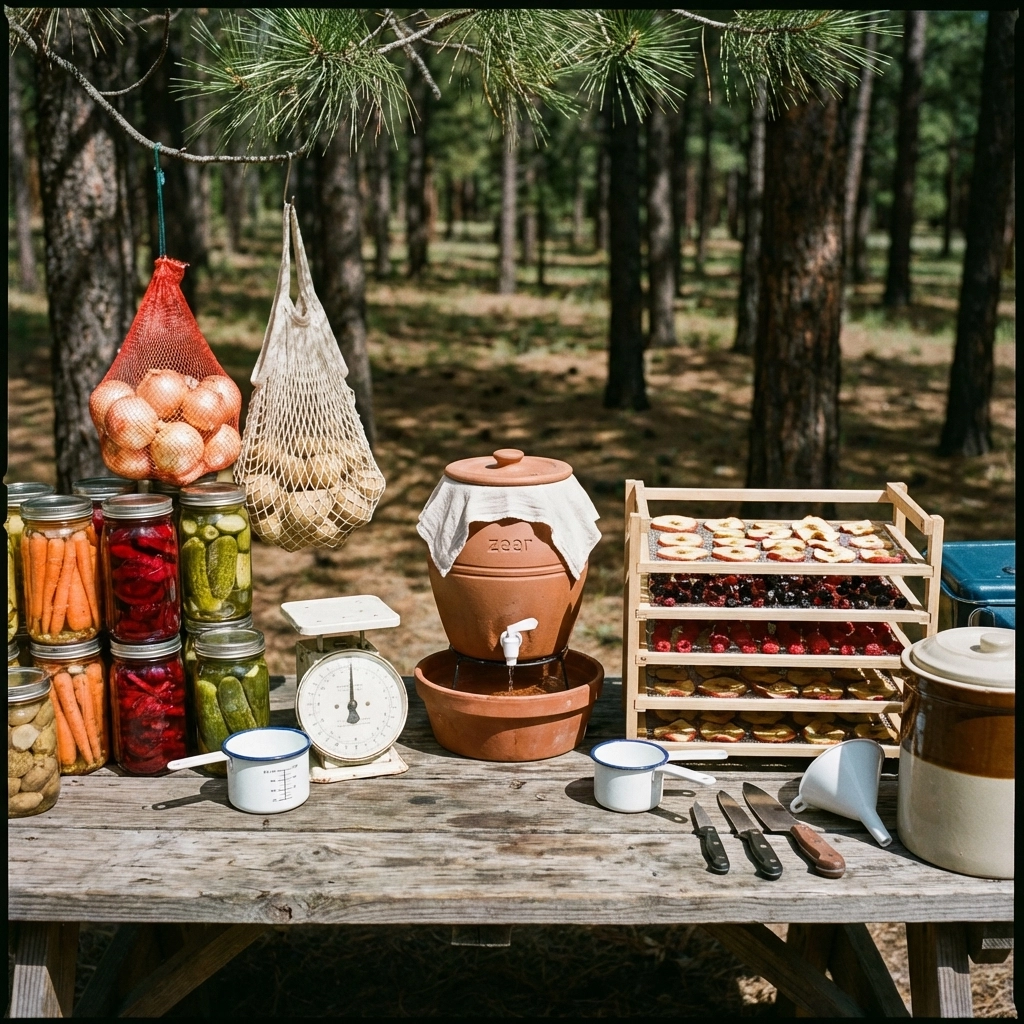
Success begins at the grocery store. Prioritize shelf-stable foods that naturally resist spoilage. Select firm, unbruised produce without soft spots or cuts that bacteria can exploit. Choose foods with natural preservation properties like high acid content (citrus), low moisture (dried goods), or natural antimicrobial compounds (garlic, onions).
Avoid highly perishable items like fresh meat, dairy, and pre-cut fruits unless you plan to consume them immediately. Instead, opt for cured meats, hard cheeses, and dried fruits that maintain quality without refrigeration.
Create cool microclimates using natural physics. Position food storage in the coolest available location, typically the north side of your RV or campsite where direct sunlight is minimal. Utilize ground cooling by placing containers directly on earth, which maintains more stable temperatures than elevated surfaces.
Insulated containers work effectively for short-term temperature control. Pack foods in coolers with frozen water bottles, replacing them as they thaw. Even without ice, well-insulated containers significantly slow temperature fluctuations.
Prevent moisture buildup using breathable storage materials. Paper bags, mesh containers, and perforated plastic allow essential airflow while protecting from dust and insects. Avoid sealing warm food in airtight containers, which creates condensation and accelerates spoilage.
Create ventilation systems using elevation and spacing. Raise containers off ground level using blocks or platforms, allowing air circulation underneath. Space items apart rather than packing them tightly together.
Implement strict first-in-first-out (FIFO) rotation, consuming older items before newer purchases. Conduct daily visual and smell inspections, looking for discoloration, soft spots, unusual odors, or visible mold growth.
Remove compromised items immediately to prevent cross-contamination. One spoiled item can accelerate deterioration of surrounding foods through ethylene gas production or direct bacterial transfer.
Hardy Vegetables: Potatoes, onions, garlic, winter squash, cabbage, and carrots naturally resist spoilage for weeks when stored in cool, dry conditions. These form the backbone of off-grid meal planning.
Durable Fruits: Apples, oranges, lemons, and bananas provide fresh nutrition while maintaining quality for 1-2 weeks. Citrus fruits last longest due to their natural acidity and protective peels.
Dry Staples: Rice, pasta, quinoa, oats, and dried beans offer unlimited shelf life when kept moisture-free. These provide essential carbohydrates and proteins for sustained energy during off-grid adventures.
Preserved Proteins: Canned fish, dried meats (jerky), nuts, and nut butters deliver necessary proteins without spoilage concerns. These compact options maximize nutrition per storage space, crucial for RV travel.
Shelf-Stable Dairy Alternatives: Powdered milk, shelf-stable plant milks, and hard cheeses provide calcium and flavor enhancement while resisting spoilage better than fresh dairy products.

Coolers Without Ice remain effective for several days using thermal mass principles. Pre-chill foods and containers, then pack tightly with frozen water bottles. Minimize opening frequency and position in shaded areas for maximum effectiveness.
Root Cellar Techniques work well for extended stays. Dig shallow depressions in shaded ground, line with stones for drainage, and cover with insulating materials. This creates naturally cool storage spaces that can extend food life significantly.
Insulated Food Boxes using reflective materials create effective thermal barriers. Wrap containers in emergency blankets or reflective insulation, creating dead air spaces that resist temperature transfer.
Hanging Storage Systems maximize airflow while protecting from ground moisture and pests. Suspend mesh bags or perforated containers from RV awnings or tree branches, allowing 360-degree ventilation.
Storing Food Directly on Ground exposes items to moisture, extreme temperatures, and pest contamination. Always elevate storage containers using platforms, blocks, or hanging systems to maintain proper ventilation and protection.
Mixing Ethylene Producers with Sensitive Foods accelerates spoilage unnecessarily. Separate bananas, apples, and tomatoes from leafy greens and other ethylene-sensitive produce to prevent premature ripening and decay.
Sealing Warm Food in Containers creates condensation that breeds bacteria and mold. Allow cooked foods to cool completely before sealing, or better yet, consume hot foods immediately after cooking.
Assuming Overnight Temperatures Guarantee Safety ignores thermal mass and insulation effects. Food containers retain heat long after air temperatures drop, maintaining dangerous temperatures well into cool evenings.
Many RV travelers underestimate the cumulative effect of repeated temperature cycling. Even brief exposure to warm conditions during daily temperature swings can compromise food safety over time.
Is it safe to keep food without refrigeration?
Yes, when using appropriate foods and proven preservation methods. Focus on naturally shelf-stable items, implement proper storage techniques, and maintain strict rotation schedules to ensure food safety.
Can cooked food be stored without a fridge?
Cooked food requires immediate consumption or rapid cooling to remain safe. Without refrigeration, consume cooked items within 2 hours of preparation, or preserve using methods like dehydration or canning.
How do you store food while camping without ice?
Use multiple strategies: select shelf-stable foods, create cool microclimates using shade and ground cooling, maintain airflow with breathable containers, and rotate stock frequently. Combine traditional preservation methods like root cellaring with modern insulated storage.
What foods spoil fastest without a fridge?
Fresh meat, dairy products, cooked foods, and cut fruits spoil within hours at room temperature. Leafy greens, berries, and soft fruits follow quickly. Prioritize consuming these items first or avoid them entirely for extended off-grid periods.
Does food storage differ between desert and forest camping?
Absolutely. Desert environments require extra protection from extreme heat and rapid temperature swings, while forest settings often provide natural cooling but present higher humidity challenges. Adapt storage methods to your specific environment for optimal results.
Successful off-grid food storage combines time-tested preservation wisdom with modern understanding of food science. By selecting appropriate foods, implementing proven storage techniques, and maintaining vigilant rotation practices, you can enjoy safe, fresh meals throughout your off-grid adventures. Whether you’re exploring remote locations in your BlackSeries RV or camping under the stars, these methods ensure food safety never compromises your outdoor experience.