RV sun protection involves regular cleaning, UV protectant application, and proactive sealant maintenance to prevent costly damage. BlackSeries campers need special attention to rubber seals and exterior sealants, especially in high-UV regions like Arizona, Nevada, and Florida where sun exposure can cause $300-$2,000 in repair costs if neglected.
Why RV Sun Protection Matters in the U.S.
The American Southwest, California, and Florida present some of the harshest UV conditions on the planet. Arizona averages over 300 sunny days per year, while Nevada and Utah’s high-altitude desert environments intensify UV radiation exposure. For RV owners in these regions, sun damage isn’t just cosmetic, it’s a serious maintenance concern that can lead to expensive repairs.
UV radiation breaks down rubber compounds at the molecular level, causing seals to harden, crack, and lose their flexibility. This is particularly problematic for BlackSeries campers and other off-road trailers because they’re designed for extended outdoor adventures in remote locations where shade is often unavailable.
Unlike traditional RVs that might spend time in covered storage, off-road campers like BlackSeries models are built for extended exposure to the elements. This means your investment is constantly battling UV rays, extreme temperatures, and environmental stress that can rapidly degrade rubber components and exterior sealants.
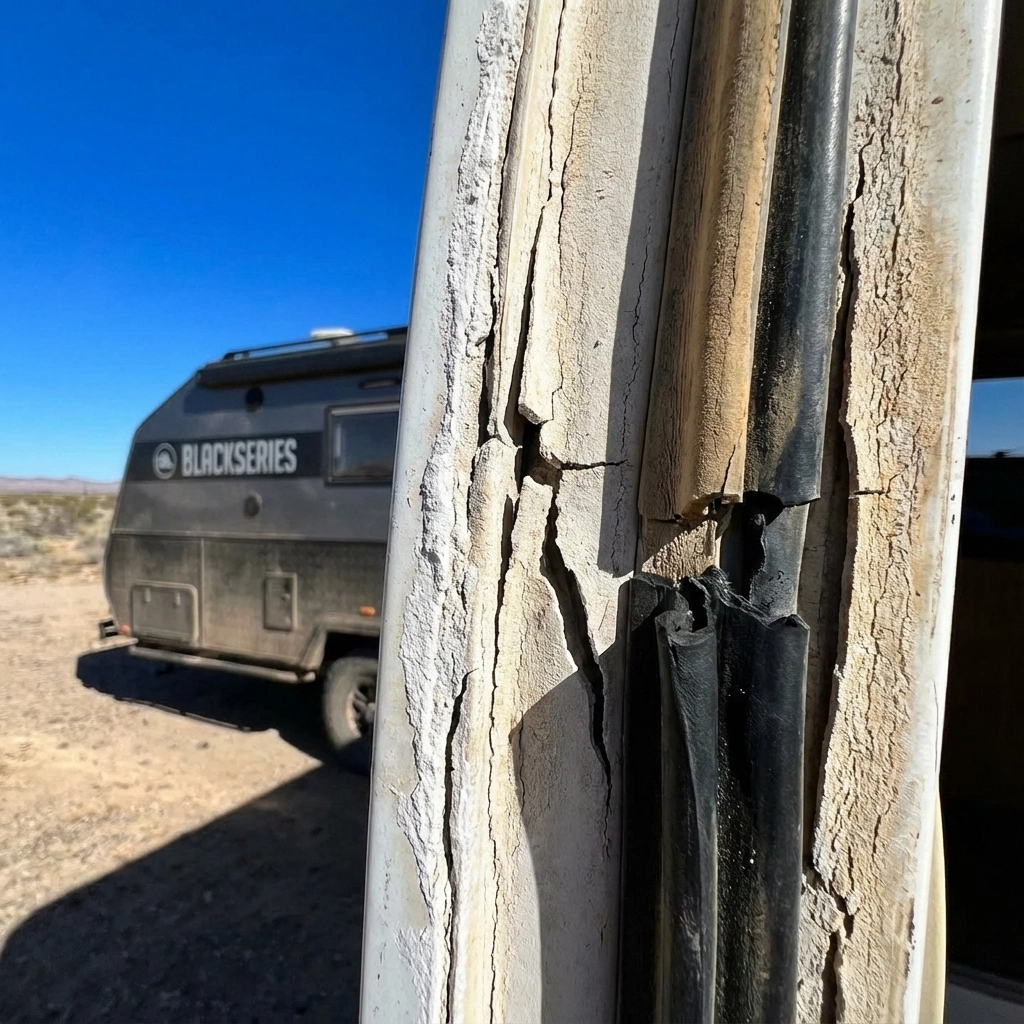
The financial impact of neglecting RV rubber seal UV protection is significant. A typical seal replacement project can cost between $300-$800 for minor repairs, while major sealant failures requiring professional remediation often exceed $2,000. Water intrusion from failed seals can damage interior wood structures, electronics, and furniture, potentially totaling a camper in severe cases.
What Parts of an RV Are Most Vulnerable to Sun Damage
Understanding which components face the greatest UV exposure helps prioritize your maintenance efforts. RV rubber seals are found throughout your BlackSeries camper, each serving critical waterproofing functions that protect your investment.
Door and window seals represent your first line of defense against water intrusion. These seals expand and contract daily with temperature changes, making them particularly susceptible to UV-induced cracking. Entry doors, storage compartments, and slide-out rooms all depend on these flexible rubber barriers.
Roof sealant faces the most intense UV exposure, as it’s constantly exposed to direct sunlight without any protection. The sealant around roof vents, air conditioning units, solar panel mounts, and antenna installations experiences the harshest conditions. This is where most water leaks begin when sealants fail.
Exterior trim and gaskets around hatches, utility connections, and compartment doors also require attention. These components often use different rubber compounds than structural seals, and each may respond differently to UV exposure and protection treatments.
Hatch and compartment gaskets seal everything from electrical panels to propane compartments. While these may seem less critical, a failed gasket can allow moisture into electrical systems or propane lines, creating serious safety hazards.
How UV Damage Affects RV Rubber and Sealant
UV radiation attacks rubber by breaking down the polymer chains that give rubber its flexibility and strength. As these molecular bonds deteriorate, rubber seals become brittle, lose their ability to compress and expand, and eventually crack or crumble.
The process typically begins with surface hardening, where the outer layer of rubber loses its flexibility while the interior remains soft. This creates stress points that eventually develop into visible cracks. Once cracking begins, water can penetrate these gaps, accelerating deterioration through freeze-thaw cycles and introducing moisture into areas where it can cause structural damage.
Sealant failure follows a similar pattern but with different visual cues. Quality RV sealants should remain flexible and maintain strong adhesion to the underlying surfaces. UV exposure causes sealants to lose their elasticity, leading to separation at the edges, shrinkage that creates gaps, and complete adhesion failure in severe cases.
The cost difference between preventive maintenance and reactive repairs is dramatic. Annual seal conditioning costs typically range from $50-$100 in materials and time, while professional seal replacement starts around $300 for simple applications and quickly escalates to $1,500-$2,500 for complex roof work or multiple seal systems.

Water damage from failed seals can compromise interior structures within months of the initial failure. Wood frame members can rot, electrical systems can short out, and interior furnishings can develop mold or structural damage. Insurance claims for RV water damage average $15,000-$20,000, making preventive seal care one of the most cost-effective maintenance investments you can make.
Step-by-Step: RV Sun Protection for Rubber Seals & Sealant
Step 1: Clean Seals and Sealant Properly
Begin your RV sealant sun damage prevention routine with thorough cleaning. Use warm water mixed with a small amount of Dawn dish soap, avoid petroleum-based cleaners, degreasers, or harsh chemicals that can accelerate rubber deterioration.
Clean seals every 30 days during active use periods, and always clean before applying any protectant products. Remove accumulated dirt, road grime, and any chalky residue that indicates UV degradation. Pay special attention to horizontal surfaces where water and debris tend to collect.
For stubborn buildup, use a soft brush or cloth, never use abrasive materials that can scratch or damage seal surfaces. Rinse thoroughly and allow all surfaces to dry completely before proceeding to treatment.
Step 2: Apply UV Protectant
Choose water-based UV protectants specifically designed for RV rubber seals. Oil-based and silicone-based products may initially make seals look good, but they can attract dirt and may not provide optimal long-term protection.
Protect RV seals from sun damage by applying protectant every 3-4 months in high-UV environments, or every 6 months in moderate climates. Apply thin, even coats using a microfiber cloth, ensuring complete coverage of all exposed rubber surfaces.
Focus on seals that face south or receive direct afternoon sun exposure, as these experience the most intense UV radiation. Allow protectant to penetrate for the manufacturer’s recommended time before wiping away any excess product.
Step 3: Inspect and Maintain Sealant
BlackSeries campers feature specific sealant applications around roof-mounted equipment, sidewall seams, and utility penetrations. Inspect these areas monthly, looking for signs of cracking, separation, or chalky deterioration.
Healthy sealant should remain flexible and maintain strong adhesion to both surfaces. If you can easily insert a fingernail into gaps at sealant edges, or if you notice separation or cracking, plan for sealant replacement before your next major trip.
Small repairs can be addressed with compatible sealant applied directly over the damaged area. Larger failures require complete sealant removal and reapplication, a job best left to professionals if you’re not comfortable with roof work.
Step 4: Shade, Covers, and Storage Best Practices
When possible, park your BlackSeries camper to minimize afternoon sun exposure on the most vulnerable sides. Use RV covers during extended storage periods, ensuring the cover is properly ventilated to prevent moisture accumulation.
In desert environments, even partial shade can significantly reduce UV exposure. Position your camper to take advantage of natural shade during the hottest parts of the day. In humid climates, prioritize airflow over complete shade to prevent moisture-related problems.
Consider portable shade structures for longer stays in exposed locations. A simple tarp or awning can provide enough protection to significantly extend seal life during extended camping periods.
Best Products for RV Sun Protection (U.S. Market)
Best UV protectants for rubber seals include water-based formulations specifically designed for RV applications. Look for products that offer both UV protection and conditioning properties without petroleum distillates that can damage rubber over time.
Quality protectants should penetrate the rubber surface rather than just coating it, providing protection from within while maintaining the seal’s flexibility. Avoid products that leave heavy residues or attract dirt, as these can actually accelerate deterioration.
BlackSeries owners should verify product compatibility with their specific seal materials before widespread application. Test any new product on an inconspicuous area first, and always follow manufacturer guidelines for application frequency and methods.
For sealant applications, choose products specifically designed for RV use that can handle the expansion and contraction cycles common in mobile applications. Self-leveling sealants work well for horizontal applications, while non-sag formulations are better for vertical surfaces.
Common RV Sun Protection Mistakes
Using tire shine products on rubber seals is a frequent mistake that can cause more harm than good. These products often contain petroleum distillates that can break down rubber compounds over time, actually accelerating UV damage rather than preventing it.
Focusing only on visible areas while ignoring hard-to-reach seals leads to inconsistent protection. Water typically finds the weakest point in your seal system, so comprehensive treatment is essential for effective protection.
Over-application of protectant products can attract dirt and debris, creating abrasive conditions that accelerate wear. Follow manufacturer guidelines for application frequency and quantities, more isn’t always better with seal protection.
Ignoring early warning signs like minor cracking or chalky residue allows small problems to become major failures. Address UV damage at the first sign of deterioration for the most cost-effective maintenance approach.
FAQ: RV Sun Protection & Seal Maintenance
How often should I treat RV rubber seals?
In high-UV environments like Arizona or Southern California, treat seals every 3-4 months during active use periods. In moderate climates, every 6 months is typically sufficient. Always clean before treating, and inspect monthly for early signs of deterioration.
Does BlackSeries use UV-resistant seals?
BlackSeries campers use quality rubber seals designed for outdoor use, but all rubber compounds will eventually degrade under UV exposure. Even UV-resistant seals benefit from regular cleaning and protective treatment to maximize their service life.
Can sun damage cause RV leaks?
Yes, UV damage is one of the leading causes of RV water leaks. As seals become brittle and crack, they lose their ability to prevent water intrusion. Sealant failure from UV exposure is even more common, particularly around roof-mounted equipment and seam areas.
Is an RV cover enough for sun protection?
RV covers provide excellent protection during storage but aren’t practical during active use. Covers must be properly fitted and ventilated to prevent moisture accumulation. For daily use, regular cleaning and protective treatment are more practical than covering and uncovering your camper repeatedly.
What’s the difference between conditioning and UV protection?
Conditioning maintains rubber flexibility and prevents cracking, while UV protection specifically blocks harmful radiation. The best products combine both functions, but conditioning alone won’t prevent UV damage if the product doesn’t include UV-blocking compounds.
How do I know when seals need replacement?
Replace seals when they show visible cracking, have lost their flexibility, or can no longer maintain a watertight seal. If seals remain permanently compressed or show signs of crumbling, replacement is necessary regardless of age.

